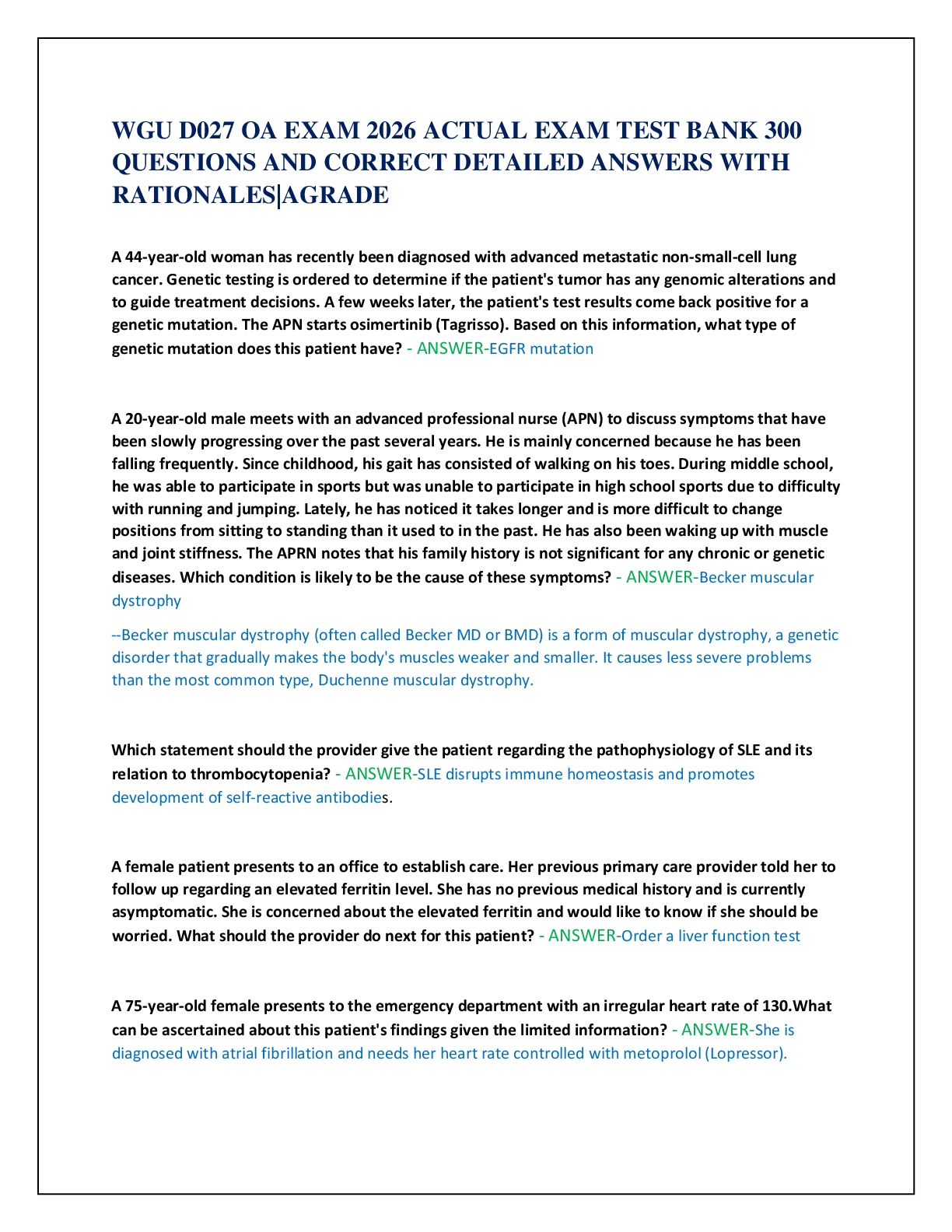
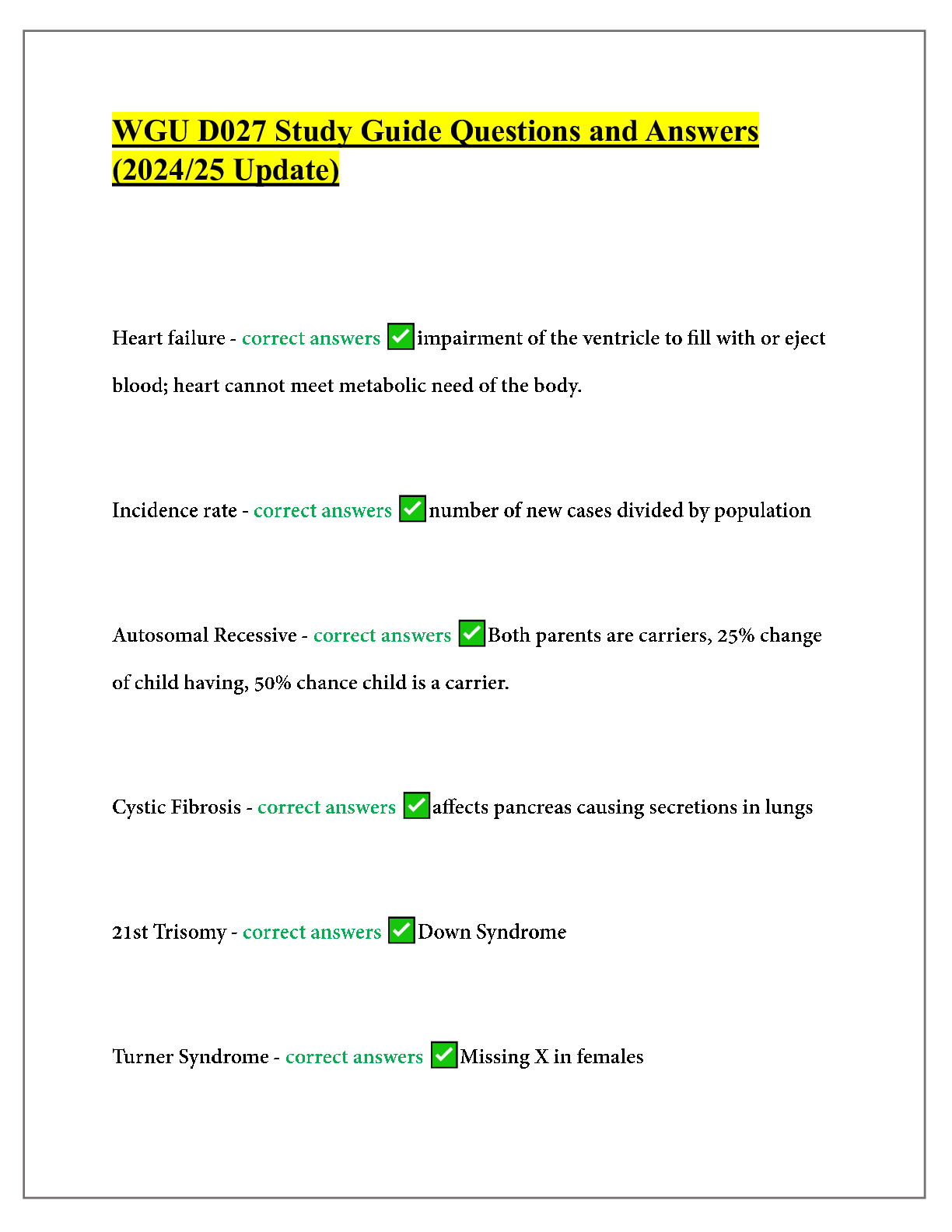
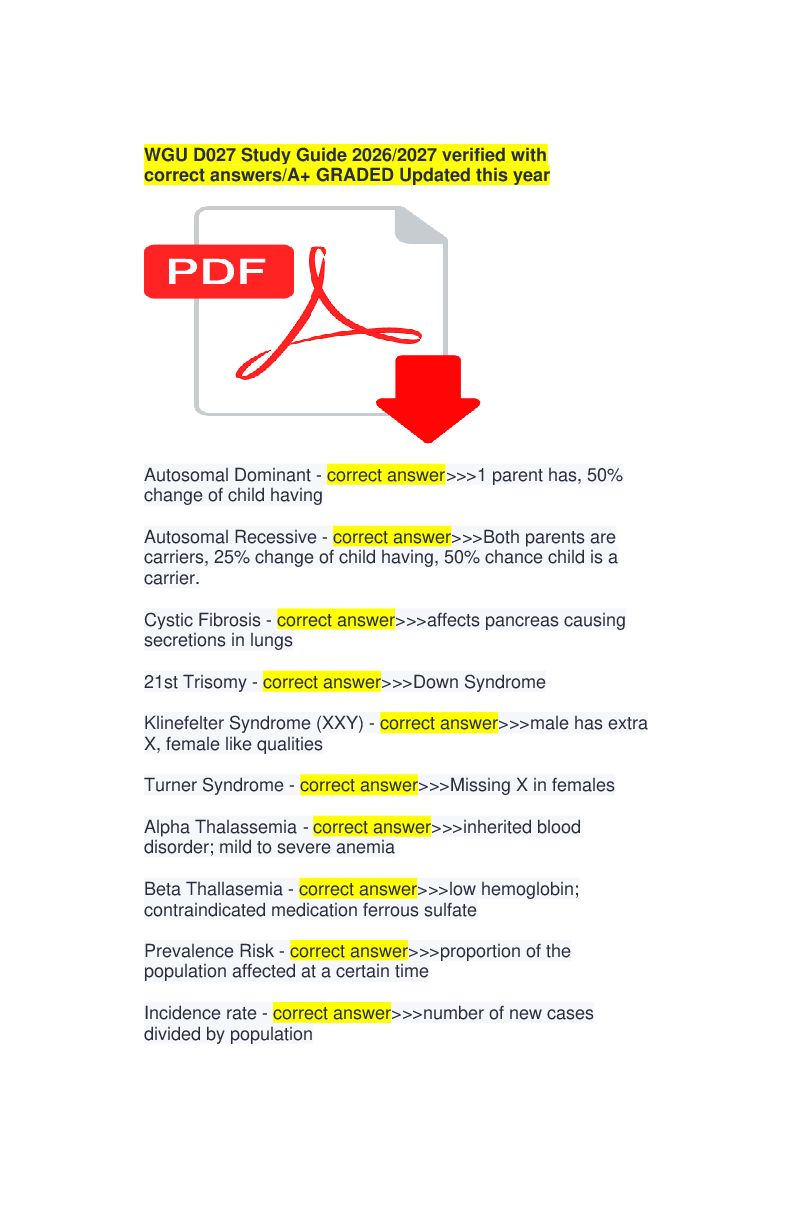
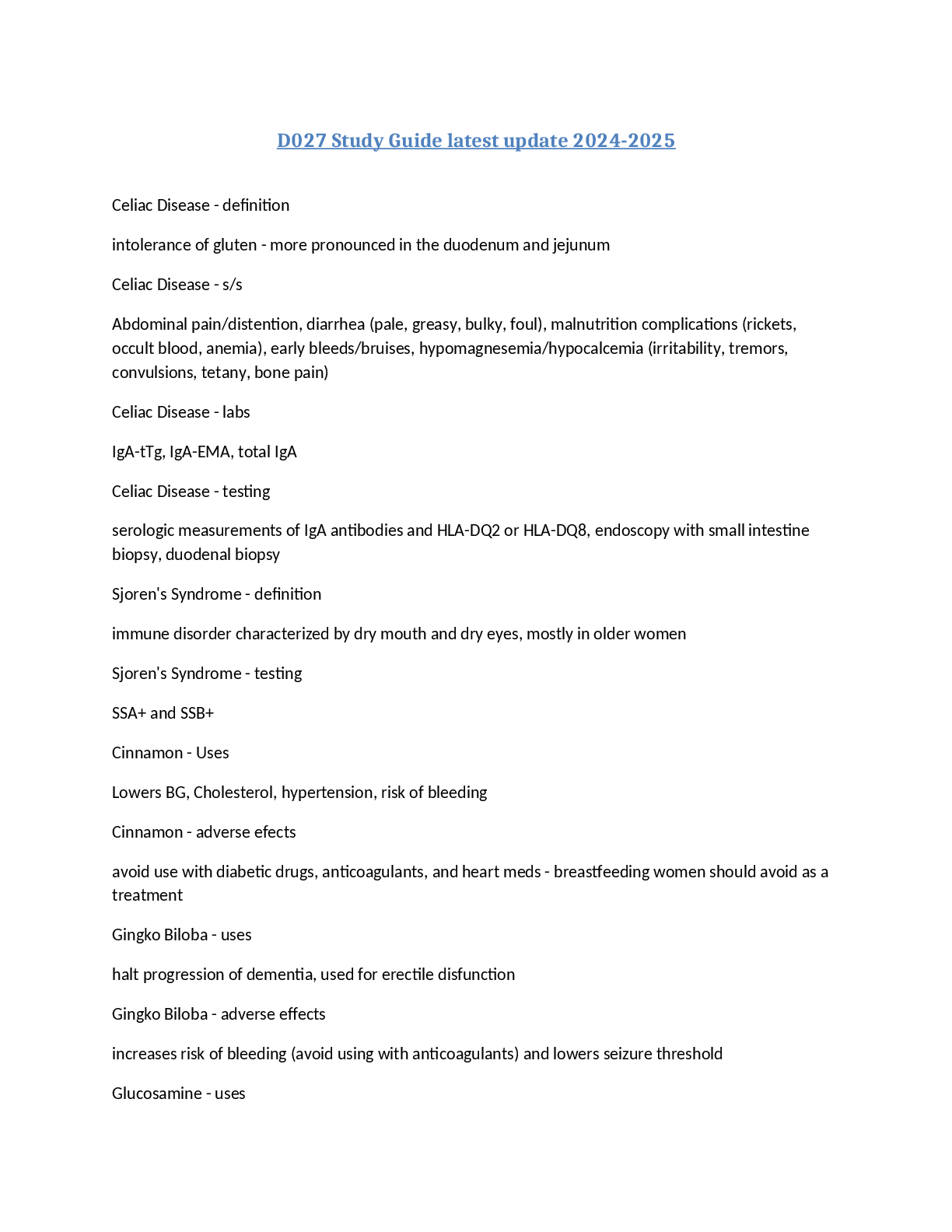
WGU D027 Course Material Questions
and Answers Latest Update, Graded A
A 23-year-old woman comes in for prenatal counseling. While completing her family history,
she reports her brother has cystic fibrosis. She does n
...
WGU D027 Course Material Questions
and Answers Latest Update, Graded A
A 23-year-old woman comes in for prenatal counseling. While completing her family history,
she reports her brother has cystic fibrosis. She does not know if she is a carrier. She asks if her
children will be affected by the disease.
What is an accurate way to determine the likelihood of this patient's children being affected?
Correct Answer- A genetic or a carrier test -
Cystic fibrosis is a hereditary disease that impacts the lungs and digestive system. It is the result
of the cystic fibrosis transmembrane conductance regulator gene mutation. The disease occurs
when an individual inherits the mutated gene from each parent. When only one mutated gene
is inherited, the individual is labeled a carrier.
A 31-year-old man comes into the office for an exam. He is 6' 5 " with a high-pitched voice, and
he has a moderate degree of mental impairment. It is discovered upon exam that his body hair
is sparse, his testes are small, and he has gynecomastia.
Which genetic disorder should this patient be tested for? Correct Answer- Klinefelter syndrome
-
Klinefelter syndrome is a hereditary disease also known as 47,XXY or XXY that manifests as the
series of symptoms described. The symptoms are expressed as a result of the presence of two
or more X chromosomes in males. It is often not diagnosed until adulthood.
A 40-year-old man presents to a clinic with an onset of a frequent cough. The patient states the
cough started when he started his new blood pressure medication two weeks ago. The patient
does not remember the name of the drug that was started. After a thorough assessment, it is
determined the cough is not being caused by an infection. It is determined the likely cause of
the frequent cough is the new blood pressure medication.
Which medication is the likely cause of this patient's symptoms? Correct Answer- Lisinopril
(Zestril) -
ACE inhibitors such as lisinopril (Zestril) are associated with dry, persistent coughing in many
patients. They prevent the breakdown of protussive mediators such as bradykinin and
substance P leading to an increase of these mediators in the respiratory tract. The cough is
actually a compensatory response of the body to force kinins out of the lungs.A 45-year-old female patient presents to a clinic complaining of chronic generalized pain and
wishes to be evaluated for fibromyalgia and chronic pain syndrome. A thorough history and
physical is conducted, and the findings are negative. The patient is not taking any medications,
has no allergies to medicines, and has a negative past medical history.
What is an appropriate first intervention for this patient? Correct Answer- Assess the patient's
sleep hygiene and make recommendations -
The most noninvasive approach to assessing generalized pain that seems to have no etiologic
physical findings of chronic fatigue, chronic pain syndrome, or fibromyalgia is to further assess
the patient's sleep history. Lack of adequate sleep has been linked to myalgias and chronic pain.
Often a vicious cycle occurs in which the pain induced by lack of sleep then causes inability to
sleep and so on.
A 45-year-old Jewish man is visiting a clinic for an adjustment of his diabetes medications.
Though the patient is taking oral medications, his blood sugar levels continue to increase, and a
decision is made to start him on insulin. Although the patient is comfortable with the concept
of starting insulin, he is concerned with the formulation of the insulin saying, "I heard insulin
was made from pigs. If that is the case, I cannot take it due to my faith."
Which response should be given to this patient? Correct Answer- While insulin did have porcine
sources in the past, it is now synthetically made -
All forms of insulin manufactured in the U.S. use recombinant DNA technology. Some are
identical to human pancreatic insulin, and others are synthetic analogs of natural human
insulin. It is appropriate to provide the patient with information that will decrease his concerns
about breaching his religious beliefs.
A 45-year-old man reports his preference for natural methods of treating illness. He states he
takes natural supplements that he orders from China to boost his health and well-being. One of
the supplements he takes daily is red yeast rice.
Which medication should be avoided with this patient's supplement? Correct AnswerLovastatin (Mevacor) -
Red yeast rice naturally contains lovastatin and other statin-related compounds that
significantly impact LDL cholesterol; therefore, there is a risk for an increased effect and side
effects if taken with a statin.A 45-year-old Muslim woman presents to a clinic for an intervention for her type 2 diabetes.
She is prescribed metformin (Glucophage) 500 mg BID. During a follow-up phone call a week
later, it is discovered she has not been taking the metformin. A second visit is scheduled. During
this visit, she states that she cannot take the medication as prescribed because it is Ramadan, a
month-long period of religious observances. Due to her religious beliefs, she fasts from dawn to
sunset. When the pharmacist told her to take metformin with breakfast and dinner, she
decided not to start the medication due to her fasting.
Which nursing intervention should be made for this patient? Correct Answer- Start metformin
XR (Glucophage XR) 250 mg once a day and reevaluate after Ramadan -
Metformin XR (Glucophage XR) is an extended release biguanide that can be given once daily at
a time when it will not impact the patient's cultural or religious practice. It has a half-life
elimination time of up to nine hours.
A 54-year-old Caucasian man comes in for a lab review. His lipids reveal an LDL of 180, an HDL
of 52, and triglycerides of 326. He has no history of atherosclerotic cardiovascular disease
(ASCVD) or diabetes. His blood pressure is 118/64. He has a pulse rate of 64, and he weighs 320
lb. He smokes one pack of cigarettes per day, and his ASCVD risk score is 12.8.
Which medication should this patient be started on? Correct Answer- Atorvastatin (Lipitor)
20mg -
Atorvastatin is more effective in reducing total cholesterol having a greater impact on lowering
LDL cholesterol. The American College of Cardiology guidelines on blood cholesterol
management emphasize that the greater the reduction in the LDL-C on statin therapy, the
greater the subsequent risk reduction.
A 54-year-old man comes into a clinic for a routine visit. His initial BP is 148/92. After a recheck
15 minutes later, his BP is 140/90. He states he suffers from "white coat hypertension." He
states he has no history of high blood pressure and no family history of high blood pressure.
Which nursing intervention would assist this patient in receiving a clinical diagnosis of
hypertension? Correct Answer- Completing an ambulatory blood pressure assessment -
For someone with "white coat hypertension," the best option is to eliminate the situation in
which the trigger is present. Assessing blood pressure in a location of comfort like the home
environment when no professional is present will enable the ability to determine his blood
pressure under routine circumstances.A 55-year-old female patient presents to a clinic for exacerbation of her chronic low back pain.
She is taking morphine extended-release tablets (MS Contin), hydrocodone (Vicodin) PRN, and
duloxetine (Cymbalta). The patient denies any drug allergies. She rates her pain at a ten out of
ten and is requesting something stronger for pain.
When considering adding a medication for this patient's pain, which medication could have a
significant interaction with her current medications? Correct Answer- Tramadol (Ultram) -
Tramadol (Ultram) is a non-opioid analgesic that acts primarily by blocking serotonin and
norepinephrine uptake. The effective increase in serotonin levels in the brain in combination
with an antidepressant such as duloxetine (Cymbalta), which also raises serotonin levels, may
result in serotonin syndrome or serotonin toxicity.
A 55-year-old male patient is on a medical floor for respite care. He is currently in hospice for
end-stage pancreatic cancer. During assessment, a nurse notices that he is diaphoretic,
moaning, and clutching his abdomen. He rates his pain at a nine out of ten. The nurse notes
that his abdomen is distended, and he has rebound tenderness in all four quadrants.
What is an appropriate nursing intervention for this patient? Correct Answer- Giving a dose of
intravenous morphine (Duramorph) -
The key information in this scenario is that the patient is in hospice for end-stage pancreatic
cancer. He is in significant pain, and none of the options other than the administration of
morphine (Duramorph) are likely to provide the level of pain reduction necessary. Hospice care
is guided by the approach to providing maximum comfort for individuals at the end of life
through a peaceful, symptom-free, and dignified transition to death when disease has
advanced beyond cure.
A 58-year-old woman comes in complaining of retrosternal chest pain, worsening with
recumbent position. She states she has had a low-grade fever for two days. Upon exam, the
patient has a friction rub. An EKG reveals sinus tachycardia with inflammatory changes. An
ultrasound is performed, and she is diagnosed with an acute pericarditis.
Which condition would make pericarditis more likely in this patient? Correct Answer- Lupus -
Lupus is an autoimmune disorder that is often responsible for causing an inflammatory
response in the pericardial sac. Autoimmune disorders are known to cause chronic pericarditis.
A 60-year-old African-American patient has a blood pressure of 120/80 mm Hg and reports a
family history of hypertension. The patient has a body mass index of 22.3. The patient reportsconsuming alcohol occasionally. Which therapeutic lifestyle change will the nurse expect to
teach this patient? Correct Answer- Sodium restriction -
Genetics account for 20-40% of the variation in blood pressure. Environmental factors play a
large role in the development of HTN (high sodium intake, insufficient physical activity, stress,
and obesity) (McCance, p. 169).
A 60-year-old female patient is about to begin long-term therapy with a glucocorticoid. Which
of the following will be important for minimizing the risk of osteoporosis? Correct AnswerCalcium and vitamin D supplements -
Glucocorticoids suppress bone creation, accelerate bone loss, and decrease absorption of
dietary calcium. Vitamin D and calcium supplementation should be prescribed for all individuals
on long-term glucocorticoid treatment to prevent bone loss and facilitate sufficient serum
calcium and vitamin D levels.
A 64-year-old male truck driver comes in complaining of pain in his lower left calf. He states he
drives eight to ten hours per day. Upon exam, swelling and mottled coloring are noted in the
patient's calf. A D-dimer test is ordered and comes back positive.
Which additional test should be ordered to confirm a diagnosis in this patient? Correct AnswerAn MRI -
D-dimer is not a conclusive assessment of a deep vein thrombosis (DVT), as it can be elevated
for a variety of reasons including stress, recent surgery, inflammation, trauma, liver disease, or
malignancy. The test does not identify the location of a clot or the cause. An MRI will provide
visualization of the causative agent and the precise location.
A 68-year-old female patient on a medical surgical floor received a dose of morphine
(Duramorph) 30 minutes ago for postoperative pain into an IV in her left hand. She has been on
the floor for two days and has received several doses of morphine over that time. The patient's
call light is now lit. When the nurse goes into the room, the patient has several complaints.
Which complaint should be addressed first in this patient? Correct Answer- A rash around the
injection site going up the left arm -
Morphine (Duramorph) is a noncytotoxic vesicant, which means it is irritating and potentially
harmful to tissues if it leaks out of the vessel. The reaction local to the site may be an indication
of local inflammatory response either caused by irritation, slow leakage of the drug into
surrounding tissue, or a sensitivity. However the extension of the rash up the arm is moreconcerning and may reflect phlebitis or the beginning of an allergic presentation. This
presentation warrants priority assessment.
A 73-year-old man with congestive heart failure (CHF) comes to a clinic complaining of
shortness of breath. He is currently taking 6.25 mg carvedilol (Coreg) twice a day and 50 mg
losartan (Cozaar) and 20 mg furosemide (Lasix) daily. His oxygen saturation is 95%, and he has a
pulse of 64. His BP is 138/82, and his BNP is 1500.
Using the 2017 heart failure guidelines, which medication change should be recommended for
this patient? Correct Answer- Stop angiotensin receptor blockers (ARB) and add
sacubitril/valsartan (Entresto) -
In this case, the elevated BNP indicates significant heart failure. Guidelines recommend
replacing an ARB or ACE inhibitor with an ARNI such as Entresto.
A 78-year-old man comes in with stable angina. He reports he has been having more angina
recently. He is currently taking the following medications: lisinopril (Zestril), atorvastatin
(Lipitor), aspirin, and nitrostat PRN for chest pain. He has a history of COPD with bronchospasm.
His blood pressure is 145/88, and he has a pulse of 74.
Which class of medications should be avoided for this patient? Correct Answer- Beta blockers -
The use of nonselective beta blockers is contraindicated in the management of patients with a
history of COPD or asthma because they impact both beta 1 and beta 2 receptors and
precipitate bronchospasms. Cardioselective beta blockers, while less likely to cause
bronchospasms, may still add to the risk of respiratory compromise.
A BMI greater than what indicates obesity? Correct Answer- 30 kg/m2 -
Underweight is < 18.5 kg/m2. Normal weight is 18.5-24.9 kg/m2. Overweight is 25-29.9 kg/m2.
Obesity is ≥ 30 kg/m2. See "About Adult BMI" for more information.
A child will begin taking methylphenidate [Ritalin] for attention-deficit and hyperactivity
disorder. Important baseline information about this patient will include the ________. Correct
Answer- height and weight -
The most common side effect of Ritalin use is decreased weight secondary to the appetite
suppression effects of the medication. Baseline height and weight are important in tracking
growth and assessing for side effects.A chronic, systemic inflammatory autoimmune disorder that affects the joints is called what?
Correct Answer- Rheumatoid arthritis -
Rheumatoid arthritis is a chronic, systemic autoimmune disease that affects tissues, organs, and
joints (McCance, p. 1450).
A condition caused by postoperative patients' reluctance to change position or breathe deeply
is _____________. Correct Answer- pulmonary atelectasis -
Pulmonary atelectasis is an acute process and the result of the alveoli collapsing in patients
postoperatively if the patient does not change position or breathe deeply to keep the delicate
lung structures inflated. There is no effect on bones (compression fractures) or function of
surfactant. Bronchiectasis is a chronic condition of lung bronchial wall thickening.
A criterion for a diagnosis of generalized anxiety disorder (GAD) is a period of excessive
worrying that lasts for at least how many months? Correct Answer- 6 -
GAD is characterized by persistent and excessive worry about many different things and that
concern is uncontrollable for a minimum of six months.
A failure to recognize the form and nature of objects is __________. Correct Answer- agnosia -
Agnosia is defined as the inability to interpret sensations and thus recognize visualized objects.
It is typically a result of brain damage. Amnesia is the loss of memory while aphasia is the loss
of speech functions. Locked-in syndrome (LIS), also known as pseudocoma, is a conscious state
where a person is aware but cannot move or communicate due to paralysis of nearly all
voluntary skeletal muscles.
A female patient taking an ACE inhibitor learns that she is pregnant. What will the nurse tell this
patient? Correct Answer- The patient should stop taking the medication and contact her
provider immediately -
ACE inhibitors are contraindicated in pregnancy because of their teratogenicity and should be
avoided. Harm to the developing fetus includes major congenital malformations (e.g.,
hypotension, skull hypoplasia, pulmonary hypoplasia, renal failure) and death (Burchum &
Rosenthal, p. 357).A GFR of 20 mL/min would be what stage of chronic kidney disease? Correct Answer- Stage 4 -
GFR is rated as severe when it is in the range of 15 to 29. This is stage 4
A low dose ICS should be started in an asthma patient when which of the following occurs?
Correct Answer- Patient wakes from sleep because of asthma more than once a month -
Adding a low dose inhaled corticosteroid is recommended for any patient with asthma who
reports waking from sleep due to asthma more than once a month, asthma symptoms
occurring more than twice a month, or asthma symptoms occurring plus one or more risk factor
for asthma exacerbation.
A nurse administers the same medication in the same preparation in the same dose to several
patients and notes that some patients have a better response to the drug than others. What is
the most likely explanation for this phenomenon? Correct Answer- Pharmacogenomic
differences among individuals -
Varying individual responses to drugs are driven by genetic differences between persons. The
study of genes and drug responses is pharmacogenomics.
A nurse at an immunization clinic is providing vaccines to children. The parent of a child waiting
to receive vaccines tells the nurse that the child has an immune deficiency disorder. Which
vaccine should not be administered to this child? Correct Answer- Varicella virus -
Immunocompromised children should not receive live vaccines due to the likelihood that the
live virus or bacteria will proliferate and cause the severe illness that the vaccination is
supposed to protect against. Injected polio vaccine is the inactive form, while the oral form
contains the live, attenuated virus. Neither the DTaP nor the Hib vaccines are made from live
bacteria.
A nurse caring for a patient, notes that the patient has a temperature of 40°C (104°F) and a
heart rate of 110 beats per minute. The patient's skin is warm and moist, and the patient
complains that the room is too warm. The patient appears nervous and has protuberant eyes.
The nurse will contact the provider to discuss _________. Correct Answer- Graves disease -
Hyperpyrexia, tachycardia, and increased sweating are signs of the hyperthyroidism associated
with Graves disease. Cretinism is congenital hypothyroidism. Myxedema is puffy skin caused by
long-standing hypothyroidism. Plummer disease is hyperthyroidism due to a cancerous thyroid
tumor.A nurse is caring for a patient who has been taking an antiepileptic drug for several weeks. The
nurse asks the patient if the therapy is effective. The patient reports little change in seizure
frequency. What will the nurse do? Correct Answer- Contact the provider to request an order
for serum drug levels -
Plasma drug levels are the gold standard for determining the dosing of antiepileptic drugs.
A nurse is caring for an older adult man who has Alzheimer disease (AD). The patient's daughter
wants to know if testing can be done to determine her risk for developing the disease. What
will the nurse tell her? Correct Answer- Advancing age and family history are known risk factors
-
The cause of AD is not currently known, but the most important risk factors are age and family
history.
A nurse is concerned about renal function in an 84-year-old patient who is taking several
medications. What should the nurse assess? Correct Answer- Creatinine clearance -
Medication elimination occurs through the kidneys. Kidney function decreases with age. When
multiple medications are used concurrently, there is both added stress on the kidneys and the
potential for increased drug levels systemically.
A nurse is discussing motor symptoms with a patient with Parkinson disease who has been
taking levodopa or carbidopa (Sinemet) for nine months and who is now having regular tics.
Which statement by the patient indicates understanding of this symptom? Correct Answer- "I
may need to try a lower dose of Sinemet to reduce my tics." -
Tics, or dyskinesias, are a possible side effect of Sinemet, which may resolve with a lower dose.
A nurse is making a home visit to an older adult woman who was recently discharged home
from the hospital with a new prescription. The nurse notes that a serum drug level drawn the
day before was subtherapeutic. What should the nurse do next? Correct Answer- Count the
pills in the prescription bottle -
To assess the factors influencing the serum levels of the drug, it is important for the nurse to
determine if the patient is taking the medication as prescribed. Counting the number of pills
will allow the nurse to determine if there have been any missed doses.A nurse is preparing a patient to go home from the emergency department after receiving
sutures for a laceration on one hand. The provider used lidocaine with epinephrine as a local
anesthetic. Which symptom in this patient causes the most concern? Correct AnswerNervousness and tachycardia -
Difficulty moving the fingers on the affected hand could be due to the effect of the drug or a
potential tendon injury. It is expected that there will be numbness and difficulty feeling
pressure at the site. As the medication effect wanes, the sensation of pain will return to the
wound. Nervousness and tachycardia could represent plasma toxicity or allergy.
A nurse is teaching a group of nursing students about antihistamines. Which statement by a
student indicates an understanding of the mechanism of action of the antihistamines? Correct
Answer- "Antihistamines block H1 receptors to prevent actions of histamine at these sites." -
H1 antihistamines block the action of histamine at H1 receptor sites. They do not block the
release of histamine and may block muscarinic receptors in addition to H1 receptors. Firstgeneration antihistamines are less selective than second-generation antihistamines and are
more likely to cause drowsiness.
A nurse is teaching a group of nursing students about the different formulations of beta2-
adrenergic agonist medications. Which statement by a student indicates an understanding of
the teaching? Correct Answer- "Oral beta2 agonists are not useful for short-term treatment." -
Inhaled beta2 agonists provide the fastest (immediate) effect. All oral beta2 agonists are longacting and not useful for short-term or PRN treatment.
A nurse is teaching a group of women about medications. The women want to know why so
many drugs have unpredictable effects in women. The nurse should tell them which of the
following? Correct Answer- Most known drug effects are based on drug trials in men -
Most drug studies have been conducted on subjects who are white and male. This creates an
opportunity for unexpected side effects in females that would otherwise have been known had
enough women been enrolled in drug trials.
A nurse is teaching a male adult patient about the use of testosterone gel. Which statement by
the patient indicates an understanding of the teaching? Correct Answer- "I should not let my
child touch the gel." -To avoid exposing others to testosterone, the areas where testosterone gel is applied should be
covered with clothing once the gel is dried and not left open to the air. Showering or swimming
may occur five to six hours after application.
A nurse obtaining an admission history on an adult patient notes that the patient has a heart
rate of 62 beats per minute, a blood pressure of 105/62 mm Hg, and a temperature of 96.2°F.
The patient appears pale and complains of always feeling cold and tired. The nurse will contact
the provider to discuss tests for which condition? Correct Answer- Hypothyroidism -
The subjective and objective findings suggest possible hypothyroidism in an adult. Cretinism is
congenital hypothyroidism and diagnosed at a young age. Graves and Plummer disease cause
hyperthyroidism.
A nurse provides dietary counseling for a patient newly diagnosed with type 1 diabetes. Which
instruction should be included? Correct Answer- "You should use a carbohydrate counting
approach to maintain glycemic control." -
The goal in type 1 diabetes is to maintain glycemic control, which counting carbohydrates will
accomplish. Eating any foods that one desires will lead to hyperglycemia. Eating protein to
promote fat breakdown as well as restricting calories may lead to ketosis and potential
ketoacidosis.
A nurse provides teaching to a group of nursing students about the risks and benefits of
hormone therapy (HT), including estrogen therapy (ET) and combination estrogen and
progestin therapy (EPT). Which statement by a student indicates an understanding of the
teaching? Correct Answer- "The principal benefits of ET are the suppression of menopausal
symptoms and prevention of bone loss." -
ET is prescribed to counteract the symptoms of menopause and prevent osteoporosis.
Progestin is included in EPT to prevent uterine cancer. Women who have undergone a
hysterectomy should only receive ET. HT may increase the risk of coronary heart disease and
has no preventive effect.
A nurse working in a family planning clinic is teaching a class on intrauterine devices (IUDs).
Which patient should be advised against using an IUD for contraception? Correct Answer- An
18-year-old woman with multiple sexual partners -Women with multiple sexual partners are at higher risk of pelvic inflammatory disease (PID),
although this is most likely due to infection present at the time of IUD placement.
A nursing student asks a nurse what the natural medicines brand evidence-based rating
(NMBER) system that rates dietary supplements means. The nurse should respond that the
NMBER system _________. Correct Answer- helps consumers evaluate the safety and efficacy
of products -
The natural medicines brand evidence-based rating (NMBER) allows the consumer to evaluate
natural products on a scale of 1 (lowest rated) to 10 (highest rated), which allows for a more
informed process in choosing safe, effective products.
A nursing student asks the nurse why epinephrine and not other adrenergic agonists is used to
treat anaphylactic shock. What will the nurse tell the student? Correct Answer- "Epinephrine
has the ability to activate multiple types of adrenergic receptors." -
Epinephrine activates the four types of adrenergic receptors and is the drug of choice for
anaphylaxis.
A patient admitted to the emergency department with abdominal pain tells the nurse he has
been taking kava. Which action is the nurse's priority at this time? Correct Answer- Review liver
function studies -
Kava, an herbal treatment for anxiety and insomnia, is hepatotoxic and has been linked to liver
failure.
A patient arrives in the emergency department with a heart rate of 128 beats/minute and a
temperature of 105°F. The patient's skin feels hot and moist. The free T4 level is 4 ng/dL. The
free T3 level is 685 pg/dL, and the TSH level is 0.1 microunits/mL. The nurse caring for this
patient will expect to administer ______________. Correct Answer- propylthiouracil (PTU) -
This patient is experiencing thyrotoxic crisis, or thyroid storm. PTU is the preferred medication
for treatment of thyroid storm. Methimazole is preferred in reducing hyperthyroidism in stable
patients. Iodine-131 is used to treat Graves disease by destroying a portion of the thyroid gland.
IV levothyroxine would not be appropriate since TSH is depressed and both free T4 and free T3
are elevated.A patient begins taking an ACE inhibitor and complains of a dry cough. What does the nurse
correctly tell the patient about this symptom? Correct Answer- This symptom is common. If it
does not stop, then your medication can be changed -
Coughing is the most common side effect associated with all ACE inhibitors. About 10% of those
taking an ACE inhibitor will experience a dry, nonproductive cough that can range from very
mild to severe and hacking. Persistent dry cough is the most common reason for discontinuing
ACE inhibitors (Burchum & Rosenthal, p. 357).
A patient begins taking nifedipine along with metoprolol to treat hypertension. The nurse
understands that metoprolol is used to ______________. Correct Answer- prevent reflex
tachycardia -
Reflex tachycardia is a side effect of taking nifedipine, exacerbating angin
[Show More]


.png)
.png)



.png)