Health Care > EXAM > (Maryville University) NURS 615- Exam V Questions and Answer with complete Solution (All)
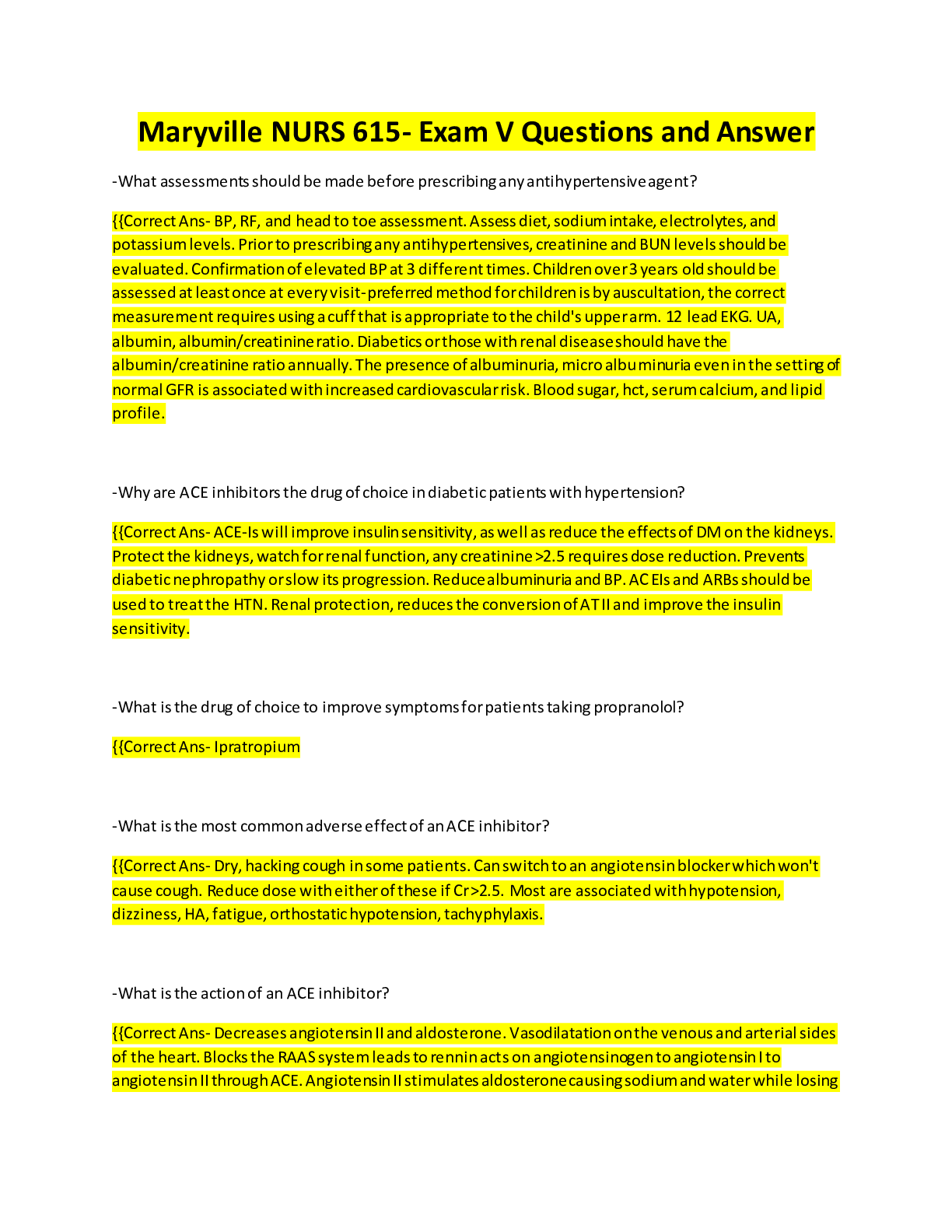
(Maryville University) NURS 615- Exam V Questions and Answer with complete Solution
Document Content and Description Below
Last updated: 4 years ago
Preview 1 out of 38 pages
Instant download
Buy this Document to get the Full Access Instantly
Provided by Students Who Aced it
We Verify Document Content to Gurantee Accuracy
Reviews( 0 )
Document information
Connected school, study & course
About the document
Uploaded On
Sep 21, 2022
Number of pages
38
Written in
All

Additional information
This document has been written for:
Uploaded
Sep 21, 2022
Downloads
0
Views
73
Topic Tags
Recommended For You
Get more on EXAM »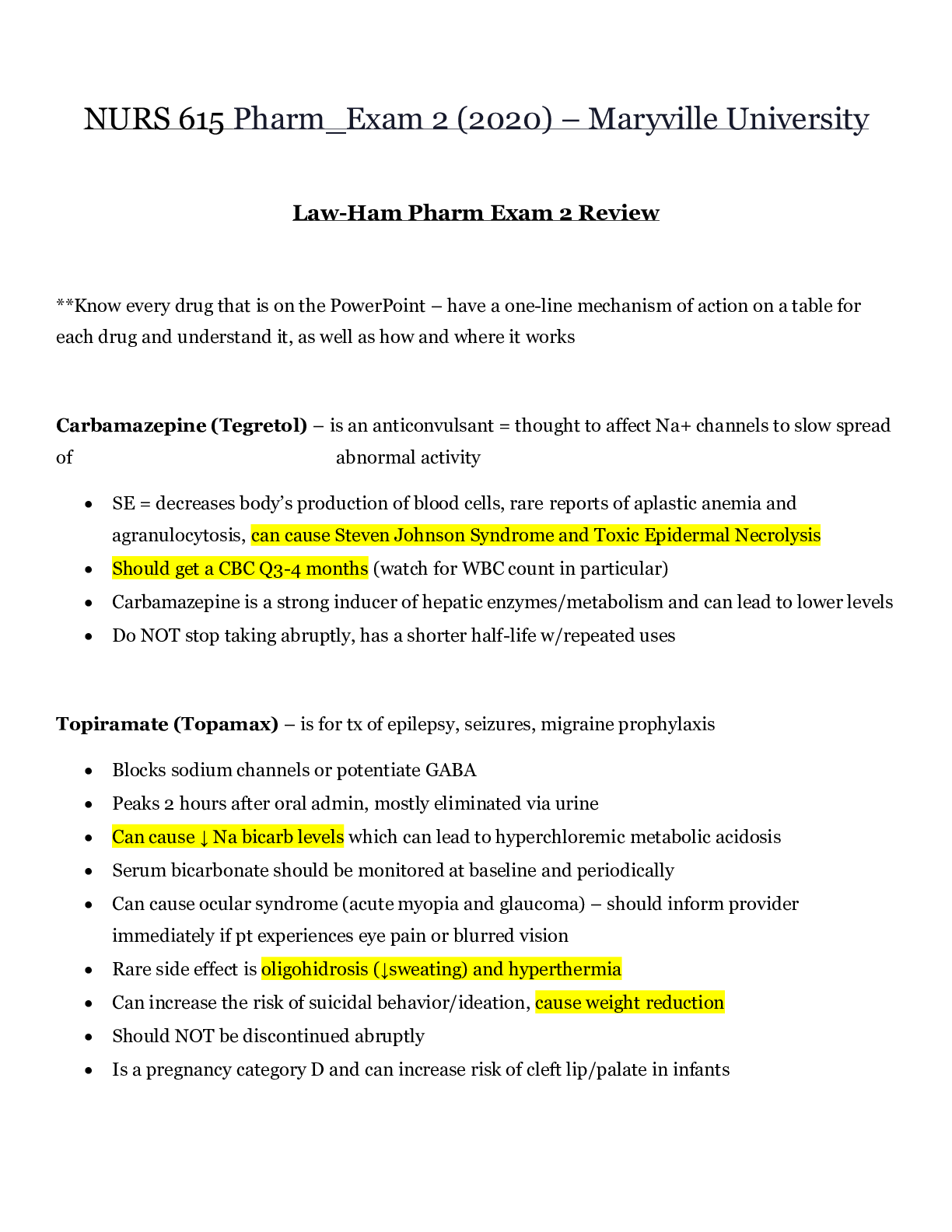
NURS 615 Pharm_Exam 2_2022/2023 | NURS615 Pharm_Exam 2_Graded...
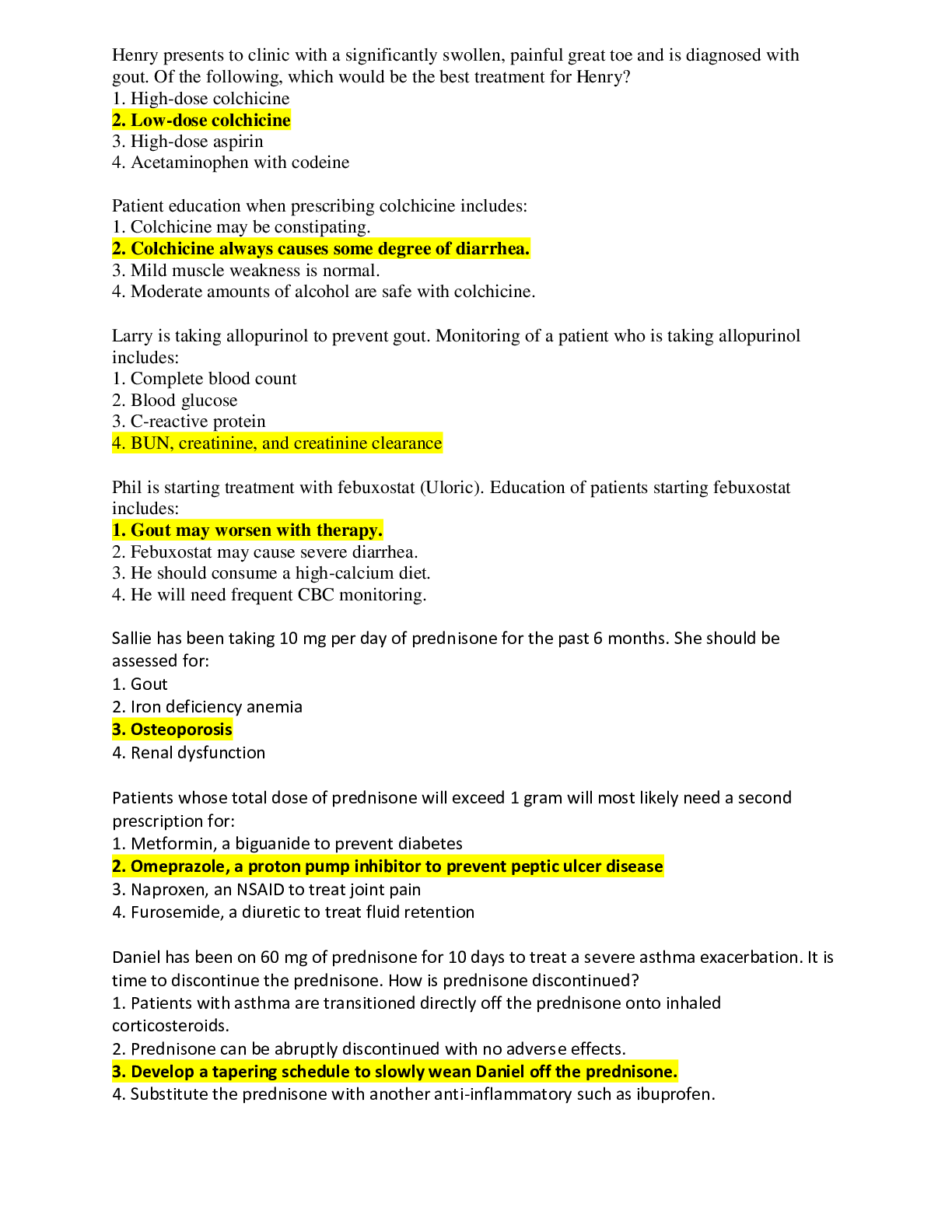
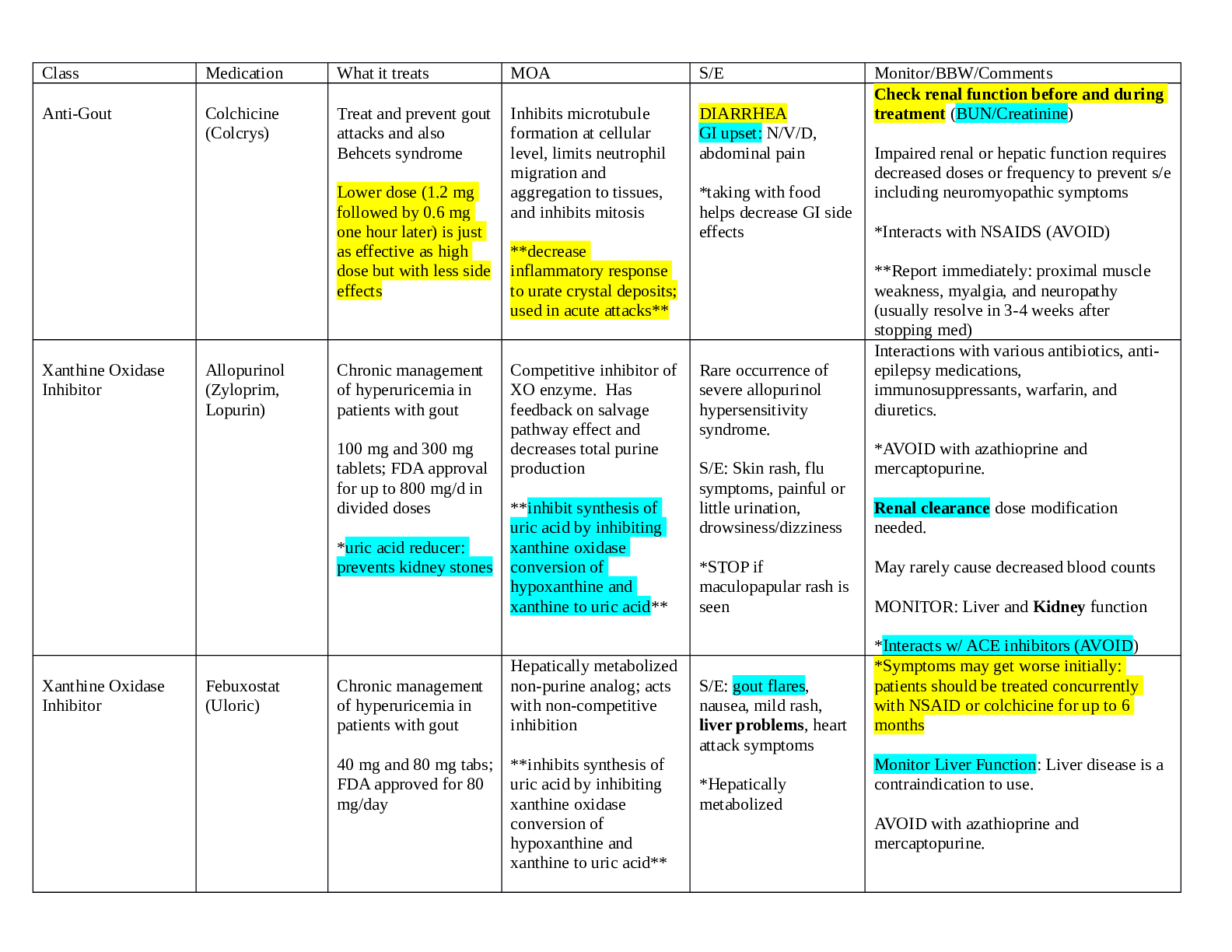
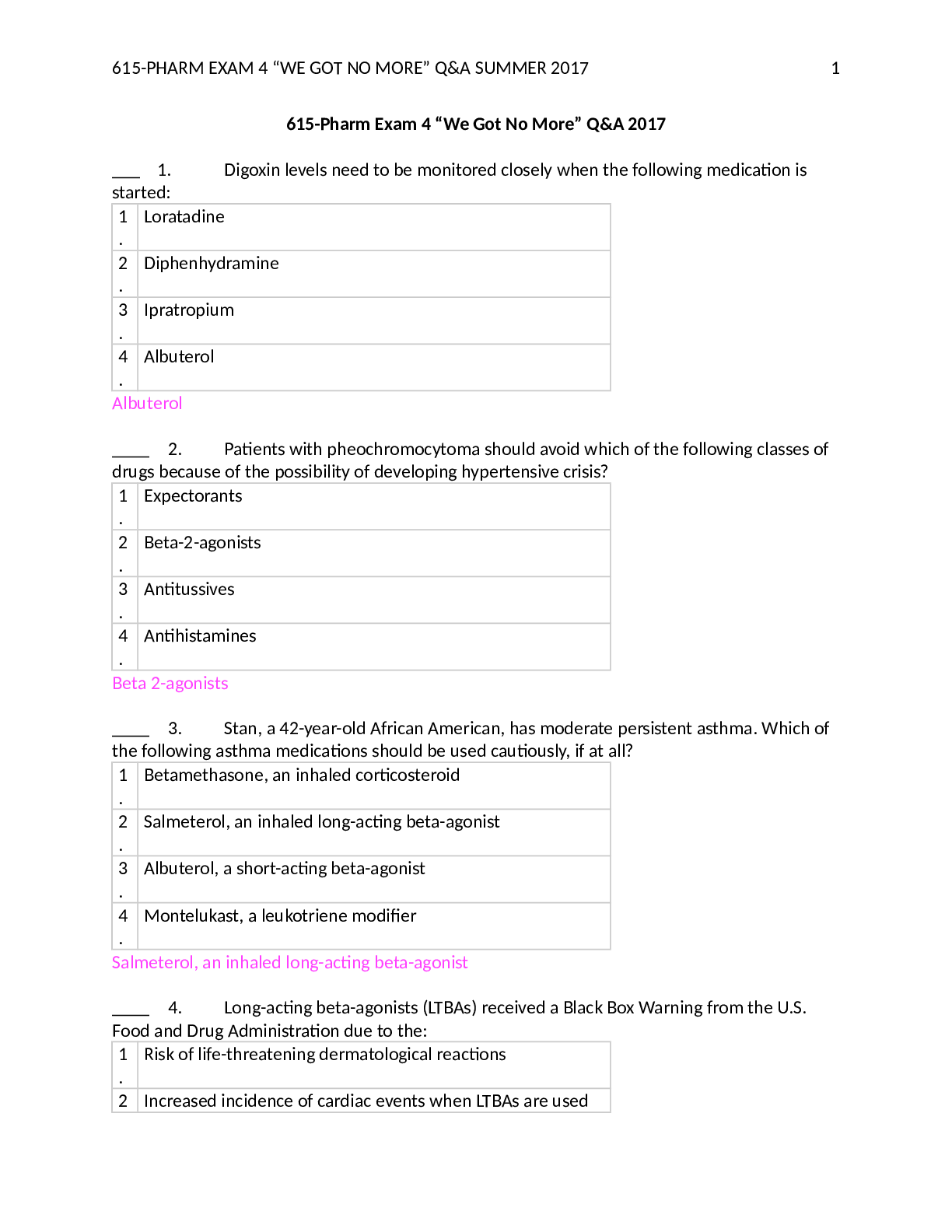
NURS 615 Pharm Exam 4 'WE GOT NO MORE' Questions And Answers.
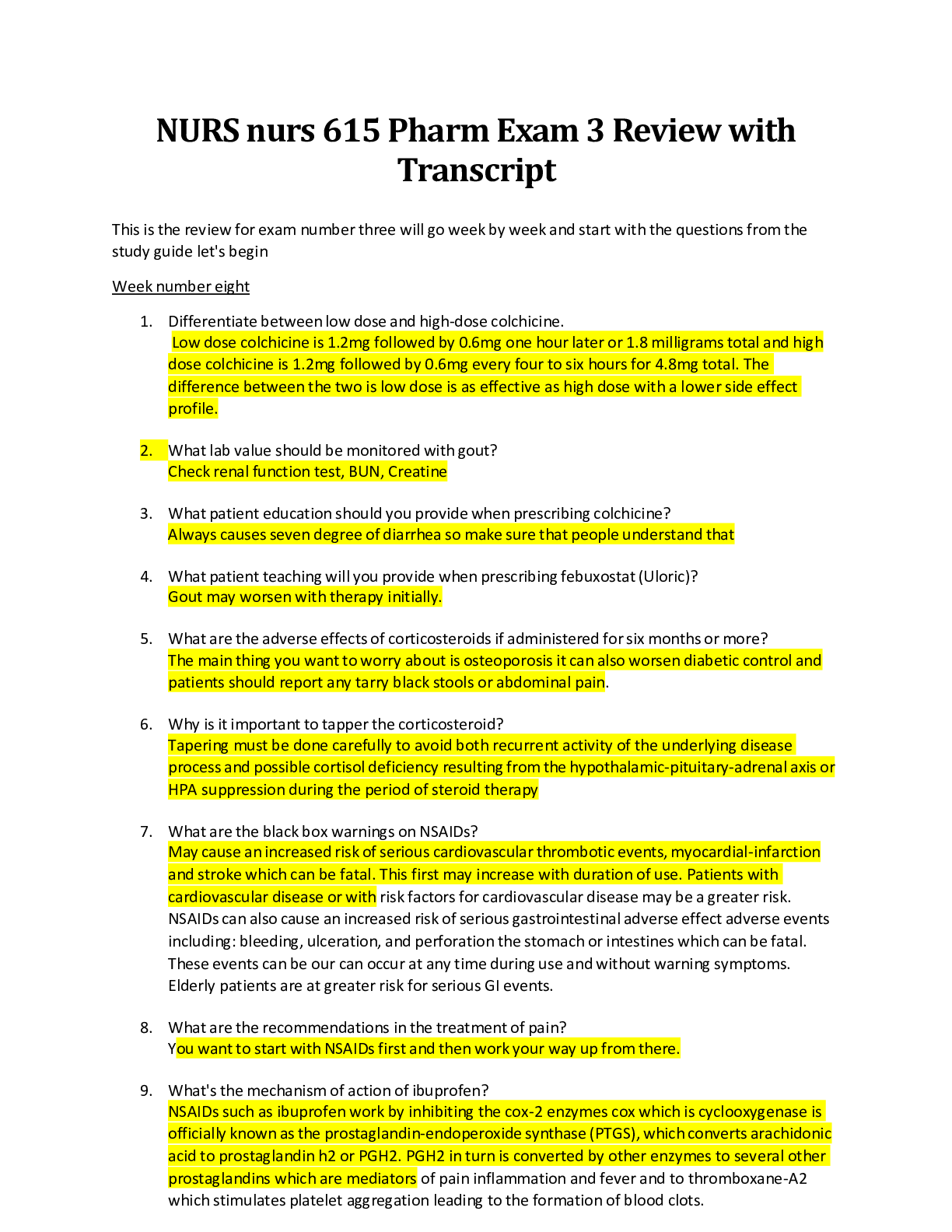
NURS nurs 615 Pharm Exam 3 Review with Transcript | Download T...

NURS 6152 B Section 200 Mabel Johnson (completed) latest sprin...
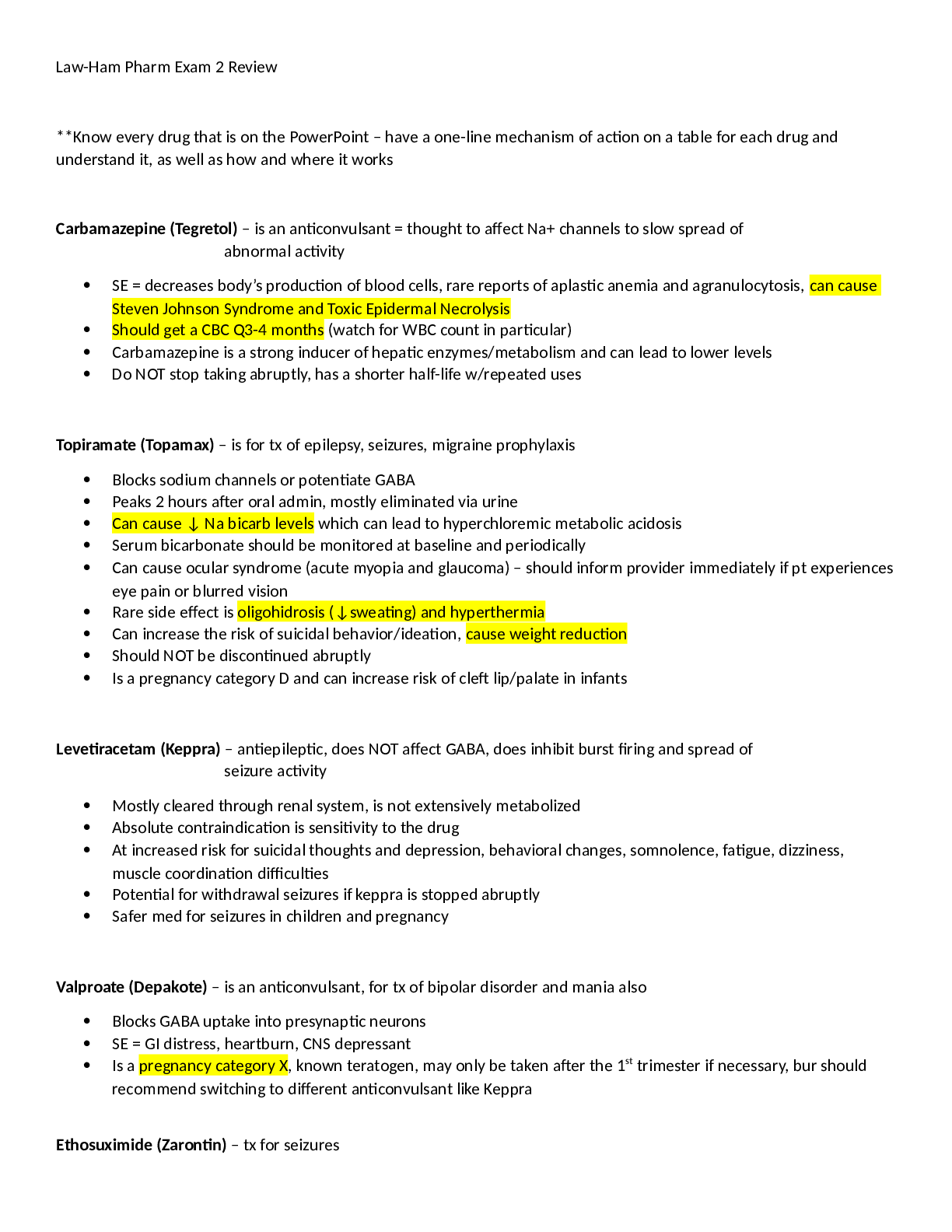
NURS 6152 B Section 200 Mabel Johnson (completed) latest sprin...
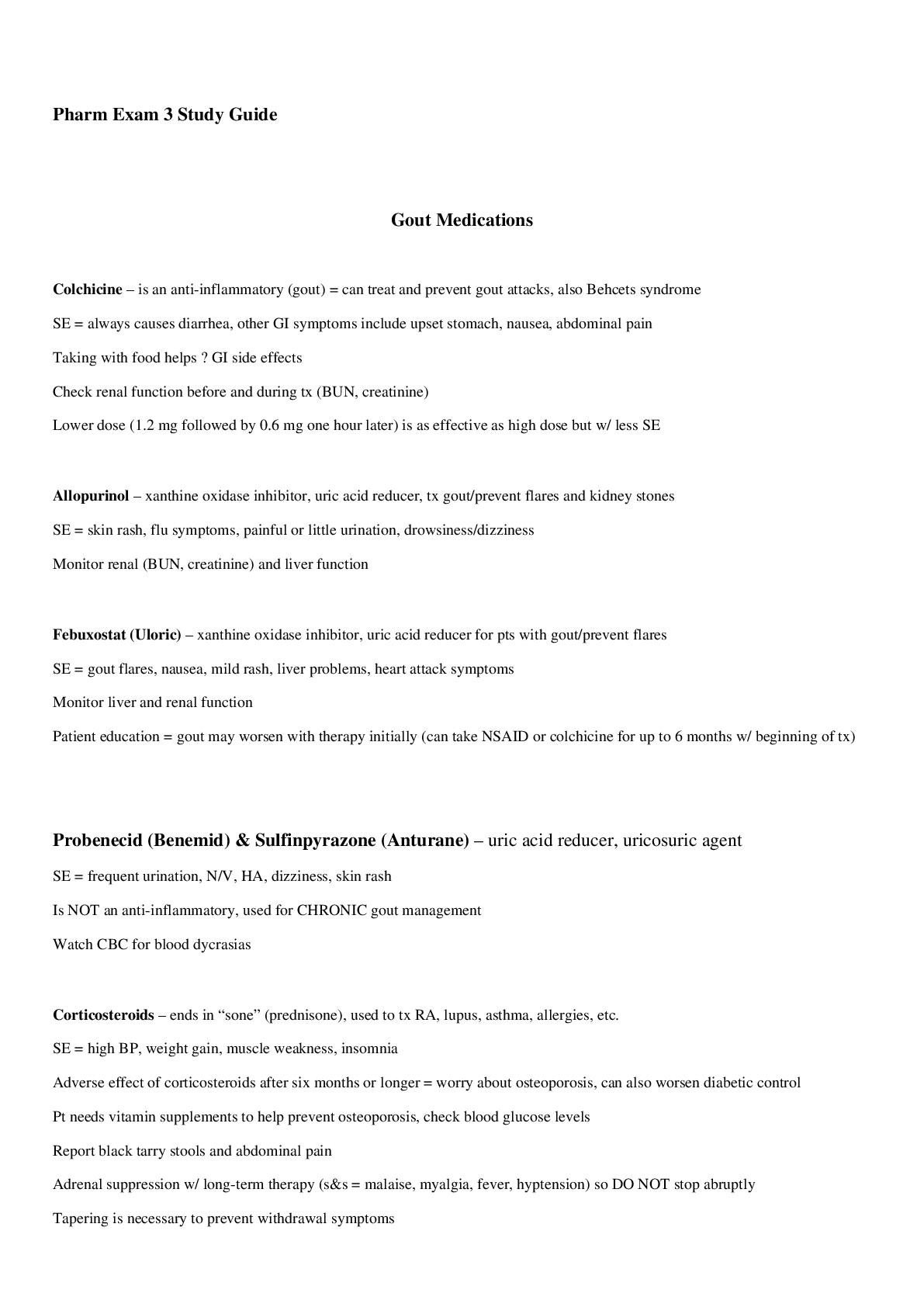
NURS 615 Pharm Exam 3 Study Guide (Angiotensin II receptor ant...
 i.png)
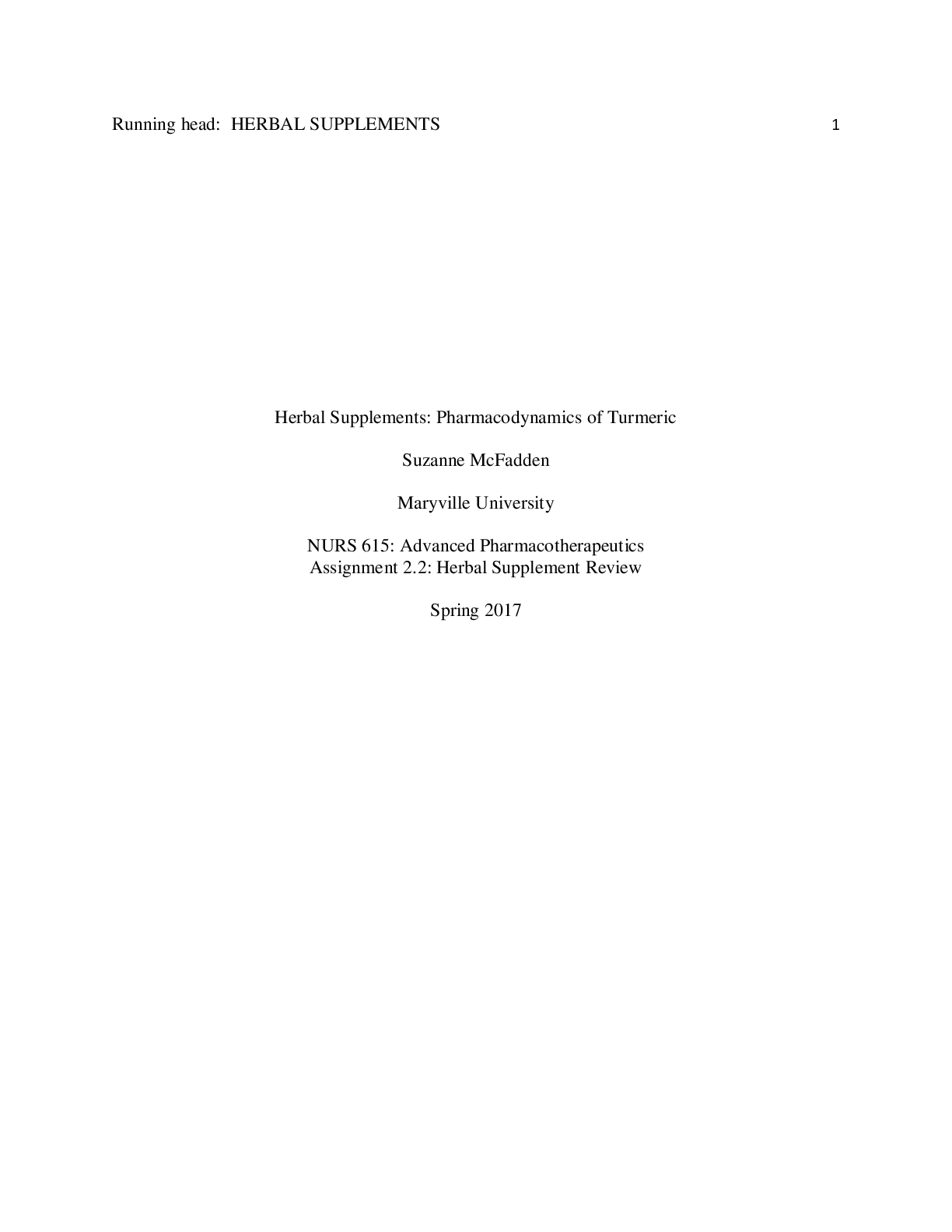
[Essay] NURS 615 - Advanced Pharmacotherapeutics Assignment 2:...


.png)


