Endocrine Study guide
2 types of glands- exocrine and endocrine (each does what?)
• Exocrine glands (e.g., salivary, sweat, digestive) discharge their products through ducts
• Endocrine glands (ductless) secrete thei
...
Endocrine Study guide
2 types of glands- exocrine and endocrine (each does what?)
• Exocrine glands (e.g., salivary, sweat, digestive) discharge their products through ducts
• Endocrine glands (ductless) secrete their products, hormones, directly into the blood rather than through a duct
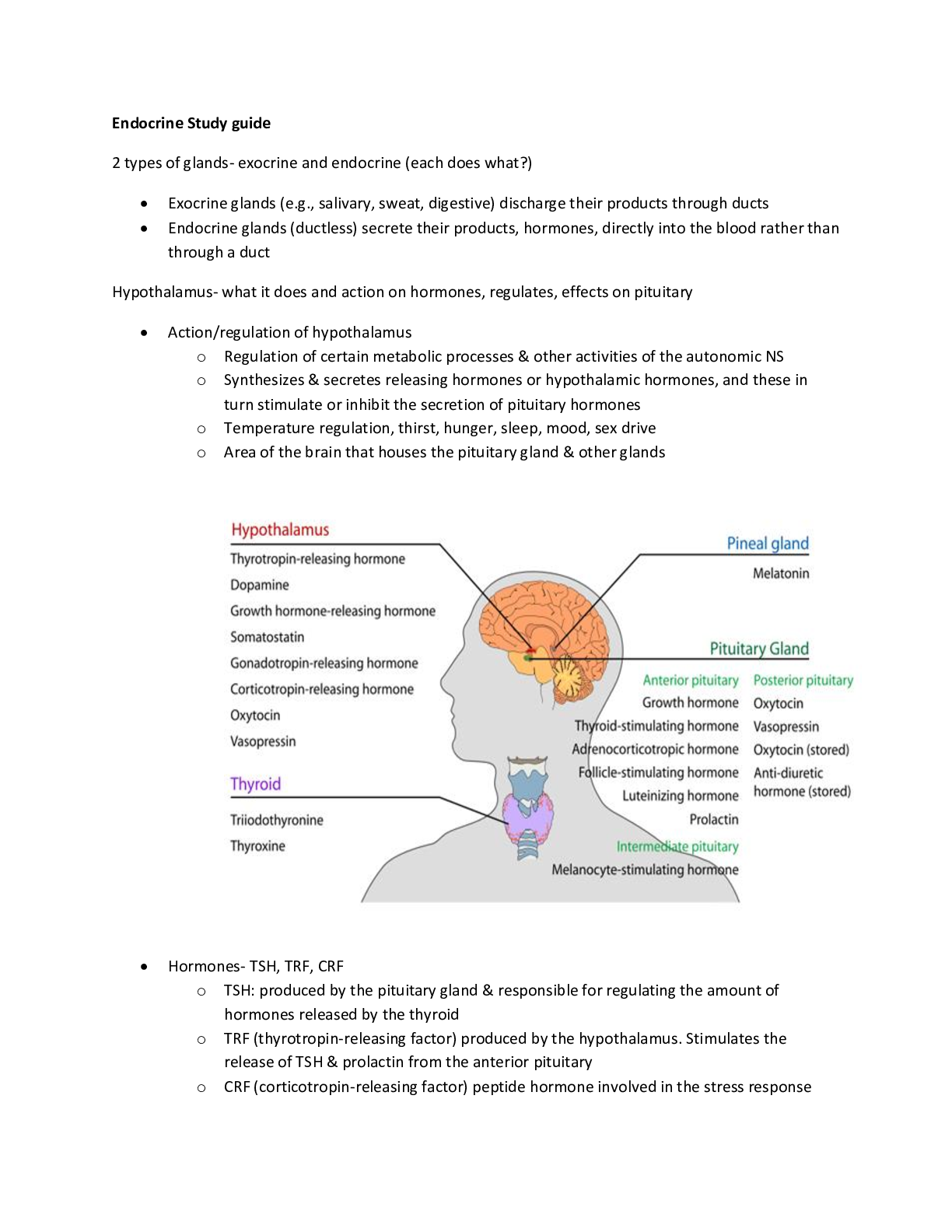
Hypothalamus- what it does and action on hormones, regulates, effects on pituitary
• Action/regulation of hypothalamus
o Regulation of certain metabolic processes & other activities of the autonomic NS
o Synthesizes & secretes releasing hormones or hypothalamic hormones, and these in turn stimulate or inhibit the secretion of pituitary hormones
o Temperature regulation, thirst, hunger, sleep, mood, sex drive
o Area of the brain that houses the pituitary gland & other glands
• Hormones- TSH, TRF, CRF
o TSH: produced by the pituitary gland & responsible for regulating the amount of hormones released by the thyroid
o TRF (thyrotropin-releasing factor) produced by the hypothalamus. Stimulates the release of TSH & prolactin from the anterior pituitary
o CRF (corticotropin-releasing factor) peptide hormone involved in the stress response
Direct and indirect control of hormones- define
• Direct Control
o Involves endocrine cells releasing secretions into blood stream as a result of changes in extracellular fluid composition
o Ex. Decrease in calcium levels causes release of parathyroid hormone, causing release of calcium by target cells
• Indirect Control
o Pathway via negative feedback through the hypothalamus
o Controls adrenal cells via autonomic pathways
o Secretes specialized regulatory hormones which regulate activity of pituitary gland
Pituitary – anterior and posterior control of certain hormones- be able to name and action pertaining to ADH and ACTH, TSH
ADH- other name
Hormone disorders- define primary, secondary, tertiary
o Primary – defect originates in gland
o Secondary – at pituitary gland, defect in level of stimulating hormone or releasing factor
o Tertiary – dysfunction of hypothalamus, both pituitary & target organ under-stimulated
Negative feedback loop- define and understand examples
Adrenal glands- secrete ?, function of each
o Adrenal cortex – secretes glucocorticoids (hydrocortisone, cortisol, corticosterone), mineral corticoids (aldosterone), sex hormones
o Glucocorticoids
Stimulates lipid and carbohydrate metabolism.
They break down fat and body proteins to provide a source of energy during periods of fasting (produces glucose by breaking down fat)
Affect defense mechanisms of the body and influences emotional functioning
Suppress inflammation and inhibits scar tissue formation
Antagonizes insulin
o Mineralocorticoid
Aldosterone is the primary hormone for the long-term regulation of sodium balance. (It promotes conservation of Na+ and elimination of K+).
ACTH has only a little influence over the secretion of aldosterone.
Release of aldosterone is also increased by hyperkalemia
o Sex hormones (androgen)
exerts effects similar to male sex hormones
May also secrete some estrogens and is controlled by ACTH
When secreted in normal amounts, there is little effect. But when secreted in excess, masculinization may result. Adrenogenital syndrome
o Adrenal medulla – secretes catecholamines (epi/norepi)
o Epinephrine AKA adrenaline
o Antiasthmatic brochodilator and Vasopressor
o Vasoconstriction
o Maintenance of HR& BP
o localization/prolongation of local/spinal anesthetic
o Norepinephrine AKA levophed or noradrenaline
o Vasopressor
o Increase BP & CO
o Vasoconstriction
o Myocardial stimulation
Diabetes insipidus- define, causes, signs and symptoms
o Clinical manifestations: enormous daily output of very dilute urine, extreme thirst, poor skin turgor, weight loss, anorexia
o Fluid restrictions won’t help
SIADH- define, causes, signs and symptom
o Disorders of the CNS may stimulate the hypothalamus-pituitary system to secrete ADH such as: head injury, brain surgery, tumor, infections
o Clinical manifestations: hyponatremia, fluid overload without peripheral edema, lethargy, personality changes, seizures, increase in thirst
o Fluid restrictions will help <1,000 cc/day
Difference between DI and SIADH
Thyroid gland- describe function
2 cell types
• Parafollicular cells- secrete calcitonin (secreted in response to high plasma calcium level & increases calcium deposit in bone)
• Follicular cells- secrete thyroid hormone
Regulation of thyroid hormone secretion
o T3 stimulates metabolism
o T4 is inactive until converted into T3 in the tissues
o Secretion is regulated by hypothalamus & anterior pituitary gland (negative feedback loop)
o High levels of iodine – temporary decrease in thyroid hormone activity
o Exposure to cold – stimulates increased thyroid hormone production
Thyrotropin-releasing hormone and thyroid-stimulating hormone-where originates and what happens
o TRF originates from the hypothalamus
o TSH originates from the anterior pituitary
Hormones produced- define and action of each
• Thyroxine (T4)-
o Most abundant, 90% of thyroid secretion
o Better indicator of thyroid function
• Triodthyronine (T3)
o Most powerful
o 10% secreted by thyroid the rest is converted from T4 by the peripheral tissues
o measures serum levels (helpful in diagnosing hyperthyroidism when T4 is normal)
o T3 has a greater effect on metabolism
Thyroid hormones travel through blood how?
o Thyroid hormone travels through bloodstream attached to carrier protein -> thyroxine – binding globulin
[Show More]







.png)