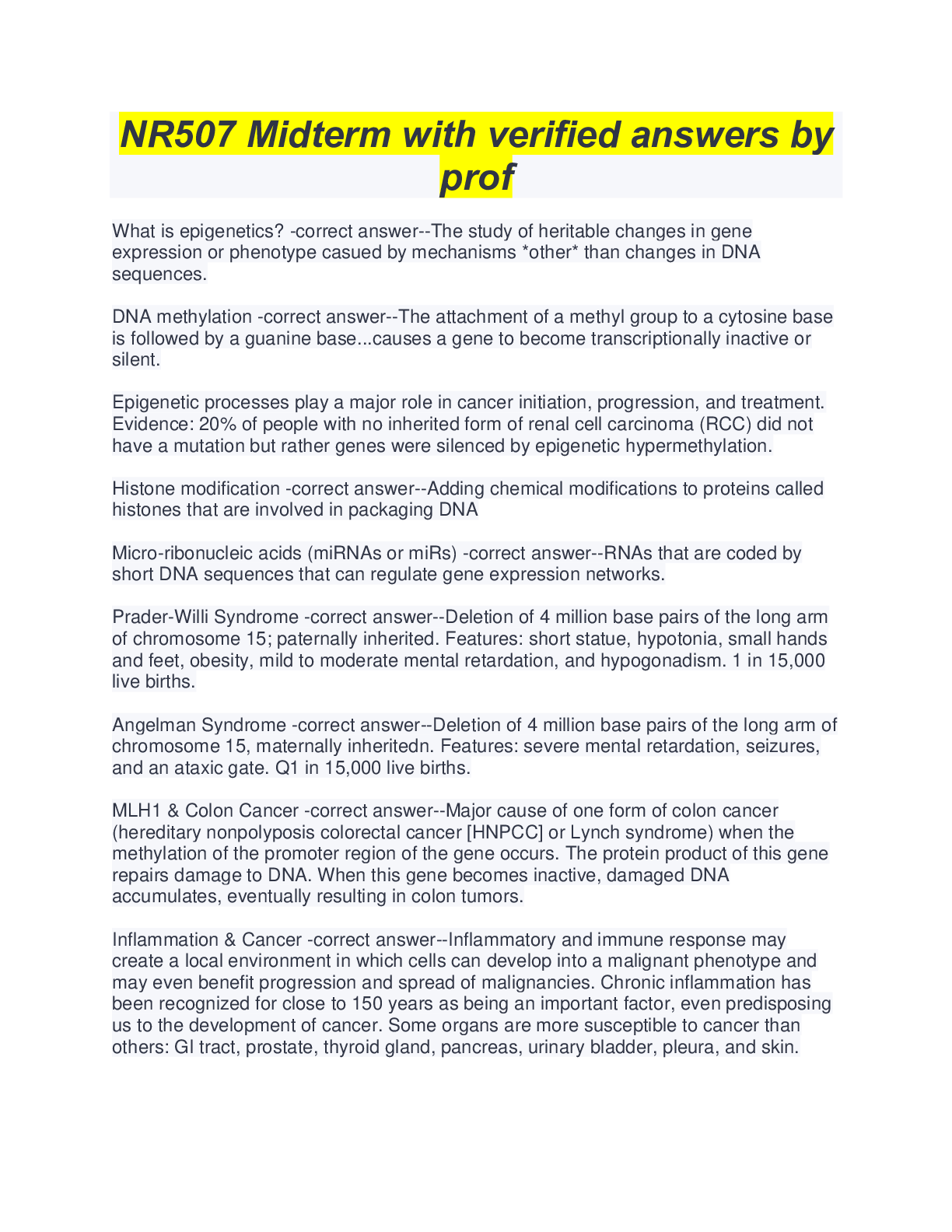
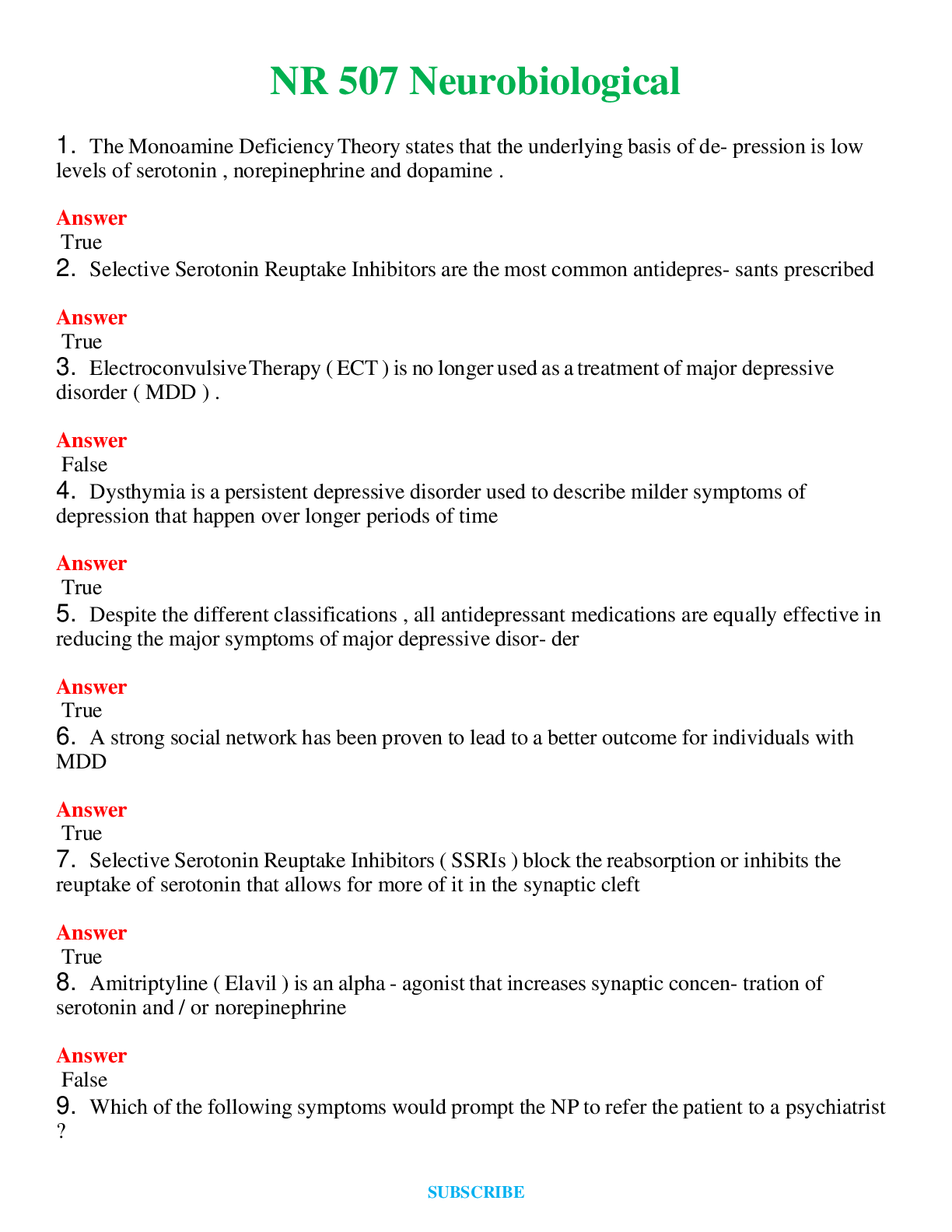
What is epigenetics? -correct answer--The study of heritable changes in gene expression or phenotype casued by mechanisms *other* than changes in DNA sequences. DNA methylation -correct answer--T ... he attachment of a methyl group to a cytosine base is followed by a guanine base...causes a gene to become transcriptionally inactive or silent. Epigenetic processes play a major role in cancer initiation, progression, and treatment. Evidence: 20% of people with no inherited form of renal cell carcinoma (RCC) did not have a mutation but rather genes were silenced by epigenetic hypermethylation. Histone modification -correct answer--Adding chemical modifications to proteins called histones that are involved in packaging DNA Micro-ribonucleic acids (miRNAs or miRs) -correct answer--RNAs that are coded by short DNA sequences that can regulate gene expression networks. Prader-Willi Syndrome -correct answer--Deletion of 4 million base pairs of the long arm of chromosome 15; paternally inherited. Features: short statue, hypotonia, small hands and feet, obesity, mild to moderate mental retardation, and hypogonadism. 1 in 15,000 live births. Angelman Syndrome -correct answer--Deletion of 4 million base pairs of the long arm of chromosome 15, maternally inheritedn. Features: severe mental retardation, seizures, and an ataxic gate. Q1 in 15,000 live births. MLH1 & Colon Cancer -correct answer--Major cause of one form of colon cancer (hereditary nonpolyposis colorectal cancer [HNPCC] or Lynch syndrome) when the methylation of the promoter region of the gene occurs. The protein product of this gene repairs damage to DNA. When this gene becomes inactive, damaged DNA accumulates, eventually resulting in colon tumors. Inflammation & Cancer -correct answer--Inflammatory and immune response may create a local environment in which cells can develop into a malignant phenotype and may even benefit progression and spread of malignancies. Chronic inflammation has been recognized for close to 150 years as being an important factor, even predisposing us to the development of cancer. Some organs are more susceptible to cancer than others: GI tract, prostate, thyroid gland, pancreas, urinary bladder, pleura, and skin. Both cancer and inflammation elicit inflammatory cells including neutrophils, lymphocytes, and macrophages to migrate to the site of injury and release cytokines and growth factors that stimulate local cell proliferation and new blood vessel growth to promote wound healing by tissue remodeling. Chronic inflammation means continued proliferation of the previous inflammatory response. Successful tumors appear capable of manipulating cells of the inflammatory and immune response towards the phenotypes associated with wound healing and tissue regeneration, which is a process that includes induction of cellular proliferation, neovascularization, and local immune suppression. These activities benefit cancer progression, as well as increase resistance to chemotherapeutic agents. Reactive oxygen species (ROS) -correct answer--Promote mutations and block the cellular response to DNA damage COX-2 -correct answer--Generates prostaglandins during acute inflammation. Associated with colon and some other cancers. Long-term high-dose use of NSAIDSs than inhibit COX-2 can reduce the risk of colon cancer by as much as 20%. [Show More]
Last updated: 3 years ago
Preview 1 out of 11 pages
Buy this document to get the full access instantly
Instant Download Access after purchase
Buy NowInstant download
We Accept:
Can't find what you want? Try our AI powered Search
Connected school, study & course
About the document
Uploaded On
Sep 23, 2022
Number of pages
11
Written in
All
This document has been written for:
Uploaded
Sep 23, 2022
Downloads
0
Views
62
Scholarfriends.com Online Platform by Browsegrades Inc. 651N South Broad St, Middletown DE. United States.
We're available through e-mail, Twitter, and live chat.
FAQ
Questions? Leave a message!
Copyright © Scholarfriends · High quality services·