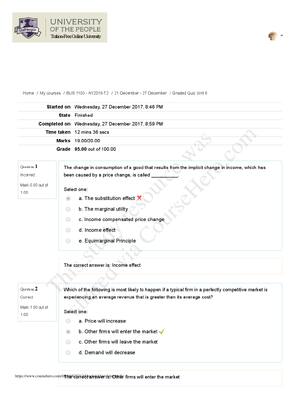
Biology > QUESTIONS & ANSWERS > BIO 130 Solar Energy Lab Quiz | Arizona State University (All)
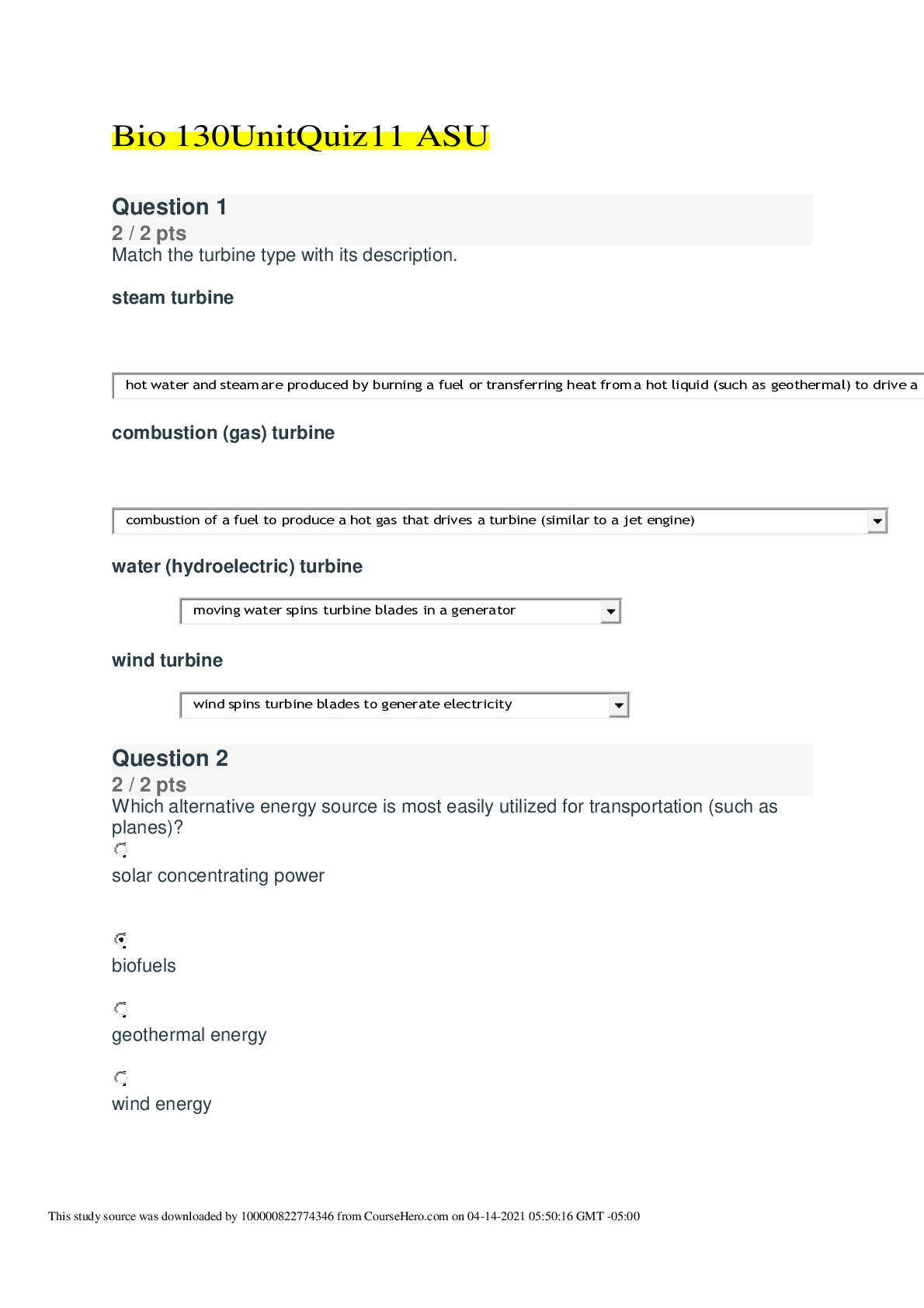
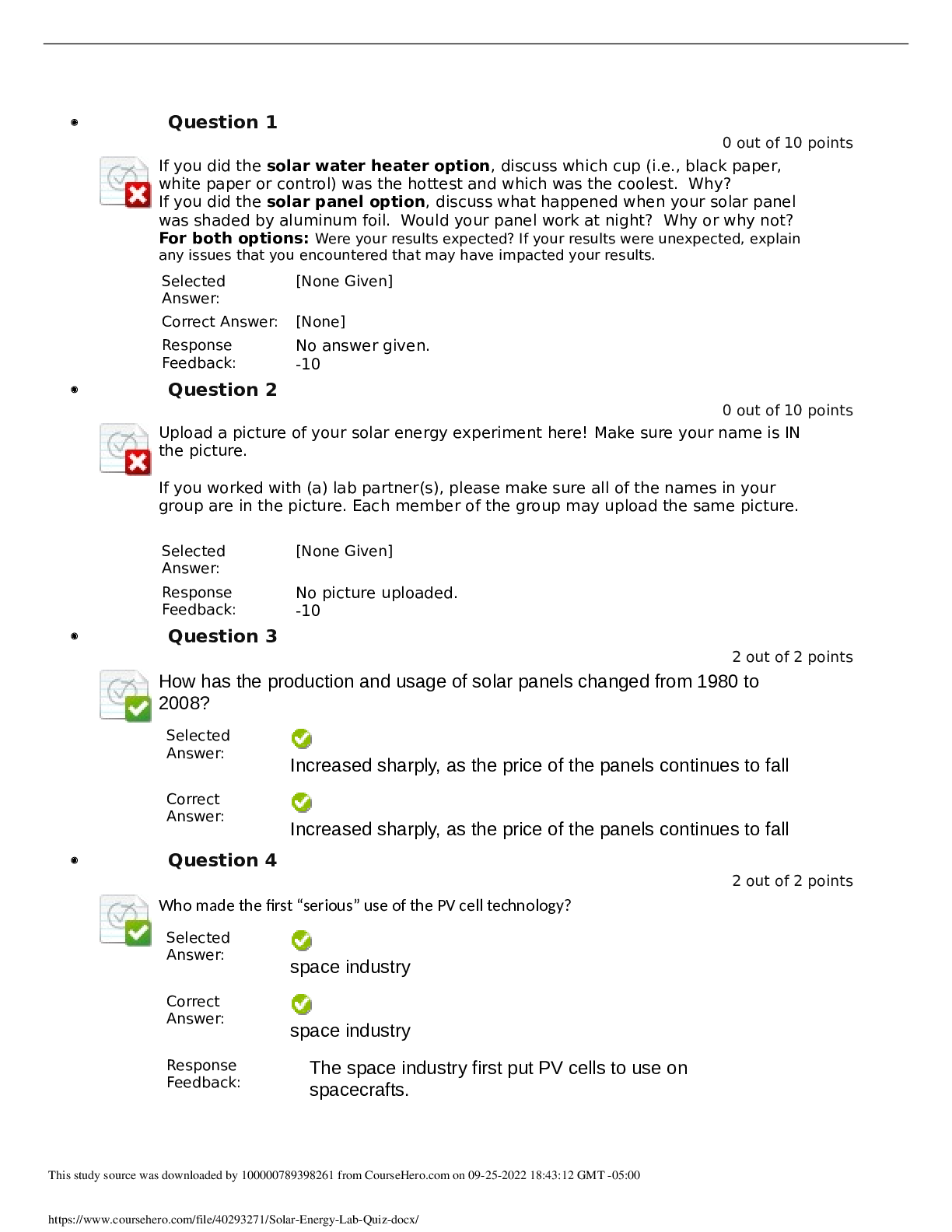
BIO 130 Solar Energy Lab Quiz | Arizona State University
Document Content and Description Below
Last updated: 2 years ago
Preview 1 out of 4 pages
Instant download
Buy this Document to get the Full Access Instantly
Provided by Students Who Aced it
We Verify Document Content to Gurantee Accuracy
Also available in bundle (1)
Click Below to Access Bundle(s)

Arizona State University BIO 130 Exams, Lab Quizzes, and Extra Credit. Questions and Answers
Arizona State University BIO 130 Intro to Environm BIO 130 Exam 3. Arizona State University BIO 130 Understanding Population Growth Models Arizona State University BIO 130 Interacting Earth Sphe...
By QuizMaster 4 years ago
$41.5
10
Reviews( 0 )
Document information
Connected school, study & course
About the document
Uploaded On
Sep 26, 2022
Number of pages
4
Written in
All

Additional information
This document has been written for:
Uploaded
Sep 26, 2022
Downloads
0
Views
236
Topic Tags
Recommended For You
Get more on QUESTIONS & ANSWERS »
BIO 130 Extra Credit- Isle Royale Lab Quiz | Arizona State Uni...


BIO 130 Physical and Chemical Properties of Soil Lab Quiz | Ar...

BIO 130 Fossil Fuels & GCC Lab Quiz | Arizona State University

BIO 130 Keystone Predator Lab Quiz | Arizona State University

BIO 130 Intermediate Disturbance Hypothesis Lab Quiz | Arizon...

BIO 130 Interacting Earth Spheres Quiz | Arizona State Univers...
BIO 130 Intro to Environment Exam 3 50 Q&A | Arizona State Un...
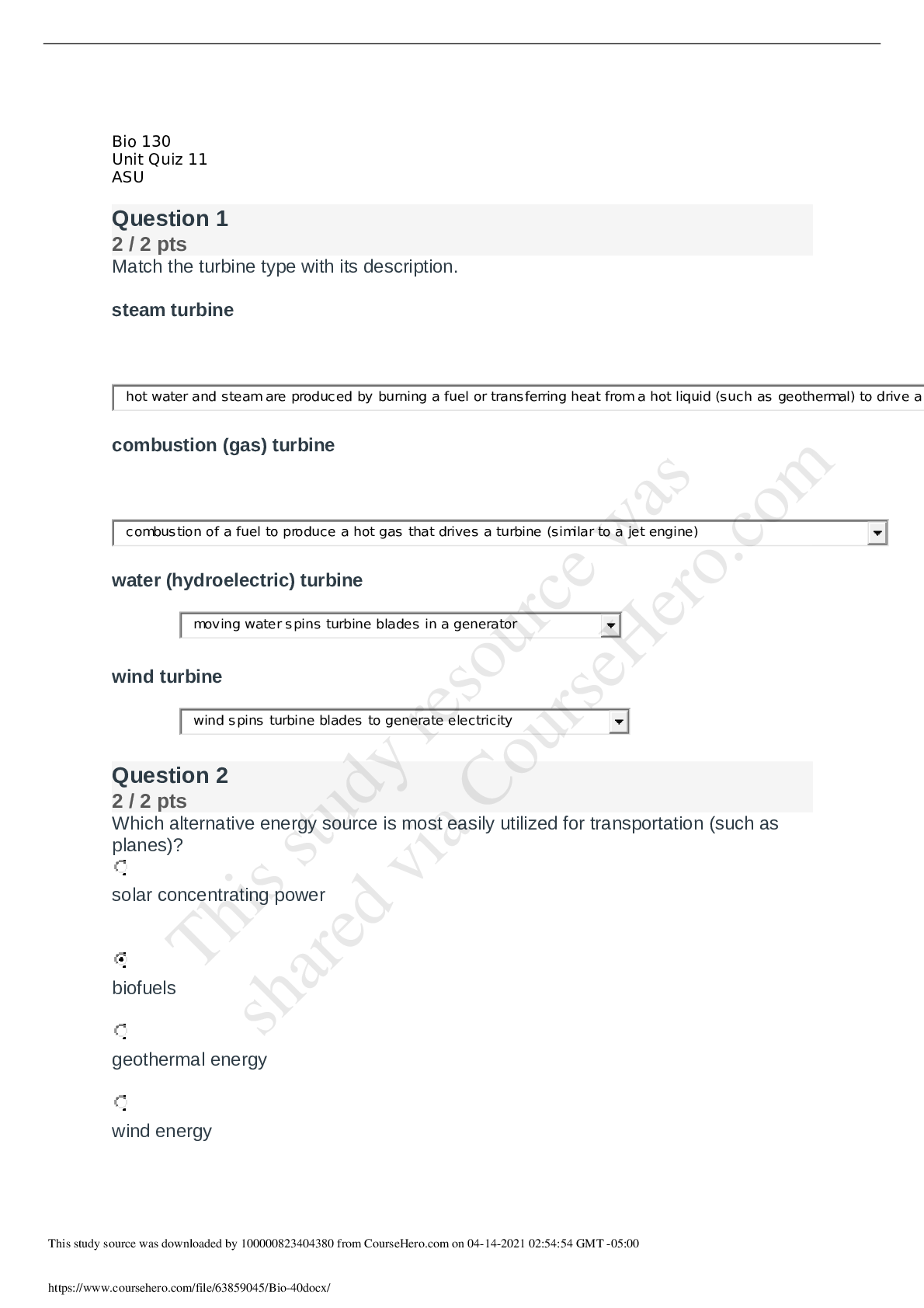
Bio 130 Unit Quiz 11 ASU>Arizona State University - BIO 130Bio...
 Correct Study Guide, Download to Score A.png)
Arizona State University - BIO 130 Exam 3 (Latest 2021) Correc...
 Correct Study Guide, Download to Score A.png)
Arizona State University - BIO 130 Exam 2 (Latest 2021) Correc...
 Correct Study Guide, Download to Score A.png)
Arizona State University - BIO 130 Exam 1 (Latest 2021) Correc...
Arizona State University - BIO 130 Exam 2 (Latest 2021) Correc...
 Correct Study Guide, Download to Score A.png)
Arizona State University - BIO 130 Exam 4 (Latest 2021) Correc...
Arizona State University - BIO 130 Exam 3 (Latest 2021) Correc...
Arizona State University - BIO 130 Exam 1 (Latest 2021) Correc...
Arizona State University - BIO 130 Exam 3 (Latest 2021) Correc...