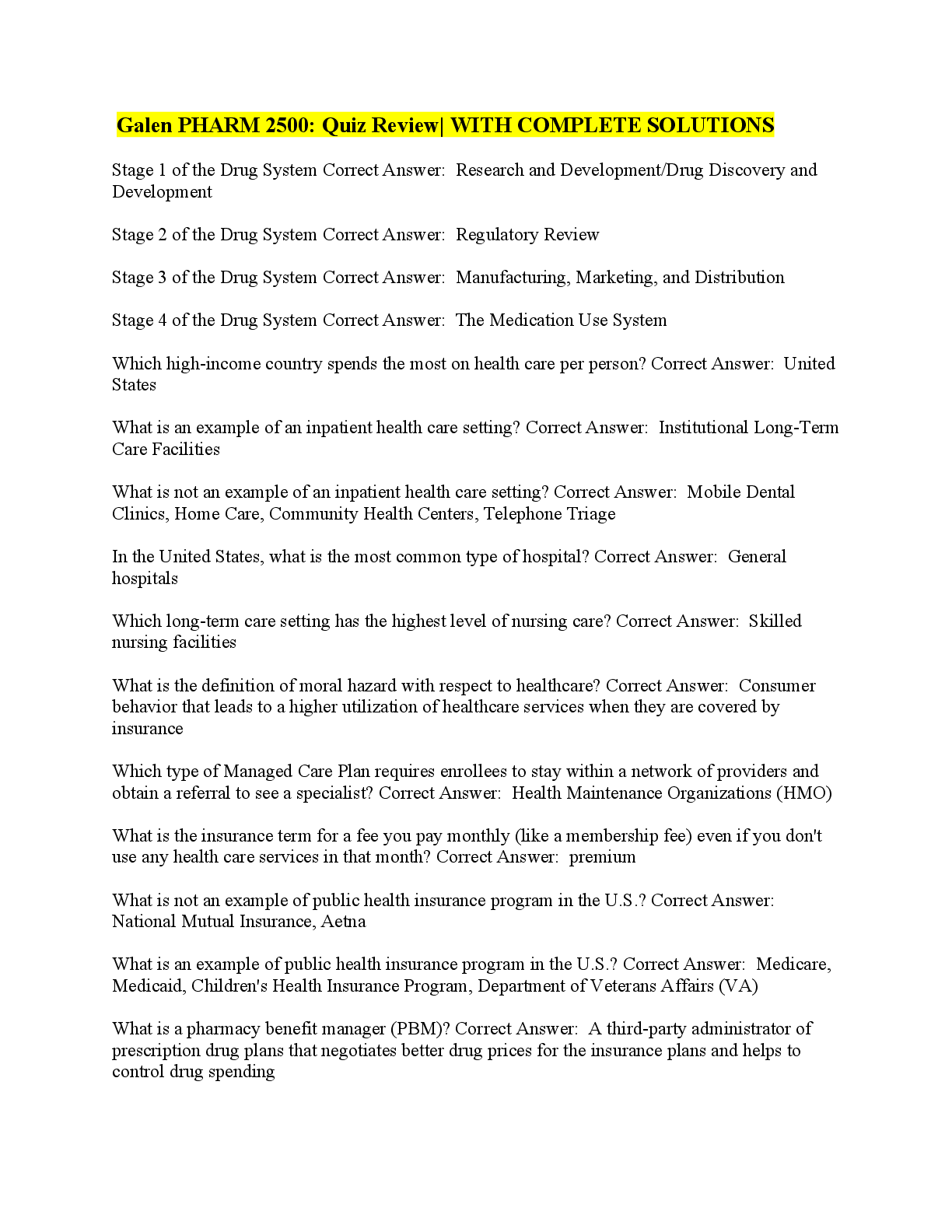
BIO 245 Exam 1 Study Guide
Document Content and Description Below
Allele Correct Answer: An alternative form of a gene.
Anaphase Correct Answer: 3rd stage of Mitosis where the spindle fibers move towards opposite poles.
Annealing Correct Answer: the process in which two comple
...
[Show More]
Last updated: 4 years ago
Preview 1 out of 10 pages
Instant download
Buy this Document to get the Full Access Instantly
Provided by Students Who Aced it
We Verify Document Content to Gurantee Accuracy
Reviews( 0 )
Document information
Connected school, study & course
About the document
Uploaded On
Sep 28, 2022
Number of pages
10
Written in
All

Additional information
This document has been written for:
Uploaded
Sep 28, 2022
Downloads
0
Views
108
Topic Tags
Recommended For You
Get more on EXAM »
$10
5 Pages
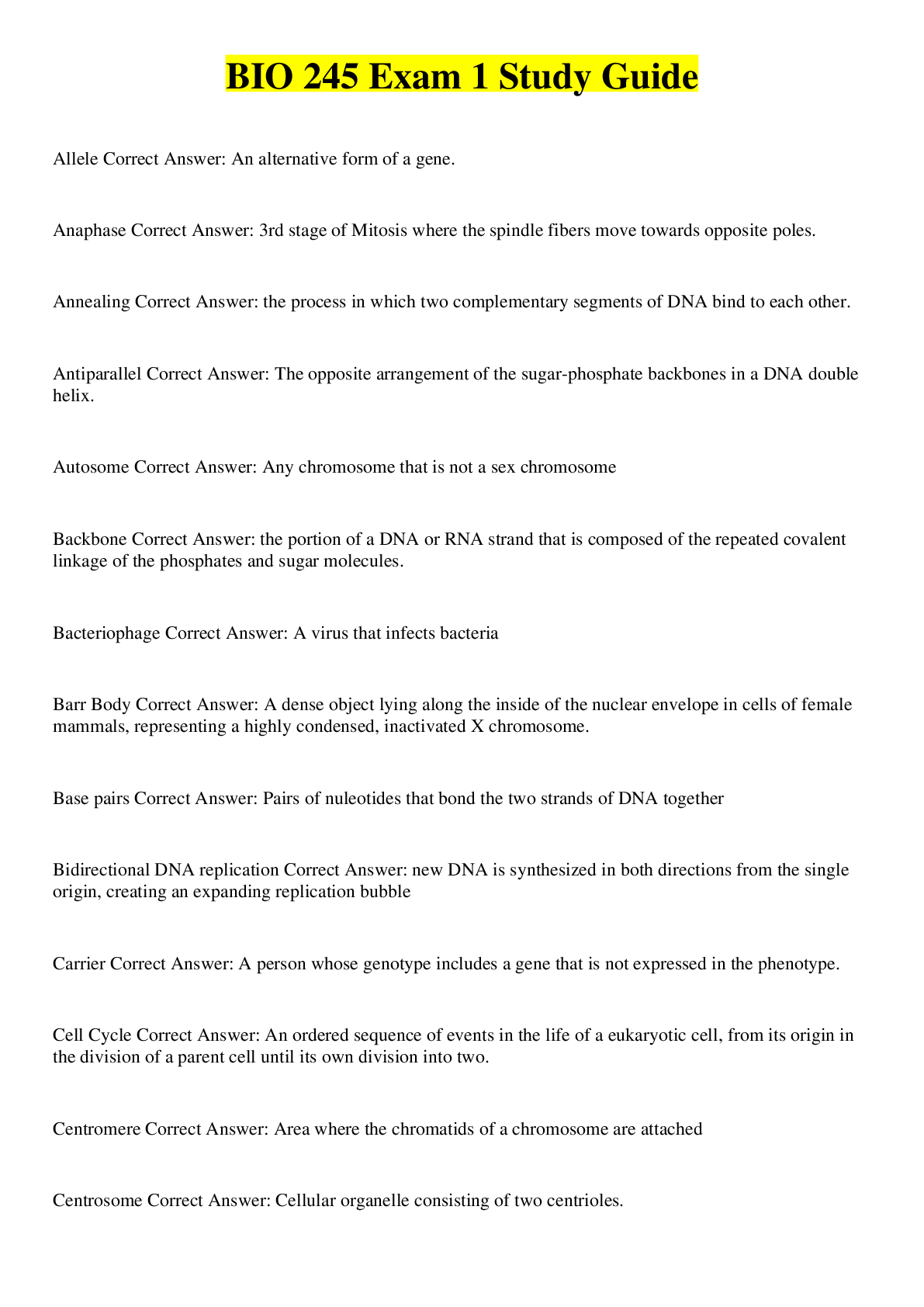
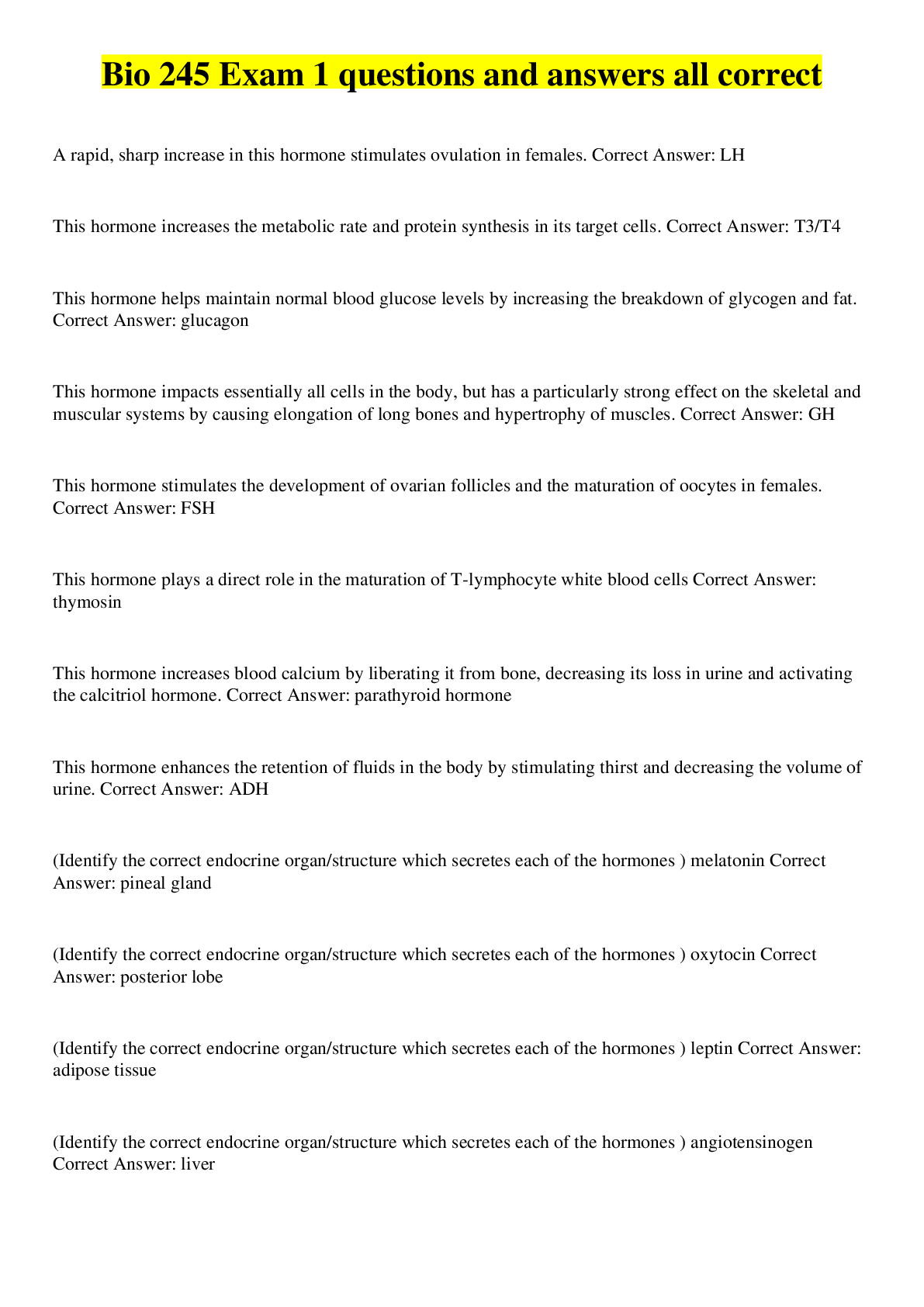
BIO 245 Test 1 Connect Questions and answers 100% correct

$10
7 Pages
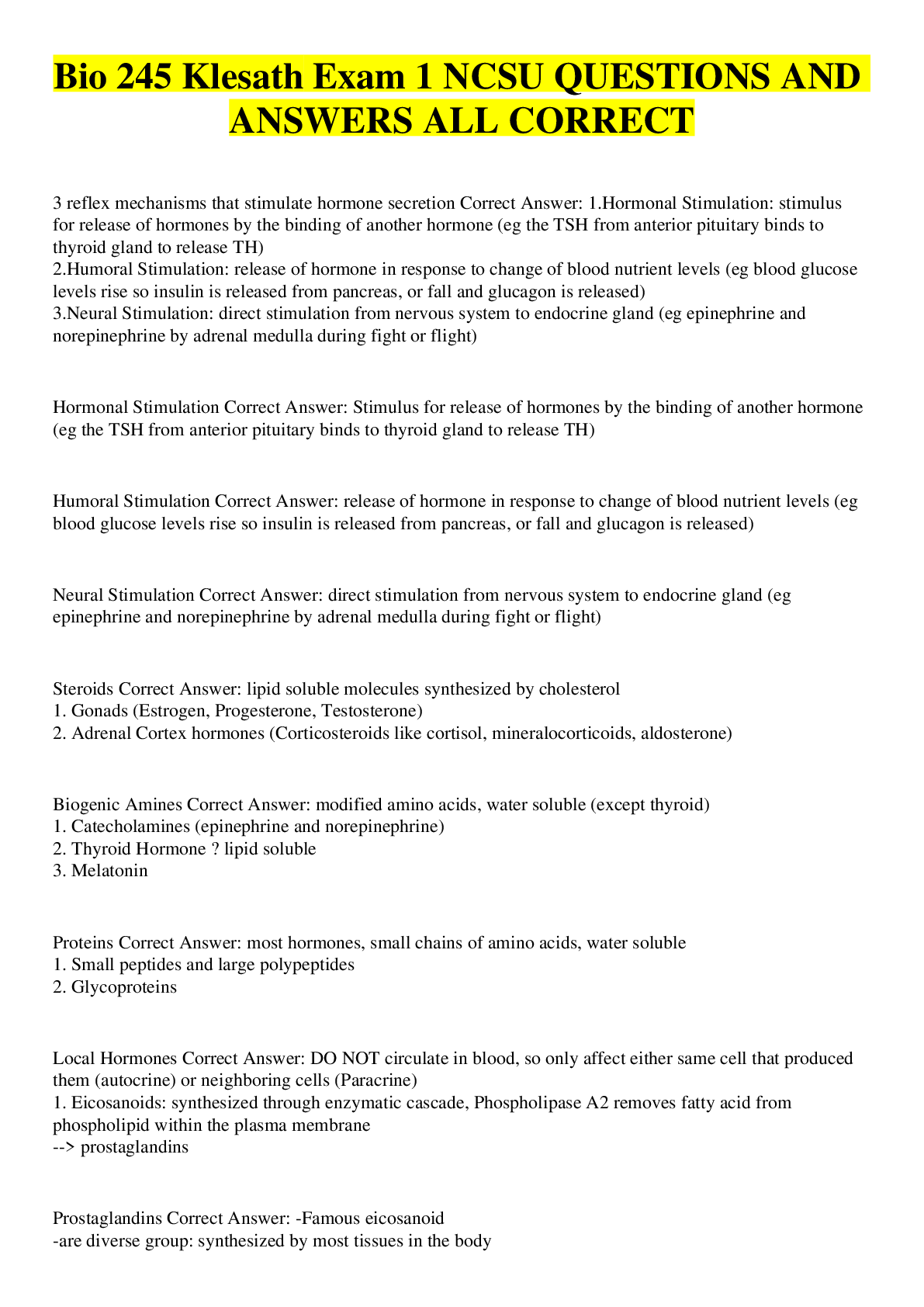
Bio 245 Klesath Exam 1 NCSU QUESTIONS AND ANSWERS ALL CORRECT
$17
10 Pages
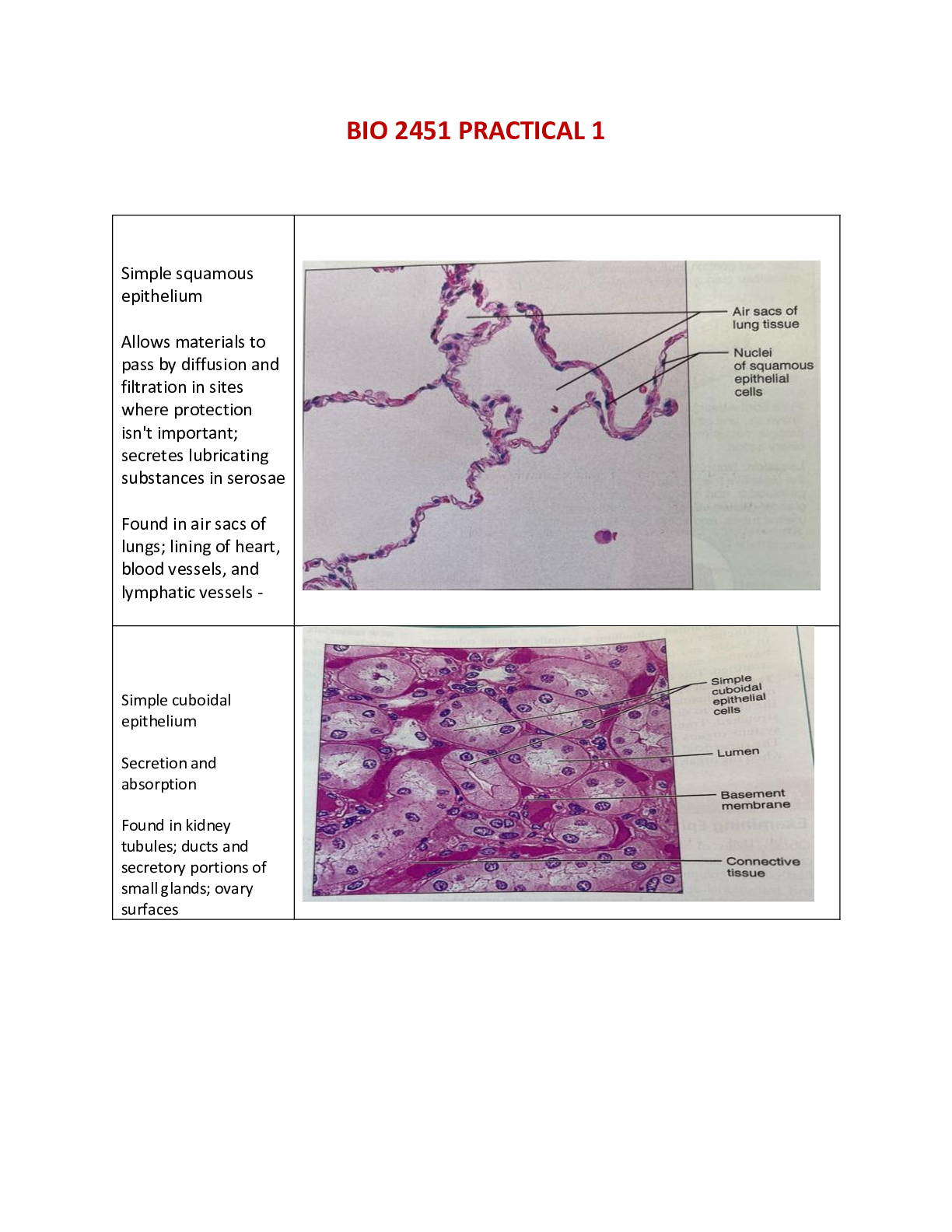
BIO 2451 ANATOMY AND PHYSIOLOGY I - PRACTICAL 1 EXAM, SPRING...
More related documents below