PMT 252 Mod 4
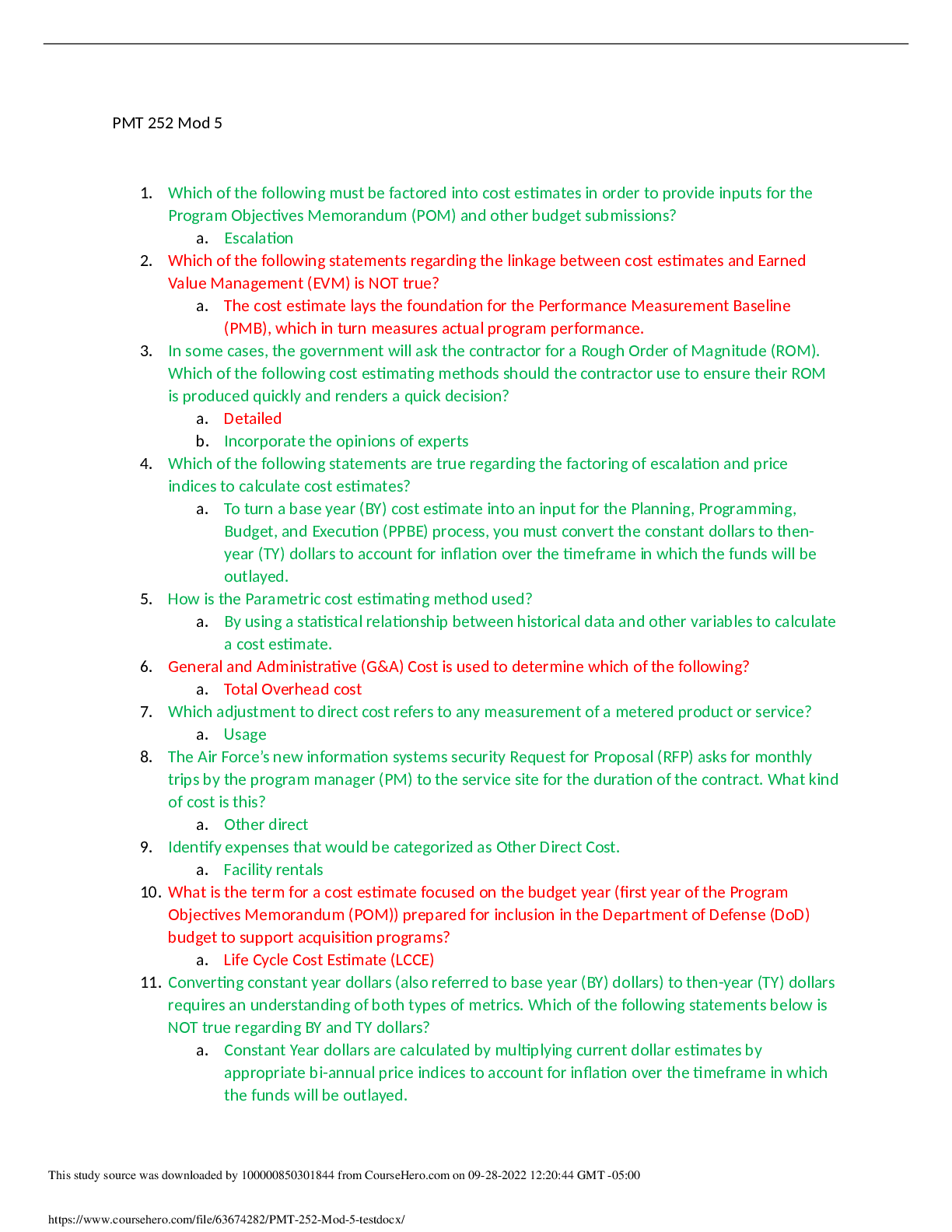
1. Which of the following is a viable solution to a schedule resource constraint?
a. Conducting some task concurrently
b. Substituting resources
2. Consider the differences between a time-constrained sc
...
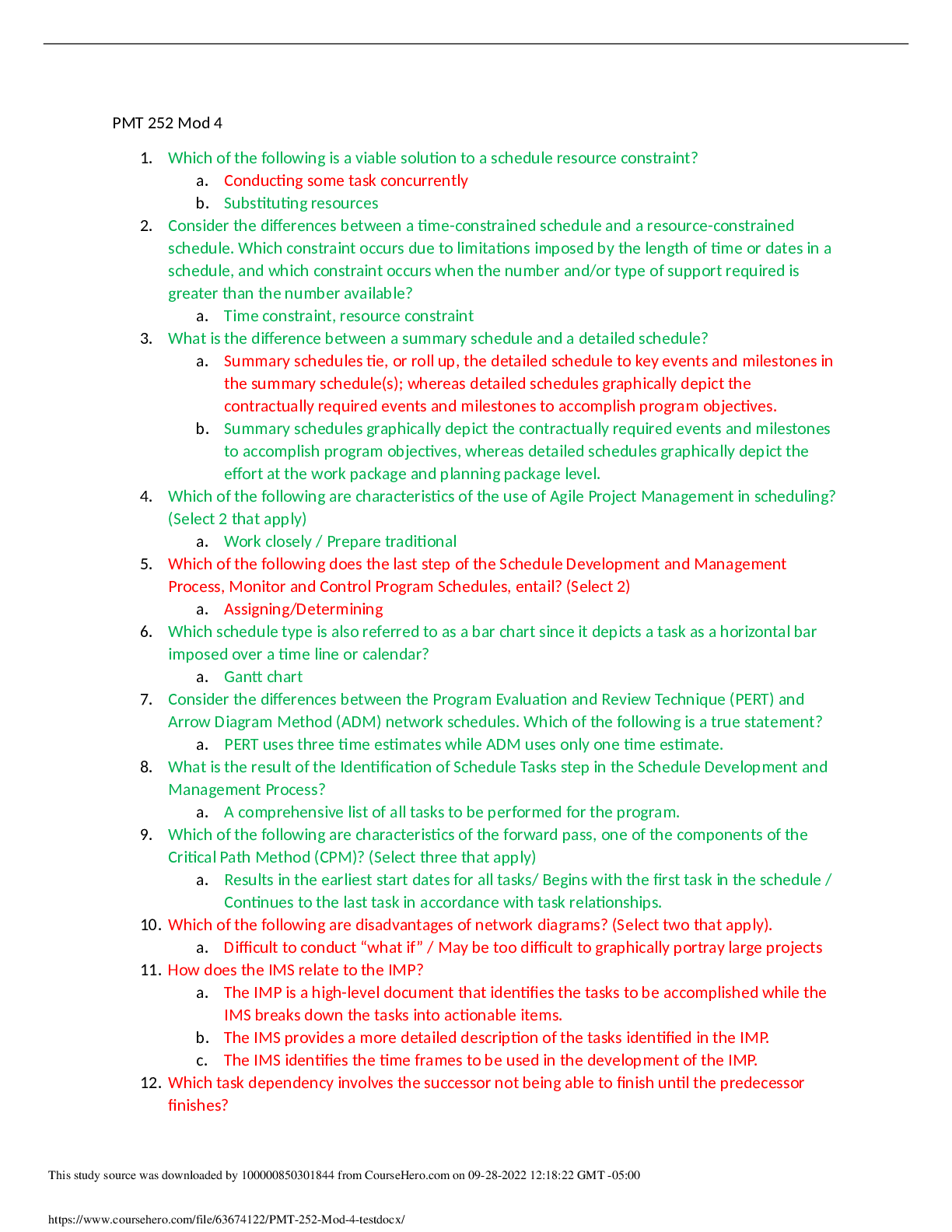
PMT 252 Mod 4
1. Which of the following is a viable solution to a schedule resource constraint?
a. Conducting some task concurrently
b. Substituting resources
2. Consider the differences between a time-constrained schedule and a resource-constrained
schedule. Which constraint occurs due to limitations imposed by the length of time or dates in a
schedule, and which constraint occurs when the number and/or type of support required is
greater than the number available?
a. Time constraint, resource constraint
3. What is the difference between a summary schedule and a detailed schedule?
a. Summary schedules tie, or roll up, the detailed schedule to key events and milestones in
the summary schedule(s); whereas detailed schedules graphically depict the
contractually required events and milestones to accomplish program objectives.
b. Summary schedules graphically depict the contractually required events and milestones
to accomplish program objectives, whereas detailed schedules graphically depict the
effort at the work package and planning package level.
4. Which of the following are characteristics of the use of Agile Project Management in scheduling?
(Select 2 that apply)
a. Work closely / Prepare traditional
5. Which of the following does the last step of the Schedule Development and Management
Process, Monitor and Control Program Schedules, entail? (Select 2)
a. Assigning/Determining
6. Which schedule type is also referred to as a bar chart since it depicts a task as a horizontal bar
imposed over a time line or calendar?
a. Gantt chart
7. Consider the differences between the Program Evaluation and Review Technique (PERT) and
Arrow Diagram Method (ADM) network schedules. Which of the following is a true statement?
a. PERT uses three time estimates while ADM uses only one time estimate.
8. What is the result of the Identification of Schedule Tasks step in the Schedule Development and
Management Process?
a. A comprehensive list of all tasks to be performed for the program.
9. Which of the following are characteristics of the forward pass, one of the components of the
Critical Path Method (CPM)? (Select three that apply)
a. Results in the earliest start dates for all tasks/ Begins with the first task in the schedule /
Continues to the last task in accordance with task relationships.
10. Which of the following are disadvantages of network diagrams? (Select two that apply).
a. Difficult to conduct “what if” / May be too difficult to graphically portray large projects
11. How does the IMS relate to the IMP?
a. The IMP is a high-level document that identifies the tasks to be accomplished while the
IMS breaks down the tasks into actionable items.
b. The IMS provides a more detailed description of the tasks identified in the IMP.
c. The IMS identifies the time frames to be used in the development of the IMP.
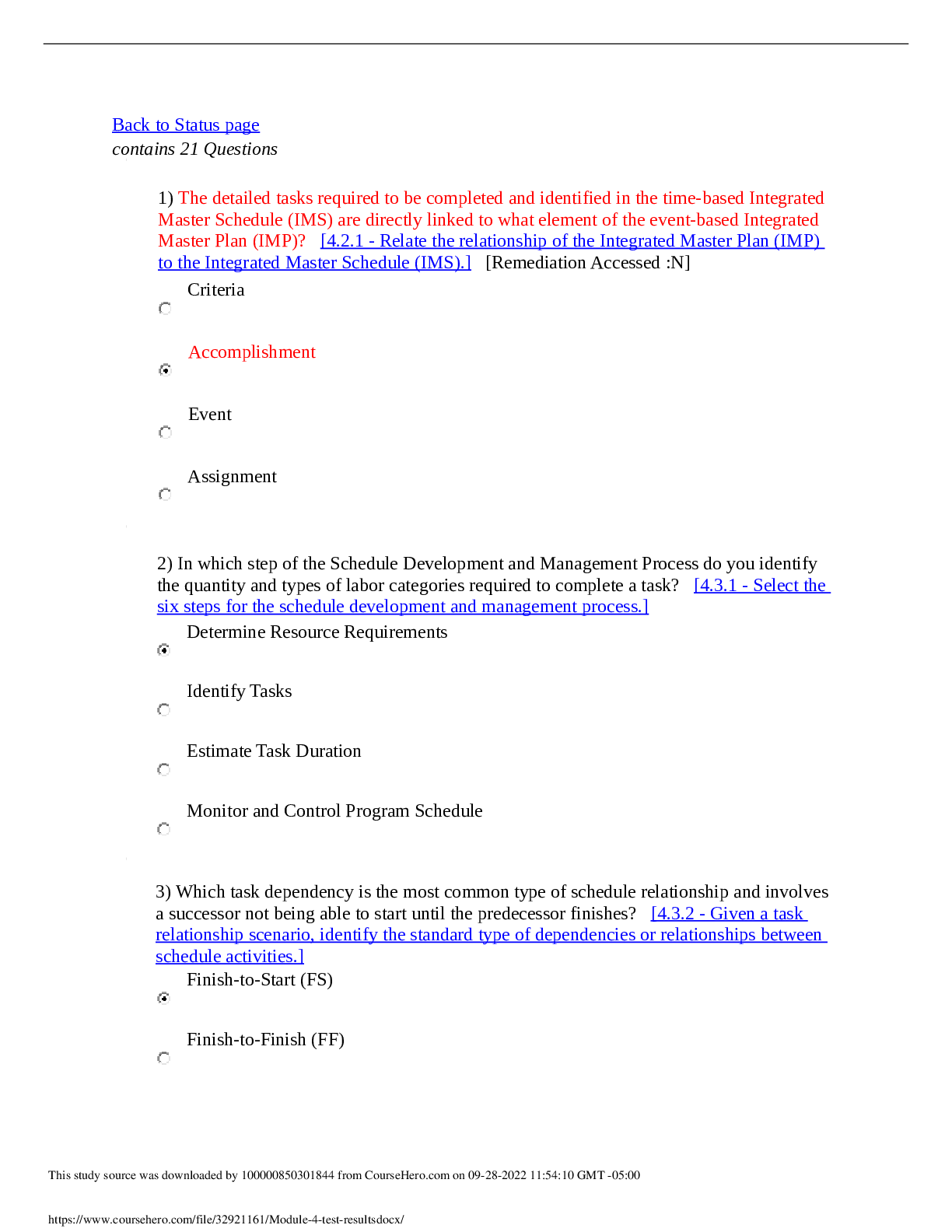
12. Which task dependency involves the successor not being able to finish until the predecessor
finishes?
b. Finish-to-Start
13. In the Precedence Diagramming Method (PDM) schedule, the critical path is delineated by red
bars, float/slack are identified in the Total Slack and Free Slack columns, and the earliest and
latest start and finish dates are identified in which of the following?
a. Start and Finish columns
14. Which schedule duration estimating method considers the optimistic estimate, the pessimistic
estimate, and the most likely estimates?
a. Three-point estimate
15. A new team leader thinks that there are too many links in the schedule. So, he decides to
remove many of them in attempts to shorten the schedule and make it simpler. What he fails to
realize, however, is that most of the links were valid; as a result of his hasty changes, his program
is now delayed. Which of following causes for schedule risks and delays is being described?
a. Inability to change the number of tasks.
b. Incorrect schedule relationships or logic
16. How are schedules in a schedule change management system similar to project elements under
configuration management (CM)?
a. In both a schedule change management system and CM, each version needs to be
managed, controlled, and constantly monitored.
17. Prior to using the 14-Point Schedule Metrics, the total number of tasks with detail level work
(i.e., lowest level discrete tasks) needs to be calculated. This describes which of the following
data types?
a. Baseline Count
b. Total tasks
18. In a Gantt chart, which of the following is signified as a simple, solid bar with distinct start and
finish designators?
a. Summary Task
19. What are the first three steps in the process for building a Precedence Diagramming Method
(PDM) schedule?
a. Sequence the tasks, identify the tasks, and estimate task durations
20. Which of the following is a viable solution to schedule time constraint issues?
a. Accepting a shorter length of time for the project.
21. Which 14-Point Schedule metric measures the number of incomplete tasks with a total float
greater than 44 working days?
a. High Float
22. Which schedule time constraint solution is best used when the project has some flexibility in the
end date and a long time to complete the project can be accommodated?
a. Accepting a longer length of time for the project.
23. In which step of the Schedule Development and Management Process do you identify the
quantity and types of labor categories required to complete a task?
a. Determine Resource Requirements
24. Which of the following is valid guideline towards maintaining a good schedule change
management system?
a. Establish the process for submitting, evaluating, and approving changes.
[Show More]