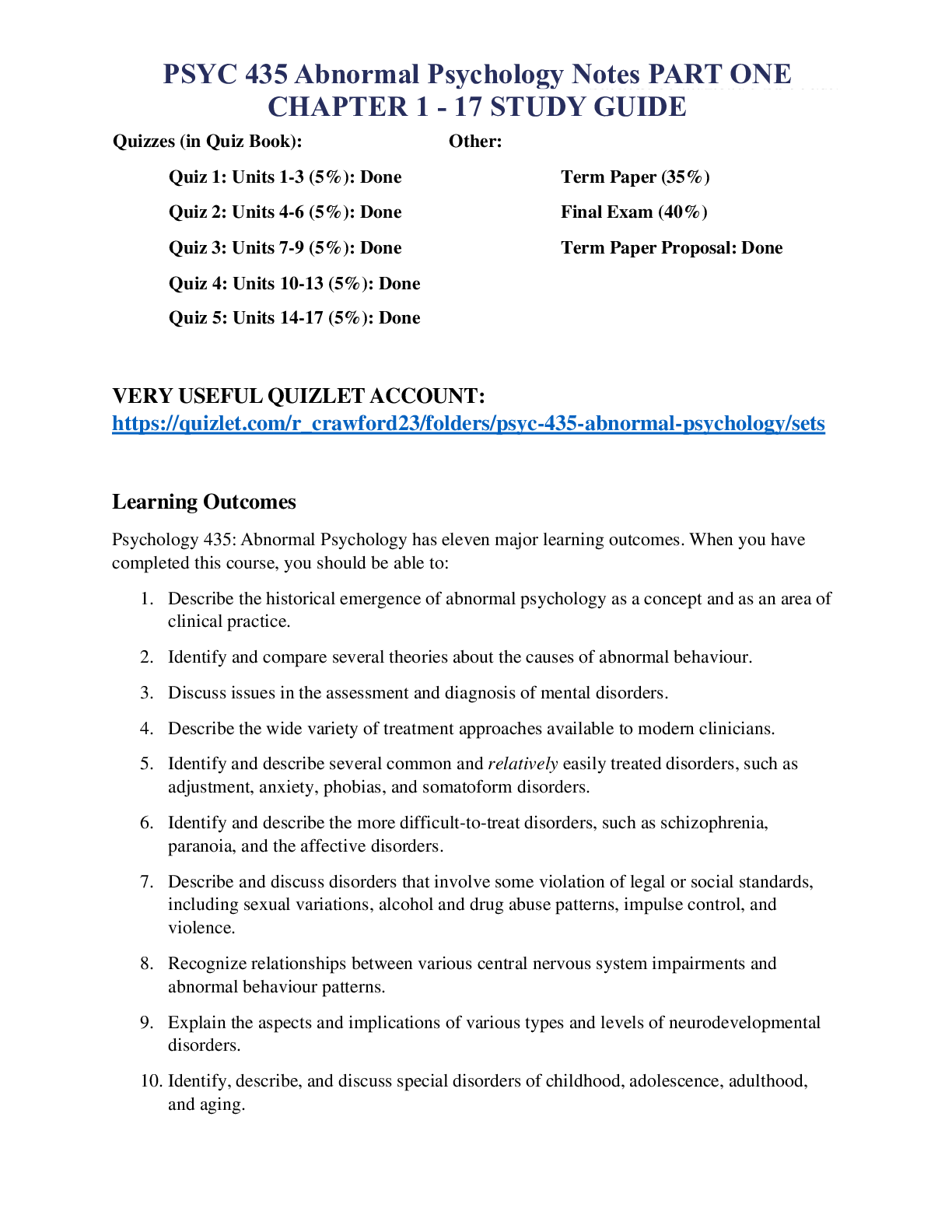
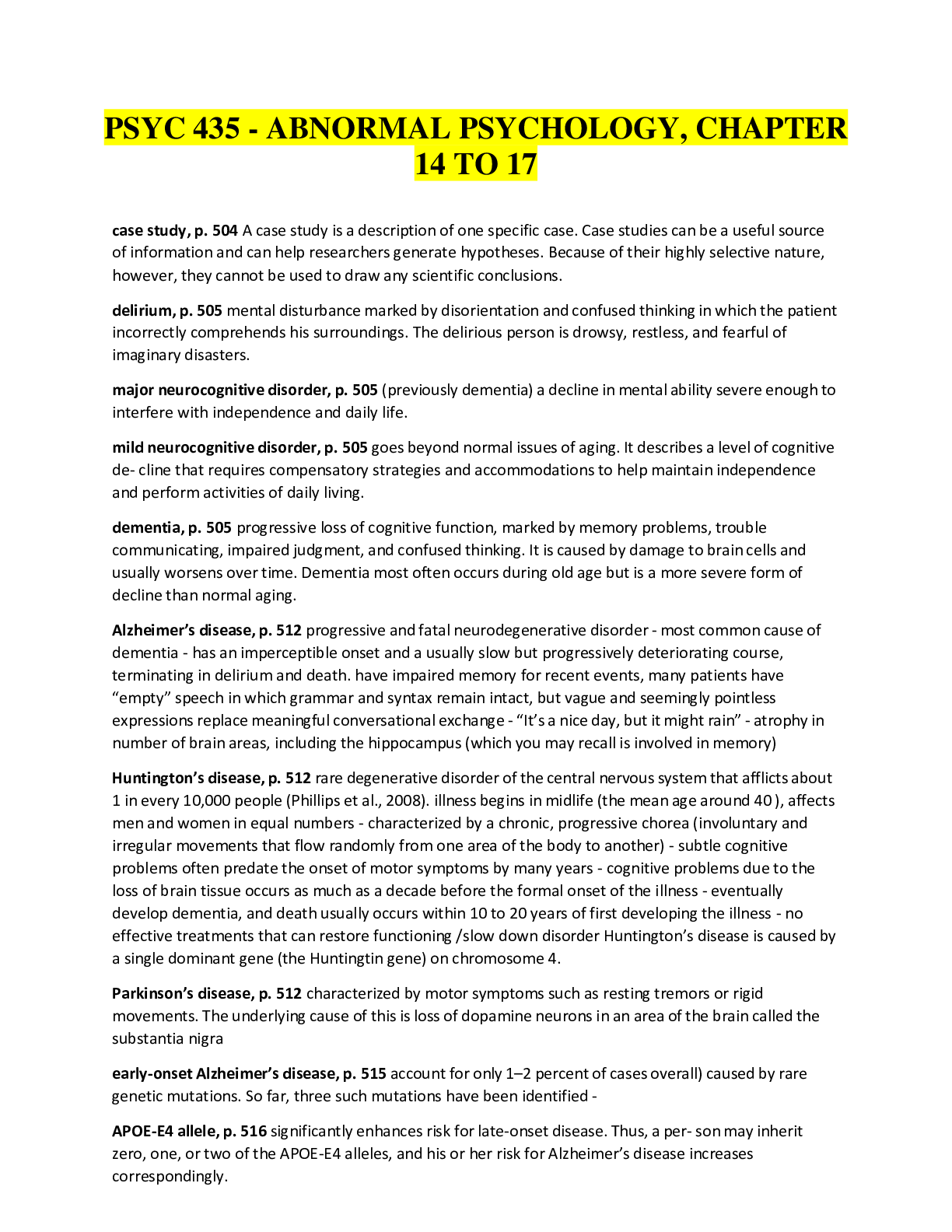
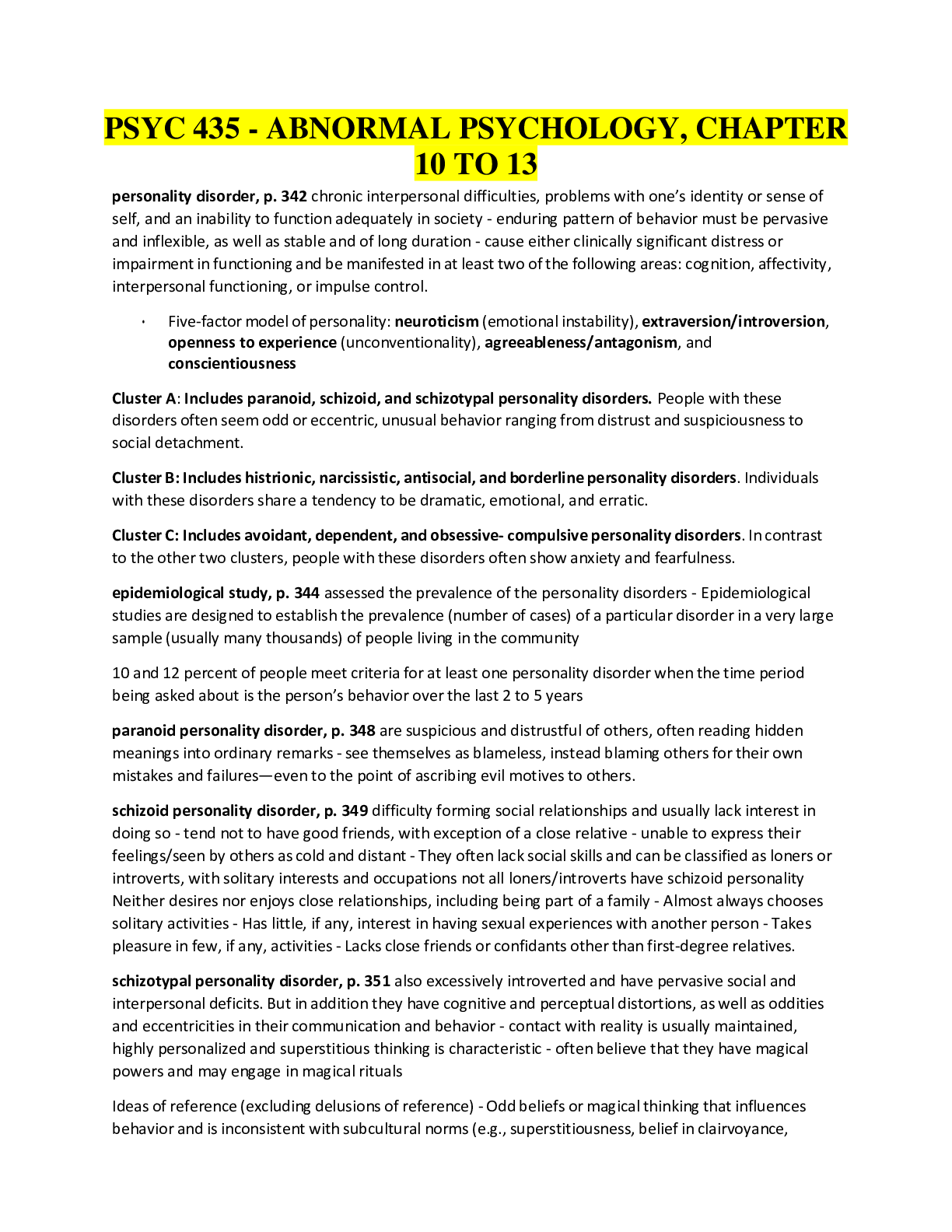
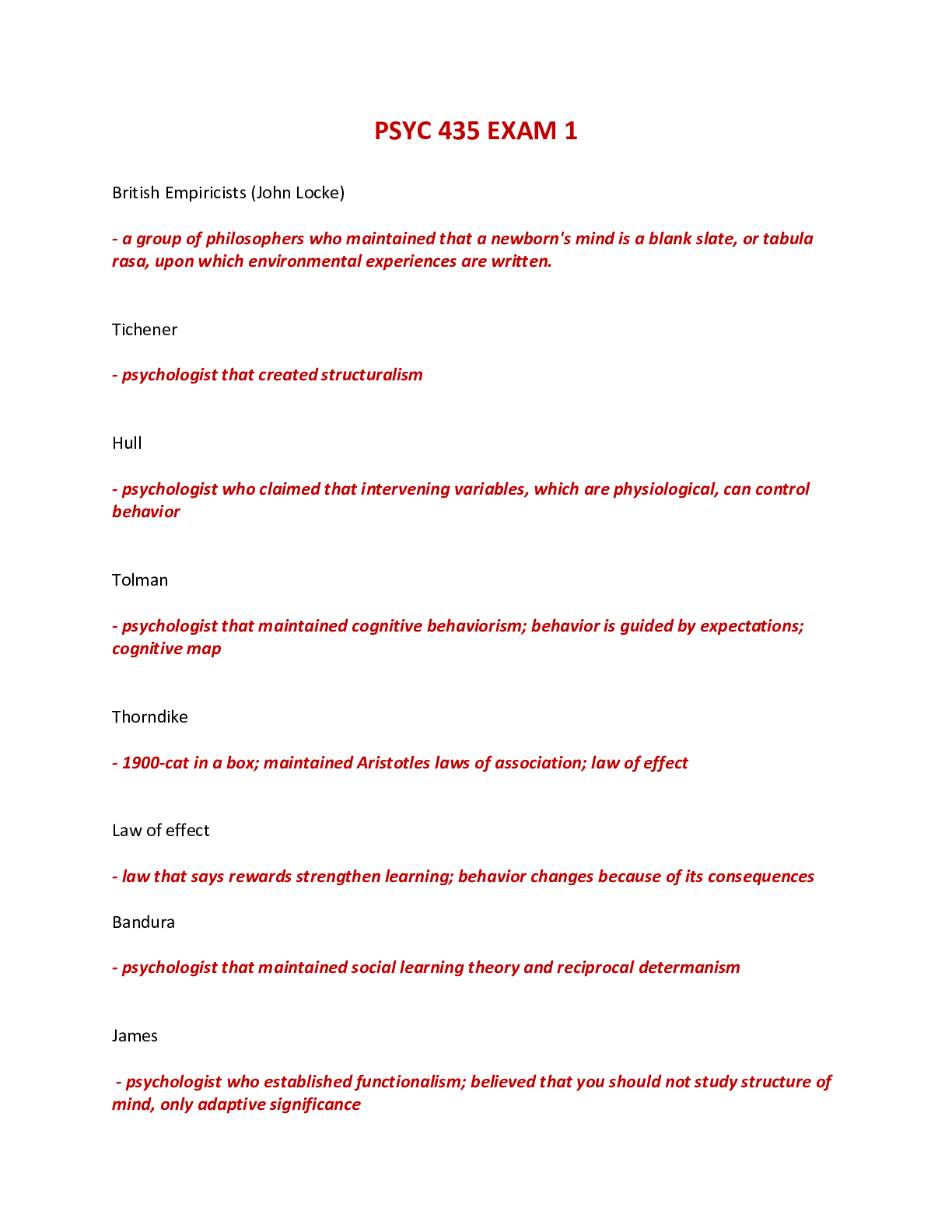
Psychology > STUDY GUIDE > PSYC 435 Abnormal Psychology Notes PART ONE CHAPTER 1 - 17 STUDY GUIDE (All)
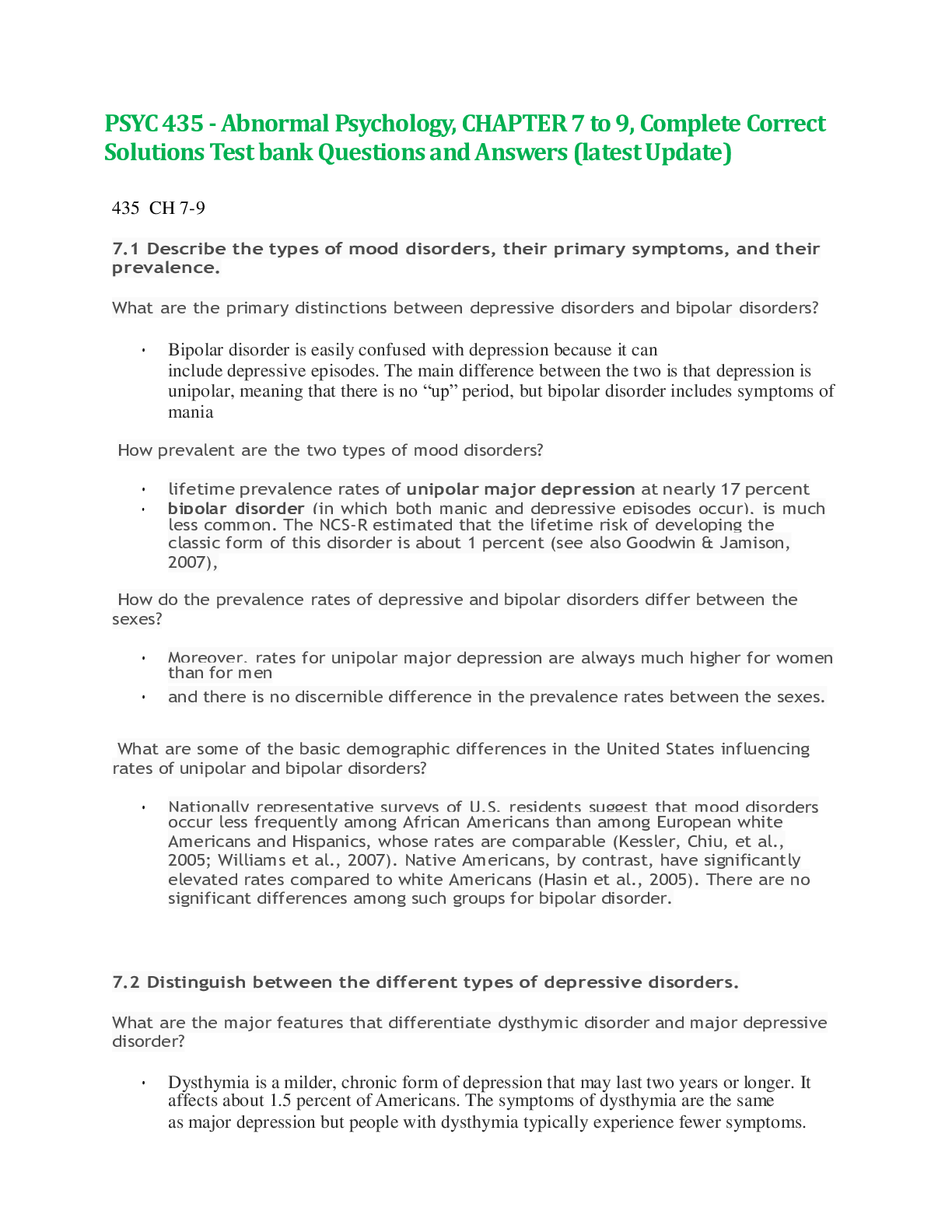
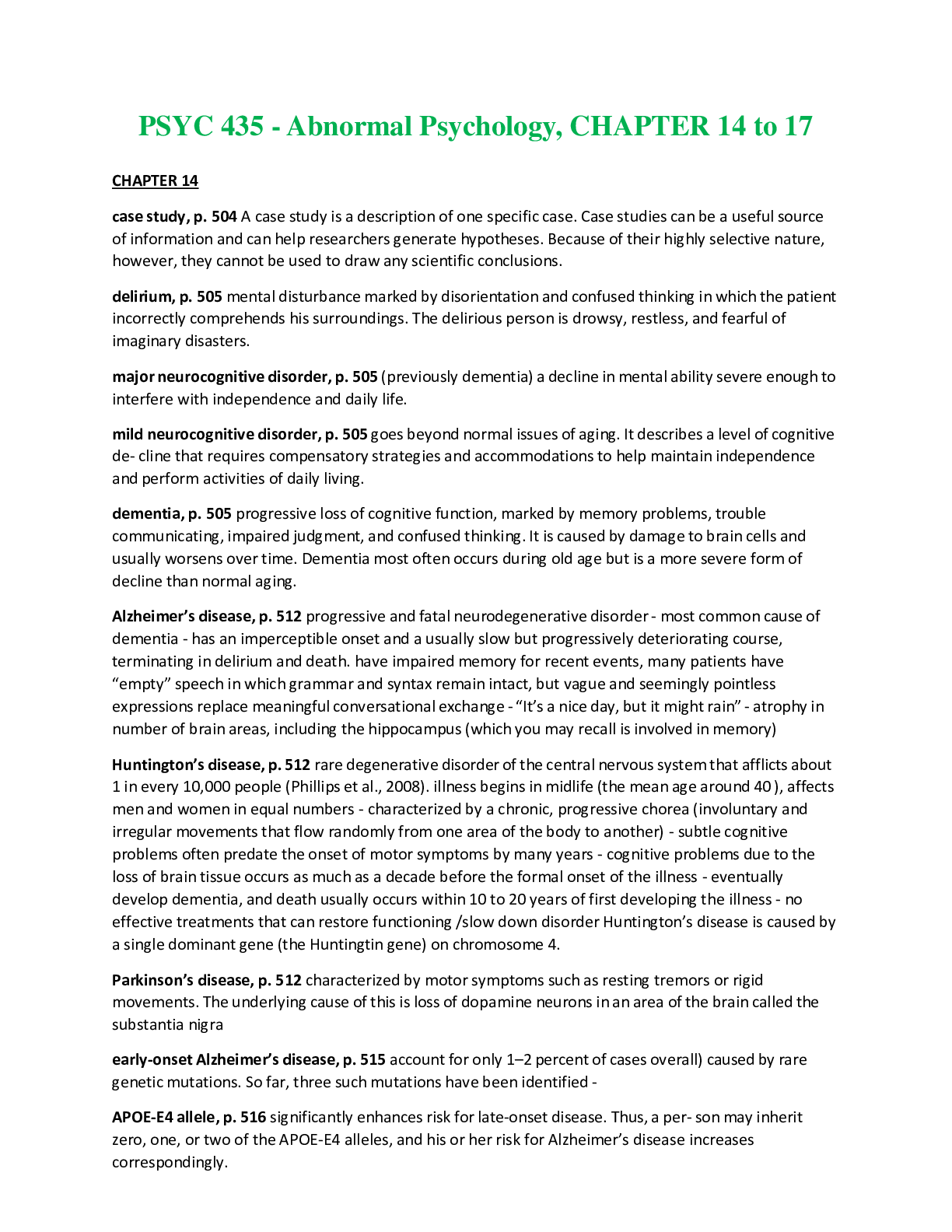
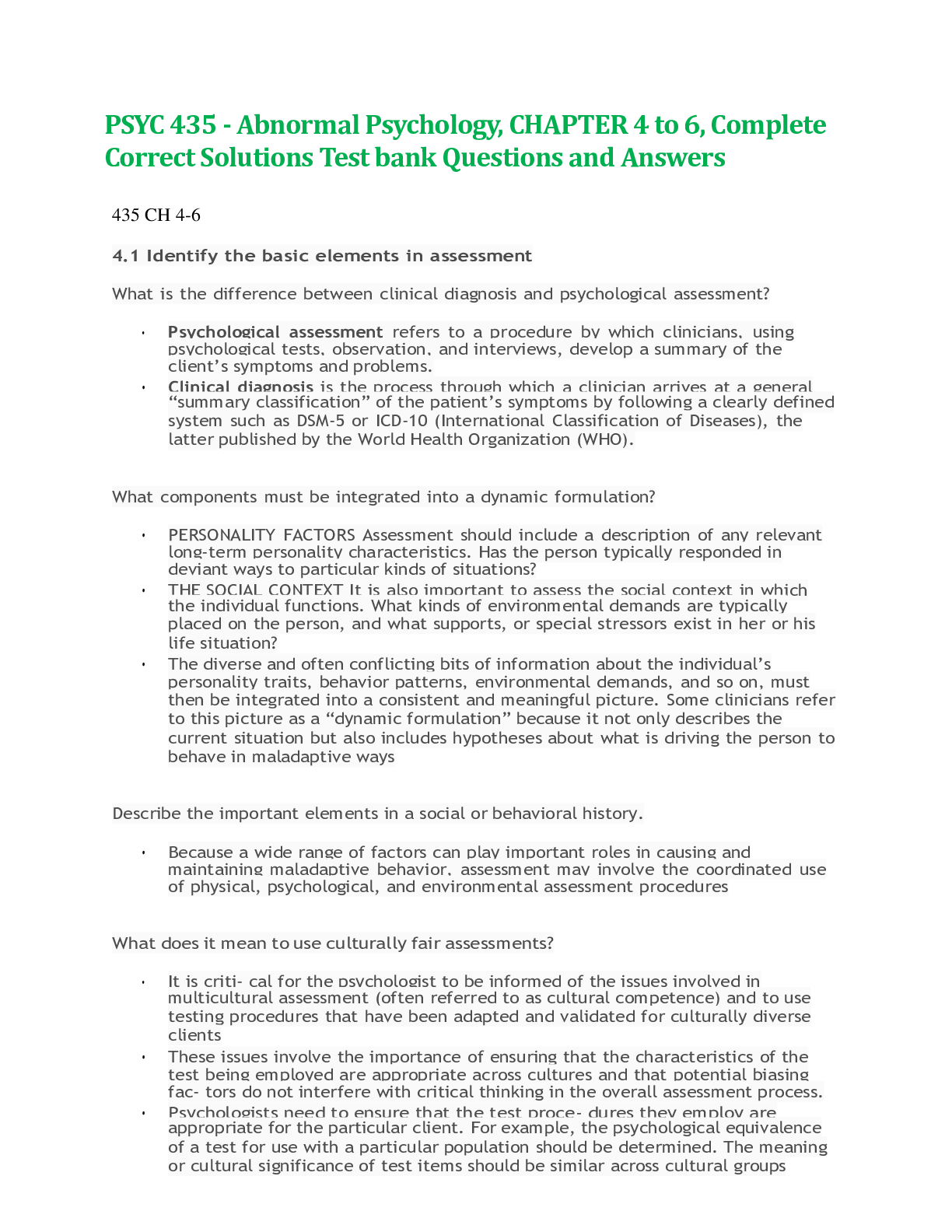
Unit 1: A. Discuss common topics and issues relevant to Abnormal Psychology. drug or alcohol problem, a suicide, an eating disorders, or psychological difficulty, addiction problems with d ... epression, schizophrenia, postpartum difficulties, eating disorders, depression questions that will enable us to help patients and families w/ mental disorders heart of a research-based approach that looks to use scientific inquiry and careful observation to understand abnormal psychology B. Explain why we need to classify mental disorders. Because all classifications play a roll on their own but can also be connected. One example could be considered a mental disorder but in a different context could be normal To have a common language between clinicians and bc culture shifts over time/these disorders may change or no longer be considered as disorders Most sciences rely on classification - provide us with a nomenclature (a naming system) common language and shorthand terms for complex clinical conditions Structure - classification systems typically place diagnoses commonalities (panic disorder, specific phobia, and agoraphobia = fear anxiety based) Classification facilitates research, which gives us more information and facilitates greater understanding. Classify which types of psychological difficulties warrant insurance reimbursement and the extent of such reimbursement. C. Explain the DSM definition of mental disorders. DSM: accepted standard for defining various types of mental disorders - descriptions, lists of symptoms to diagnose mental disorders. Provides clinicians with specific diagnostic criteria for each disorder. A common language so specific diagnosis means the same thing to everyone. descriptive info on the type and number of symptoms needed for each diagnosis helps ensure diagnostic accuracy and consistency (reliability). Help w/treatment D. Identify how culture can influence the definition of Abnormal Psychology. Different values amongst cultures differences between what is considered normal or abnormal Public etiquette, standards of health and safety, religious or societal differences E. Types of people who help with Therapy People with mental disorders do seek help, they are often treated by their family physician rather than by a mental health specialist Psychiatrist may prescribe medications and monitor the patient for side effects. [Show More]
Last updated: 3 years ago
Preview 1 out of 46 pages
Buy this document to get the full access instantly
Instant Download Access after purchase
Buy NowInstant download
We Accept:
Can't find what you want? Try our AI powered Search
Connected school, study & course
About the document
Uploaded On
Sep 29, 2022
Number of pages
46
Written in
All
This document has been written for:
Uploaded
Sep 29, 2022
Downloads
0
Views
133
Scholarfriends.com Online Platform by Browsegrades Inc. 651N South Broad St, Middletown DE. United States.
We're available through e-mail, Twitter, Facebook, and live chat.
FAQ
Questions? Leave a message!
Copyright © Scholarfriends · High quality services·