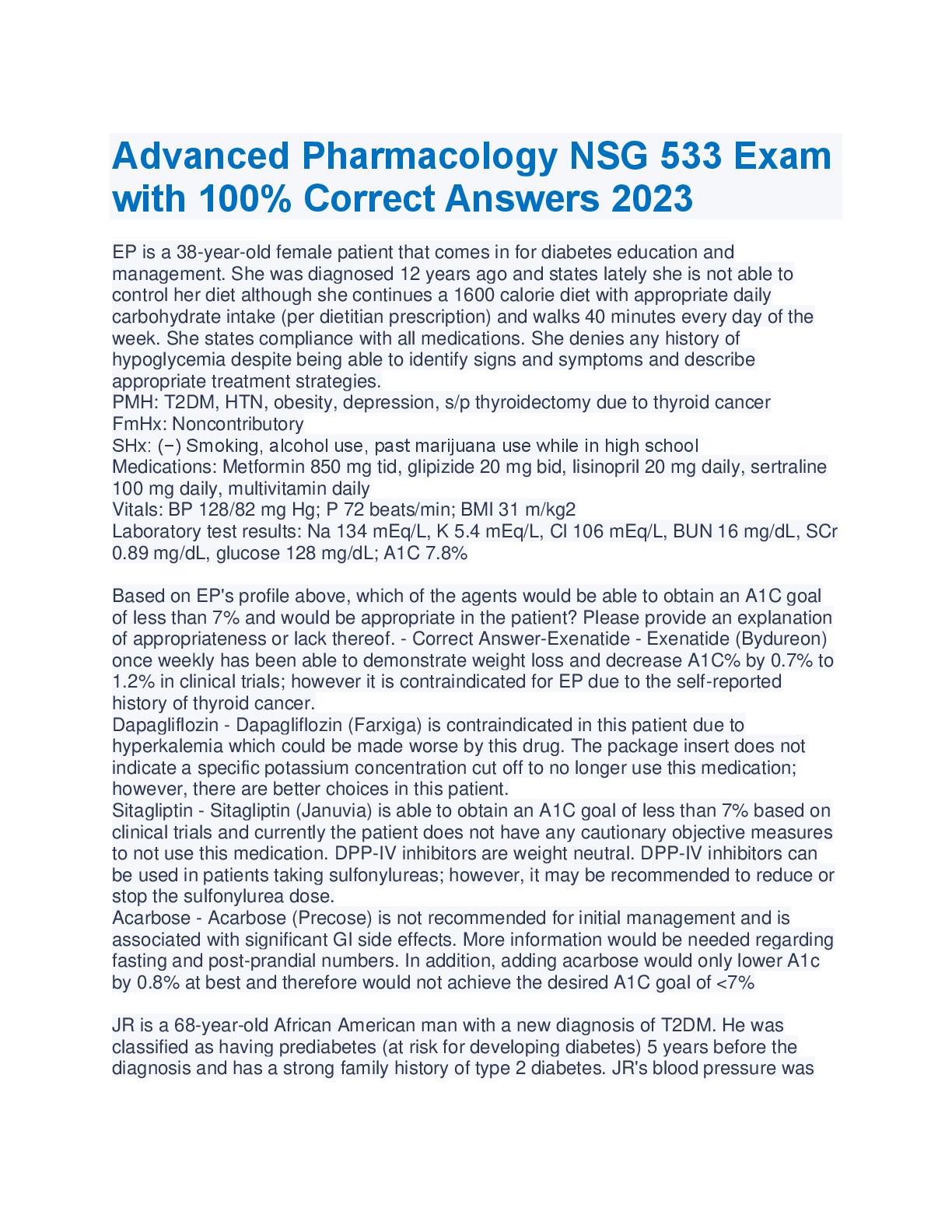
EP is a 38-year-old female patient that comes in for diabetes education
and management. She was diagnosed 12 years ago and states lately she
is not able to control her diet although she continues a 1600 calorie diet
w
...
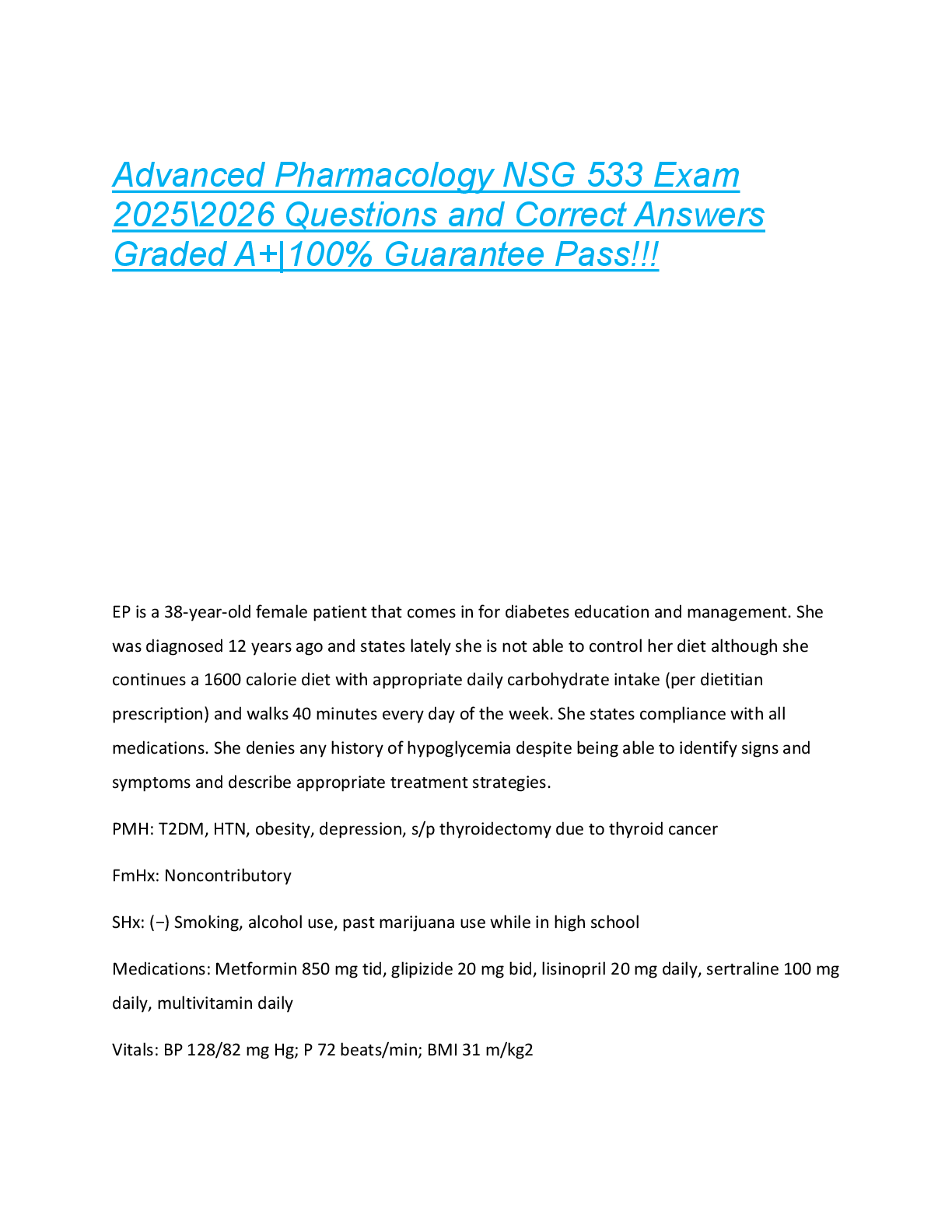
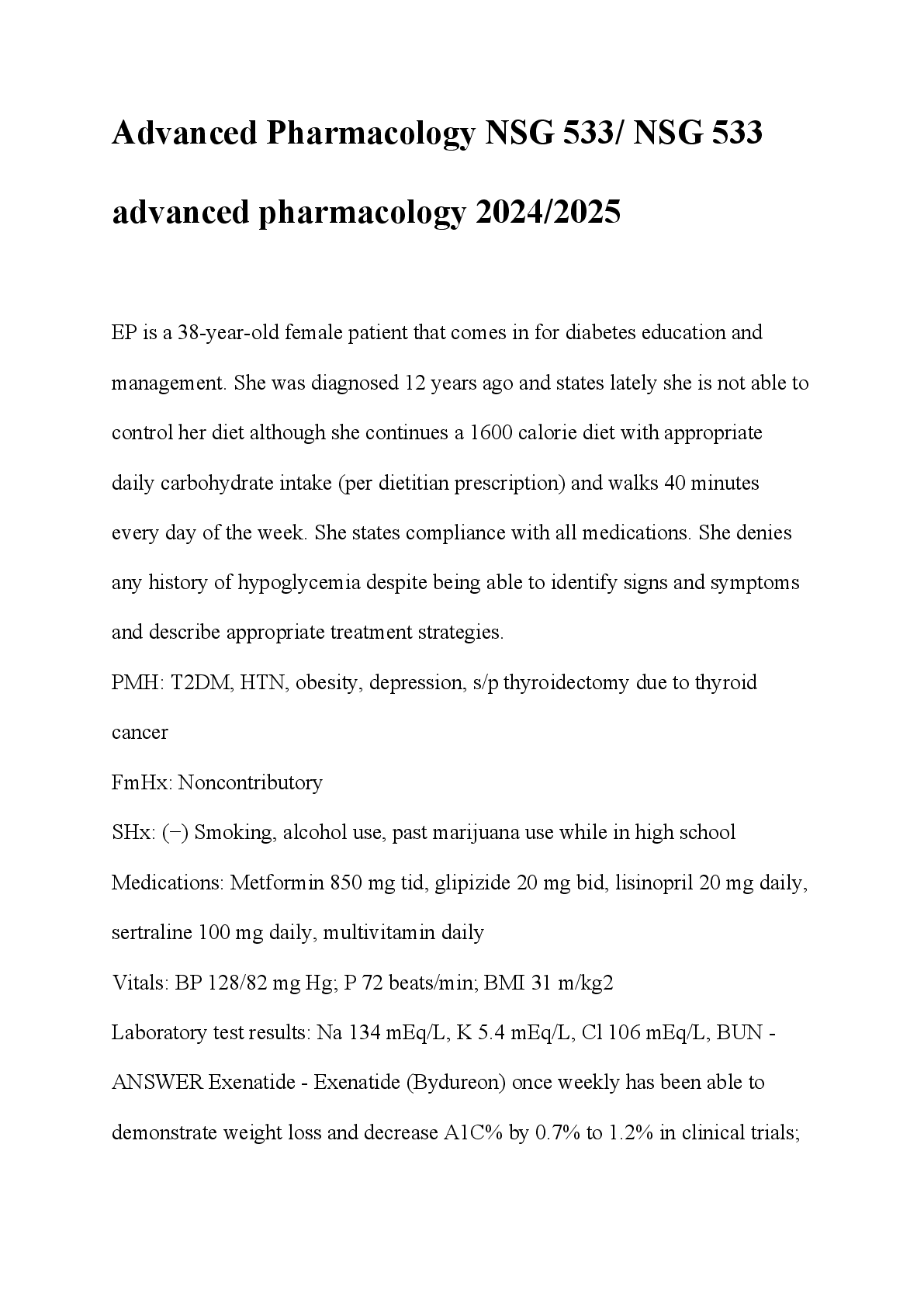
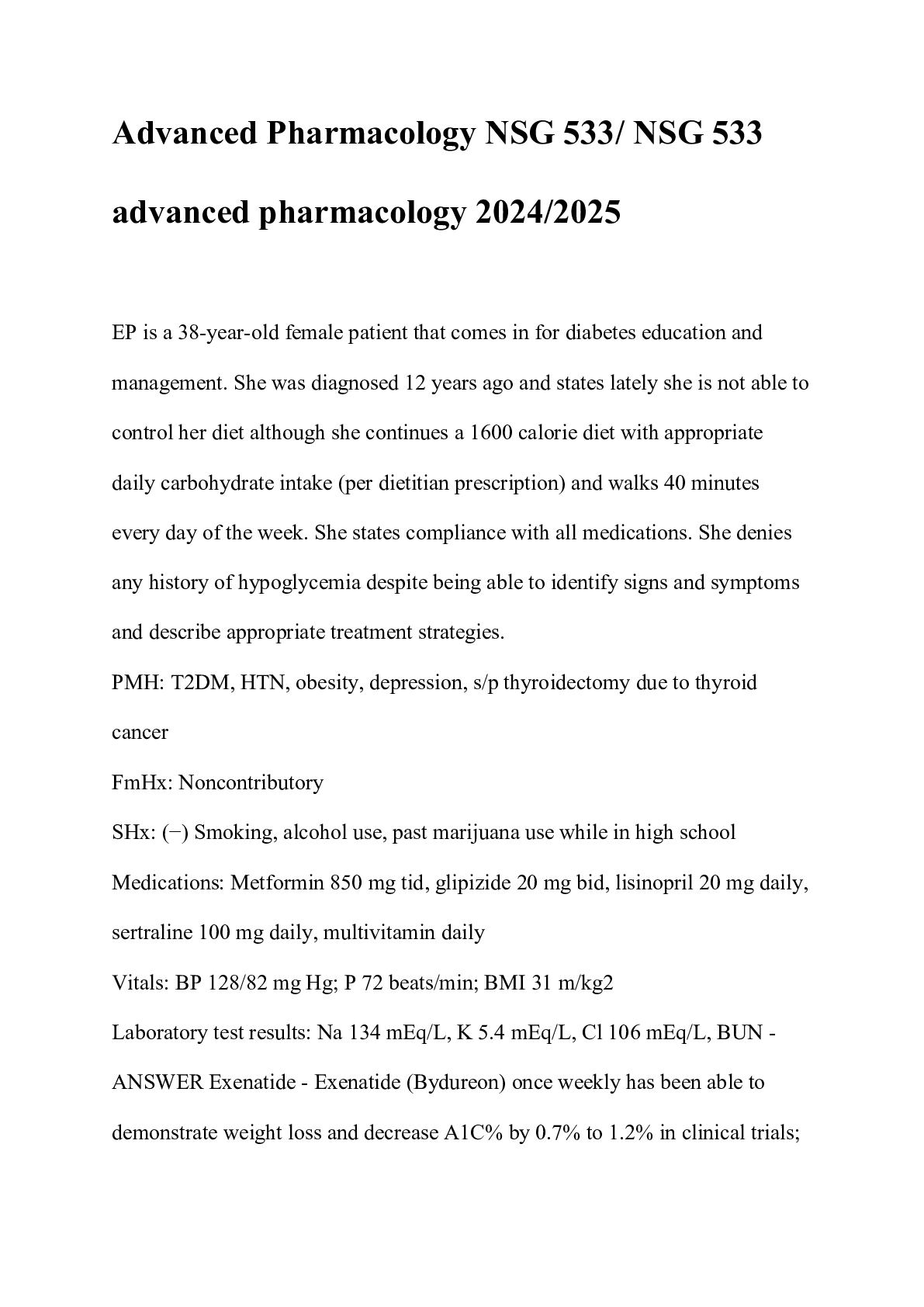
EP is a 38-year-old female patient that comes in for diabetes education
and management. She was diagnosed 12 years ago and states lately she
is not able to control her diet although she continues a 1600 calorie diet
with appropriate daily carbohydrate intake (per dietitian prescription) and
walks 40 minutes every day of the week. She states compliance with all
medications. She denies any history of hypoglycemia despite being able to
identify signs and symptoms and describe appropriate treatment strategies.
PMH: T2DM, HTN, obesity, depression, s/p thyroidectomy due to thyroid
cancer
FmHx: Noncontributory
SHx: ( ) Smoking, alcohol use, past marijuana use while in high school
Medications: Metformin 850 mg tid, glipizide 20 mg bid, lisinopril 20 mg daily,
sertraline 100 mg daily, multivitamin daily
Vitals: BP 128/82 mg Hg; P 72 beats/min; BMI 31 m/kg2
Laboratory test results: Na 134 mEq/L, K 5.4 mEq/L, Cl 106 mEq/L, BUN 16
mg/dL, SCr 0.89 mg/dL, glucose 128 mg/dL; A1C 7.8%
Based on EP's profile above, which of the agents would be able to obtain
an A1C goal of less than 7% and would be appropriate in the patient?
Please provide an explanation of appropriateness or lack thereof.: Exenatide
- Exenatide (Bydureon) once weekly has been able to demonstrate weight loss and
decrease A1C% by 0.7% to 1.2% in clinical trials; however it is contraindicated for
EP due to the self-reported history of thyroid cancer.
Dapagliflozin - Dapagliflozin (Farxiga) is contraindicated in this patient due to
hyperkalemia which could be made worse by this drug. The package insert does
not indicate a specific potassium concentration cut off to no longer use this
medication; however, there are better choices in this patient.
Sitagliptin - Sitagliptin (Januvia) is able to obtain an A1C goal of less than 7%
based on clinical trials and currently the patient does not have any cautionary
objective measures to not use this medication. DPP-IV inhibitors are weight neutral.
DPP-IV inhibitors can be used in patients taking sulfonylureas; however, it may be
recommended to reduce or stop the sulfonylurea dose.
Acarbose - Acarbose (Precose) is not recommended for initial management and
is associated with significant GI side effects. More information would be needed
regarding fasting and post-prandial numbers. In addition, adding acarbose would
only lower A1c by 0.8% at best and therefore would not achieve the desired A1C
goal of <7%
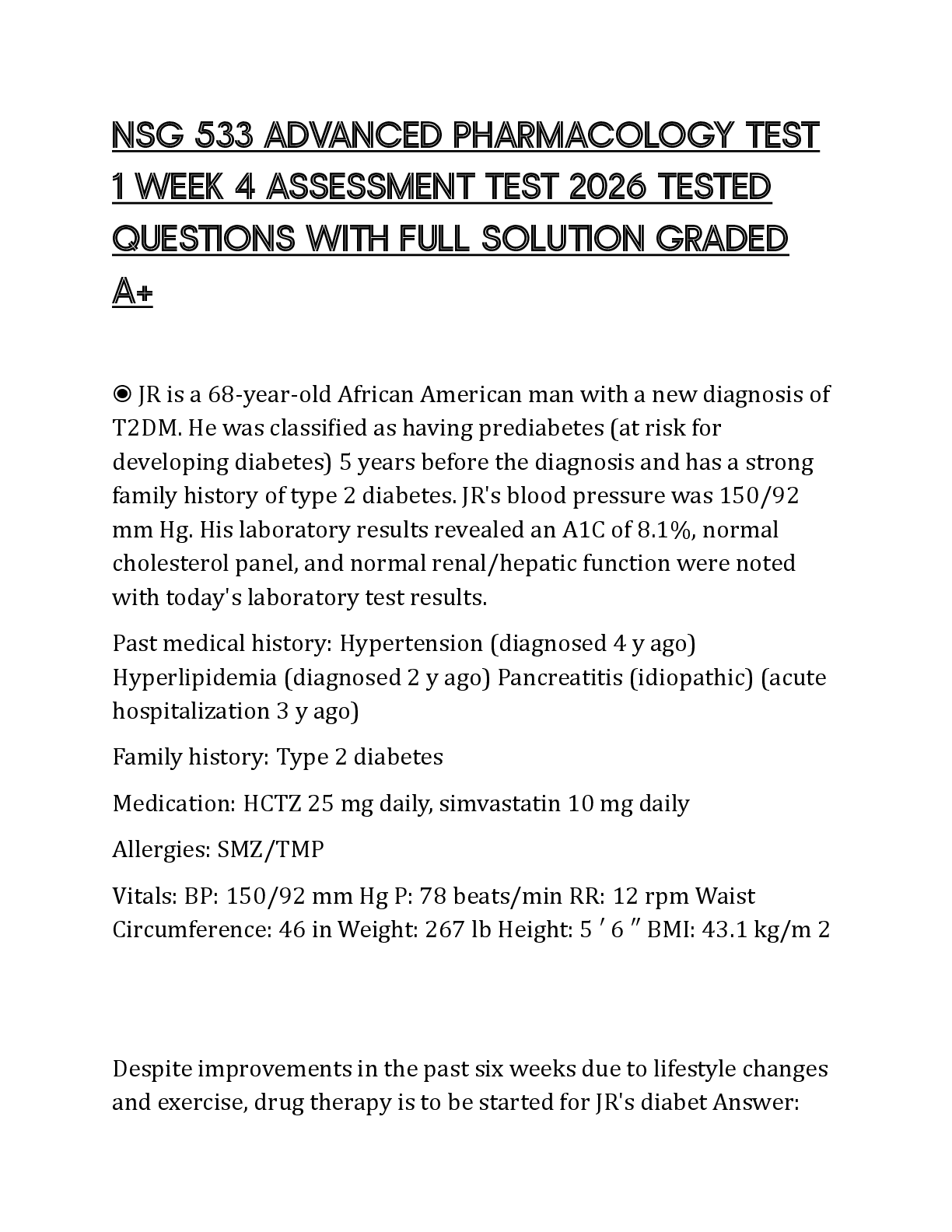
2. JR is a 68-year-old African American man with a new diagnosis of T2DM.
He was classified as having prediabetes (at risk for developing diabetes) 5Advanced Pharmacology NSG 533
2 / 25
years before the diagnosis and has a strong family history of type 2 diabetes.
JR's blood pressure was 150/92 mm Hg. His laboratory results revealed an
A1C of 8.1%, normal cholesterol panel, and normal renal/hepatic function
were noted with today's laboratory test results.
Past medical history: Hypertension (diagnosed 4 y ago) Hyperlipidemia
(diagnosed 2 y ago) Pancreatitis (idiopathic) (acute hospitalization 3 y ago)
Family history: Type 2 diabetes
Medication: HCTZ 25 mg daily, simvastatin 10 mg daily
Allergies: SMZ/TMP
Vitals: BP: 150/92 mm Hg P: 78 beats/min RR: 12 rpm Waist Circumference:
46 in Weight: 267 lb Height: 5 2 6 3 BMI: 43.1 kg/m 2
Despite improvements in the past six weeks due to lifestyle changes and
exercise, drug therapy is to be started for JR's diabetes.Which drug therapy
would be the best for JR to trial?
Discuss your opinion of JR's lipid management.
Discuss your opinion of JR's blood pressure management.: Metformin is the
drug of choice recommended for most patients with diabetes in addition to lifestyle
modifications assuming no contraindications or intolerabilities are present upon
evaluation. Metformin has also shown to provide positive weight neutral/loss effects
in obese patients. It is crucial to know the renal status of patients commencing
metformin therapy to limit the risk of lactic acidosis (JR is without contraindication).
Since his entry A1C is >7.5%, dual therapy is indicated.There are several potential
choices. The second step can be a dipeptidyl peptidase-4 inhibitor, it can be a
glucagon-like peptide-1 (GLP-1) receptor agonist, it can be a TZD, it can be a
sulfonylurea agent, it can be a SGLT2 inhibitor, or it could be basal insulin. Anything
next can be tried depending on what suits the circumstance
DPP4 inhibitors are weight neutral bet relatively benign side effect profile.
Sitagliptin has been associated with case reports of pancreatitis, so this specific
agent should be avoided. $$$
GLP-1 analog and has data to support an A1C reduction necessary to gain
glycemic control and may assist with weight loss goals for this patient. New
information suggests these agents may provide benefits in those with ASCVD. JR
has a past history of pancreatitis and GLP-1 analogs are not recommended due
to this contraindication
TZDs have data to support an A1C reduction necessary to gain glycemic control,
but are associated with weight gain, negative effects on lipids and increased risk
of fracture. Until recently, TZDs have also been linked to increased CV events andAdvanced Pharmacology NSG 533
3 / 25
use has fallen out of favor
Sulfonylureas provide excellent A1C lowering, but are also associated with weight
gain. They also have the potential to cause hypoglycemia, so patient education is
crucial. Because of his allergies to "sulfa", use would be contraindicated
SGLT2 inhibitors have data to support an A1C reduction necessary to gain
glycemic control. In addition, they are associated with weight loss and blood
pressure lowering. New information demonstrates these agents may be beneficial
in those with ASCVD, heart failure and / or CKD. They are also associated with
dyslipidemias as well. Prior to starting therapy, renal function and electrolytes
would have to be assessed. $$$
Based on the ASCVD recommendations (which are now paralleled by the 2015
ADA recommendations), all patients with type I or II DM ages 40-75 should be on
a moderate intensity statin. If the patients 10 years ASCVD risk is greater than
7.5%, a high intensity statin can be considered. Since all information needed to
perform the estimate is not present, we can assume JR need at least moderate
intensity statin. ACCE/ACE guidelines still resemble those of ATPIII. Even so, the
recommendation is for a statin regardless of LDL-C in diabetics over 40 with at
least 1 risk factor of ASCVD.
Options: atorvastatin 10mg, rosuvastatin 10, simvastatin 20-40, pravastatin 40,
lovastatin 40, fluvastatin 40.
An angiotensin-converting enzyme inhibitor and considered to be a drug of choice
for renal protection in patients with diabetes. ACEi and ARBs have demonstrated
a reduction in renal progression to overt proteinuria. African Americans may not
see the maximum effect of blood pressure lowering with ACEi due to a decreased
amount of renin. Combination therapy with a thiazide would be a reasonable add
on
3. A patient with type 1 diabetes reports taking propranolol for hypertension.
What concern does this information present for the provider?: A patient with
Type 1 DM is insulin dependent for glucose control and at high risk for hypoglycemic episodes. Propanolol causes prolonged hypoglycemic episodes. Needs
to switch to ACE or ARB
[Show More]



 with Complete Solution.png)
 Career Information with Complete Solution.png)


 for E-6 Career Information_watermark.png)