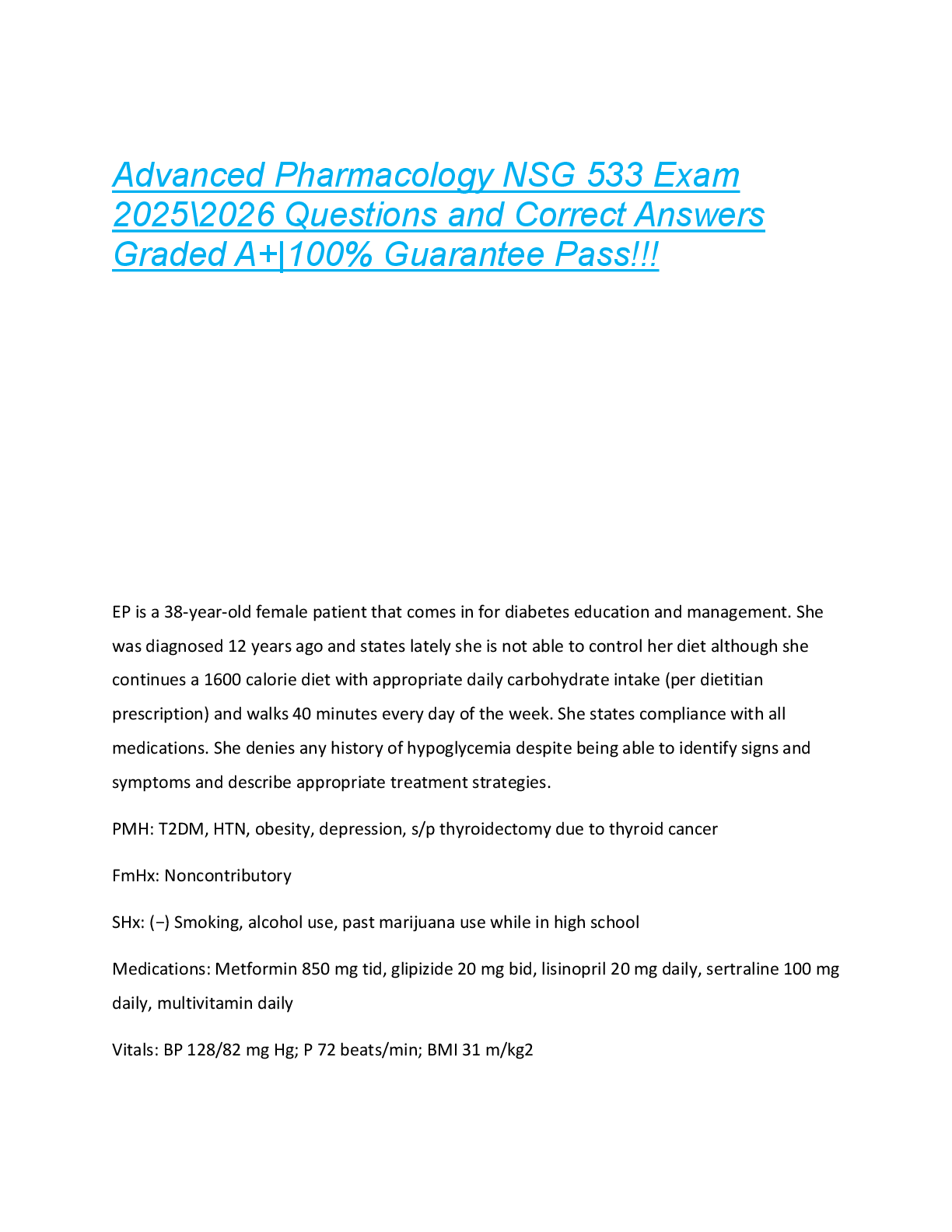
1. EP is a 38-year-old female patient that comes in for diabetes education and management. She was diagnosed 12 years ago and states lately she is not able to control her diet although she continues a 1600 calorie diet w
...
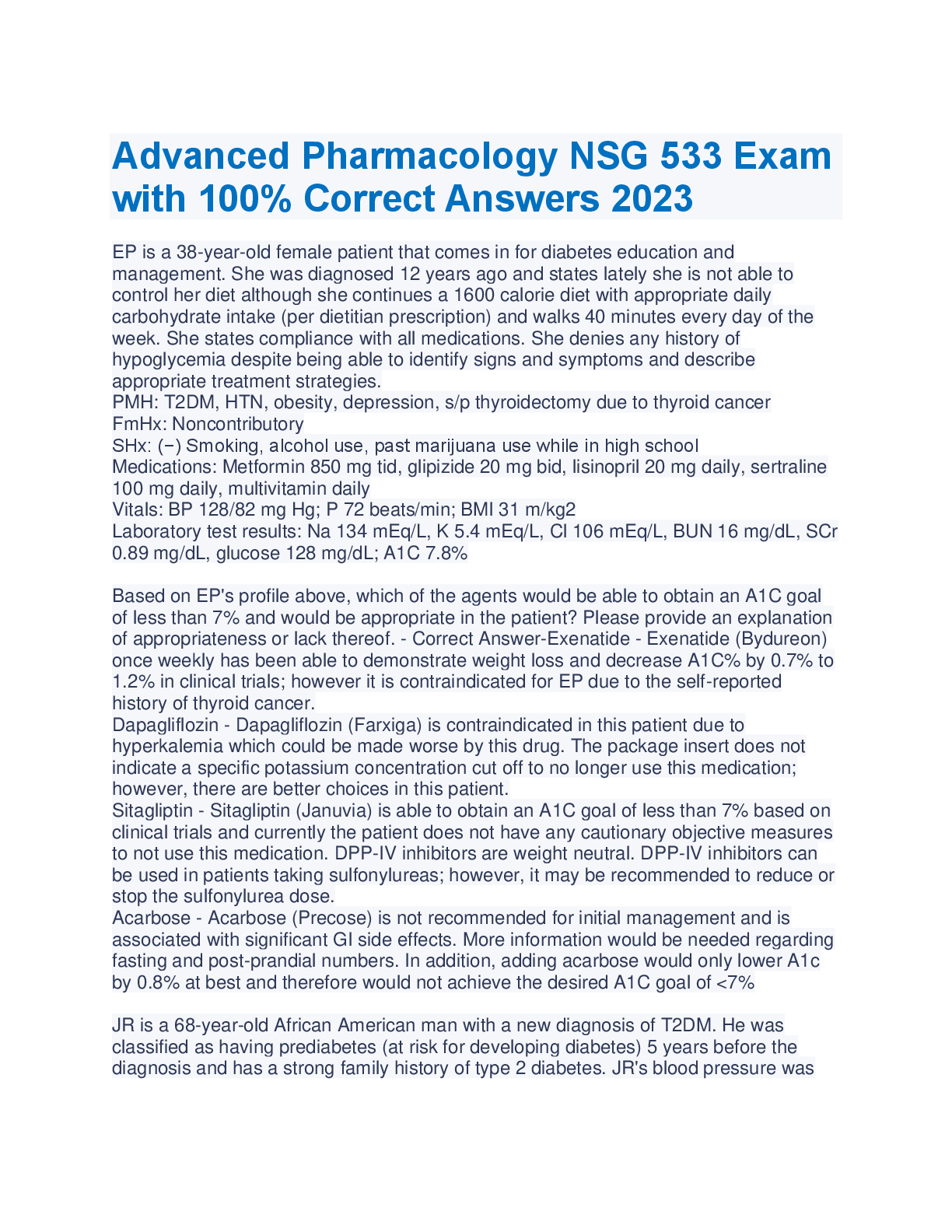
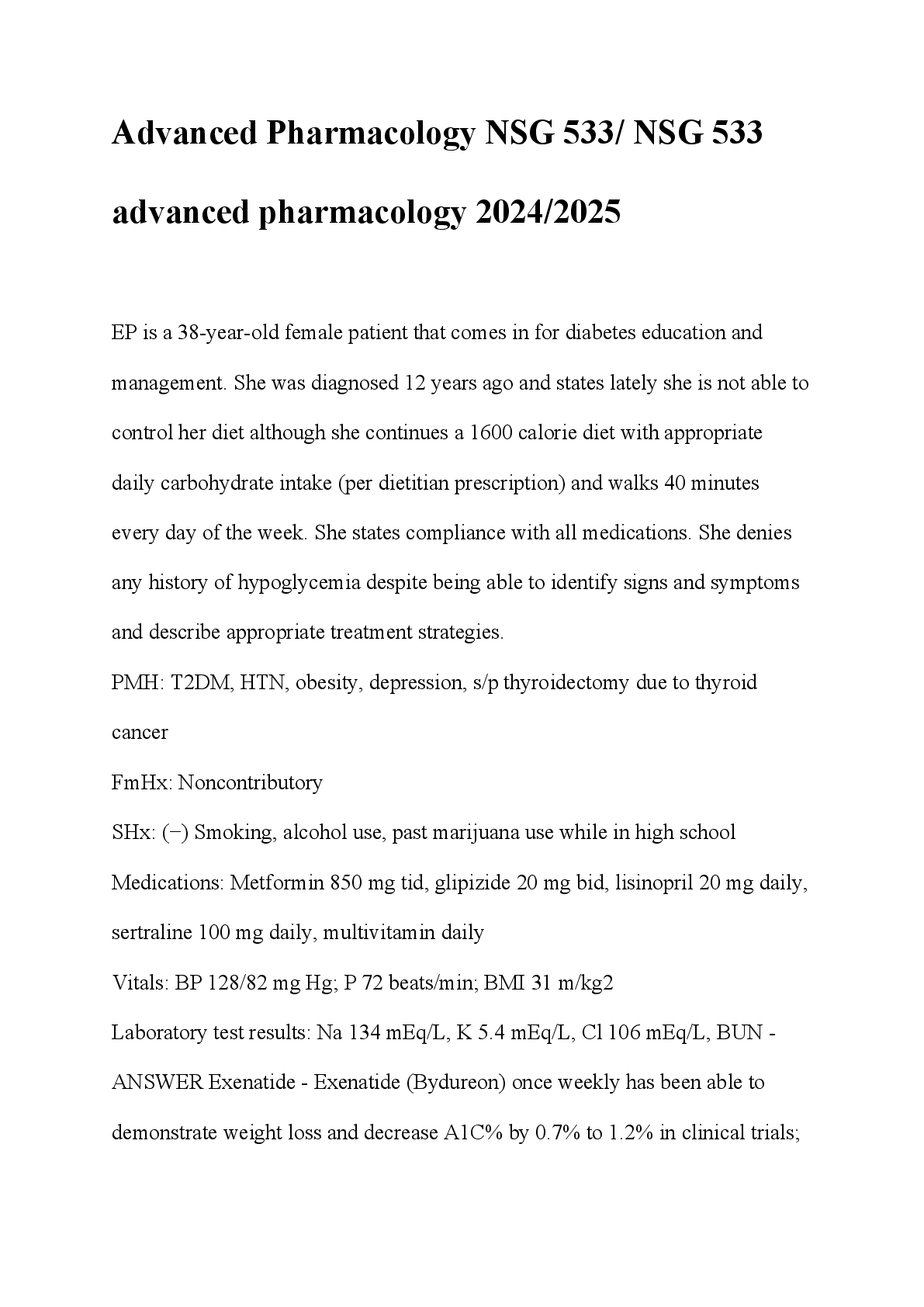
1. EP is a 38-year-old female patient that comes in for diabetes education and management. She was diagnosed 12 years ago and states lately she is not able to control her diet although she continues a 1600 calorie diet with appropriate daily carbohydrate intake (per dietitian prescription) and walks 40 minutes every day of the week. She states compliance with all
medications. She denies any history of hypoglycemia despite being able to identify signs and symptoms and describe appropriate treatment strategies. PMH: T2DM, HTN, obesity, depression, s/p thyroidectomy due to thyroid cancer
FmHx: Noncontributory
SHx: ( ) Smoking, alcohol use, past marijuana use while in high school Medications: Metformin 850 mg tid, glipizide 20 mg bid, lisinopril 20 mg daily, sertraline 100 mg daily, multivitamin daily
Vitals: BP 128/82 mg Hg; P 72 beats/min; BMI 31 m/kg2
Laboratory test results: Na 134 mEq/L, K 5.4 mEq/L, Cl 106 mEq/L, BUN 16 mg/dL, SCr 0.89 mg/dL, glucose 128 mg/dL; A1C 7.8%
Based on EP's profile above, which of the agents would be able to obtain an A1C goal of less than 7% and would be appropriate in the patient?
Please provide an explanation of appropriateness or lack thereof.: Exenatide
- Exenatide (Bydureon) once weekly has been able to demonstrate weight loss and decrease A1C% by 0.7% to 1.2% in clinical trials; however it is contraindicated for EP due to the self-reported history of thyroid cancer.
Dapagliflozin - Dapagliflozin (Farxiga) is contraindicated in this patient due to hyperkalemia which could be made worse by this drug. The package insert does not indicate a specific potassium concentration cut off to no longer use this medication; however, there are better choices in this patient.
Sitagliptin - Sitagliptin (Januvia) is able to obtain an A1C goal of less than 7% based on clinical trials and currently the patient does not have any cautionary objective measures to not use this medication. DPP-IV inhibitors are weight neutral. DPP-IV inhibitors can be used in patients taking sulfonylureas; however, it may be recommended to reduce or stop the sulfonylurea dose.
Acarbose - Acarbose (Precose) is not recommended for initial management and is associated with significant GI side effects. More information would be needed regarding fasting and post-prandial numbers. In addition, adding acarbose would only lower A1c by 0.8% at best and therefore would not achieve the desired A1C goal of <7%
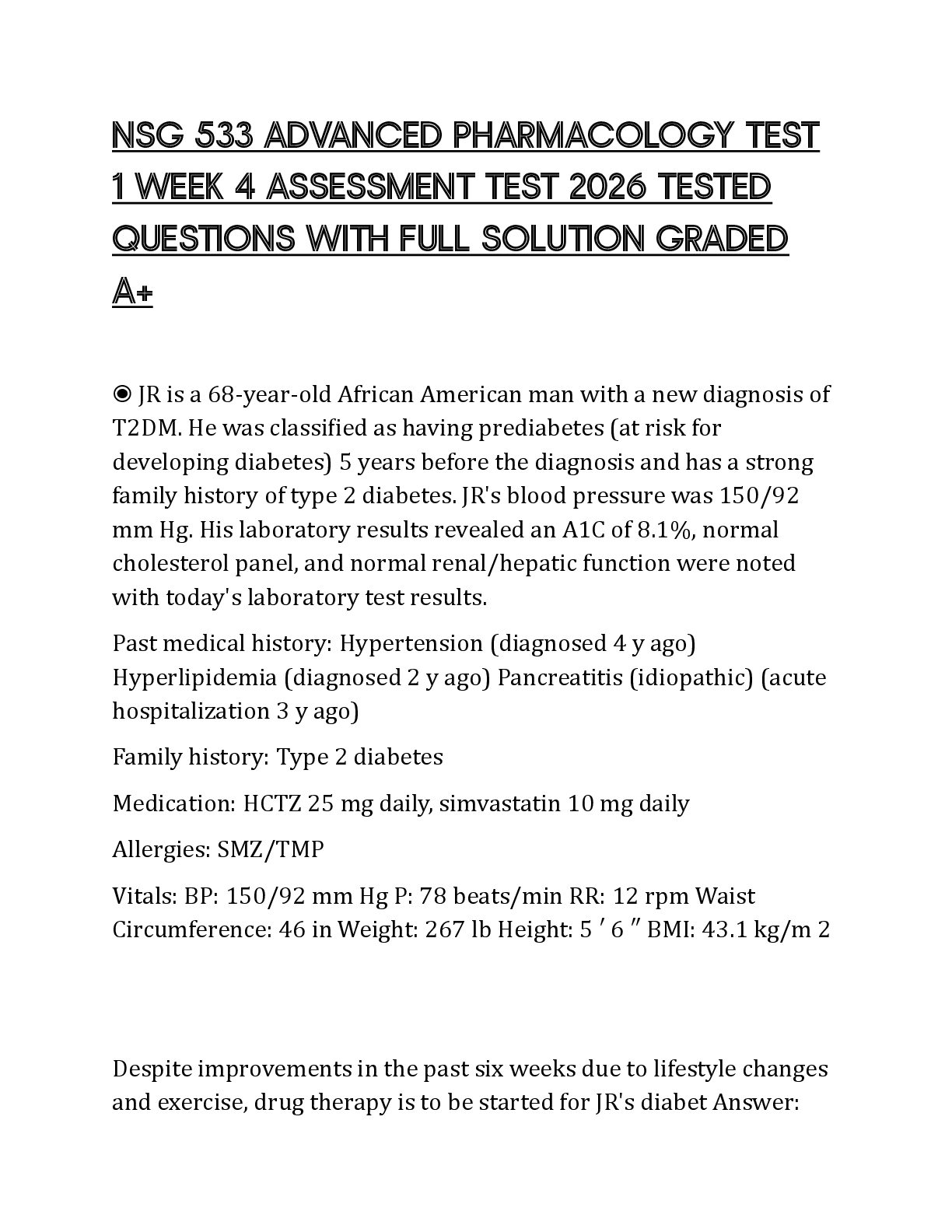
2. JR is a 68-year-old African American man with a new diagnosis of T2DM. He was classified as having prediabetes (at risk for developing diabetes) 5
years before the diagnosis and has a strong family history of type 2 diabetes. JR's blood pressure was 150/92 mm Hg. His laboratory results revealed an A1C of 8.1%, normal cholesterol panel, and normal renal/hepatic function were noted with today's laboratory test results.
Past medical history: Hypertension (diagnosed 4 y ago) Hyperlipidemia (diagnosed 2 y ago) Pancreatitis (idiopathic) (acute hospitalization 3 y ago) Family history: Type 2 diabetes
Medication: HCTZ 25 mg daily, simvastatin 10 mg daily Allergies: SMZ/TMP
Vitals: BP: 150/92 mm Hg P: 78 beats/min RR: 12 rpm Waist Circumference: 46 in Weight: 267 lb Height: 5 2 6 3 BMI: 43.1 kg/m 2
Despite improvements in the past six weeks due to lifestyle changes and exercise, drug therapy is to be started for JR's diabetes. Which drug therapy would be the best for JR to trial?
Discuss your opinion of JR's lipid management.
Discuss your opinion of JR's blood pressure management.: Metformin is the drug of choice recommended for most patients with diabetes in addition to lifestyle modifications assuming no contraindications or intolerabilities are present upon evaluation. Metformin has also shown to provide positive weight neutral/loss effects in obese patients. It is crucial to know the renal status of patients commencing metformin therapy to limit the risk of lactic acidosis (JR is without contraindication). Since his entry A1C is >7.5%, dual therapy is indicated. There are several potential choices. The second step can be a dipeptidyl peptidase-4 inhibitor, it can be a glucagon-like peptide-1 (GLP-1) receptor agonist, it can be a TZD, it can be a sulfonylurea agent, it can be a SGLT2 inhibitor, or it could be basal insulin. Anything next can be tried depending on what suits the circumstance
DPP4 inhibitors are weight neutral bet relatively benign side effect profile.
Sitagliptin has been associated with case reports of pancreatitis, so this specific agent should be avoided. $$$
GLP-1 analog and has data to support an A1C reduction necessary to gain glycemic control and may assist with weight loss goals for this patient. New information suggests these agents may provide benefits in those with ASCVD. JR has a past history of pancreatitis and GLP-1 analogs are not recommended due to this contraindication
[Show More]





 with Complete Solution.png)
 Career Information with Complete Solution.png)


 for E-6 Career Information_watermark.png)