Part 1: Recognizing RELEVANT Clinical Data
History of Present Problem:
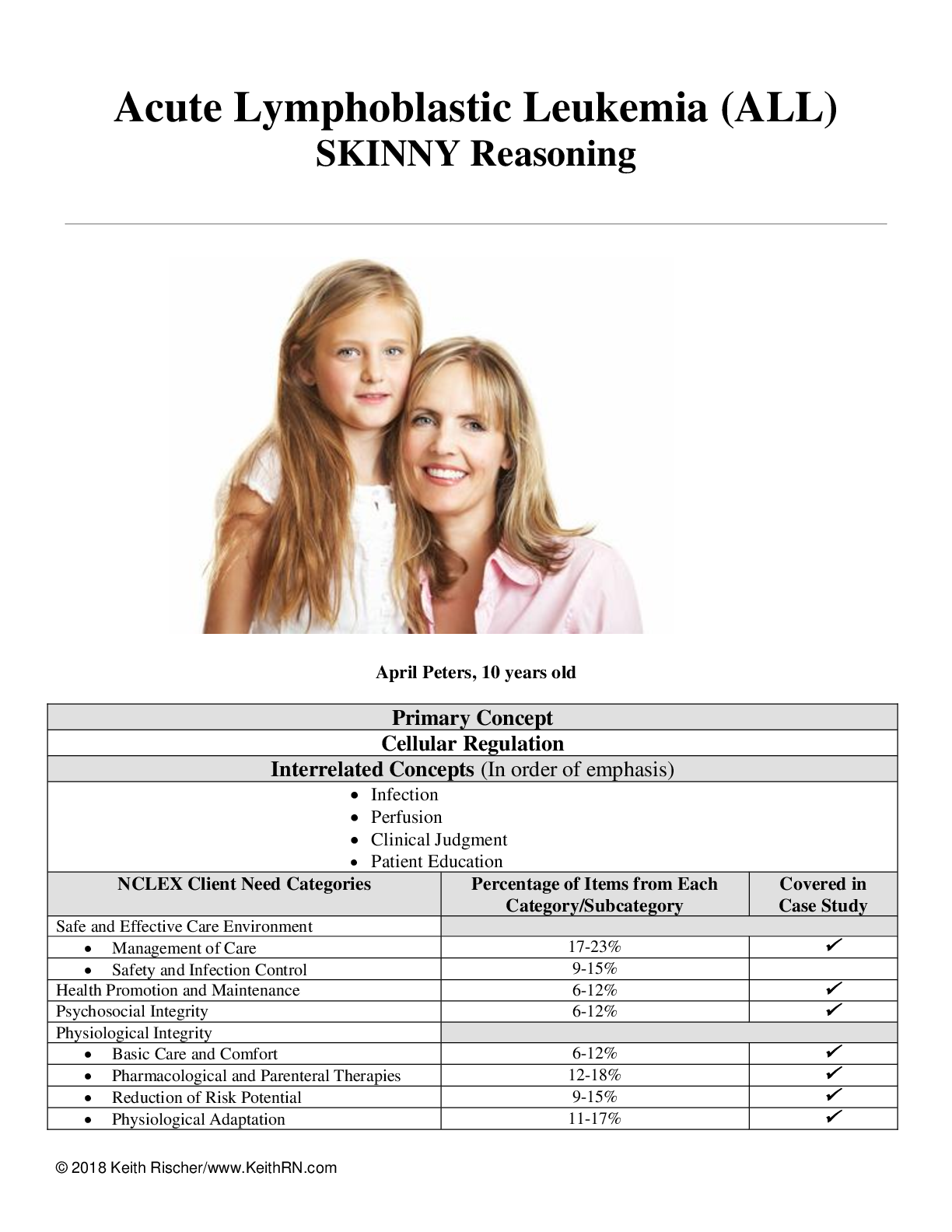
April Peters is a 10-year-old female with acute lymphoblastic leukemia (ALL) who presents to the emergency department
with a temperature of 38.4 d
...
Part 1: Recognizing RELEVANT Clinical Data
History of Present Problem:
April Peters is a 10-year-old female with acute lymphoblastic leukemia (ALL) who presents to the emergency department
with a temperature of 38.4 degrees C. (101.2 F.) and a complaint of a sore throat. She has been receiving
chemotherapy since her diagnosis three months ago. April's mother reports that her fever has been unresponsive
to acetaminophen and she is two days out from her most recent chemotherapy treatment. No reports of nausea,
vomiting, or diarrhea noted. A CBC is drawn immediately from April's central venous access device (CVAD) and
April is admitted directly to the pediatric oncology unit where you are the nurse responsible for her care. She
weighs 57 lbs. (25.9 kg), is 51.5 inches (128.8 cm.) and has NKDA.
Personal/Social History:
April lives at home with her mother Cindy, her father Tom, and her 6-year-old sister Maggie. Tom works fulltime
as an engineer while Cindy stays home with the children because of April's diagnosis and resulting
hospitalizations and treatment. April has missed quite a few days of school. Although her school system has
provided April with a tutor to keep up with her studies, April does not return telephone calls from her friends
and refuses their visits.
Past Medical History (PMH):
o Cindy's pregnancy was uneventful and April was born via an uncomplicated vaginal delivery at 40
weeks and weighed 7 lbs., loz. (3.2 kg.)
o Tonsillectomy at 3 years old under general anesthesia.
o ALL diagnosis 3 month ago following a short history of headaches and pallor. April's WBC count at
diagnosis was 469,000 FYI: Hyperleukocytosis is defined as a peripheral white blood cell count greater
than 100,000/mm3 and is a pediatric oncologic emergency. These white blood cells are immature blast
cells not normal cells. Hyperleukocytosis can progress to capillary obstruction, microinfarction, and
organ dysfunction, which can lead to respiratory distress and cyanosis. Children may also experience
changes in neurologic function, including an altered level of consciousness, visual disturbances,
confusion, and ataxia.
What data from the histories is RELEVANT and has clinical significance to the nurse?
RELEVANT Data from Present
Problem:
Clinical Significance:
10-year-old female with acute
lymphoblastic leukemia (ALL)
She has been receiving
chemotherapy since her diagnosis
three months ago.
She is two days out from her most
recent chemotherapy treatment.
It is important to know that the patient is 10 years old to adapt the
plan of care to her stage of development. Knowing her cancer
diagnosis of ALL is key to understanding that she is presenting as an
emergent case and what nursing interventions are critical for a patient
with ALL. Knowing she was only diagnosed 3 months ago is very
important to note as she has not dealt with the disease very long, is
currently undergoing chemotherapy and had her last treatment two
days ago. This information can provide insight to what is causing her
symptoms and what diagnostic testing should be done. Also, it tells us
she is actively fighting the cancer and is not in remission, thus
making her immunocompromised and susceptible to infections. ALL
is characterized by cancerous cells in the bone marrow producing
excessive amounts of immature white blood cells that can lead to
damage in the circulatory system and in the organs of the body if
levels are too high. Chemotherapy is used because it destroys the
cancerous tissue. Unfortunately, it also affects healthy tissues/cells
and reduces the white blood cell count, cancerous and healthy, until
the immune system is no longer able to function efficiently to be able
to fight off foreign bacteria and invading viruses.
Temperature of 38.4 degrees C.
(101.2 F.) and a complaint of a sore
A temperature over 100.4 in pediatric patients with cancer is
considered an emergency! Fever and sore throat are signs of
4
throat. April's mother reports that
her fever has been unresponsive to
acetaminophen and no reports of
nausea, vomiting, or diarrhea noted.
A CBC is drawn immediately from
April's central venous access device
(CVAD) and April is admitted
directly to the pediatric oncology
unit
infection, reactions/side effects to chemotherapy. Chemotherapy often
causes pain and irritation of various tissues, it causes patients to feel
fatigue and malaise.
An unresponsive fever despite interventions requires immediate
intervention
Knowing if the patient is experiencing nausea etc. is important to help
the healthcare team distinguish the possible cause of the patient’s
symptoms.
Since ALL occurs with too many immature WBCs and lifethreatening
complications can occur, it is important to draw labs
immediately and admit the patient. CBC, liver panels and other labs
will give insight to her immune status, if she requires neutropenic
precautions, if any of her organs are being affected by her
chemotherapy and for signs of possible sepsis or cancer
complications.
Her CVAD will be used to reduce any new portals of infection and
for efficiency as patients veins are difficult to start IVs with as their
veins
RELEVANT Data from Social
History
Clinical Significance:
April has missed quite a few days
of school. Although her school
system has provided April with a
tutor to keep up with her studies,
April does not return telephone
calls from her friends and refuses
their visits
57 lbs. (25.9 kg), is 51.5 inches
(128.8 cm.) and has NKDA.
Difficulty keeping up with school and not wanting to speak and see
friends could indicate that April is struggling to adjust to her
diagnosis and the symptoms that come along with ALL. Also, the side
effects of chemo drugs likely affect her self esteem and she may feel
depressed. Being around other children is very important for a child’s
development socially and developmentally as their interaction with
others allows them to learn more about interactions and how the
world works. Without it, it places her at risk for delayed social
development that will leave her possibly struggling with identifying
and communicating with others now and in the future.
Knowing her height and weight is important to calculate safe dosages
of her medications as well as knowing if she has any allergies.
Patient Care Begins:
Current VS: P-Q-R-S-T Pain Assessment (5th VS):
T: 100.8 F/38.2 C (oral) Provoking/Palliative
:
"My throat hurts"
P: 112
[Show More]


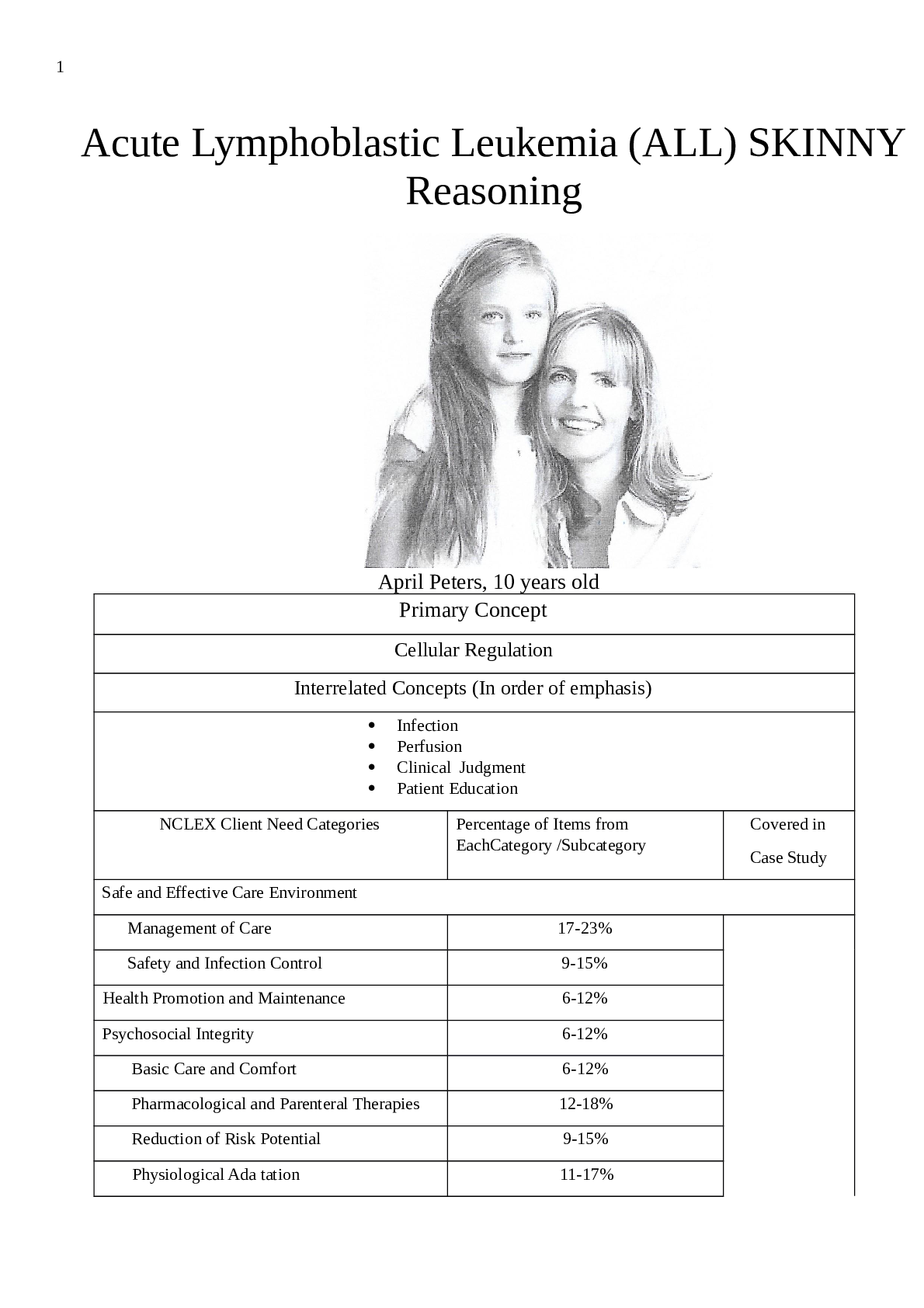

 SKINNY Reasoning, April Peters, 10 years old, (Latest 2021) Correct Study Guide, Download to Score A.png)

, April Peters, 10 years old, (Latest 2021) Correct Study Guide, Download to Score A.png)