Pathophysiology > EXAM > NURS 5315 Advanced Pathophysiology Cancer | Module Objectives with Advanced Organizers (All)
NURS 5315 Advanced Pathophysiology Cancer | Module Objectives with Advanced Organizers
Document Content and Description Below
Last updated: 3 years ago
Preview 1 out of 10 pages
Instant download

Buy this Document to get the Full Access Instantly
Provided by Students Who Aced it
We Verify Document Content to Gurantee Accuracy
Reviews( 0 )
Document information
Connected school, study & course
About the document
Uploaded On
Jan 17, 2021
Number of pages
10
Written in
All

Additional information
This document has been written for:
Uploaded
Jan 17, 2021
Downloads
0
Views
139
Topic Tags
Related Subjects & Courses
Explore similar study resources and related concepts.
Recommended For You
Get more on EXAM »
NURS 5315 Advanced Pathophysiology Altered Cellular Function a...

NURS 5315 Advanced Pathophysiology Gastrointestinal | Core Kno...

NURS 5315 Advanced Pathophysiology Genetics | Core Knowledge O...

NURS 5315 Pathophysiology | The Biologic Basis for Disease in...

NURS 5315 PATHO Module 7 N5315 Advanced Pathophysiology Neurol...
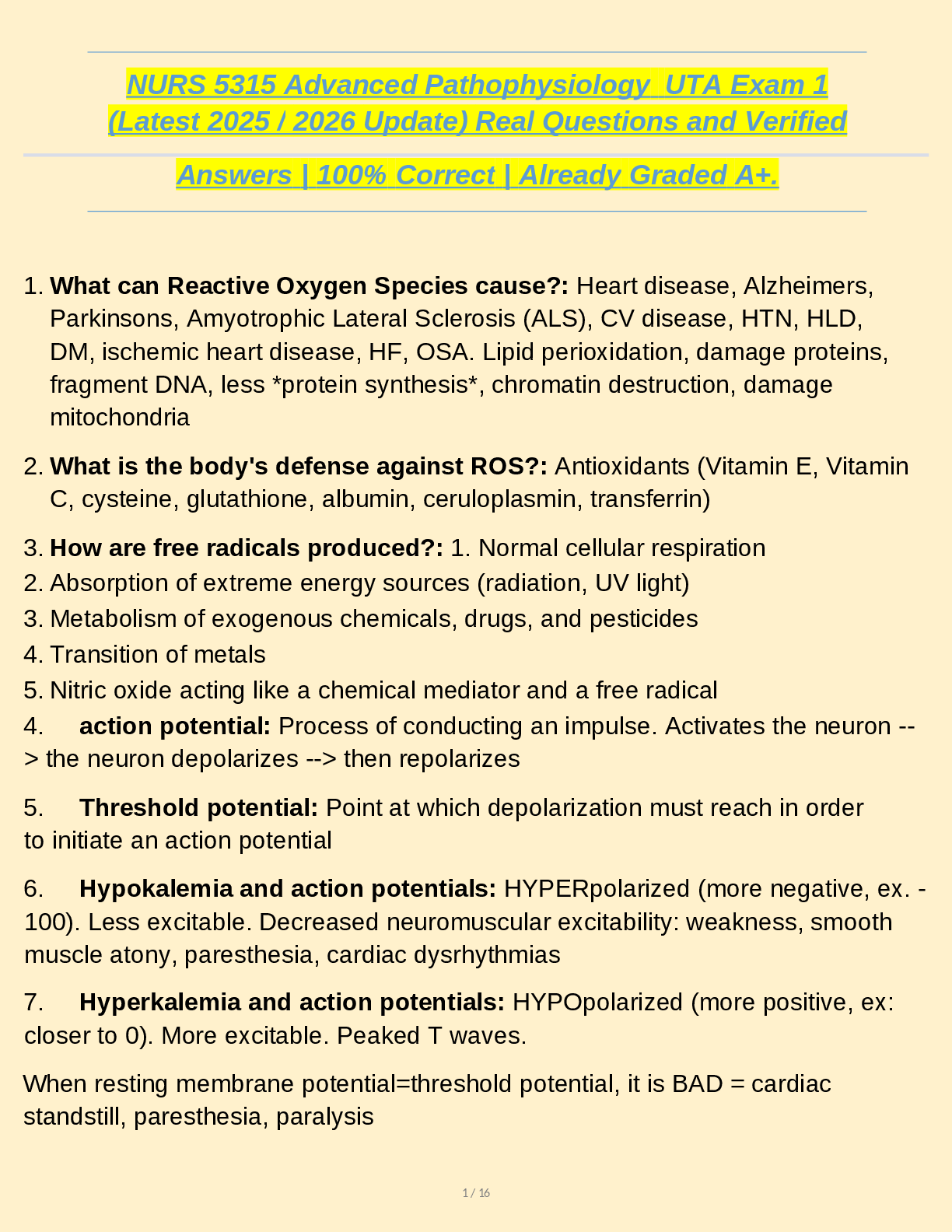
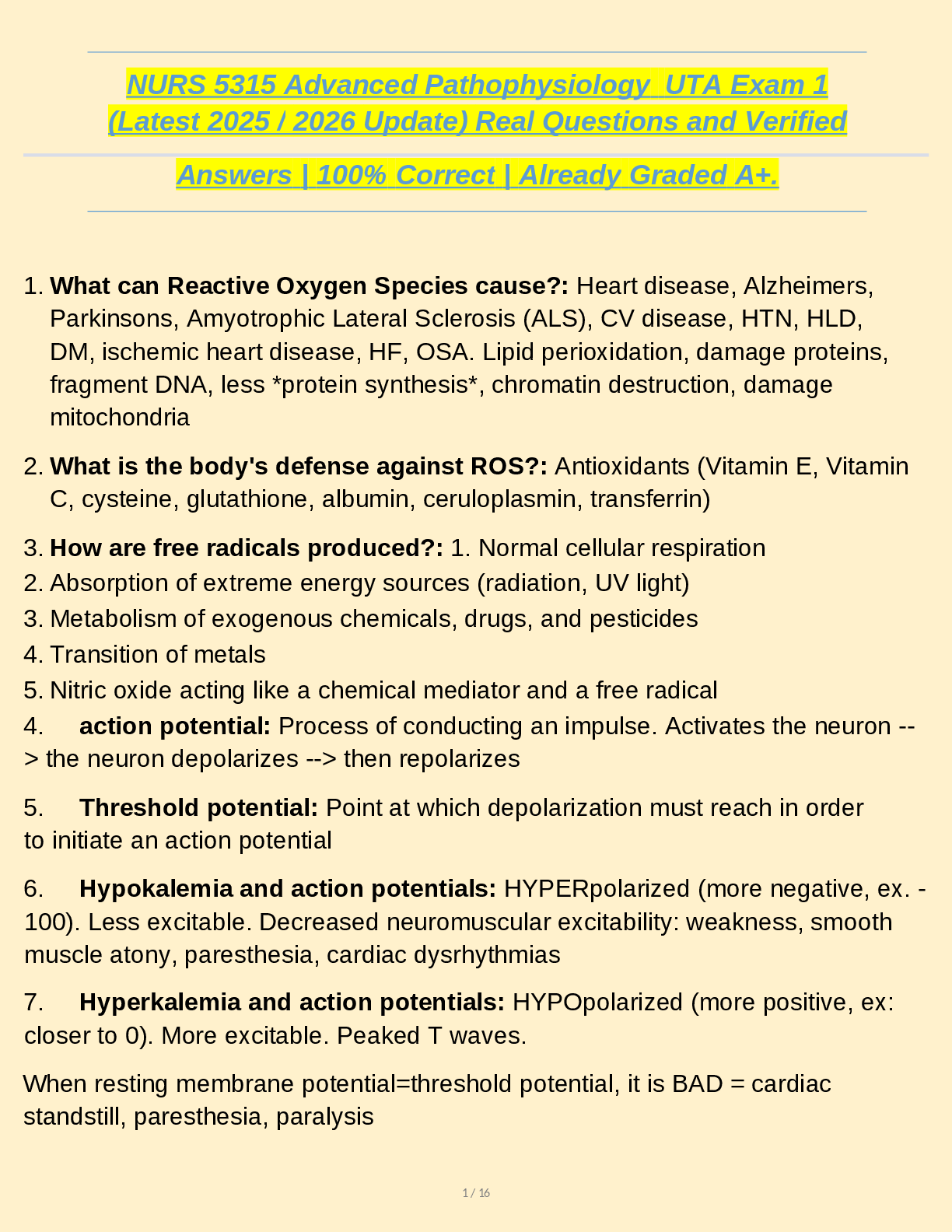
NURS 5315 Advanced Pathophysiology (Latest 2025 / 2026 Up...
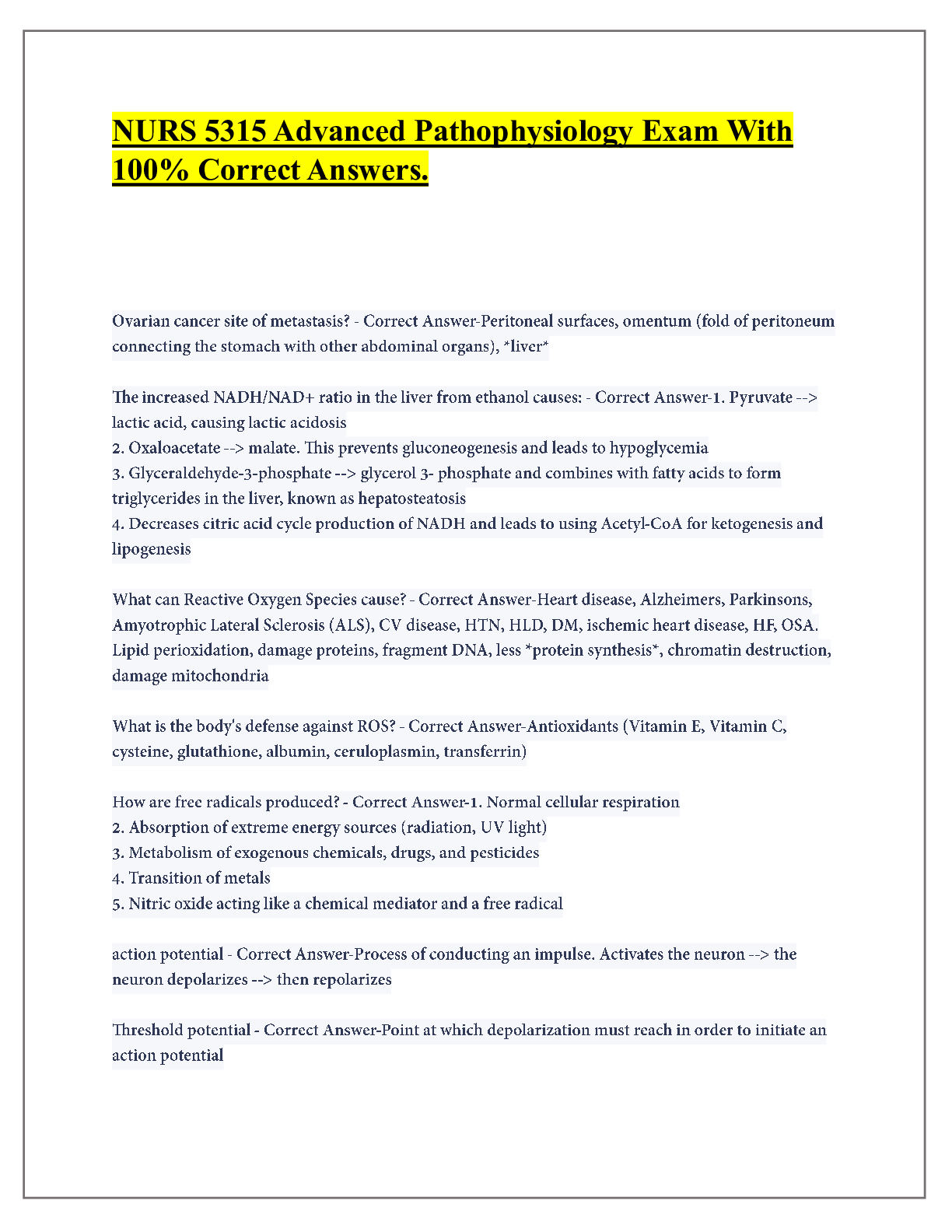
NURS 5315 Advanced Pathophysiology Exam With 100% Correct Answ...
NURS 5315 Pathophysiology | The Biologic Basis for Disease in...
NURS 5315 Pathophysiology | The Biologic Basis for Disease in...

NURS 5315 Pathophysiology The Biologic Basis for Disease in Ad...
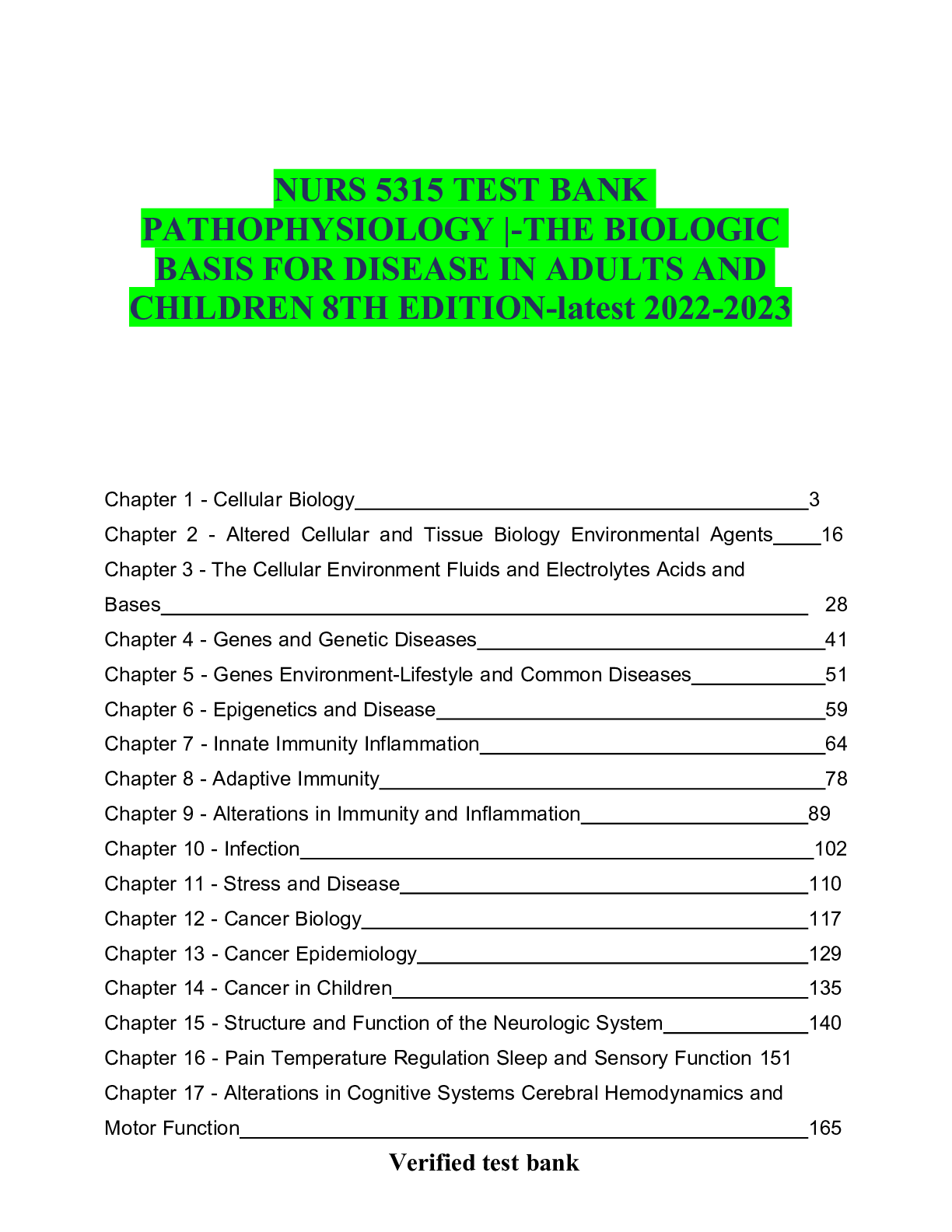
NURS 5315 TEST BANK PATHOPHYSIOLOGY |-THE BIOLOGIC BASIS FOR D...
NURS 5315 TEST BANK PATHOPHYSIOLOGY |-THE BIOLOGIC BASIS FOR D...
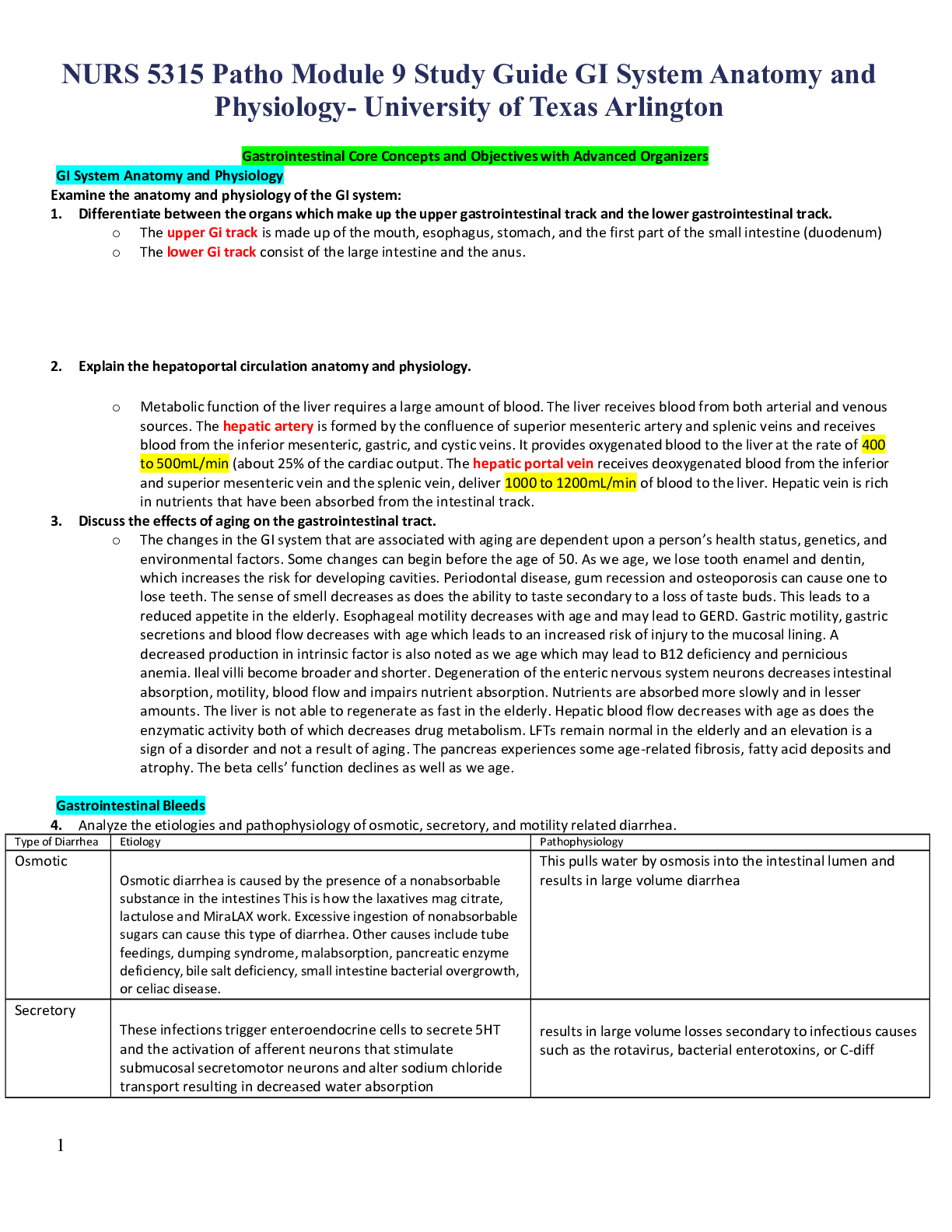
NURS 5315 Patho Module 9 Study Guide GI System Anatomy and Phy...

 – Chamberlain College of Nursing.png)
 – Chamberlain College of Nursing.png)