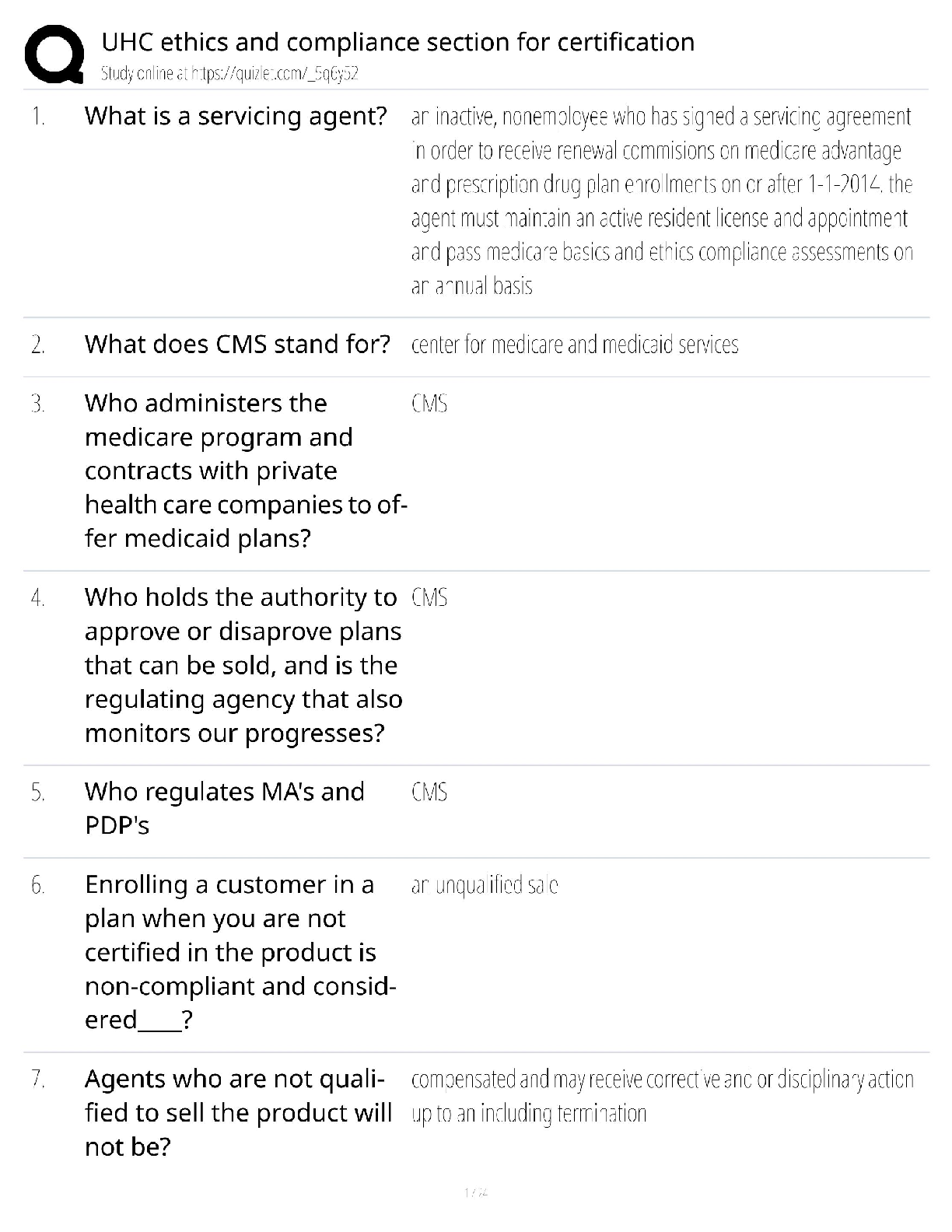
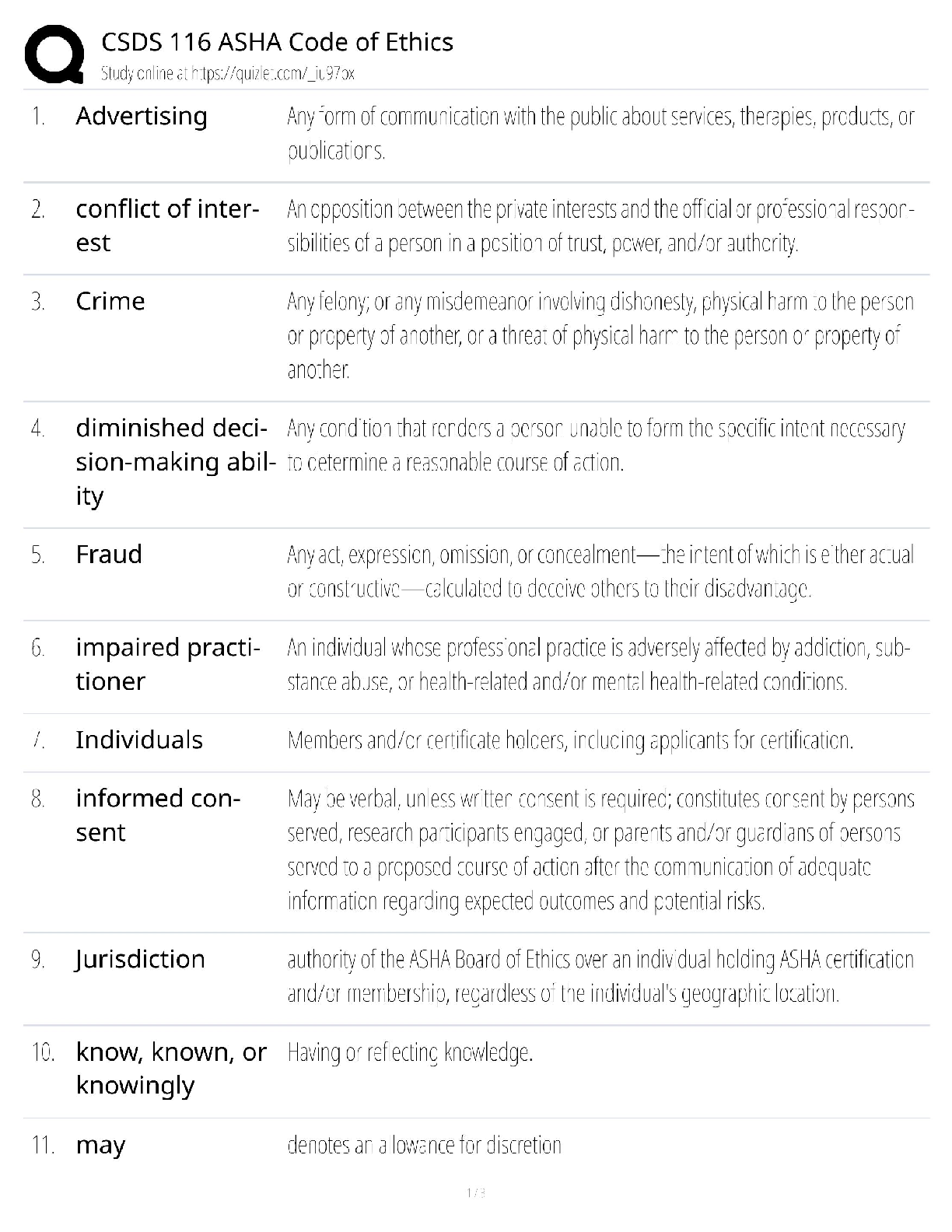
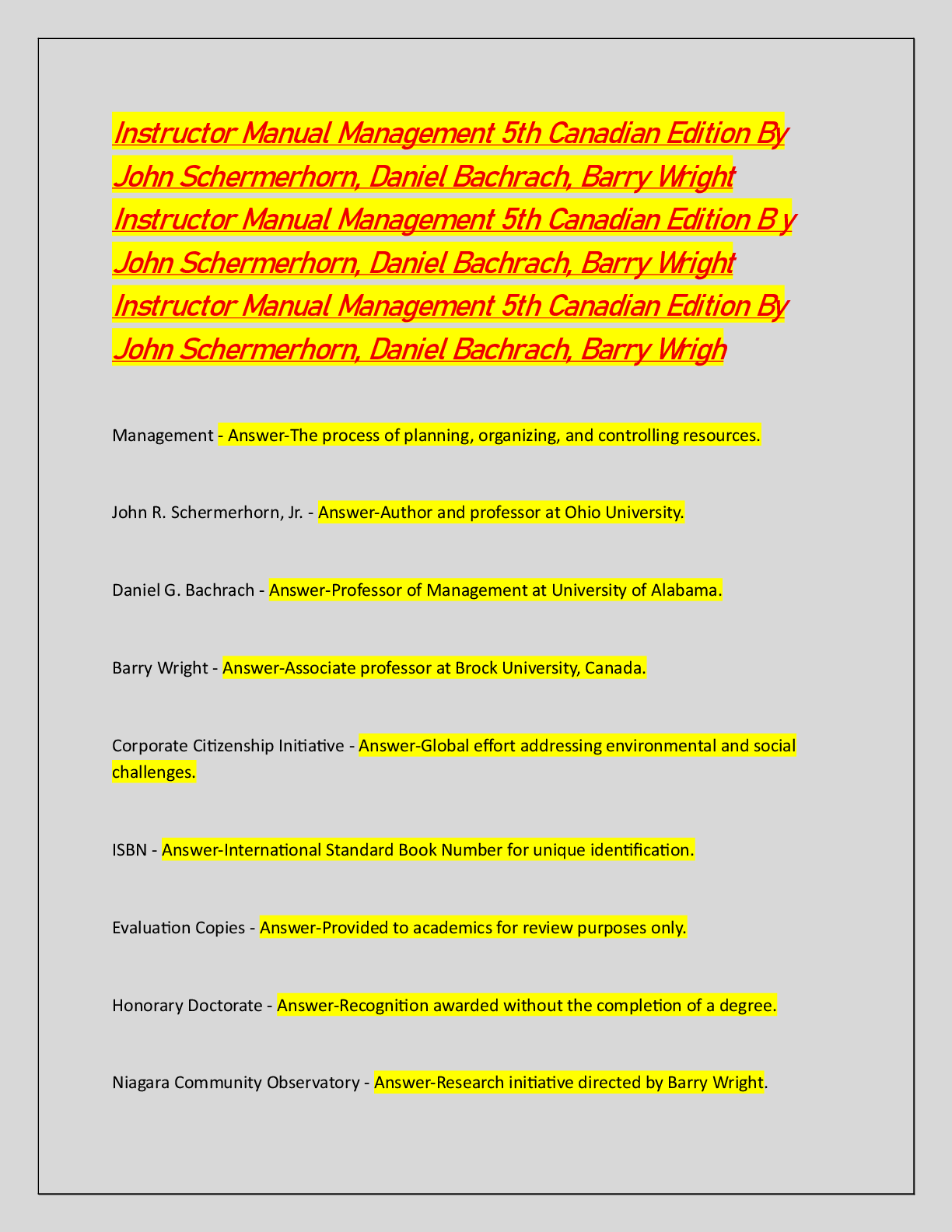
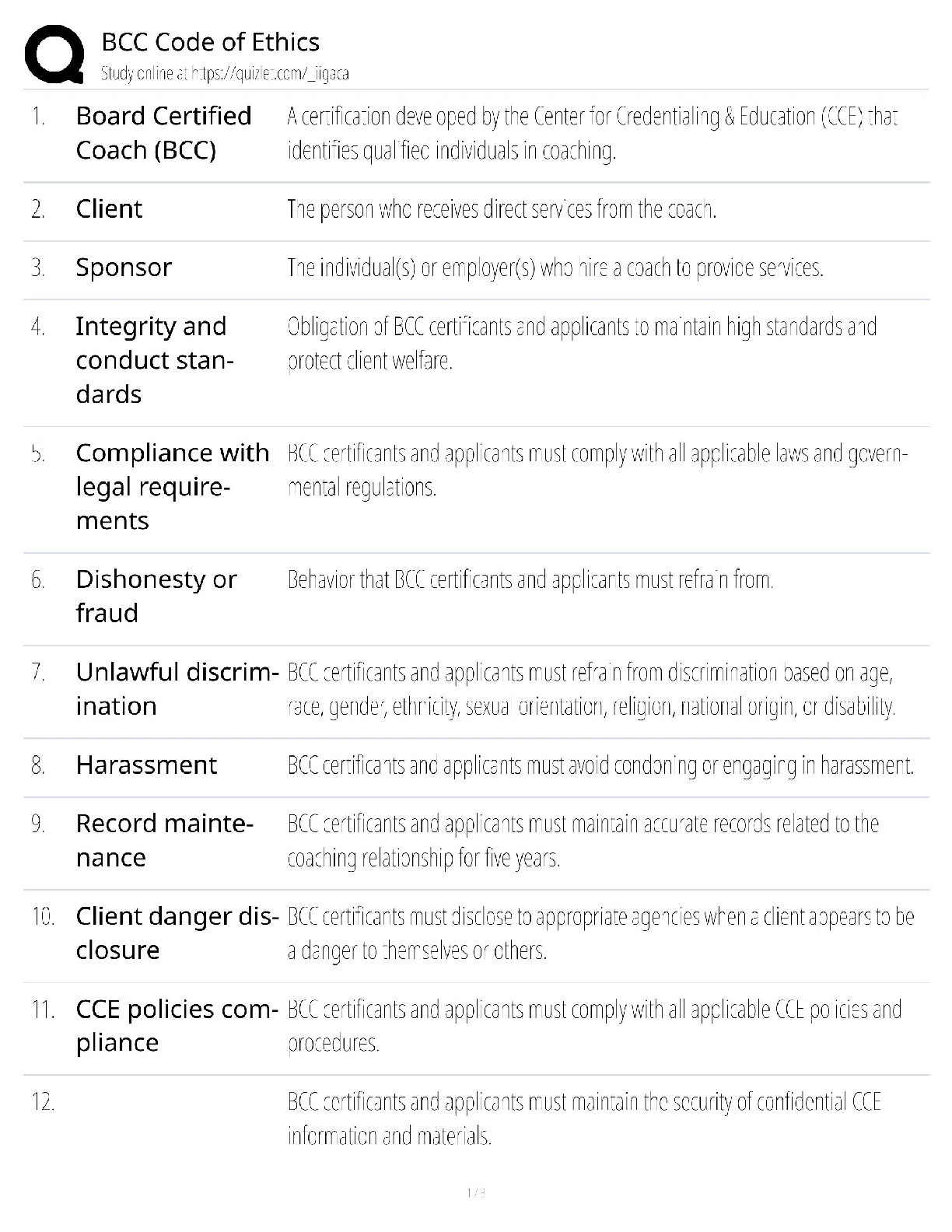
Business Ethics > EXAM > Midterm 2 Exam Concordia University COMM 315 (All)
Midterm 2 Exam Concordia University COMM 315
Document Content and Description Below
Last updated: 3 years ago
Preview 1 out of 4 pages
Instant download

Buy this Document to get the Full Access Instantly
Provided by Students Who Aced it
We Verify Document Content to Gurantee Accuracy
Reviews( 0 )
Document information
Connected school, study & course
About the document
Uploaded On
Nov 09, 2022
Number of pages
4
Written in
All

Additional information
This document has been written for:
Uploaded
Nov 09, 2022
Downloads
0
Views
204
Topic Tags
Related Subjects & Courses
Explore similar study resources and related concepts.
Recommended For You
Get more on EXAM »
TDLR Lash Extension Written Exam-with 100% verified solutions-...

HSBC Money Laundering and Government Regulation Chapter 11 Med...

Test Bank for Business Its Legal Ethical and Global Environmen...
.png)


Business Ethics OpenStax by Stephen M. Byars 2025 | Test Bank
Test Bank for Business Ethics: Decision Making for Personal In...
Business Ethics: Managing Corporate Citizenship and Sustainabi...
Test Bank for Business Ethics: Ethical Decision Making and Cas...
Solution Manual for Organizational Ethics: A Practical Approac...
Solutions Manual for Ethics Theory and Contemporary Issues 10t...
Instructor Manual for Legal Ethics 4th Edition By Kent Kauffm...
Instructor Manual with Case Solutions For Business and Profess...