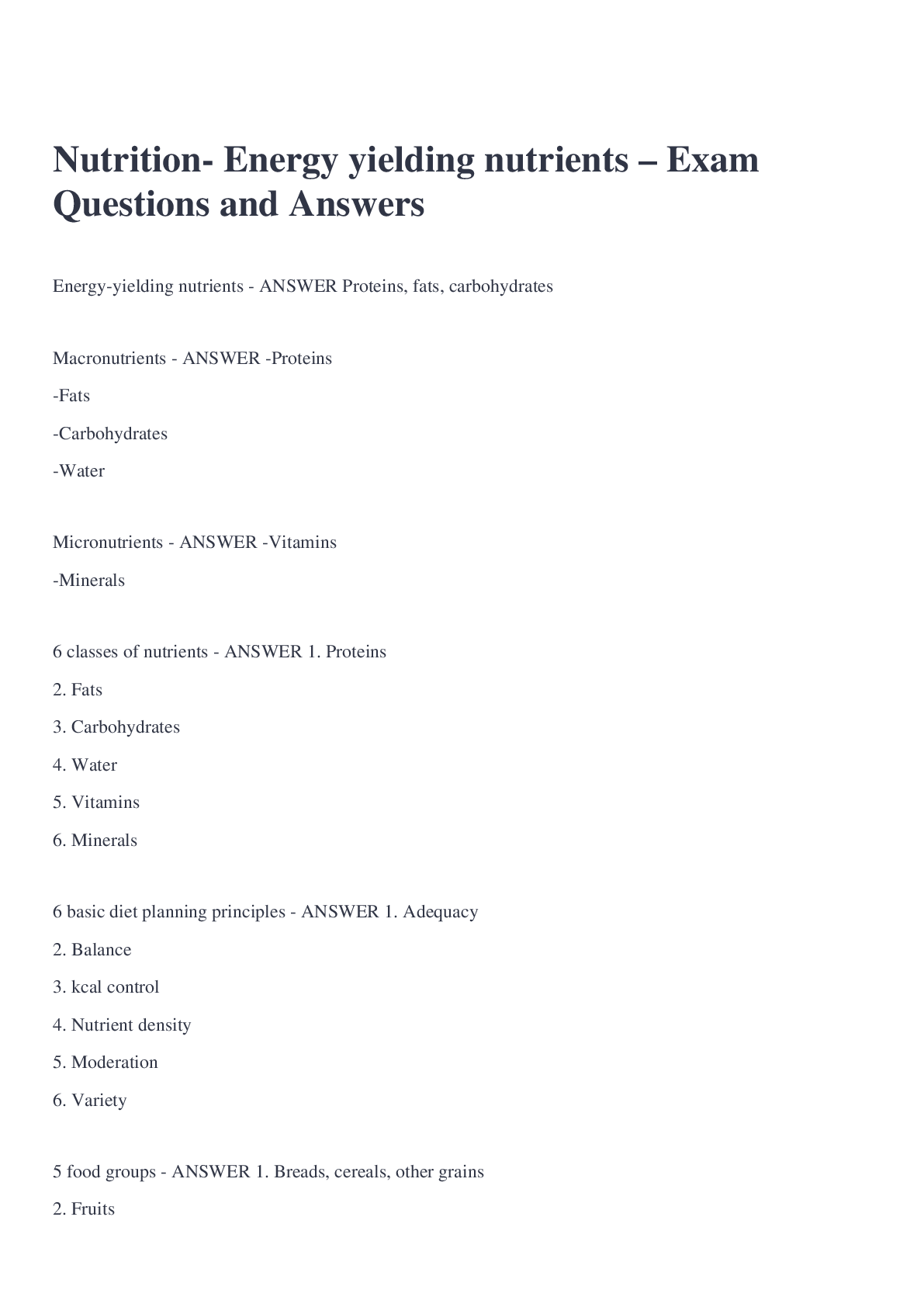
Energy-yielding nutrients - ANSWER Proteins, fats, carbohydrates
Macronutrients - ANSWER -Proteins
-Fats
-Carbohydrates
-Water
Micronutrients - ANSWER -Vitamins
-Minerals
6 classes of nutrients - ANSWER 1. P
...
Energy-yielding nutrients - ANSWER Proteins, fats, carbohydrates
Macronutrients - ANSWER -Proteins
-Fats
-Carbohydrates
-Water
Micronutrients - ANSWER -Vitamins
-Minerals
6 classes of nutrients - ANSWER 1. Proteins
2. Fats
3. Carbohydrates
4. Water
5. Vitamins
6. Minerals
6 basic diet planning principles - ANSWER 1. Adequacy
2. Balance
3. kcal control
4. Nutrient density
5. Moderation
6. Variety
5 food groups - ANSWER 1. Breads, cereals, other grains
2. Fruits
3. Vegetables
4. Meat, poultry, alternatives
5. Dairy
Dairy milk - ANSWER High in proteins, vitamin D, calcium
Almond milk - ANSWER -Not a good source of protein or calcium
-Fewer calories than other milks (good for CRF patients)
-No lactose
-Available with fortified calcium
-High in vitamin A and D
-No saturated fat or cholesterol
Soy milk - ANSWER -Good source of protein, vitamin A, B12, D and potassium
-No cholesterol
-Suspected for reducing male fertility
-Soy sterol may interfere with progesterone production in pregnancy, may counteract effects of chemo and tamoxifen therapy
Isoflavones in soy milk - ANSWER -May help decrease incidence of breast and prostate cancer
-May lower postpartum sx
Rice milk - ANSWER -The least allergenic of milk alternatives
-Good source of calcium if fortified
-Okay for vegans
2010 Dietary Guidelines for Americans recommends eating within the following ranges - ANSWER -Carbohydrates: 45-65% of calories
-Fat: 20-35% of calories
-Protein: 10-35% of calories
Carbohydrates - ANSWER -Body's main fuel source
-Glucose and glycogen provide about 1/2 of all the energy muscles and body tissues use
-Eaten and broken down into simple glucose units and stored as branches of glucose in the form of glycogen
Dietary carbohydrates include - ANSWER -Simple sugars: monosaccharides, disaccharides
-Complex carbohydrates: starches and fibers
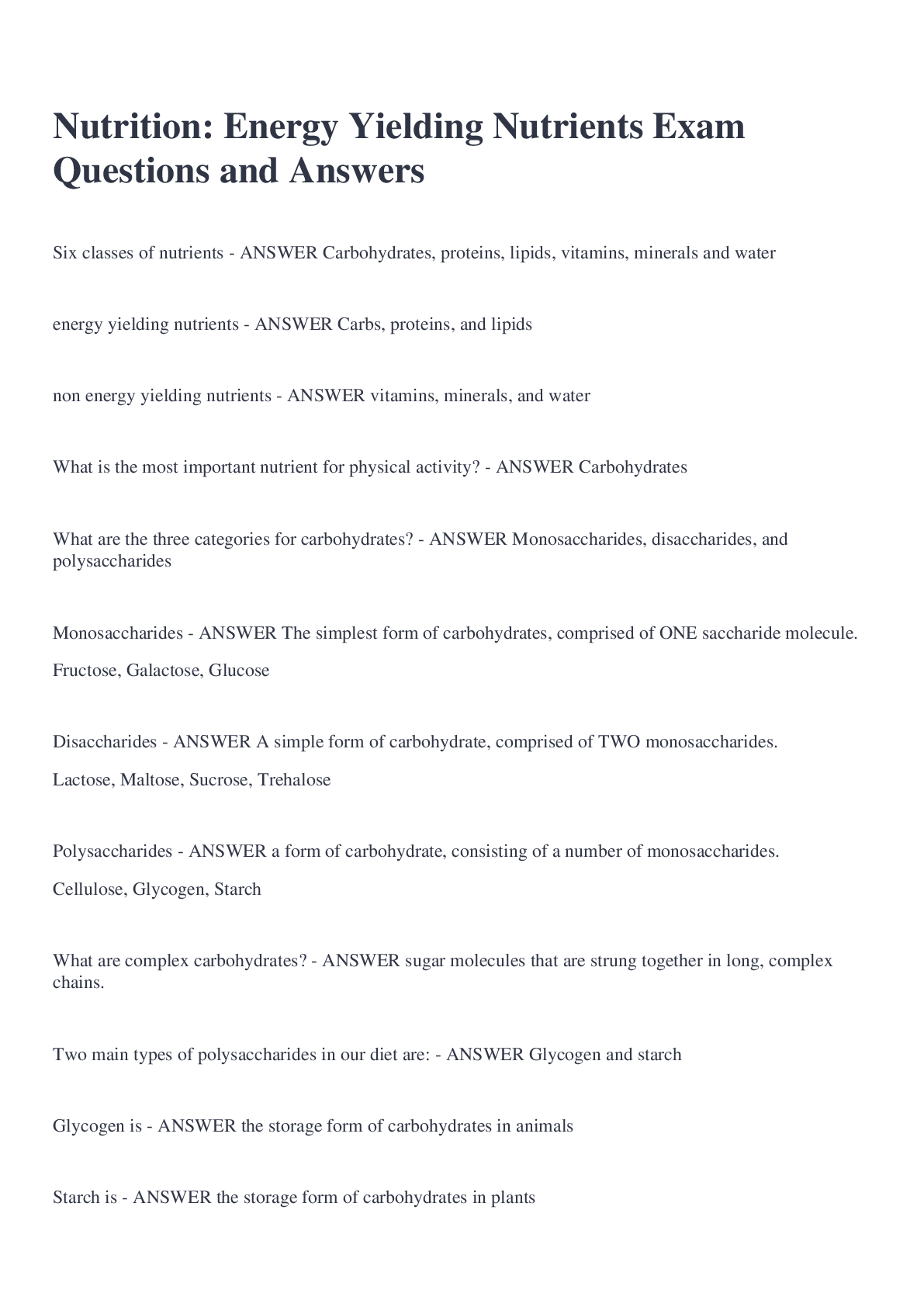
Monosaccharides - ANSWER -Fructose, glucose, galactose
-Named by number of carbohydrates
Disaccharides - ANSWER -Sucrose (glucose+fructose)
-Lactose (galactose+glucose)
-Maltose (glucose+glucose)
Complex carbohydrates - ANSWER -Contain many glucose units and a few other monosaccharides strung together as polysaccharides
Glycogen - ANSWER -Complex carbohydrate
-Storage form of energy in humans and animals
-Hundreds of glucose molecules linked together in highly branched chains
-Found only to a limited extent in meats and not at all in plants
-This arrangement permits rapid hydrolysis
FODMAP - ANSWER -Short chain of carbohydrates that are poorly absorbed in the small intestine
-Feeds gut bacteria, making it a prebiotic
-"Fermentable Oligo-, Di-, Mono-saccharides And Polyols
FODMAP restriction - ANSWER -Found to improve symptom control in people with IBS and other functional GI disorders that involve visceral hypersensitivity and impaired GI motility
High FODMAP foods - ANSWER -High lactose cheeses
-High fructose fruits and veggies
-Foods high in fructans
-High polyol foods
Low FODMAP foods - ANSWER -Green beans, carrots, chives
-Oranges, grapes, melon
-Meats, fish, chicken, tofu, tempeh
-Lactose-free milk, lactose-free yogurts, hard cheese
-Gluten free bread
-Almonds, pumpkin seeds
-Water, coffee, tea
Glucose monomers are linked by - ANSWER Glycosidic bonds
Oligosaccharides - ANSWER -3-9 sugars
-Prebiotics
-Grains, pectin, human breast milk
Fructo-oligosaccharides - ANSWER -FOS
-Jerusalem artichokes, onions, garlic
Galacto-oligosaccharides - ANSWER -GOS
-Beans, peas, lentils, cabbage, whole grains, soybeans
Polysaccharides - ANSWER -10 or more sugars
-Starch, glycogen, cellulose
Starch - ANSWER -Plant cells store glucose as starches in long branched or unbranched chains with hundreds or thousands of glucose units
-Amylopectin and amylose
Amylopectin - ANSWER -1 or 2 components of starch w/ occasionally branched chains
-Starches high in this are digested and absorbed more quickly than starches w/ high amylose
-Potatoes, corn, white rice and pasta
-Polymer of glucose
Amylose - ANSWER -The other starch component that is composed of unbranched chains of glucose
-Provides a high fiber source w/ low glycemic index
-Legumes, bananas, sweet potatoes, whole grains
-Polymer of glucose
Glycemic index - ANSWER -Measures starch digestibility
-Foods w/ higher fiber content are less digestible
-Ratio of amylopectin to amylose
-Higher amylose, lower glycemic index
Fiber - ANSWER -Structural parts of plants
-Nonstarch polysaccharide
-Cellulose, hemicellulose, pectins, gums, mucilages, lignins
-Differ from starch polysaccharides in that the bonds between the monosaccharides cannot be broken down by human digestive systems
Hemicellulose - ANSWER Form parts of cell walls like cellulose, but have much smaller chains of glucose, not as structurally sound
Mucilage - ANSWER Thick, gluey substance produced by plants. Seeds, cacti, aloe vera, Sundew plant.
Pectin - ANSWER Important cell wall polysaccharide. Pears, apples, plums, gooseberries.
Gums - ANSWER Used in thickening agents, gelling agents, emulsifying agents, stabilizers
Lignins - ANSWER Help form woody parts of plants
Soluble fiber - ANSWER -Delays GI transit
-Delays glucose absorption
-Lowers blood cholesterol
-Pectins, gums, mucilages, some hemicellulose
-Soluble in water and forms a gel
Soluble fiber is found in - ANSWER -Fruits (apples, pears, citrus, strawberries)
-Oats
-Barley
-Legumes
-Carrots
Insoluble fiber - ANSWER -Accelerates GI transit
-Promotes bowel movements
-Slows starch hydrolysis
-Delays glucose absorption
-Cellulose, lignans, many hemicelluloses
Insoluble fiber found in - ANSWER -Wheat bran
-Corn bran
-Whole grains
-Vegetables
Lipid family includes - ANSWER -Triglycerides
-Phospholipids
-Sterols
Triglycerides contain - ANSWER A glycerol and 3 fatty acids
Fatty acids - ANSWER -4-24, Even number of carbons
-Either saturated or unsaturated
-2 are essential: linoleic and linolenic
Essential fatty acids - ANSWER -Linoleic acid (omega 6)
-Linolenic acid (omega 3)
-Used to make cell membranes and eicosanoids (help regulate BP, clotting, blood lipids, and immune response
DHA and EPA - ANSWER -Come from linolenic acid
-Essential for normal growth and development
-May play a role in treatment and prevention of heart disease, htn, arthritis, and cancer
Arachidonic acid - ANSWER -Comes from linoleic acid
-Precursor to eicosanoids
-Subfamily of eicosanoids: prostaglandins, thromboxanes, leukotrienes
Where are triglycerides predominately found? - ANSWER -Solid fats and liquid oils (carry with them fat soluble vitamins)
-In the body as energy storage
Function of triglycerides - ANSWER Provide the body with a steady amount of energy, keep it warm, a source for hormone regulators
Phospholipids and sterols - ANSWER Contribute to cell structure
Cholesterol - ANSWER -Sterol
-Serves as the raw material for hormones, vit D, and bile
MUFA - ANSWER -One double bond
-Liquid at room temperature
-Canola oil, olive oil, avocados, almonds, pistachios, peanuts, pecans
-Healthiest of all fat
-Plant sources
What helps to lower LDL and TG if used in place of saturated fat? Can also raise HDL? - ANSWER MUFAs
PUFAs - ANSWER -2 or more double bonds
-Predominate form in diet is linolenic acid (omega 3, anti-inflammatory properties)
-Does not stick to blood vessel walls
-Does not raise LDL
-Liquid at room temp
-Long chain FA are most common in diet, but some medium and short can come from dairy (6-10 C)
Long chain FA PUFAs - ANSWER -12-24 carbons
-Meat and fish
Omega 3 FAs - ANSWER -Linolenic
-Anti-inflammatory properties
-Reduce CRP levels
-Cardioprotective: interfere with blood clotting and alter prostaglandin sythesis
-Stimulate nitric oxide production: stimulate vasodilation
-Eat fatty fish x2 week
Omega 6 FAs - ANSWER -Linoleic acid
-Proinflammatory
-High intake can have adverse fx on vascular endothelial fxn, stimulate production of inflammatory cytokines
Healthy ratio of omega FAs - ANSWER Healthier to eat low ration of omega 6 to omega 3
Omega 3 supplementation - ANSWER 3-4 gm/day can lower triglyceride levels
Saturated fat - ANSWER -No double bonds- saturated with hydrocarbons
-Increase serum LDL
-LDL sticks to blood vessel walls, clogs arteries
-Animal products
-Vegetable oils: coconut, palm, plam kernel
-Usually solid at room temp
Most potent effect on elevating LDLs, more so than dietary cholesterol - ANSWER Saturated fat
How does saturated fat raise LDL? - ANSWER -Decrease synthesis and activation of LDL receptors, promoting an increase in LDL
-LDL receptor is responsible for the binding and subsequent cellular uptake of apolipoprotein B- and E- containing lipoproteins
Trans fatty acids - ANSWER -Formed when vegetable oils are hydrogenated or partially hydrogenated
-Changes FA double bond from a cis to trans configuration
-Raise LDL and lower HDL
-Found in margarines, fried foods, commercially baked goods
-Hydrogenation increases product shelf life and makes liquid oils solid at room temp
Hydrogenation process - ANSWER Straightens out the molecules so they can lie closer together and become solid rather than liquid
Amino acids - ANSWER -Building blocks of proteins which are needed for growth, development, repair and maintenance of body tissues
Protein - ANSWER -Provides structure to muscle and bone
-Repairs tissues when damaged
-Helps immune cells fight inflammation and infection
-Is always getting used, recycled, sometimes excreted
-Is not stored
Non essential AAs - ANSWER The body can synthesize more than half of the amino acids for itself if given enough nitrogen and
[Show More]