Six classes of nutrients - ANSWER Carbohydrates, proteins, lipids, vitamins, minerals and water
energy yielding nutrients - ANSWER Carbs, proteins, and lipids
non energy yielding nutrients - ANSWER vitamins, minera
...
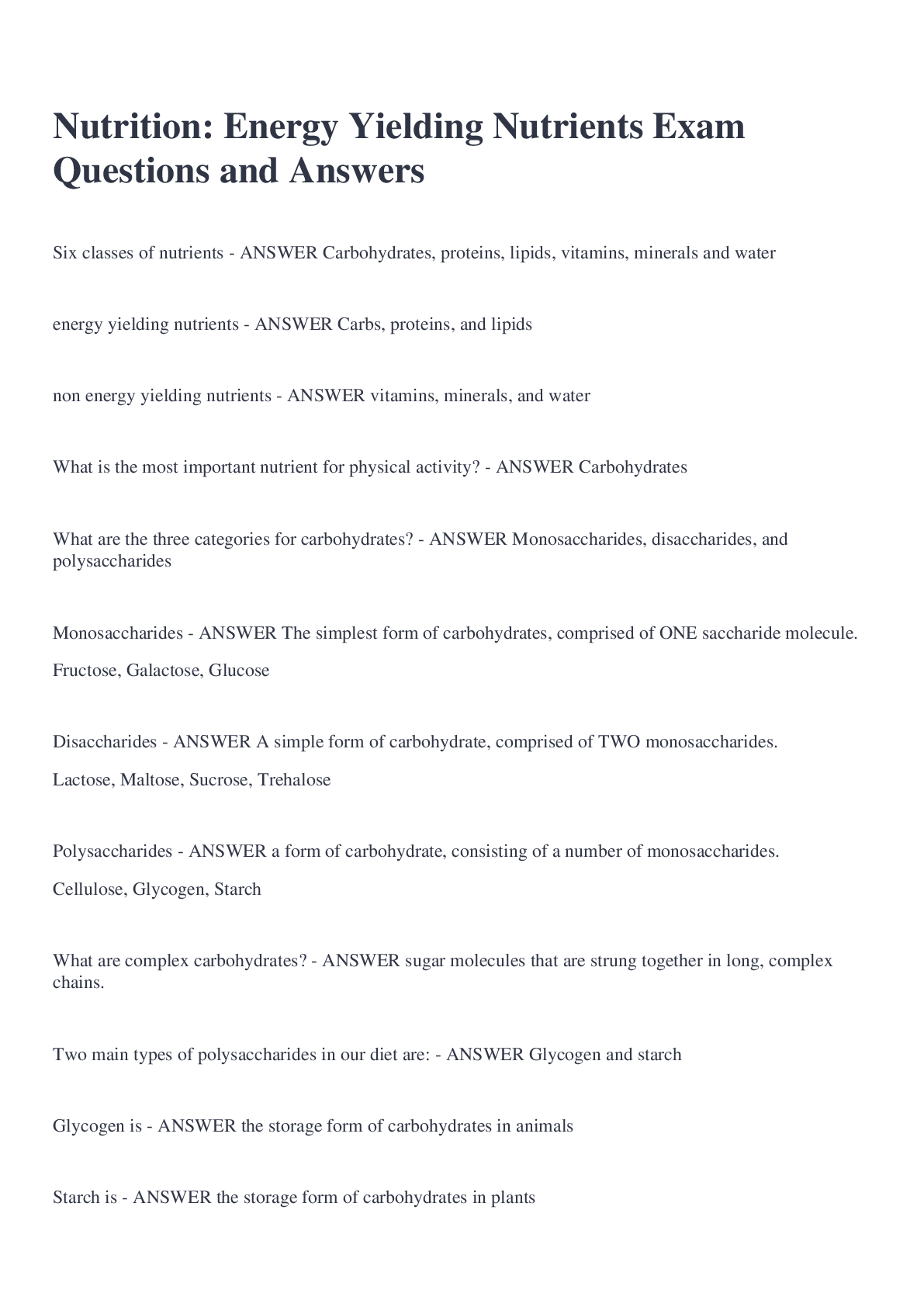
Six classes of nutrients - ANSWER Carbohydrates, proteins, lipids, vitamins, minerals and water
energy yielding nutrients - ANSWER Carbs, proteins, and lipids
non energy yielding nutrients - ANSWER vitamins, minerals, and water
What is the most important nutrient for physical activity? - ANSWER Carbohydrates
What are the three categories for carbohydrates? - ANSWER Monosaccharides, disaccharides, and polysaccharides
Monosaccharides - ANSWER The simplest form of carbohydrates, comprised of ONE saccharide molecule.
Fructose, Galactose, Glucose
Disaccharides - ANSWER A simple form of carbohydrate, comprised of TWO monosaccharides.
Lactose, Maltose, Sucrose, Trehalose
Polysaccharides - ANSWER a form of carbohydrate, consisting of a number of monosaccharides.
Cellulose, Glycogen, Starch
What are complex carbohydrates? - ANSWER sugar molecules that are strung together in long, complex chains.
Two main types of polysaccharides in our diet are: - ANSWER Glycogen and starch
Glycogen is - ANSWER the storage form of carbohydrates in animals
Starch is - ANSWER the storage form of carbohydrates in plants
Plant starch is - ANSWER the most important source of carbohydrates for most Americans
What is fiber? - ANSWER a non-starch polysaccharide, and in the form of cellulose, is the most important organic molecule on earth.
What are the two types of fiber? - ANSWER soluble and insoluble
What are sample foods that are high in fiber? - ANSWER whole grain products, fruits, and leafy green vegetables
i.e. oatmeal, Lima beans, pear, figs, strawberries, apples, green beans
Glucose is the - ANSWER main monosaccharide used by the body. It can be split for ATP, stored later as glycogen
Fructose is - ANSWER nature's fruit sugar
Galactose is - ANSWER animal monosaccharide found in diary products
Sucrose is - ANSWER the most commonly consumed sugar
Lactose is - ANSWER glucose + galactose and is also know as diary sugar
Maltose is - ANSWER formed when two glucose molecules are combined. Present in cereals, germinating seeds and beer
The elevation in blood glucose concentrations is quantified using a measurement system called - ANSWER Glycemic indexing
Glycemic index - ANSWER describes the effect carbohydrate sources have on circulating blood glucose levels by rate and concentration
The rate at which the food increases blood glucose is called - ANSWER Glycemic response
The amount of glucose in the blood is referred to as - ANSWER Glycemic load
Trehalose - ANSWER a sweet tasting disaccharide
Glycemic indexing - ANSWER a rating system for evaluating how different foods affect blood sugar levels
Glycemic Response - ANSWER A measure of the increase of blood sugar after food consumption
Glycemic Load is - ANSWER a ranking system for carbohydrate content in food portions based on their glycemic index and portion size
Hunger mechanism - ANSWER A physiological response to hunger controlled by chemical receptors being stimulated by the hypothalamus in response to reducing levels of blood glucose.
Appetite - ANSWER an instinctive physical desire or caloric need
Thermic Effect of Food - ANSWER The increment in energy expenditure above resting metabolic rate dut to the cost of processing food for storage and use
Protein-Sparing Mechanism - ANSWER The body's preferential utilization of fats and carbohydrates instead of protein for energy
Low carbohydrate diets are know as: - ANSWER Ketogenic diets
Simple lipids - ANSWER oils or fats containing one or two different types of compounds
Compound Lipids - ANSWER Phosphlipids and glycol-lipids, which frequently contain three or more chemical identities
Derived Lipids - ANSWER Includes sterols and fatty acids
Monounsaturated Fatty Acids - ANSWER any large group of meonobasic acids found in animal and vegetable fats and oils
Polyunsaturated Fatty Acid - ANSWER an unsaturated fatty acid with a carbon chain containing more than double or triple valence bond per molec
[Show More]