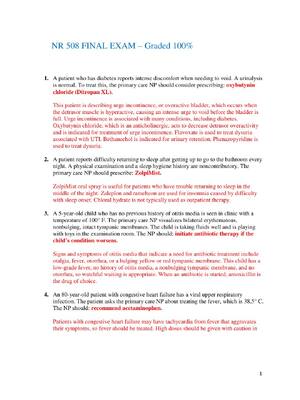
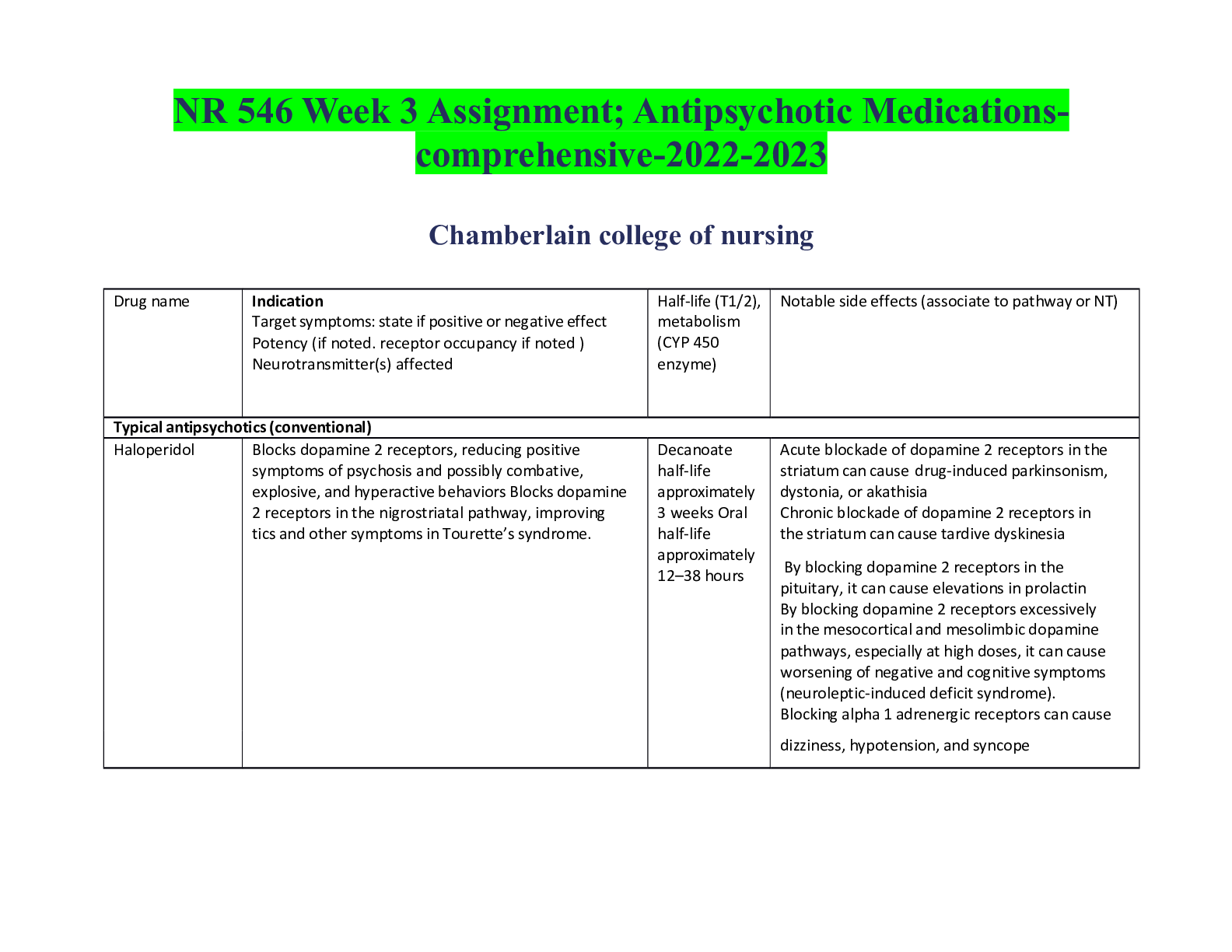
NR 546 Week 3 Assignment-Antipsychotic Medications-comprehensive-2022-2023
Document Content and Description Below
NR 546 Week 3 Assignment-Antipsychotic Medications-comprehensive-2022-2023
Chamberlain college of nursing
Drug name Indication
Target symptoms: state if positive or negative effect Potency (if noted. receptor oc
...
[Show More]
Last updated: 3 years ago
Preview 1 out of 20 pages
Instant download
Buy this Document to get the Full Access Instantly
Provided by Students Who Aced it
We Verify Document Content to Gurantee Accuracy
Reviews( 0 )
Document information
Connected school, study & course
About the document
Uploaded On
Nov 09, 2022
Number of pages
20
Written in
All

Additional information
This document has been written for:
Uploaded
Nov 09, 2022
Downloads
0
Views
114
Topic Tags
Recommended For You
Get more on EXAM »

$15
13 Pages
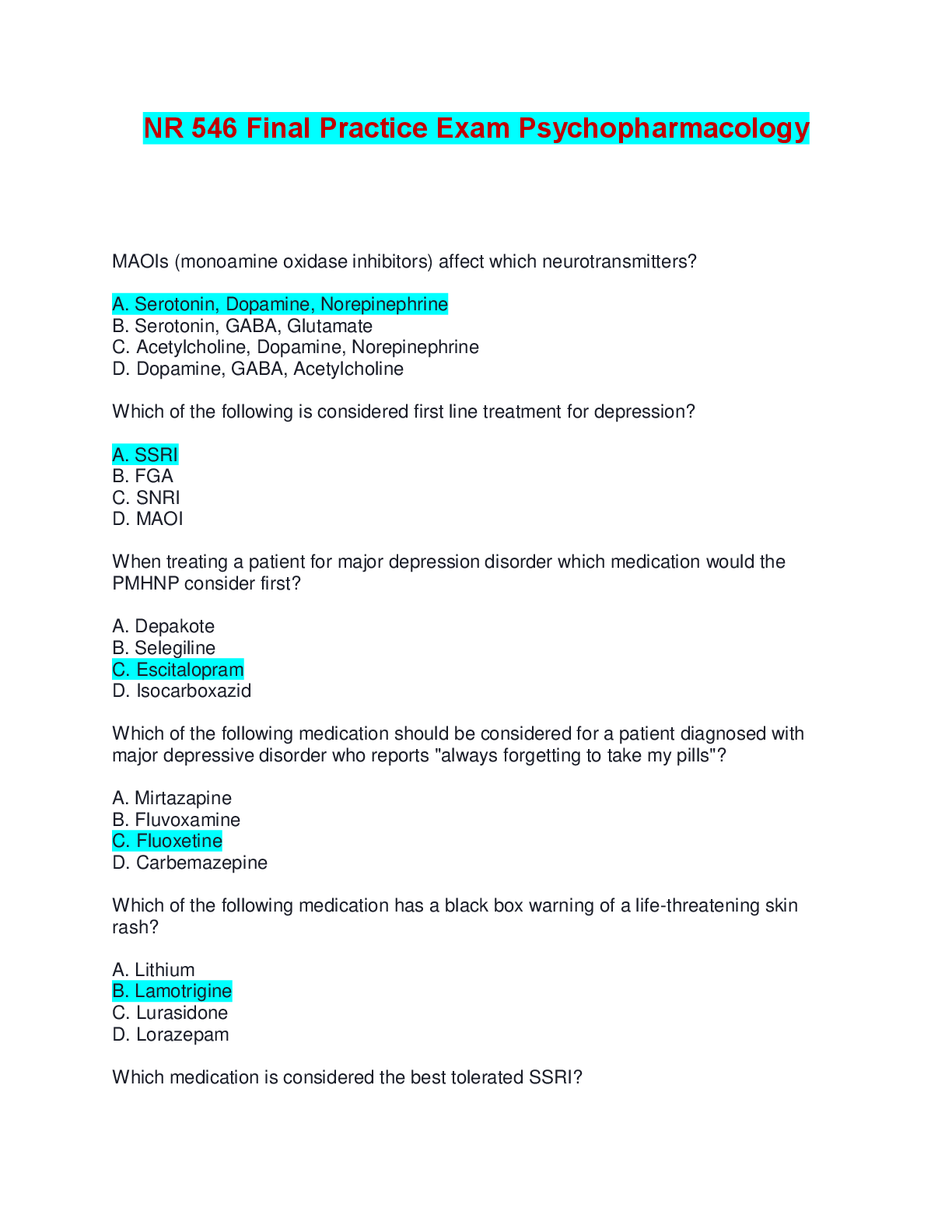
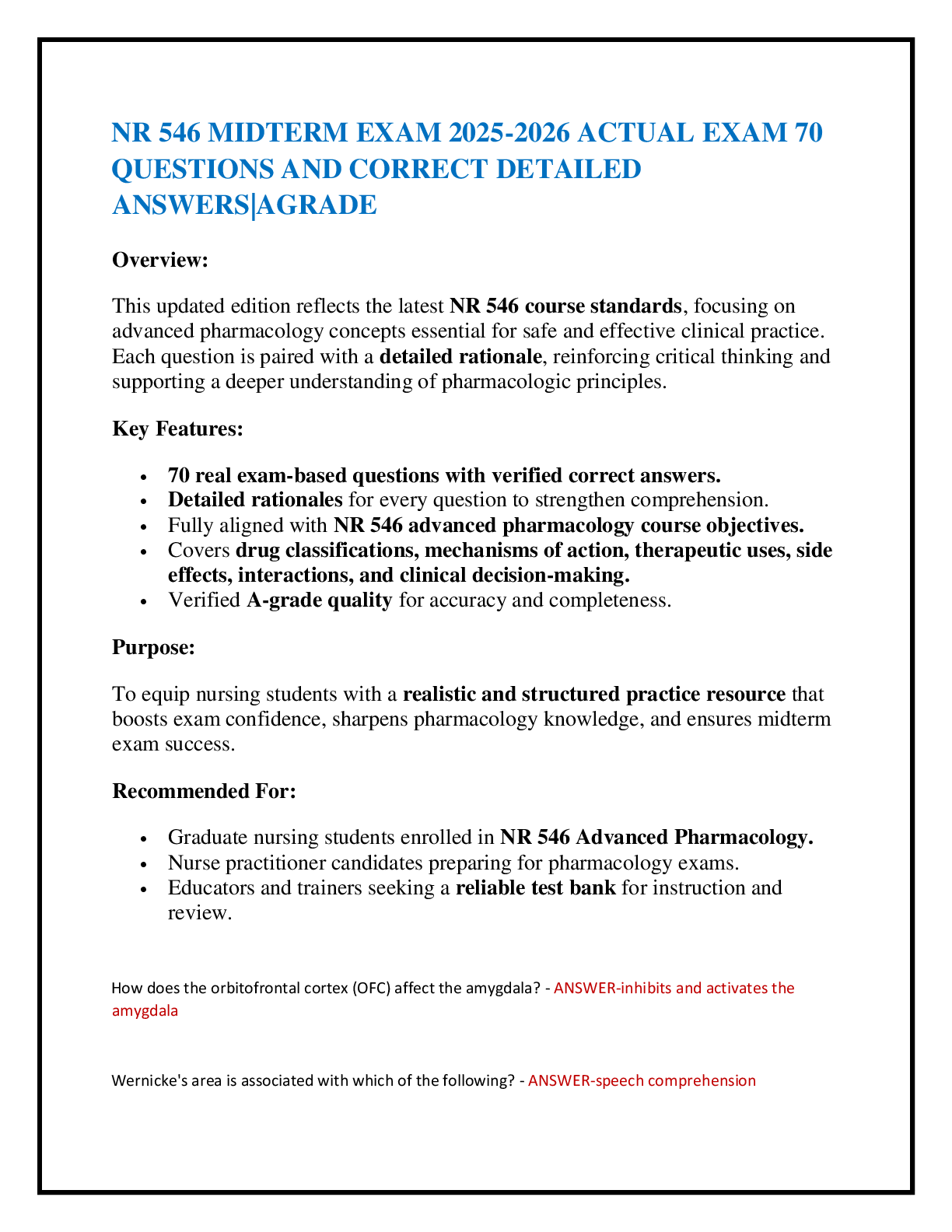
NR 546 Midterm Exam Questions and Answersj Latest Update 2023...
$17
96 Pages
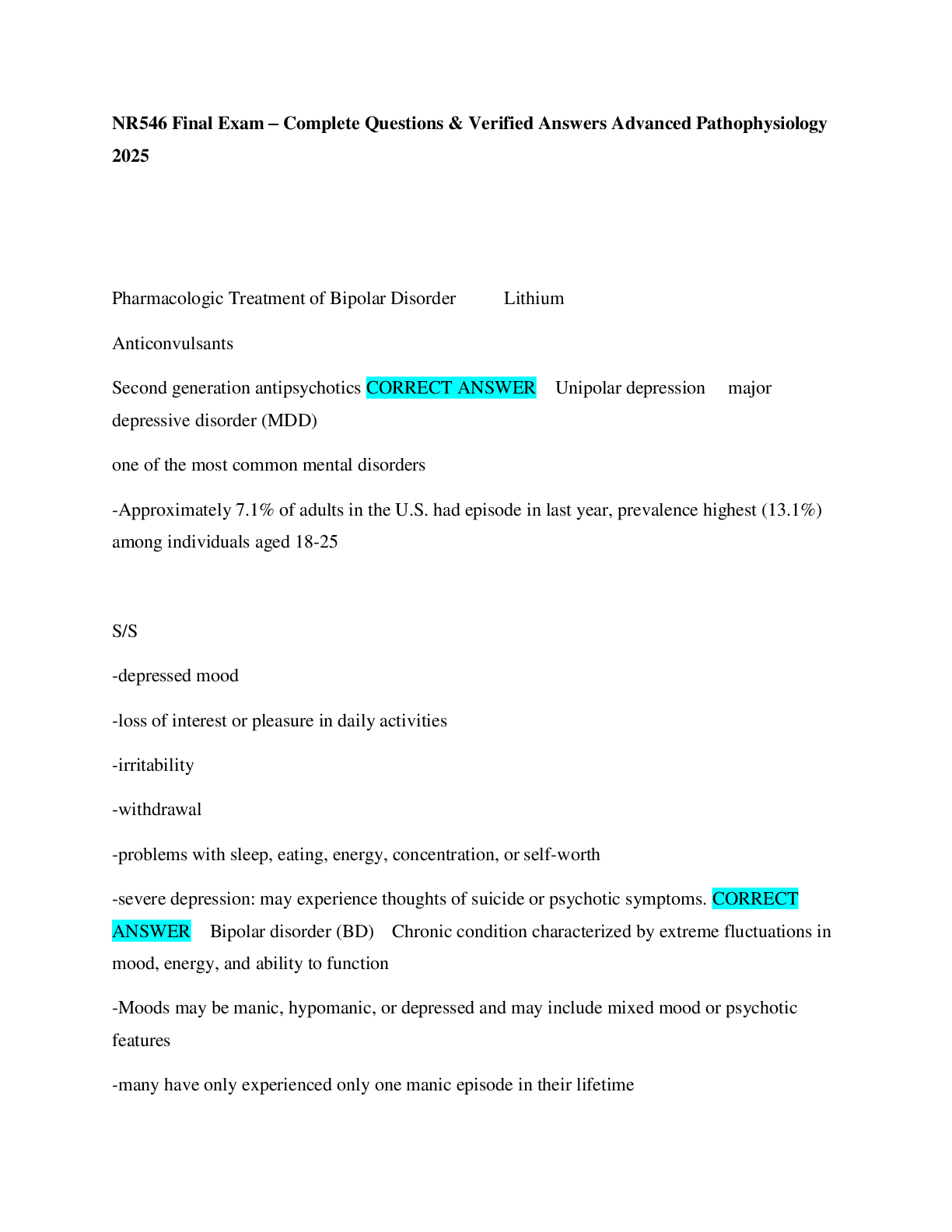
NR546 Midterm Exam Guide 2025-2026 With Questions and Verifie...
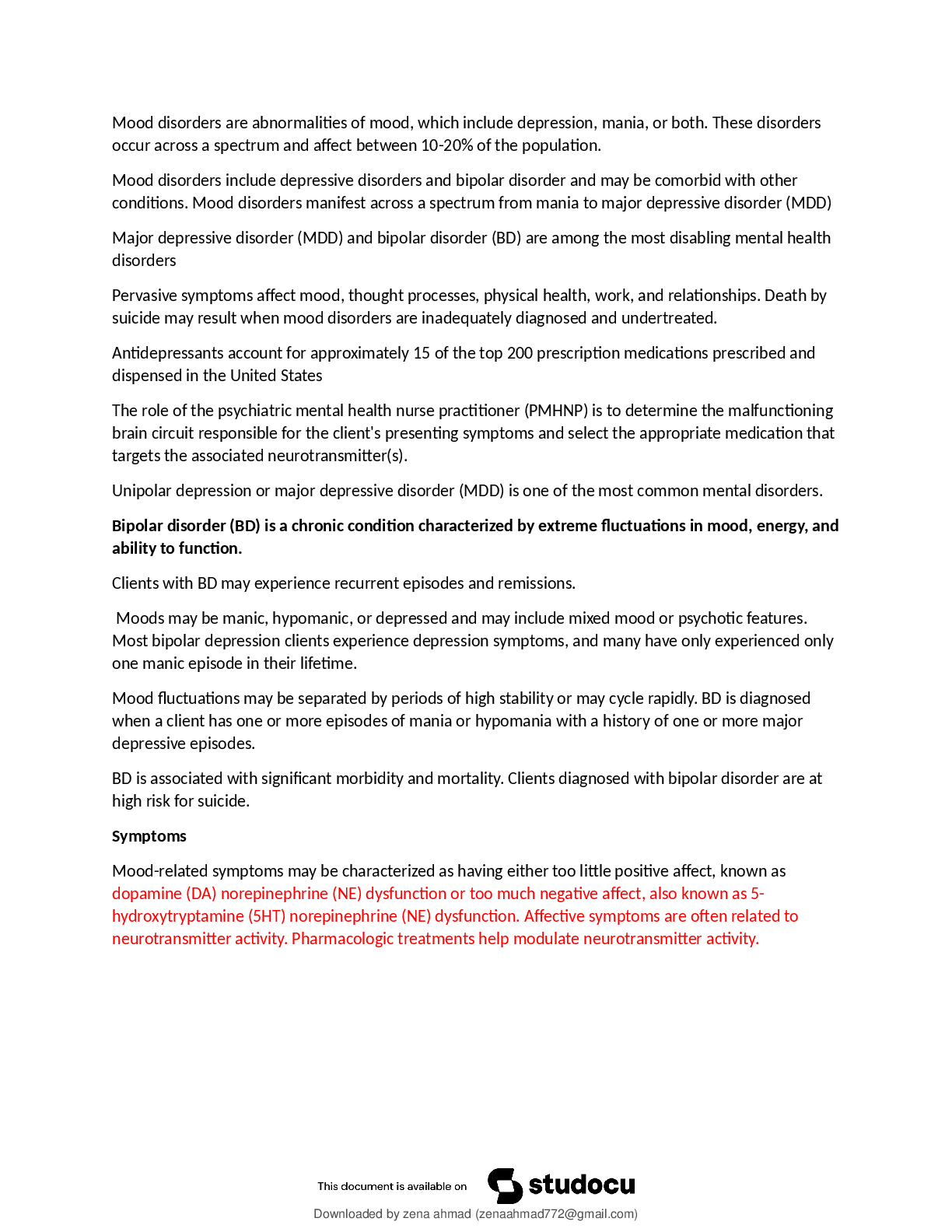
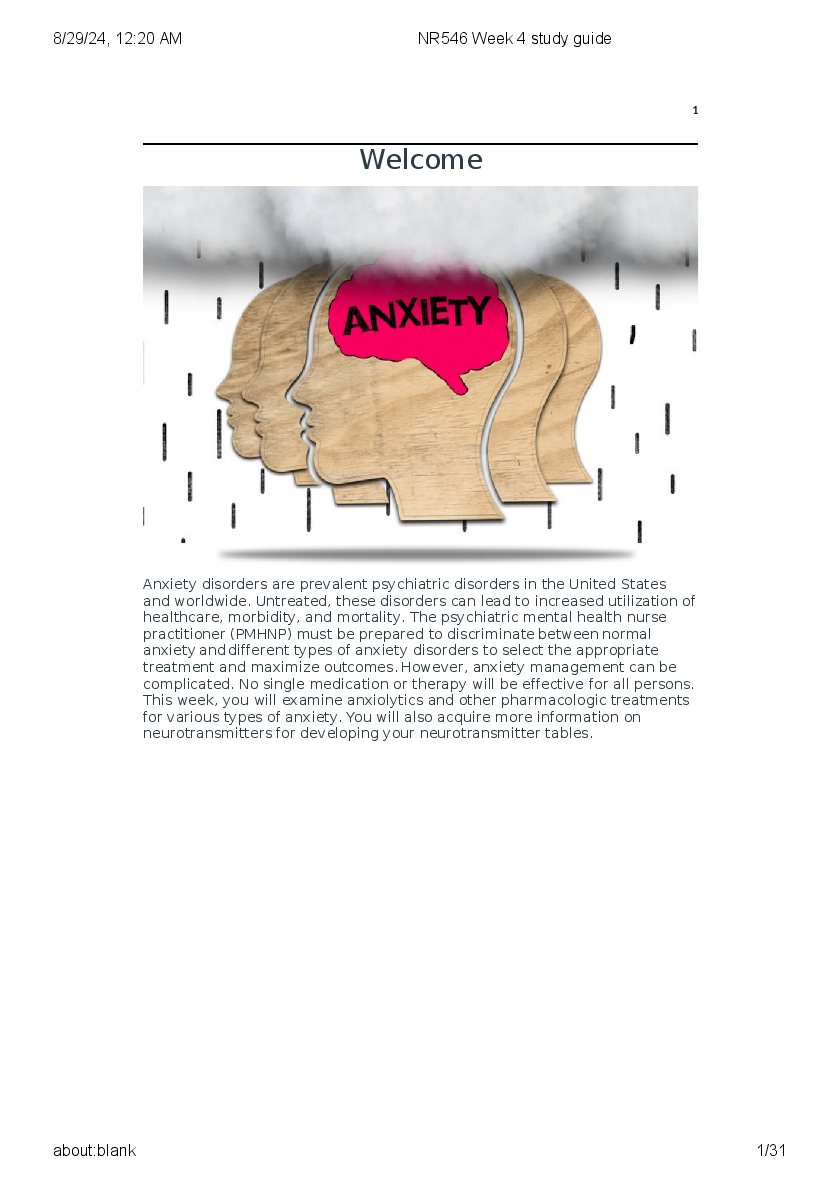
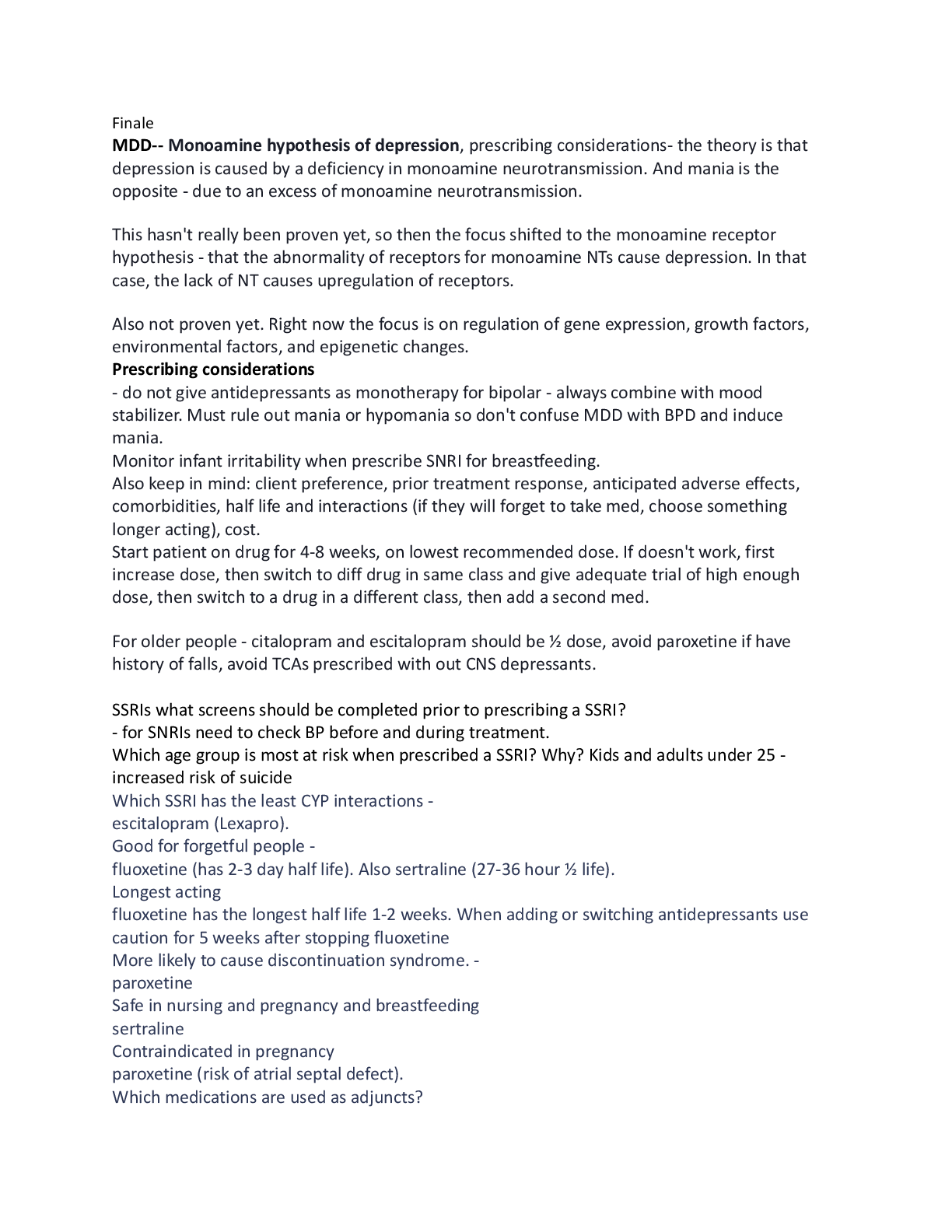
$10.5
14 Pages
NR 546 Week 5 Antidepressant and Mood Stabilizer Medication Ta...
$10
11 Pages
2025 NR 546 WEEK 3 CASE STUDY AND NR 546 WEEK 3 DISCUSSION UPD...

$21.5
38 Pages
NR 546 – Psychopharmacology for the Psychiatric-Mental Health...
More related documents below