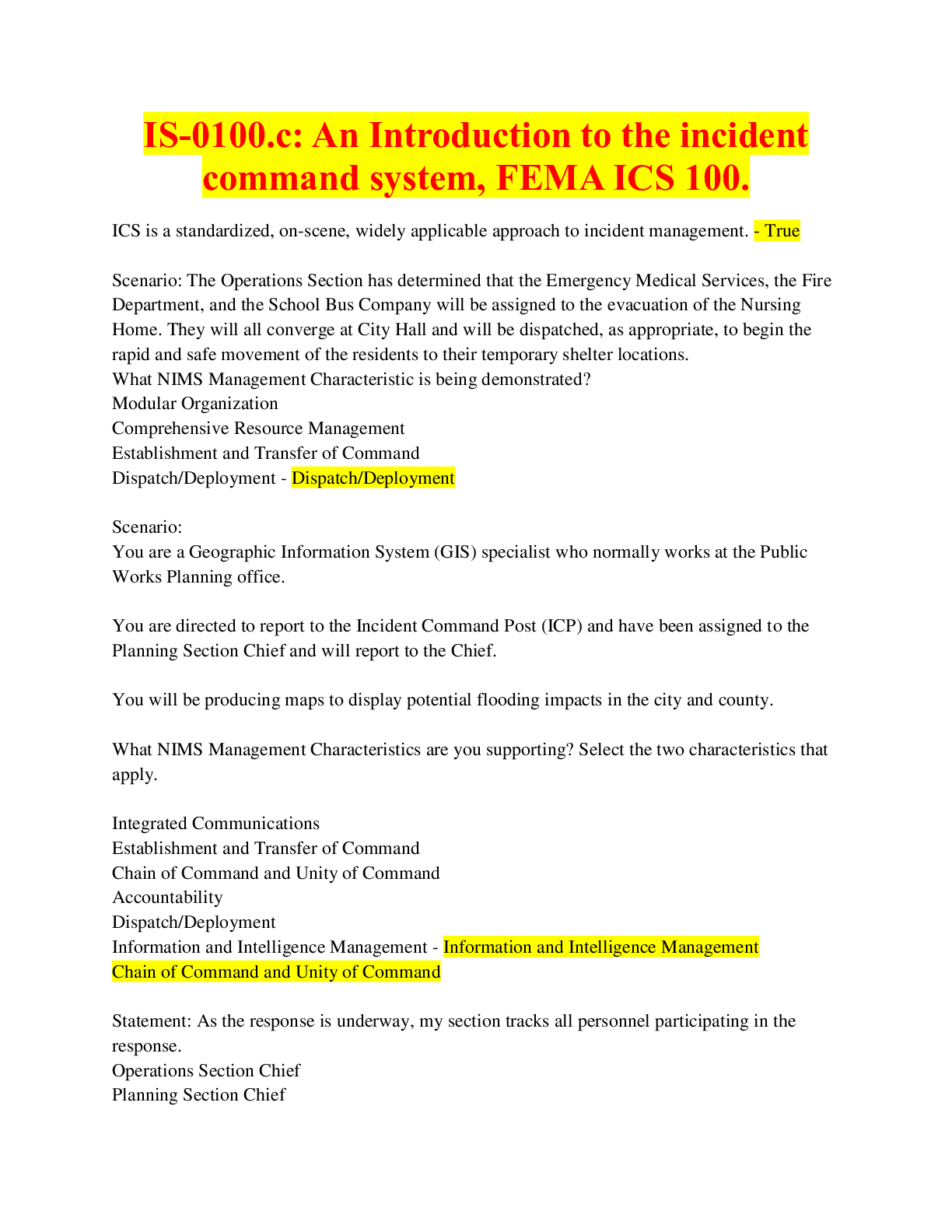
ICS is a standardized, on-scene, widely applicable approach to incident management.
True
Scenario: The Operations Section has determined that the Emergency Medical Services, the Fire Department, and the School Bus
...
ICS is a standardized, on-scene, widely applicable approach to incident management.
True
Scenario: The Operations Section has determined that the Emergency Medical Services, the Fire Department, and the School Bus Company will be assigned to the evacuation of the Nursing Home. They will all converge at City Hall and will be dispatched, as appropriate, to begin the rapid and safe movement of the residents to their temporary shelter locations.
What NIMS Management Characteristic is being demonstrated?
Modular Organization
Comprehensive Resource Management
Establishment and Transfer of Command
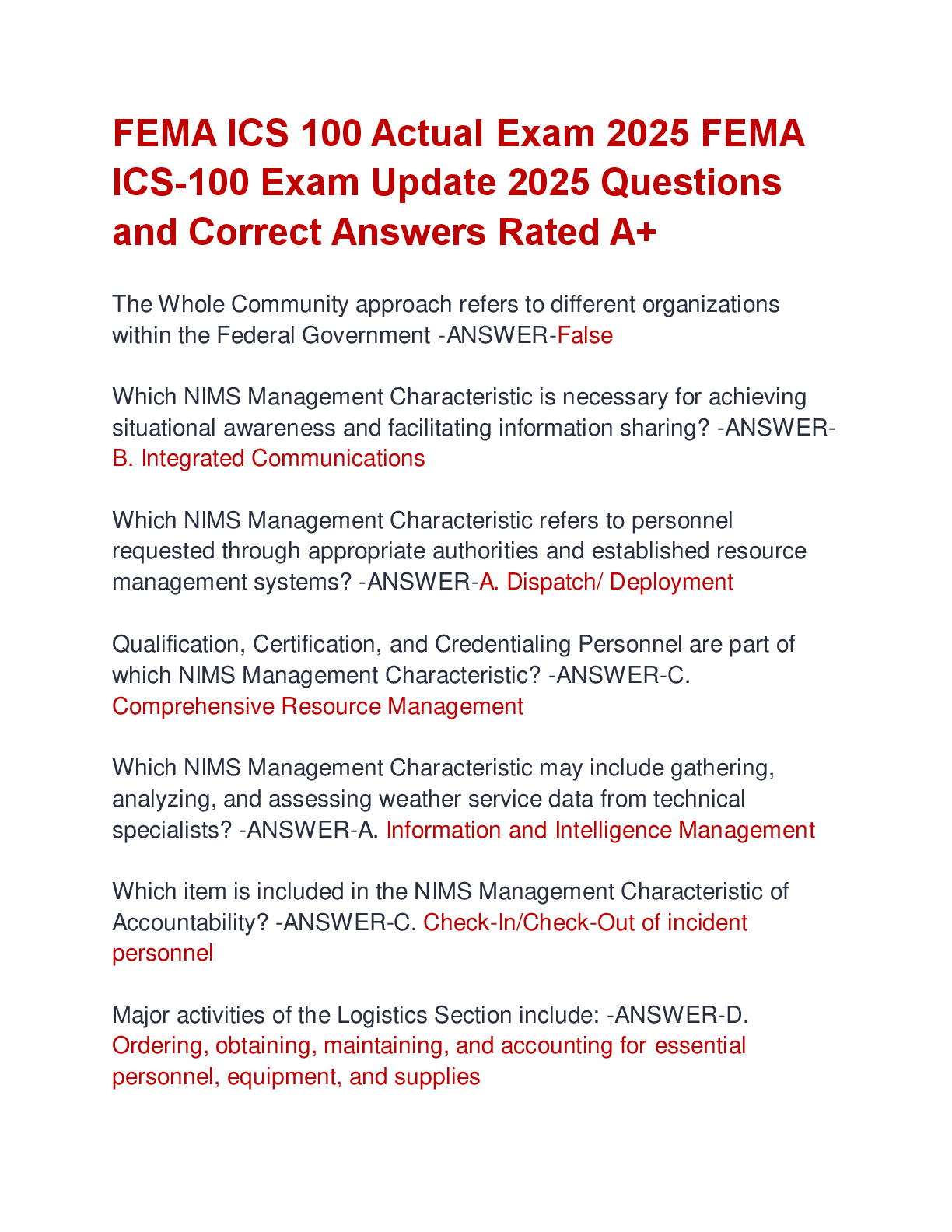
Dispatch/Deployment
Dispatch/Deployment
Scenario:
You are a Geographic Information System (GIS) specialist who normally works at the Public Works Planning office.
You are directed to report to the Incident Command Post (ICP) and have been assigned to the Planning Section Chief and will report to the Chief.
You will be producing maps to display potential flooding impacts in the city and county.
What NIMS Management Characteristics are you supporting? Select the two characteristics that apply.
Integrated Communications
Establishment and Transfer of Command
Chain of Command and Unity of Command
Accountability
Dispatch/Deployment
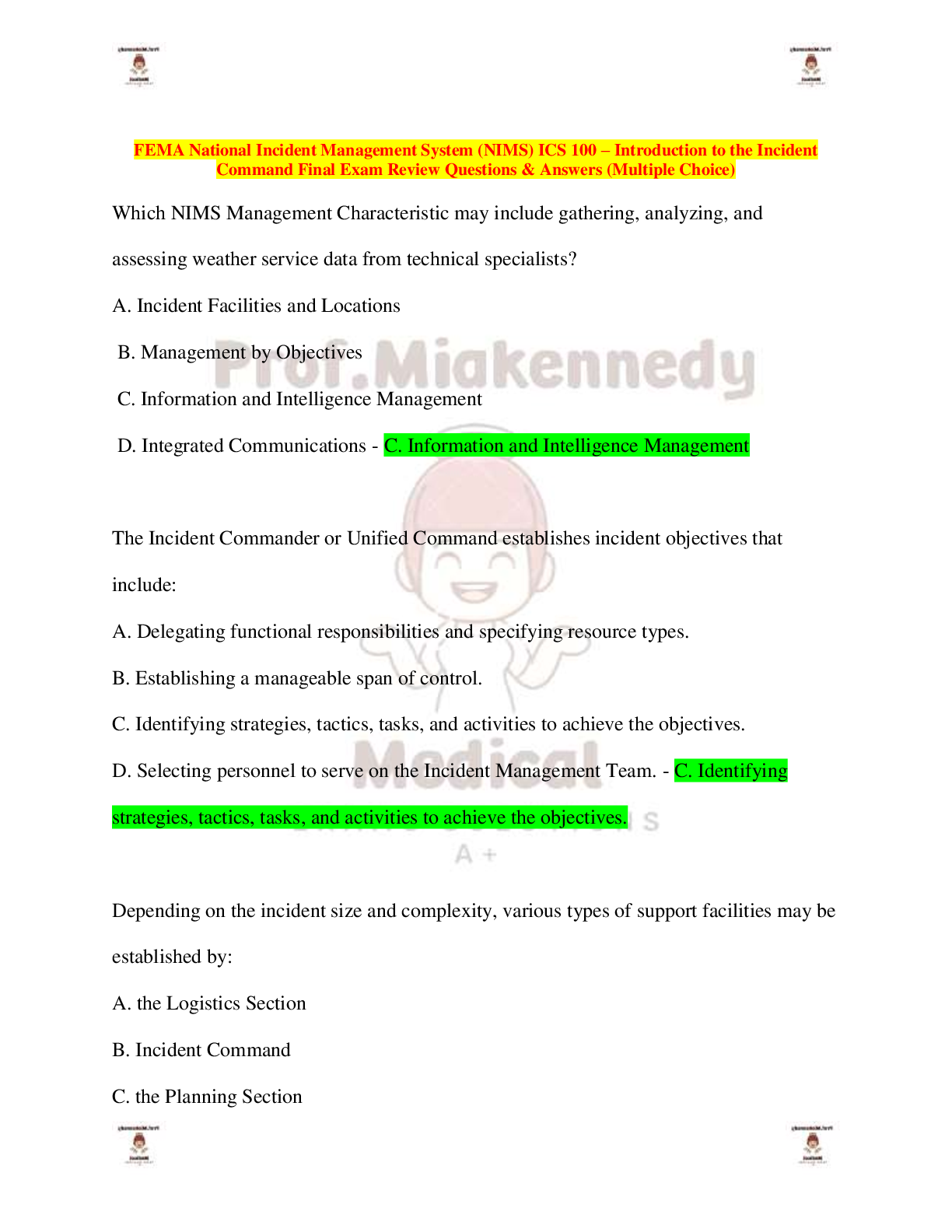
Information and Intelligence Management
Information and Intelligence Management
Chain of Command and Unity of Command
Statement: As the response is underway, my section tracks all personnel participating in the response.
Operations Section Chief
Planning Section Chief
Logistics Section Chief
Finance/Administration Section Chief
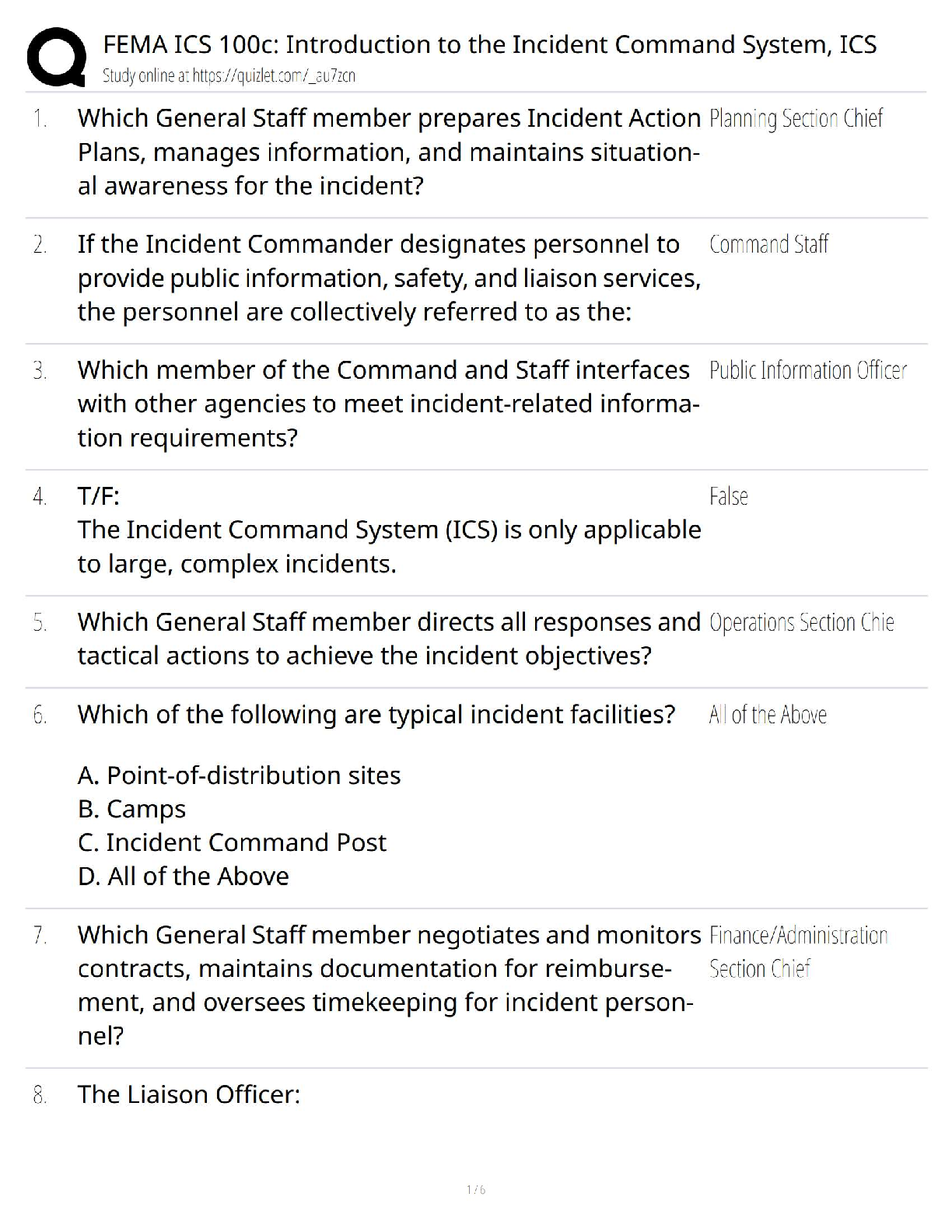
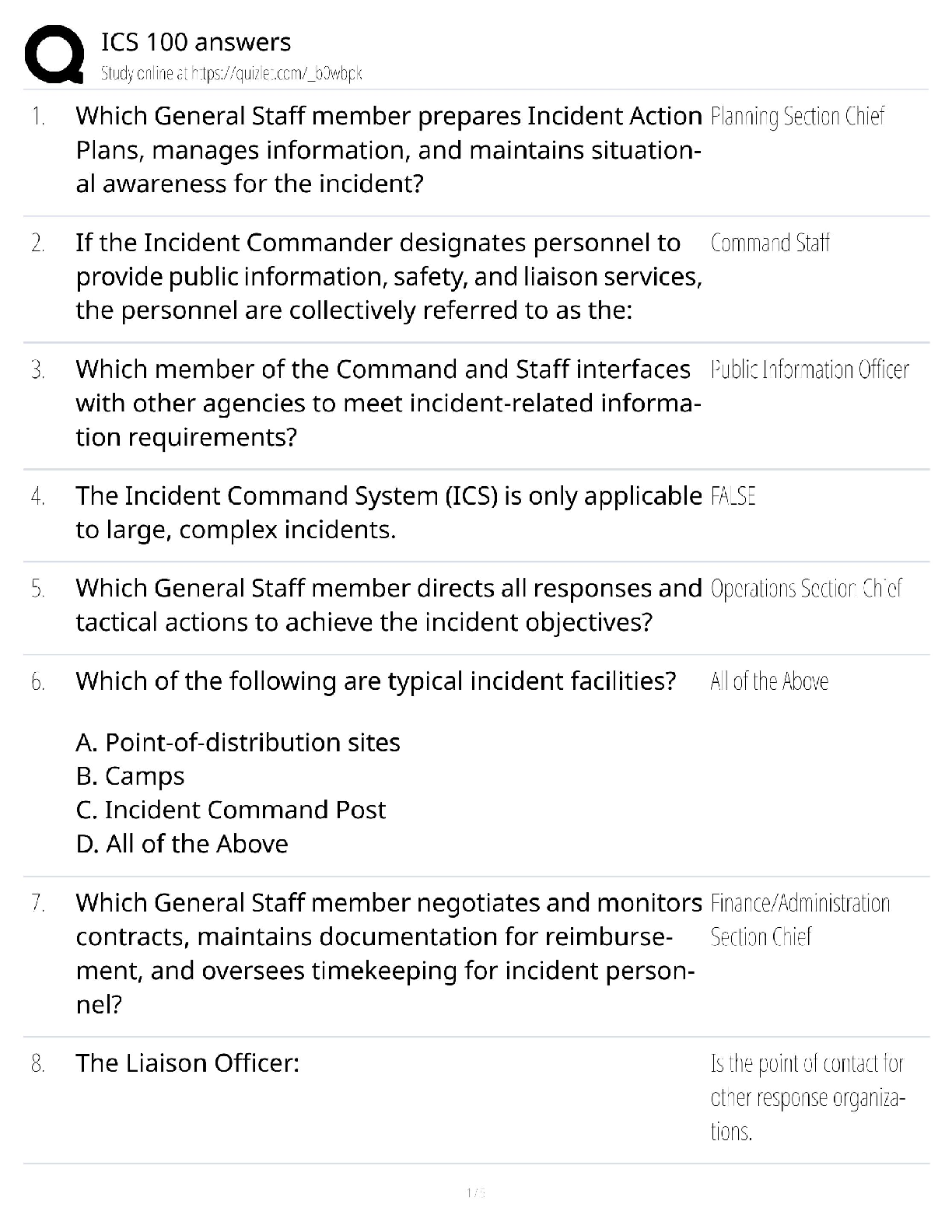
Planning Section Chief
Statement: I am the primary contact for anyone who wants details about the incident and our response to it. I serve an external audience through the media and an internal audience including incident staff and agency personnel.
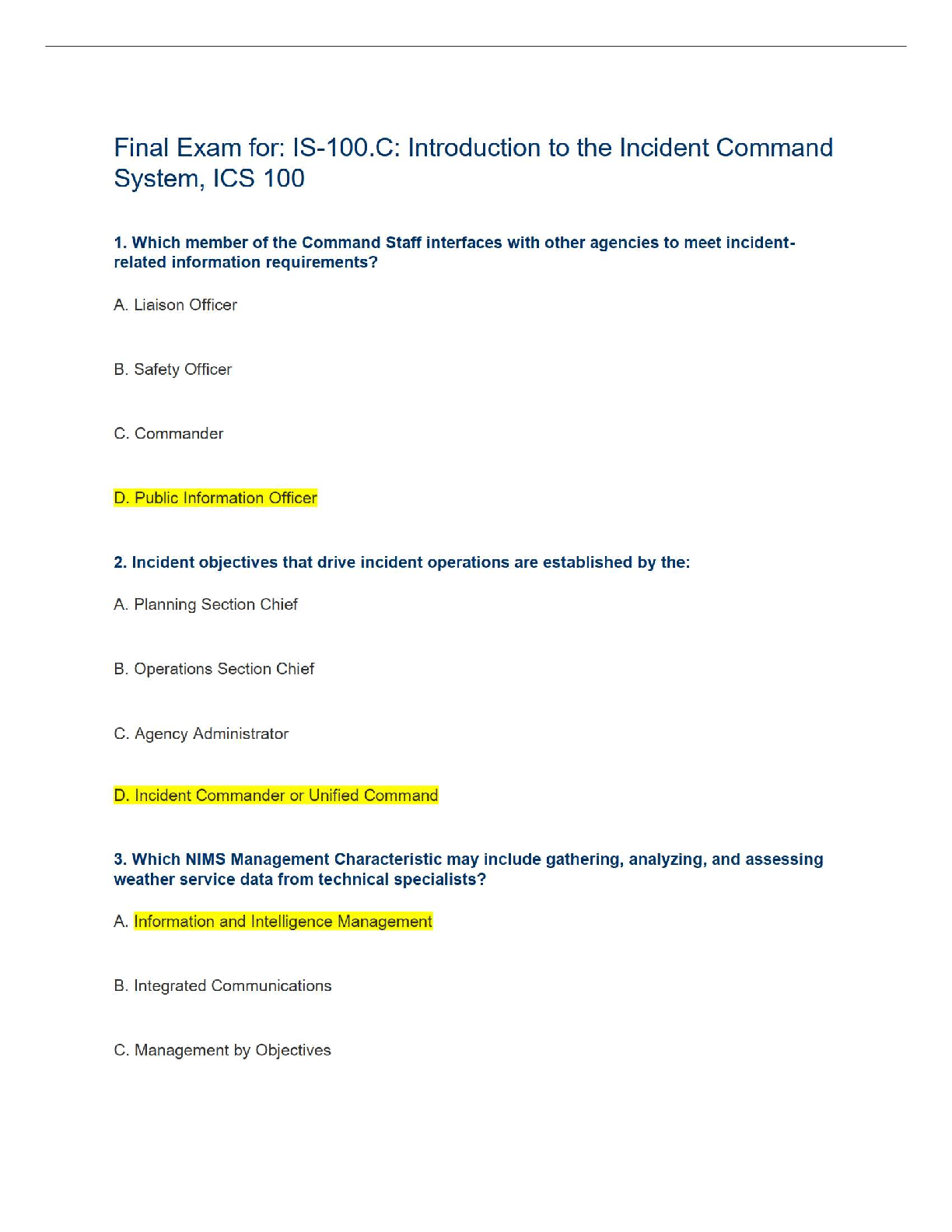
Public Information Officer
Safety Officer
Liaison Officer
Public Information Officer
Statement: I work very closely with Operations to make sure that our people in the field are wearing appropriate protective equipment and implementing safe tactical options.
Public Information Officer
Safety Officer
Liaison Officer
Safety Officer
Supports the incident action planning process by tracking resources, collecting/analyzing information, and maintaining documentation.
Planning
Sets the incident objectives, strategies, and priorities, and has overall responsibility for the incident
Incident Command
Ensures that all intelligence/investigations operations and activities are properly managed, coordinated, and directed
Intelligence/Investigations
Conducts operations to reach the incident objectives. Establishes tactics and directs all operational resources.
Operations
Monitors costs related to the incident. Provides accounting, procurement, time recording, and cost analyses
Finance & Administration
Arranges for resources and needed services to support achievement of the incident objectives.
Logistics
The Incident Command System (ICS) and NIMS are the same, and these terms can be used interchangeably
False
ICS could be used to manage a large sporting event or a visit from a foreign dignitary.
True
Statement: "This is Unit 1, we have a 10-37, Code 2."Does this statement comply with the NIMS Management Characteristic of common terminology?
NO
Which of these is NOT a characteristic of an Incident Action Plan (IAP)?
It specifies incident objectives.
It states the activities to be completed.
It identifies needed resources.
It focuses on previous operational periods in order to provide lessons learned.
It focuses on previous operational periods in order to provide lessons learned.
Span of control refers to the fact that a supervisor can effectively manage an unlimited amount of resources
False
In part, comprehensive resource management describes standard mechanisms used to identify requirements and acquire, mobilize, track, and demobilize resources
True
Integrated communications are necessary to achieve situational awareness.
False
Because incident details are often unknown at the start, command should not be established until after the Incident Action Plan has been developed
False
Unity of command means that every individual is accountable to and reports to only one designated supervisor
True
Chain of command restricts personnel from communicating or sharing information outside their organizational units.
False
To promote accountability, which document outlines the method for coordinating response operations?
National Incident Management System (NIMS) Doctrine
Incident Action Plan
Resource Tracking System
Responder Personnel Roster
Incident Action Plan
Scenario: The Deputy Incident Commander will be replacing the current Incident Commander, who needs to attend to a family emergency.
The current Incident Commander should:
Leave the scene to allow the new Commander to take over
Write an Incident Action Plan for the new Commander
Provide a transfer-of-command briefing to the new Commander
Continue to provide direction to the Deputy Incident Commander while on leave, using teleconferences
Provide a transfer-of-command briefing to the new Commander
Statement: I provide briefings to supporting Agency Representatives and work with them to address their questions and concerns about the operation. I remain visible on the incident scene to all incoming cooperating and assisting agencies.
Public Information Officer
Safety Officer
Liaison Officer
Liaison Officer
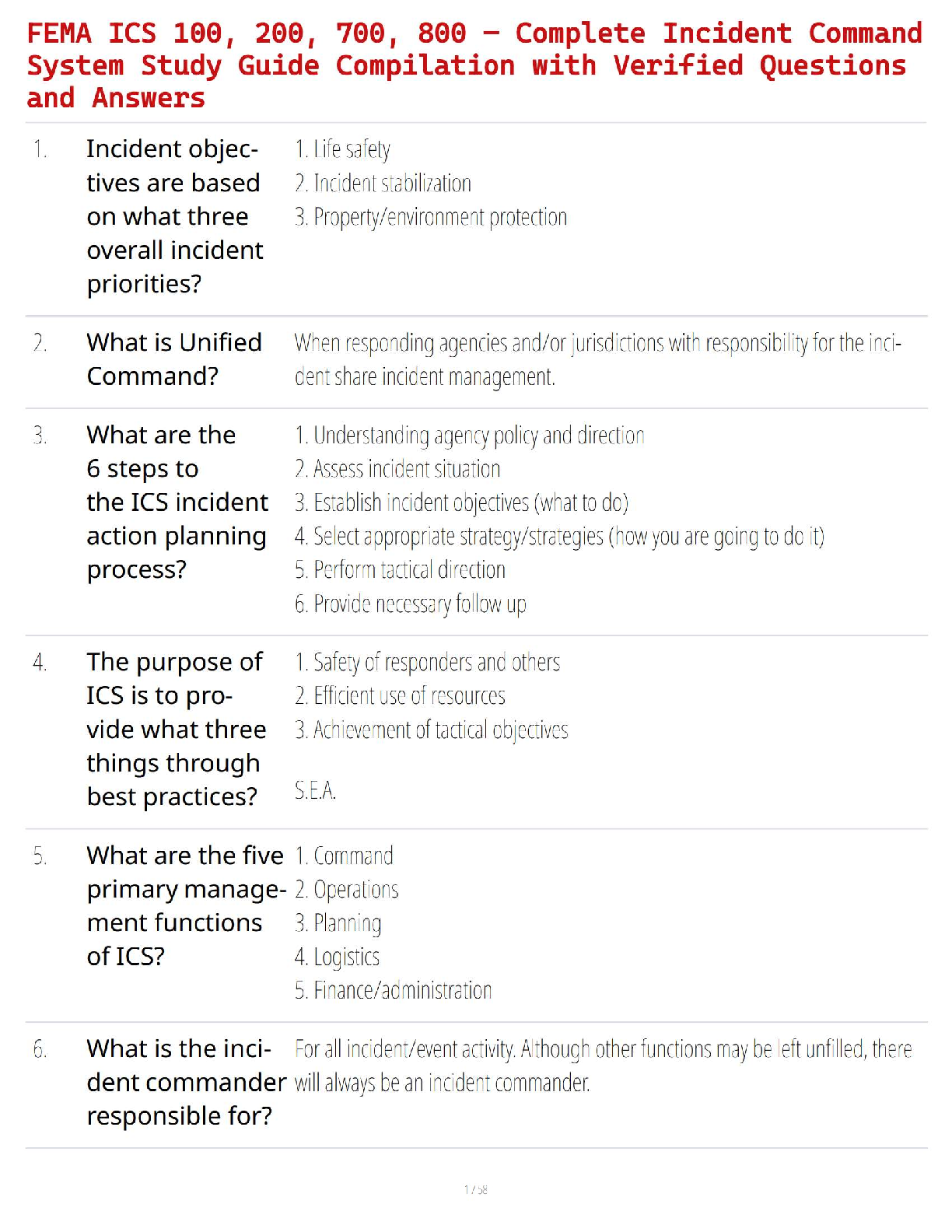
Establish objectives, make assignments, and order resources
Incident Command
Collect, analyze, and disseminate information
Incident Coordination
Synchronize public information messages
Incident Coordination
Establishing priorities among incidents
Incident Coordination
[Show More]





.png)








![Preview of ATI critical points (1/1)[updated 2022/2023]](https://scholarfriends.com/storage/ATI critical points.png)