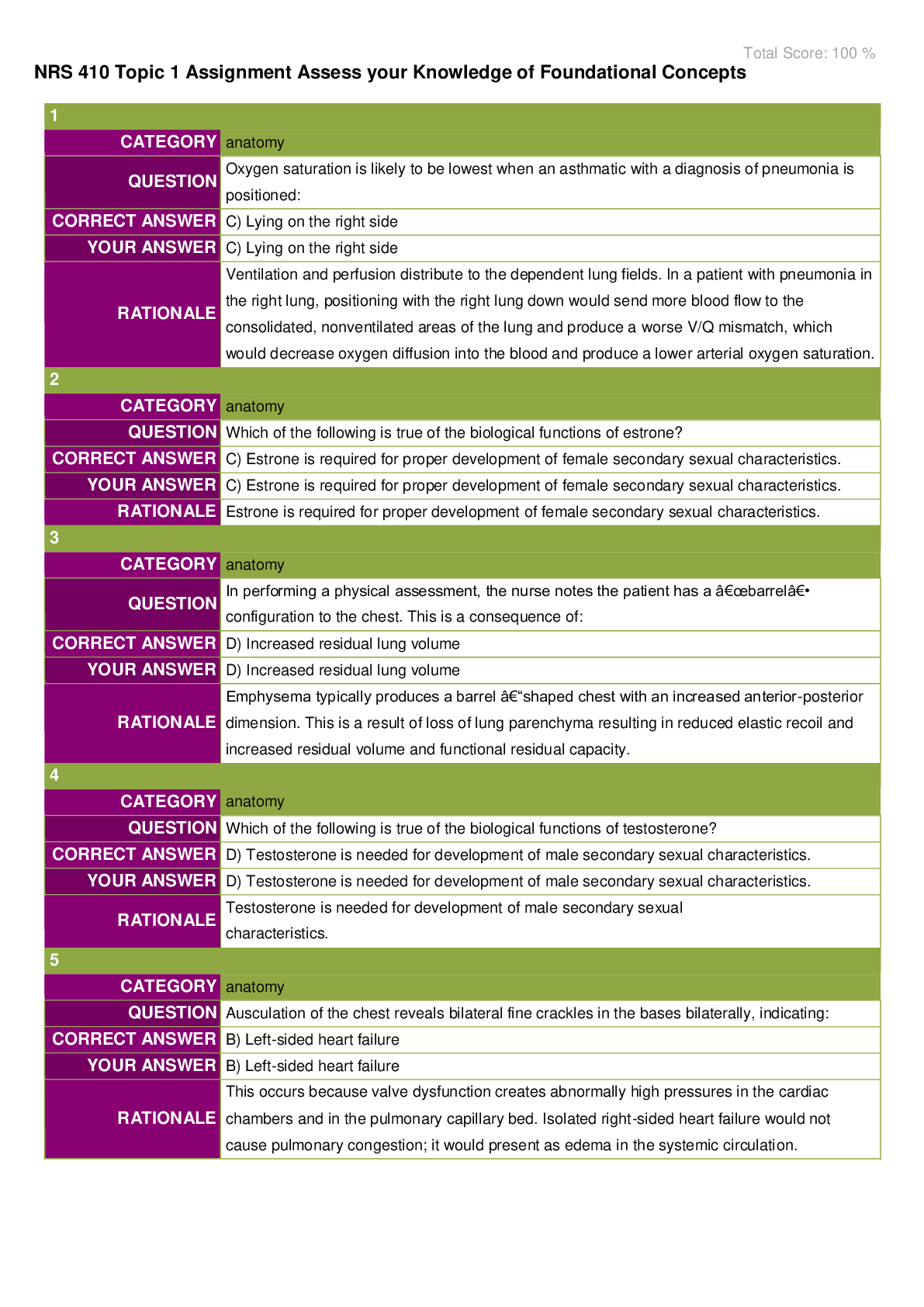
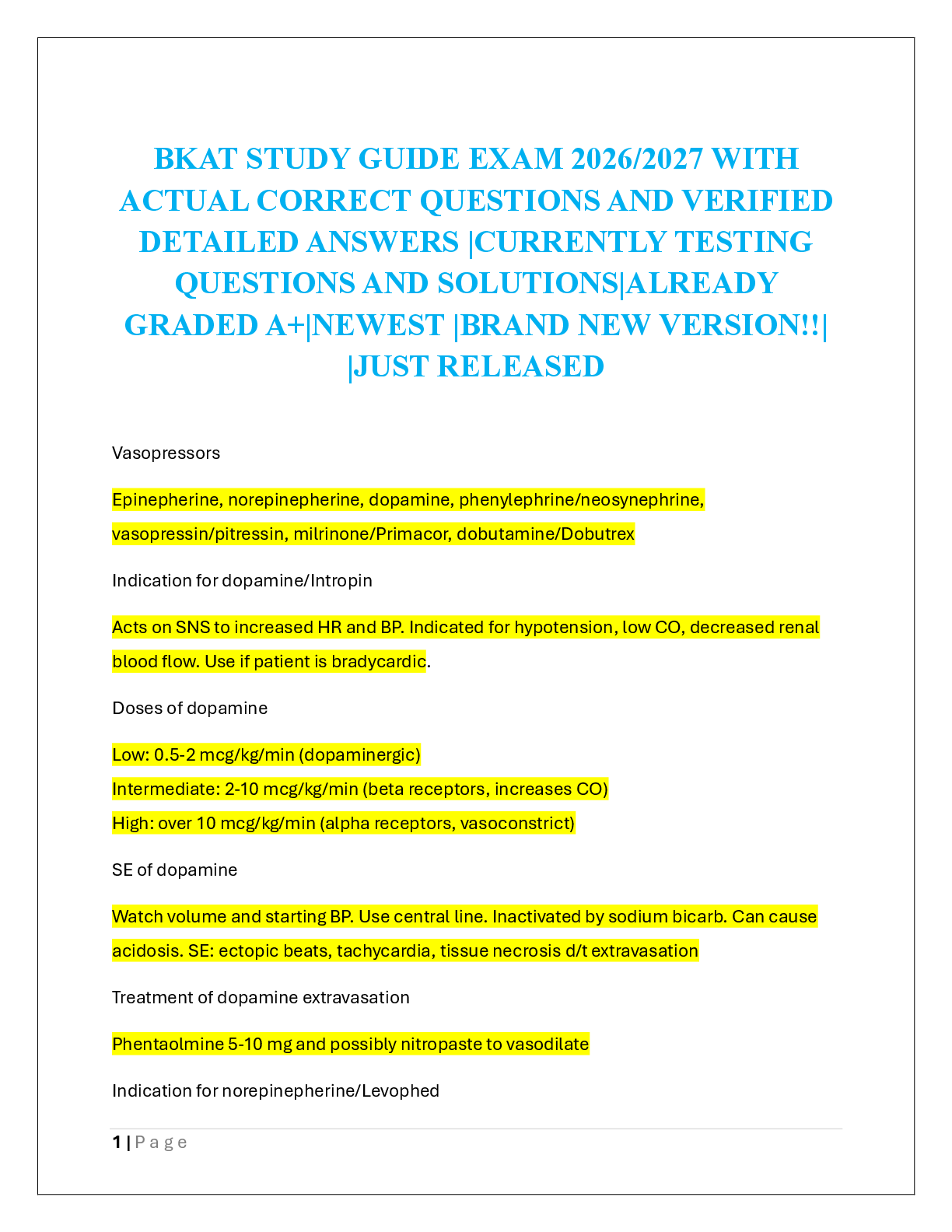
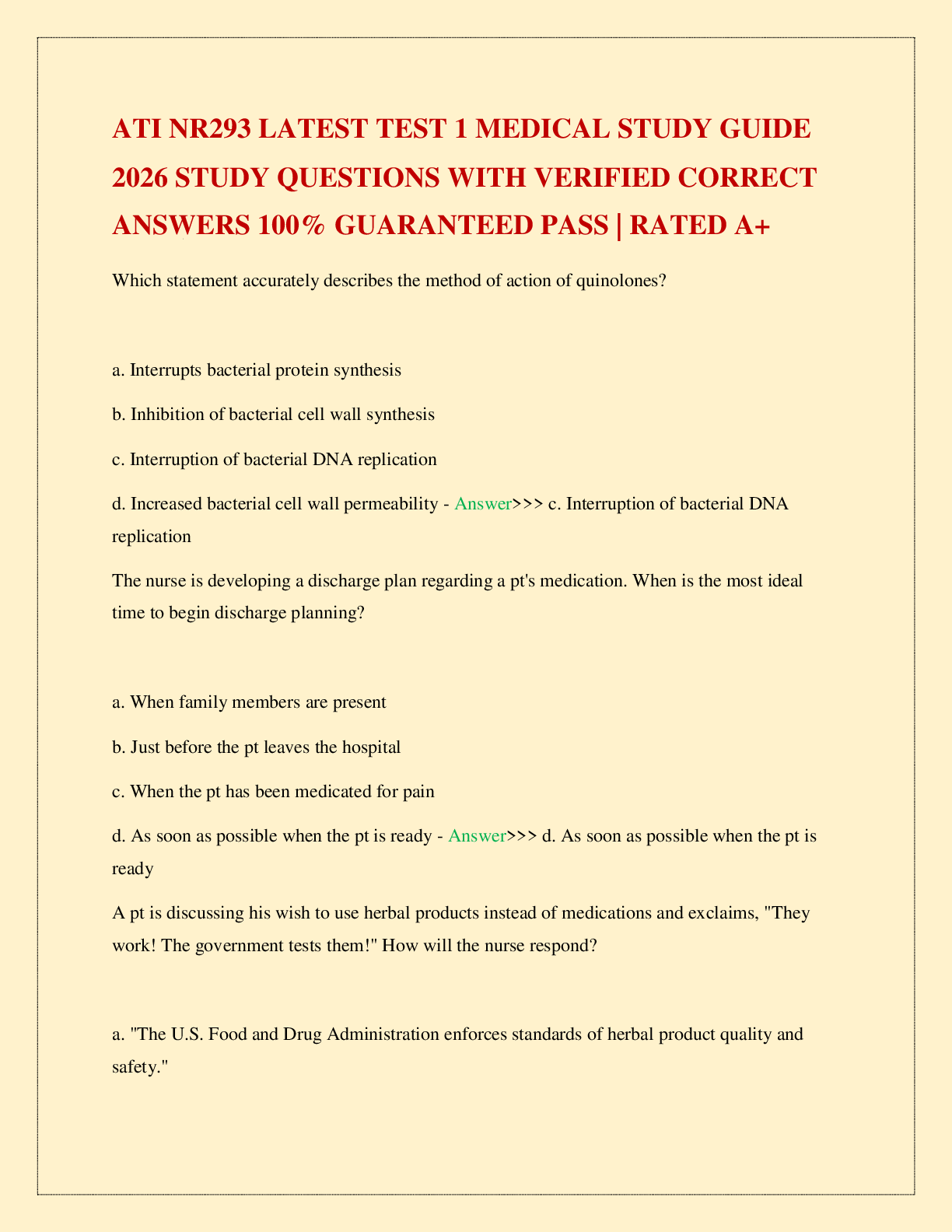
NR-509 Week 1 Midweek Comprehension QUIZ (100% correct)
Document Content and Description Below
Last updated: 3 years ago
Preview 1 out of 3 pages
Instant download

Buy this Document to get the Full Access Instantly
Provided by Students Who Aced it
We Verify Document Content to Gurantee Accuracy
Also available in bundle (1)
Click Below to Access Bundle(s)

NR 509 Advanced Physical Assessment Coursework Week 1 – 8 BUNDLE (HIGHLY RATED) | 100% Guaranteed Pass
NR 509 Week 1 Debriefing Session or Alternate Writing Assignment NR-509 Week 1 Midweek Comprehension QUIZ NR 509 Week 1 SOAP Notes NR 509 Week 2 Debriefing Session or Alternate Writing Assignment...
By EliteStudyDocs 3 years ago
$14.5
20
Reviews( 0 )
Document information
Connected school, study & course
About the document
Uploaded On
Nov 16, 2022
Number of pages
3
Written in
All

Additional information
This document has been written for:
Uploaded
Nov 16, 2022
Downloads
0
Views
190
Topic Tags
Related Subjects & Courses
Explore similar study resources and related concepts.
Recommended For You
Get more on Quiz »
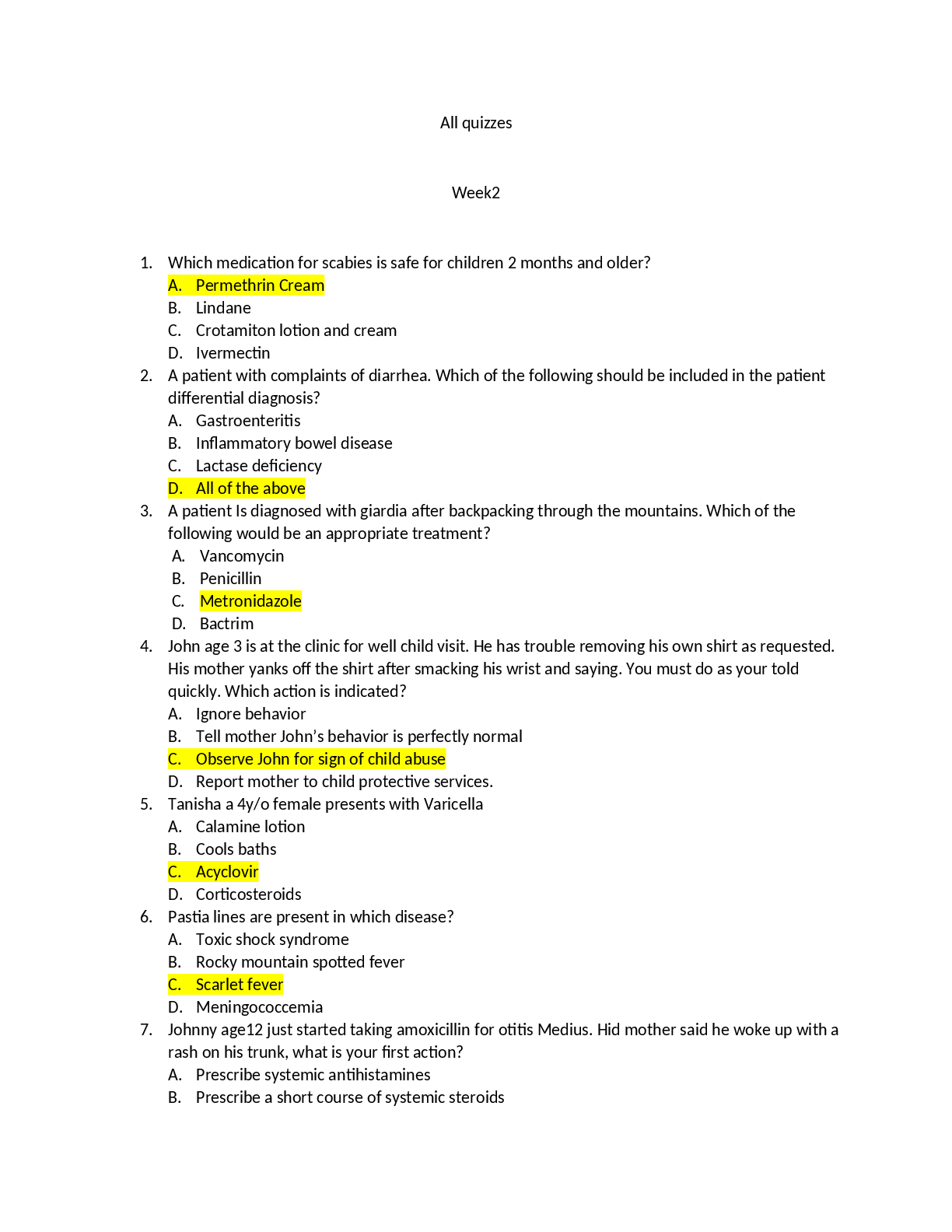
United States University FNP 593: All Quizzes | Complete Quest...
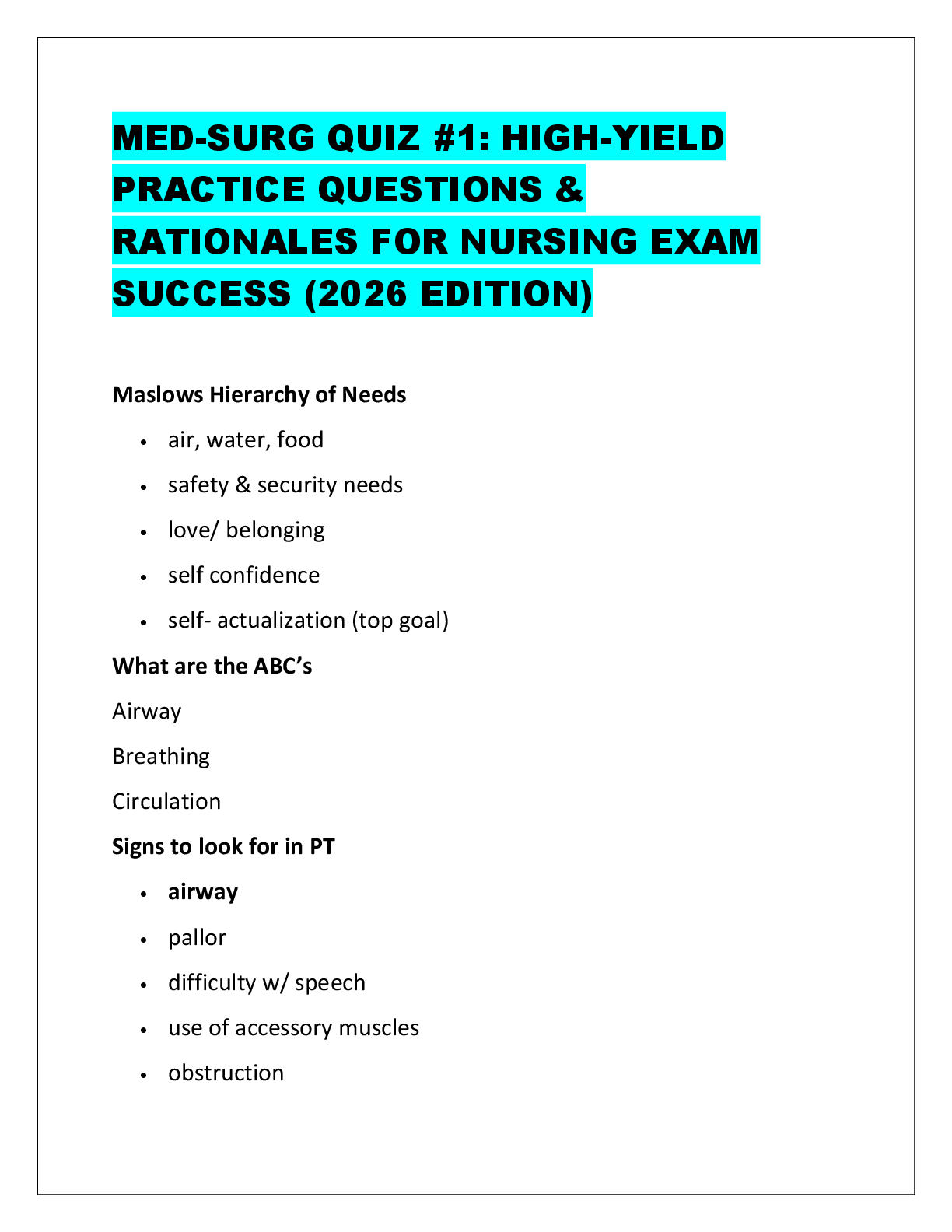
MED-SURG QUIZ #1: HIGH-YIELD PRACTICE QUESTIONS & RATIONALES F...
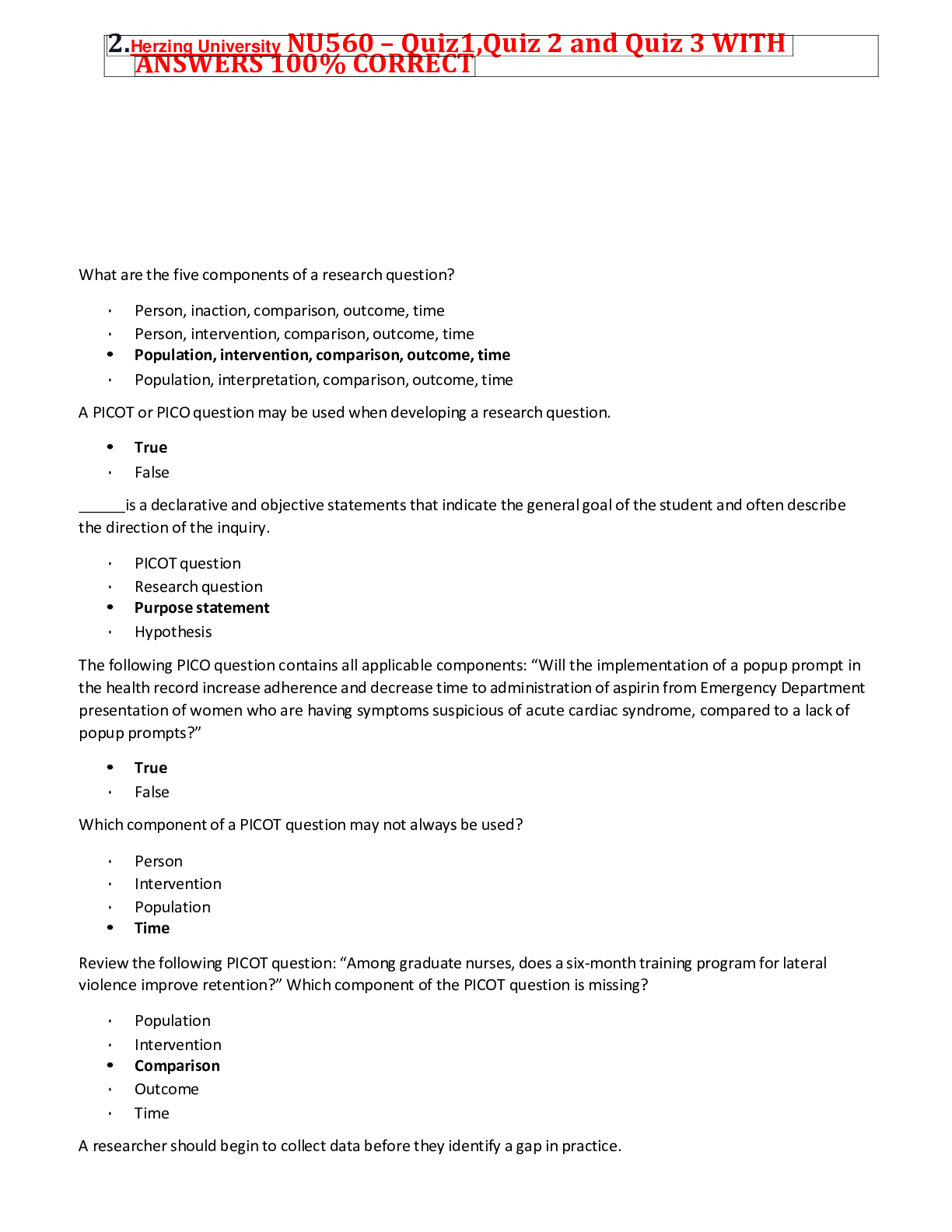
NU560 Quiz1, Quiz 2 and Quiz 3 WITH ANSWERS | Herzing Universi...
TEST BANK for Davis Advantage for Psychiatric Mental Health Nu...
Test Bank For Fundamentals of Nursing 11th Edition Potter Perr...
TEST BANK for Essentials of Psychiatric Mental Health Nursing:...
Essentials of Psychiatric Nursing 2nd Edition Boyd TEST BANK
Test Bank for Essentials of Psychiatric Nursing 2nd Edition by...
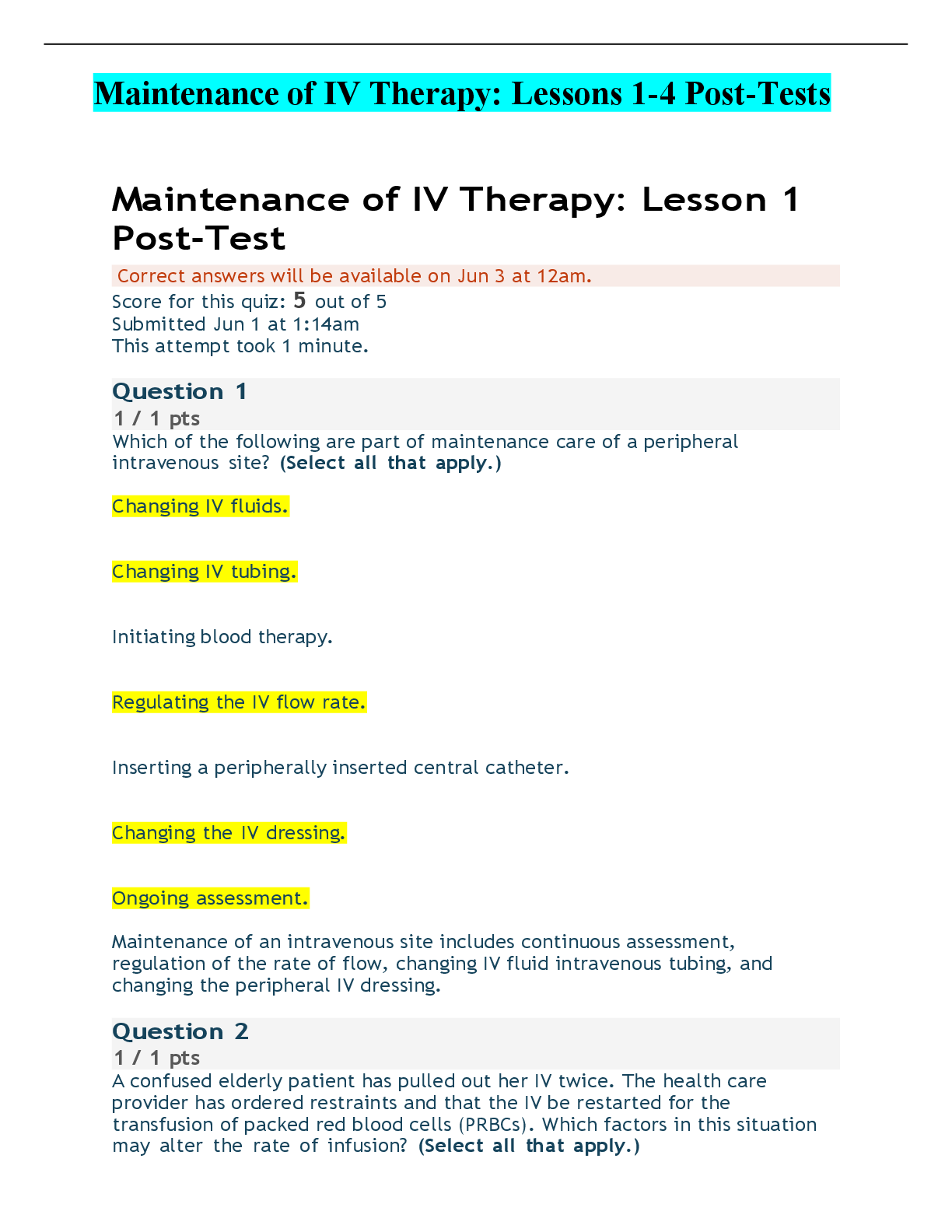
American River College NURSE 266| Maintenance of IV Therapy:...