AQA A-LEVEL BIOLOGY PAPER 1 .2020|442 QUESTIONS WITH CORRECT ANSWERS
Document Content and Description Below
3.1 Correct Answer biological molecules
3.1.1 Correct Answer Monomers and polymers
What are monomers? Correct Answer The smaller units from which larger molecules are made
What are polymers? Correct Answer Molec
...
[Show More]
Last updated: 3 years ago
Preview 1 out of 33 pages
Instant download
Buy this Document to get the Full Access Instantly
Provided by Students Who Aced it
We Verify Document Content to Gurantee Accuracy
Reviews( 0 )
Document information
Connected school, study & course
About the document
Uploaded On
Nov 24, 2022
Number of pages
33
Written in
All

Additional information
This document has been written for:
Uploaded
Nov 24, 2022
Downloads
0
Views
325
Topic Tags
Recommended For You
Get more on AQA »
$20.5
82 Pages
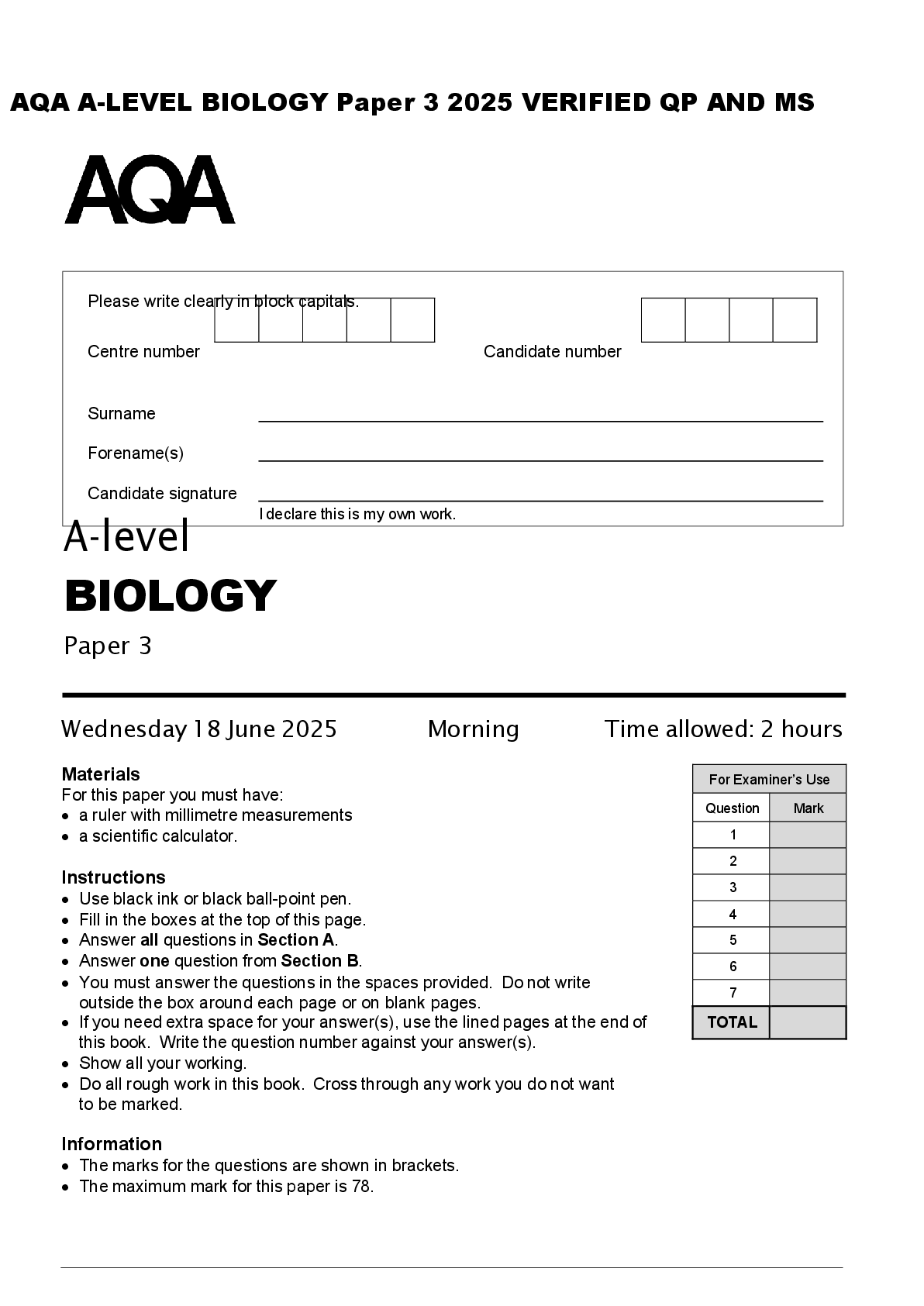
AQA A-Level Biology Paper 3 (7402/3) June 2025: Verified Ques...
$12
6 Pages
FEMA FINAL EXAM ICS 100: IS-100.C: INTRODUCTION TO THE INCIDEN...
$17
333 Pages
Complete Test Bank For Lehnes Pharmacotherapeutics for Advance...
$24
993 Pages
Test Bank for Brunner & Suddarth's Textbook of Medical-Surgica...
$10.5
3 Pages
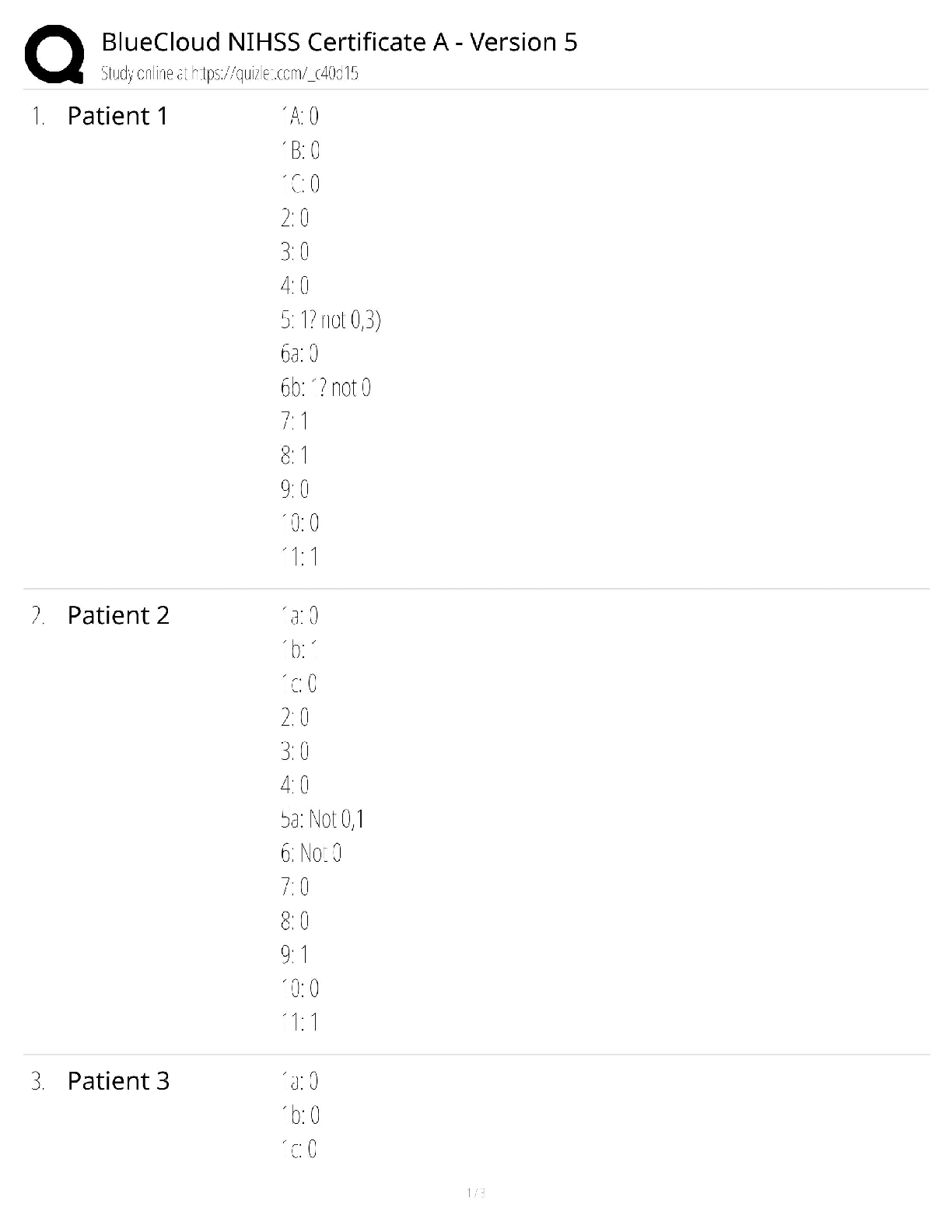
Blue Cloud NIHSS Certificate A (v5) Stroke Scale Certificatio...
More related documents below