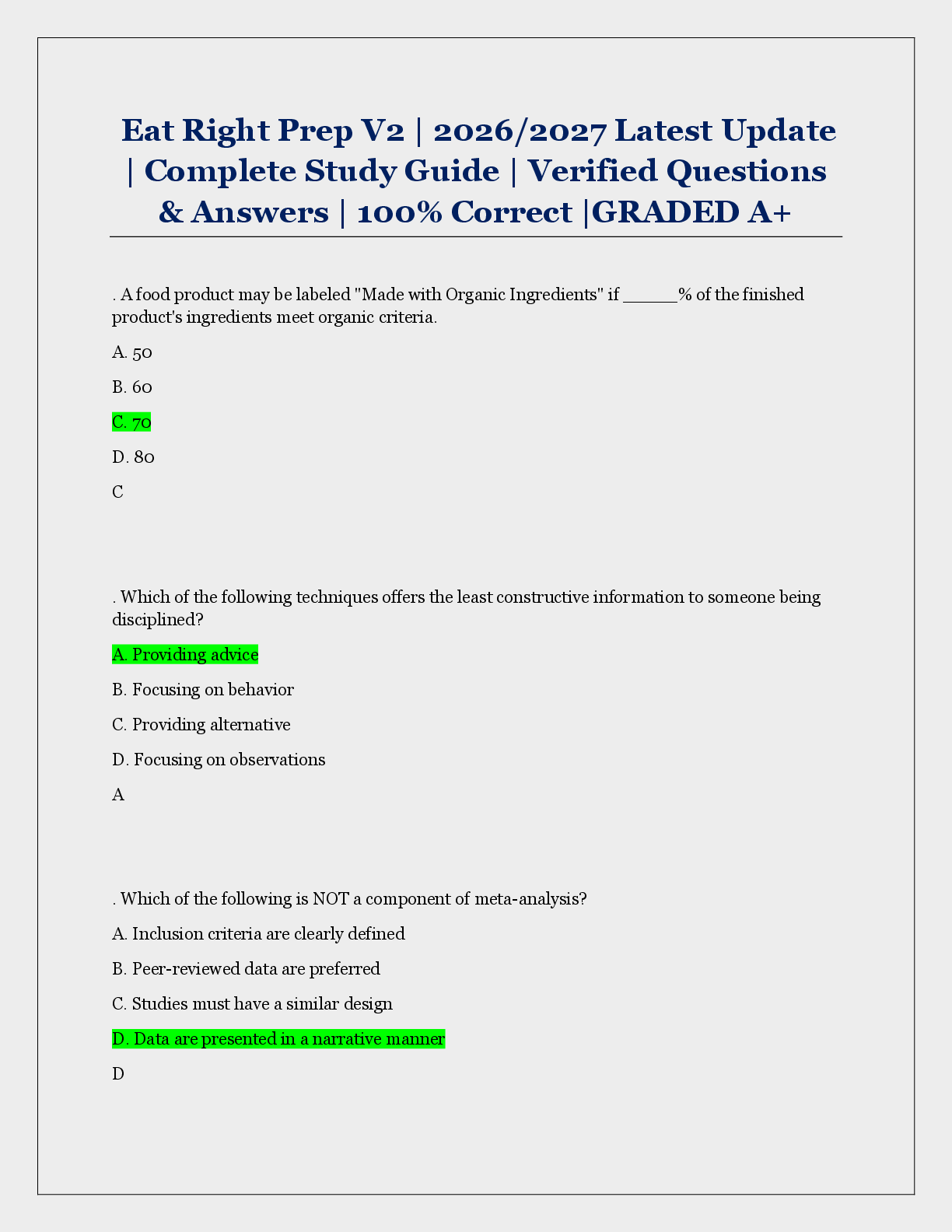
M6: Module 6 EXAM
Due No due date Points 5 Questions 19 Time Limit None
Attempt History
Attempt Time Score
LATEST Attempt 1 1,572 minutes 100 OUT OF 100
...
M6: Module 6 EXAM
Due No due date Points 5 Questions 19 Time Limit None
Attempt History
Attempt Time Score
LATEST Attempt 1 1,572 minutes 100 OUT OF 100
For all viruses, the genome is replicated following attachment and entry, never before.
Describe the basic steps of the viral life cycle.
1. Attachment: Viral receptors bind to host proteins on the surface of the cell.
2. Entry: The virus fuses with the host membrane and enters the cell
3. Uncoating: (where applicable) the viral capsid disassembles
4. Replication: The viral genome provides the 'blueprint' to make copies of itself
5. Exit: New viruses are produced and leave the cell
6. New infection: Newly produced viruses leave the host cell and go on to infect new cells. The process outlined above now restarts
1. Attachment: Viral receptors bind to host proteins on the surface of the cell.
2. Entry: The virus fuses with the host membrane and enters the cell
3. Uncoating: (where applicable) the viral capsid disassembles
4. Replication: The viral genome provides the ‘blueprint’ to make copies of itself
5. Exit: New viruses are produced and leave the cell
6. New infection: Newly produced viruses leave the host cell and go on to infect new cells. The process outlined above now restarts.
Question 10
0 / 0 pts
What structural aspects make bacteriophages distinct from viruses that infect either animals or plants?
Your Answer:
Bacteriophages possess an icosahedral capsid head group and a helical tail. Attached to the tail are fibrous extensions or 'legs' that aid in binding host cells. Notably, this particular structural arrangement has not been observed among viruses that infect either animals or plants.
Bacteriophages possess an icosahedral capsid head group and a helical tail. Attached to the tail are fibrous extensions or ‘legs’ that aid in binding host cells. Notably, this particular structural arrangement has not been observed among viruses that infect either animals or plants.
Question 12
0 / 0 pts
Describe the appearance of a bacterial culture infected with virus at the time of infection versus later once viral replication is occurring at a high rate.
Your Answer:
During the initial inoculation of virus and bacteria, the media has a high degree of turbidity (cloudiness). However, as the lytic cycle progresses and more and more bacterial cells are destroyed, the culture media turns from turbid to clear, as turbidity is a function of the number of intact bacterial cells present in the media. Thus, as bacterial cell numbers decrease due to lysis, the media becomes clearer.
Question 15
0 / 0 pts
What disease state emerges as a viral reactivation of a prior infection with the varicella virus?
Your Answer:
Shingles, also known as Herpes zoster, is due to the reactivation of the varicella-zoster virus (VZV). Because VZV lies dormant in inactive nerve cells, its reactivation typically results in painful blisters. However, unlike the initial chickenpox rash, the blisters are localized and limited to small areas.
Shingles, also known as Herpes zoster, is due to the reactivation of the varicella-zoster virus (VZV). Because VZV lies dormant in inactive nerve cells, its reactivation typically results in painful blisters. However, unlike the initial chickenpox rash, the blisters are localized and limited to small areas.
Question 17
0 / 0 pts
What are the two key glycoproteins found in the influenza virus?
Your Answer:
The viral envelope contains two key glycoproteins, hemagglutinins (HA) and neuraminidase (N). Hemagglutinins are heavily involved in the entry of the viral particle into a host cell, while neuraminidase proteins are involved in the budding and release of new viral particles from the host cell.
The viral envelope contains two key glycoproteins, hemagglutinins (HA) and neuraminidase (N). Hemagglutinins are heavily involved in the entry of the viral particle into a host cell, while neuraminidase proteins are involved in the budding and release of new viral particles from the host cell.
Describe the composition of HIV.
Your Answer:
HIV contains two copies of single-stranded, linear RNA that is enclosed by a capsid. The conical capsid surrounds the two RNA strands and is comprised of ~2,000 copies of the viral protein p24. A viral envelope derived from the cell host membrane then surrounds the viral capsid.
Within this envelope are two key glycoproteins, gp120 and gp41, which are essential for viral binding and entry into the host cell.
HIV contains two copies of single-stranded, linear RNA that is enclosed by a capsid. The conical capsid surrounds the two RNA strands and is comprised of ~2,000 copies of the viral protein p24. A viral envelope derived from the cell host membrane then surrounds the viral capsid. Within this envelope are two key glycoproteins, gp120 and gp41, which are essential for viral binding and entry into the host cell.
[Show More]
 (1).png)