Music for Sight Singing, 10th Edition, By Nancy Rogers, Robert Ottman | eBook [PDF]
Title Page
Copyright Page
Contents
Preface
In Memoriam
Acknowledgments
Part I Melody: Diatonic Intervals Rhythm: Division of
...
Music for Sight Singing, 10th Edition, By Nancy Rogers, Robert Ottman | eBook [PDF]
Title Page
Copyright Page
Contents
Preface
In Memoriam
Acknowledgments
Part I Melody: Diatonic Intervals Rhythm: Division of the Beat
1. Rhythm: Simple Meters; The Beat and Its Division into Two Parts
Rhythmic Reading
Section 1 (R). The quarter note as the beat unit. Beat-note values and larger only
Section 2 (R). The quarter note as the beat unit and its division. Dotted notes and tied notes
Section 3 (R). Two-part drills
Section 4 (R). Note values other than the quarter note as beat values
Section 5 (R). Two-part drills
2. Melody: Stepwise Melodies, Major Keys Rhythm: Simple Meters; The Beat and Its Division into Two P
Sight Singing
Section 1. Major keys, treble clef, the quarter note as the beat unit. Key signatures with no more t
Section 2. Bass clef
Section 3. Other meter signatures
Section 4. Duets
Section 5. Structured improvisation
3. Melody: Leaps within the Tonic Triad, Major Keys Rhythm: Simple Meters
Section 1. Major keys, treble clef, leaps of a third, fourth, fifth, and octave within the tonic tri
Section 2. Bass clef
Section 3. Leaps of a sixth within the tonic triad
Section 4. The half note and the eighth note as beat units
Section 5. Duets
Section 6. Key signatures with five, six, and seven sharps or flats
Section 7. Structured improvisation
4. Melody: Leaps within the Tonic Triad, Major Keys Rhythm: Compound Meters; The Beat and Its Divisi
Section 1 (R). Rhythmic reading: The dotted quarter note as the beat unit. Single lines and two-part
Section 2. Sight singing: Major keys, treble clef; the dotted quarter note as the beat unit
Section 3. Sight singing: Bass clef
Section 4 (R). Rhythmic reading: The dotted half note and the dotted eighth note as beat units, incl
Section 5. Sight singing: The dotted half note and dotted eighth note as beat units
Section 6. Duets
Section 7. Structured improvisation
5. Melody: Minor Keys; Leaps within the Tonic Triad Rhythm: Simple and Compound Meters
Section 1. Melodies not including 6 and 7
Section 2. Melodies including descending ↓6 and ascending ↑7
Section 3. Melodies including ascending ↑6 and descending ↓7
Section 4. Melodies including less common uses of 6 and 7
Section 5. Duets
Section 6. Structured improvisation
6. Melody: Leaps within the Dominant Triad (V); Major and Minor Keys Rhythm: Simple and Compound Met
Section 1. Leaps of a third within the V triad; major keys; simple meters
Section 2. Leaps of a third within the V triad; minor keys; simple meters
Section 3. Leaps of a fourth and fifth within the V triad; major and minor keys; simple meters
Section 4. Leaps of a sixth within the V triad; simple meters
Section 5. Compound meters; various leaps within the V triad
Section 6. Numerator of 3, compound meters
Section 7. Duets
Section 8. Structured improvisation
7. The C clefs Alto and Tenor Clefs
Section 1. The alto clef
Section 2. The tenor clef
Section 3. Duets
Section 4. Additional practice in the C clefs
Section 5. Structured improvisation
8. Melody: Further Use of Diatonic Leaps Rhythm: Simple and Compound Meters
Section 1. Melodies outlining the IV or ii triad
Section 2. Leaps to specific scale degrees
Section 3. Other leaps of a third
Section 4. Larger leaps involving 2, 4, and 6
Section 5. Additional practice with consonant diatonic leaps
Section 6. Bass lines
Section 7. Duets
Section 8. Structured improvisation
9. Melody: Leaps within the Dominant Seventh Chord (V7); Other Diatonic Seventh Leaps Rhythm: Simple
Section 1. The complete dominant seventh chord
Section 2. The leap of a minor seventh within the V7 chord
Section 3. The leap of a tritone within the V7 chord
Section 4. Other diatonic seventh leaps
Section 5. Structured improvisation
Part II Melody: Diatonic Intervals Rhythm: Subdivision of the Beat
10. Rhythm The Subdivision of the Beat: The Simple Beat into Four Parts, The Compound Beat into Six
Rhythmic Reading, Simple Meters
Section 1 (R). Preliminary exercises, simple meters
Section 2 (R). Rhythmic reading exercises in simple meters
Section 3 (R). Two-part drills, simple meters
Rhythmic Reading, Compound Meters
Section 4 (R). Preliminary exercises, compound meters
Section 5 (R). Rhythmic reading exercises in compound meters
Section 6 (R). Two-part drills, compound meters
11. Melody: Leaps within the Tonic and Dominant Triads Rhythm: Subdivision in Simple and Compound Me
Section 1. Single-line melodies and duets
Section 2. Structured improvisation
12. Melody: Further Use of Diatonic Leaps Rhythm: Subdivision in Simple and Compound Meters
Section 1. Melodies outlining the IV or ii triad
Section 2. Leaps to 4 and 6
Section 3. Leaps of a seventh or tritone within the V7 chord
Section 4. Other melodic dissonances
Section 5. Additional practice with consonant diatonic leaps
Section 6. Structured improvisation
Part III Melody: Chromaticism Rhythm: Further Rhythmic Practices
13. Rhythm and Syncopation Melody:
Rhythmic Reading
Section 1 (R). Syncopation in simple meters at the beat or beat division level
Section 2 (R). Syncopation in compound meters at the beat or beat division level
Section 3 (R). Two-part drills
Section 4 (R). Syncopation at the beat subdivision level in simple meters
Section 5 (R). Syncopation at the beat subdivision level in compound meters
Section 6 (R). Two-part drills
Sight Singing
Section 7. Syncopation in simple meters at the beat or beat division level
Section 8. Syncopation in compound meters at the beat or beat division level
Section 9. Syncopation at the beat subdivision level in simple and compound meters
Section 10. Duets
Section 11. Structured improvisation
14. Rhythm and Triplet Division of Undotted Note Melody: Values; Duplet Division of Dotted Note Valu
Rhythmic Reading
Section 1 (R). Triplet division of undotted note values
Section 2 (R). Duplet division of dotted note values
Section 3 (R). Two-part drills
Sight Singing
Section 4. Triplet division of undotted note values
Section 5. Duplet division of dotted note values
Section 6. Duets
Section 7. Structured improvisation
15. Melody: Chromaticism (I): Chromatic Embellishing Tones; Tonicizing the Dominant; Modulation to t
Section 1. Chromatic notes in the context of stepwise motion
Section 2. Chromatic notes approached or left by leap
Section 3. Tonicization of V in major keys
Section 4. Tonicization of III and modulation to the relative major from minor keys
Section 5. Modulation to the dominant from major keys
Section 6. Modulation to the dominant from minor keys
Section 7. Duets
Section 8. Structured improvisation
16. Melody: Chromaticism (II): Tonicization of Any Diatonic Triad; Modulation to Any Closely Related
Section 1. Brief tonicizations of any diatonic triad with no modulation
Section 2. Extended tonicizations
Section 3. Tonicization with modulation only to the dominant or relative major key
Section 4. Modulation to any closely related key
Section 5. Successive modulations among closely related keys
Section 6. Additional practice with tonicization and modulation
Section 7. Duets
Section 8. Structured improvisation
17. Rhythm and Melody: Changing Meter Signatures; The Hemiola; Less Common Meter Signatures
Rhythmic Reading
Section 1 (R). Definitions and rhythmic reading exercises
Sight Singing
Section 2. Changing meter signatures
Section 3. The hemiola
Section 4. Meters of 5 and 7, and other meters
Section 5. Structured improvisation
18. Rhythm and Melody: Further Subdivision of the Beat; Notation in Slow Tempi
Section 1 (R). Rhythmic reading
Section 2. Sight singing
Section 3. Structured improvisation
19. Melody Chromaticism (III): Additional Uses of Chromatic Tones; Remote Modulation
Section 1. Mode mixture
Section 2. Augmented-sixth chords
Section 3. The Neapolitan sixth
Section 4. Chromatic tones in less common intervals
Section 5. Remote modulation
Section 6. Structured improvisation
Part IV The Diatonic Modes and Recent Music
20. Melody The Diatonic Modes
Section 1. Folk music
Section 2. Composed music
Section 3. Structured improvisation
21. Rhythm and Melody: The Twentieth and Twenty-First Centuries
Section 1 (R). Meter and rhythm. Rhythmic reading
Section 2. Extensions of the traditional tonal system
Section 3. Symmetrical collections; the whole-tone and octatonic scales
Section 4. Freely post-tonal melodies; twelve-tone melodies
Section 5. Duets
Section 6. Structured improvisation
Appendix A: Rhythm Solmization
Appendix B: Pitch Solmization
Appendix C: Musical Terms
[Show More]







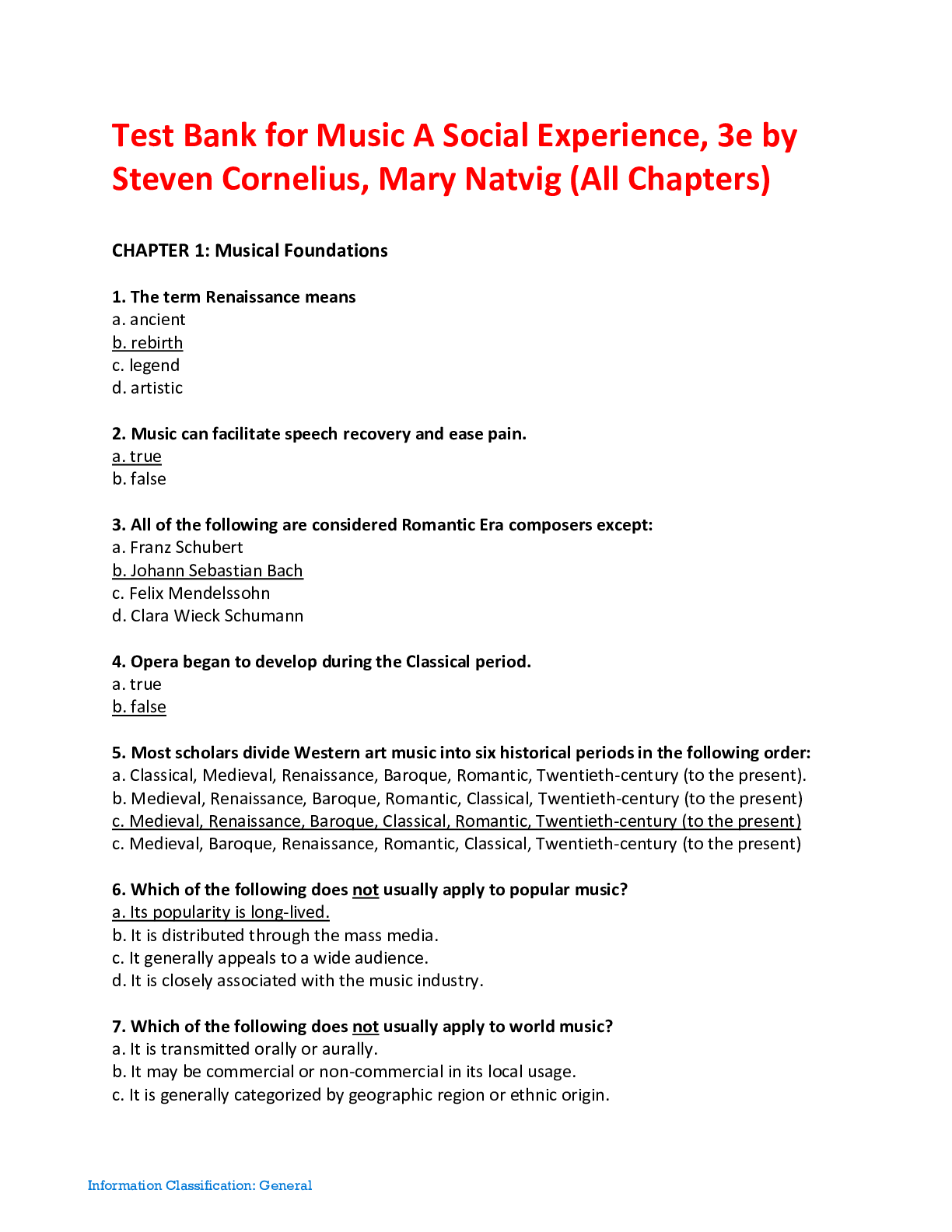







.png)



 Gary Donell, Clarence Byrd, Ida Chen.png)
 Gary Donell, Clarence Byrd, Ida Chen.png)