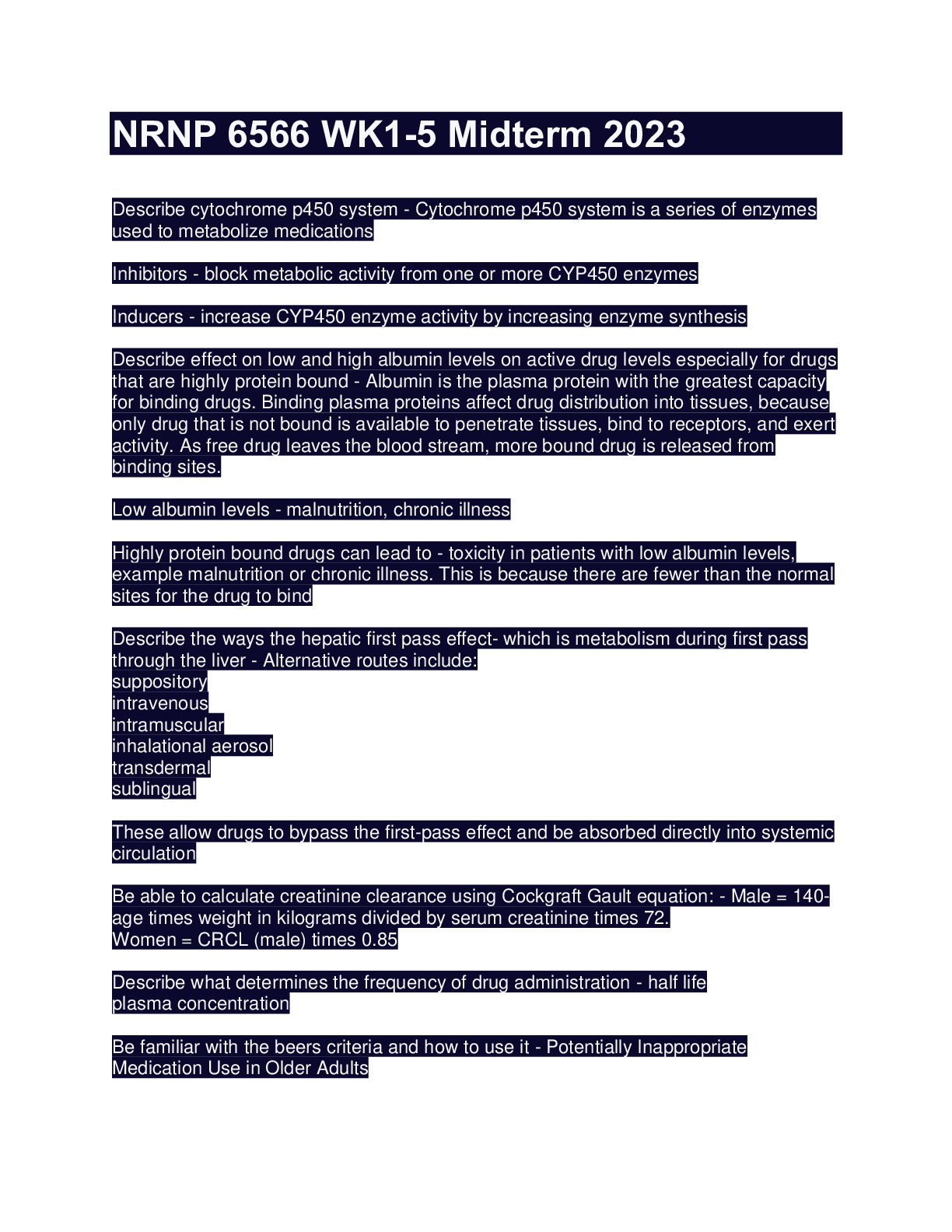
Describe cytochrome p450 system - Cytochrome p450 system is a series of enzymes used to metabolize medications
Inhibitors - block metabolic activity from one or more CYP450 enzymes
Inducers - increase CYP450 enzyme
...
Describe cytochrome p450 system - Cytochrome p450 system is a series of enzymes used to metabolize medications
Inhibitors - block metabolic activity from one or more CYP450 enzymes
Inducers - increase CYP450 enzyme activity by increasing enzyme synthesis
Describe effect on low and high albumin levels on active drug levels especially for drugs that are highly protein bound - Albumin is the plasma protein with the greatest capacity for binding drugs. Binding plasma proteins affect drug distribution into tissues, because only drug that is not bound is available to penetrate tissues, bind to receptors, and exert activity. As free drug leaves the blood stream, more bound drug is released from binding sites.
Low albumin levels - malnutrition, chronic illness
Highly protein bound drugs can lead to - toxicity in patients with low albumin levels, example malnutrition or chronic illness. This is because there are fewer than the normal sites for the drug to bind
Describe the ways the hepatic first pass effect- which is metabolism during first pass through the liver - Alternative routes include:
suppository
intravenous
intramuscular
inhalational aerosol
transdermal
sublingual
These allow drugs to bypass the first-pass effect and be absorbed directly into systemic circulation
Be able to calculate creatinine clearance using Cockgraft Gault equation: - Male = 140-age times weight in kilograms divided by serum creatinine times 72.
Women = CRCL (male) times 0.85
Describe what determines the frequency of drug administration - half life
plasma concentration
Be familiar with the beers criteria and how to use it - Potentially Inappropriate Medication Use in Older Adults
to call attention to medications that are most commonly problematic and thus should be avoided in older adults
Describe factors that affect absorption - low blood state (shock or arrest), contact time with GI tract too fast (diarrhea = cant absorb), delayed stomach emptying (large meal = delayed absorption)Drug- to drug or drug to food interactions
Describe the factors that affect distribution - low albumin levels, body composition, cardiac decompensation (heart failure), age
Describe the factors that affect metabolism - genetics, age, organ function
Describe factors that affect excretion - affected by abnormal kidney or liver function, age, drug interactions
Define narrow therapeutic index. How would you monitor a patient with a narrow therapeutic index? - Therapeutic index is the dose range of effiency of med is optimized while side effects are minimized
Narrow therapeutic index drugs are defined as those drugs where small differences in dose or blood concentration may lead to dose and blood concentration dependant, serious therapeutic failures or adverse drug reactions.
You will need to monitor blood tests to monitor blood concentrations and dose adjustments accordingly.
Describe how aging can affect absorption, distribution, metabolism and excretion - decreased organ function, poorly tolerate drugs that require metabolism, lower rates of excretion
decrease in small-bowel surface area, slowed gastric emptying, increase in gastric PH, changes in drug absorption
With age, body fat generally increases and total body water decreases. Increased fat increases the volume of distribution for highly lipophilic drugs (for example, diazepam and chlordiazepoxide), which may increase their elimination half-lives.
Serum albumin decreases and alpha 1 acid glycoprotein increases -- Phenytoin and warfarin are examples of medications with a higher risk of toxic effects when serum albumin increases
hepatic metabolism of many drugs through cytochrome P enzyme system decreases with age; decreasing 30-40%
decreased renal elimination
Identify 1st degree heart block - cardiologist consult
Order echo to rule out structural diagnosis, check thyroid levels, medications, electrolytes and identify and treat cause
Identify 2nd degree heart block - permanent pacemaker, continuous tele monitoring, possible transcutaneous pacing, determine cause; IV atropine if poor perfusion s/s every 3-5 minutes with max of 3mg if poor perfusion. No response to atropine, use dopamine, epinephrine, isoproterenol
[Show More]