Questions > ECON 250 Introduction to Economics Problem Set 2
Document Content and Description Below
A. Bob consumes two commodities: x and y (say, chocolate and classical
music). More y never hurts, but in order to enjoy y he has to consume at
least 4 units of it; put di¤erently, he starts to enjoy y after the fourth
...
[Show More]
Last updated: 3 years ago
Preview 1 out of 3 pages
Instant download

Buy this Document to get the Full Access Instantly
Provided by Students Who Aced it
We Verify Document Content to Gurantee Accuracy
Reviews( 0 )
Document information
Connected school, study & course
About the document
Uploaded On
Jan 08, 2023
Number of pages
3
Written in
All

Additional information
This document has been written for:
Uploaded
Jan 08, 2023
Downloads
0
Views
94
Topic Tags
Recommended For You
Get more on EXAM »

$25
106 Pages
Introduction to Behavioral Economics 1st Edition By David Just...
$13
7 Pages
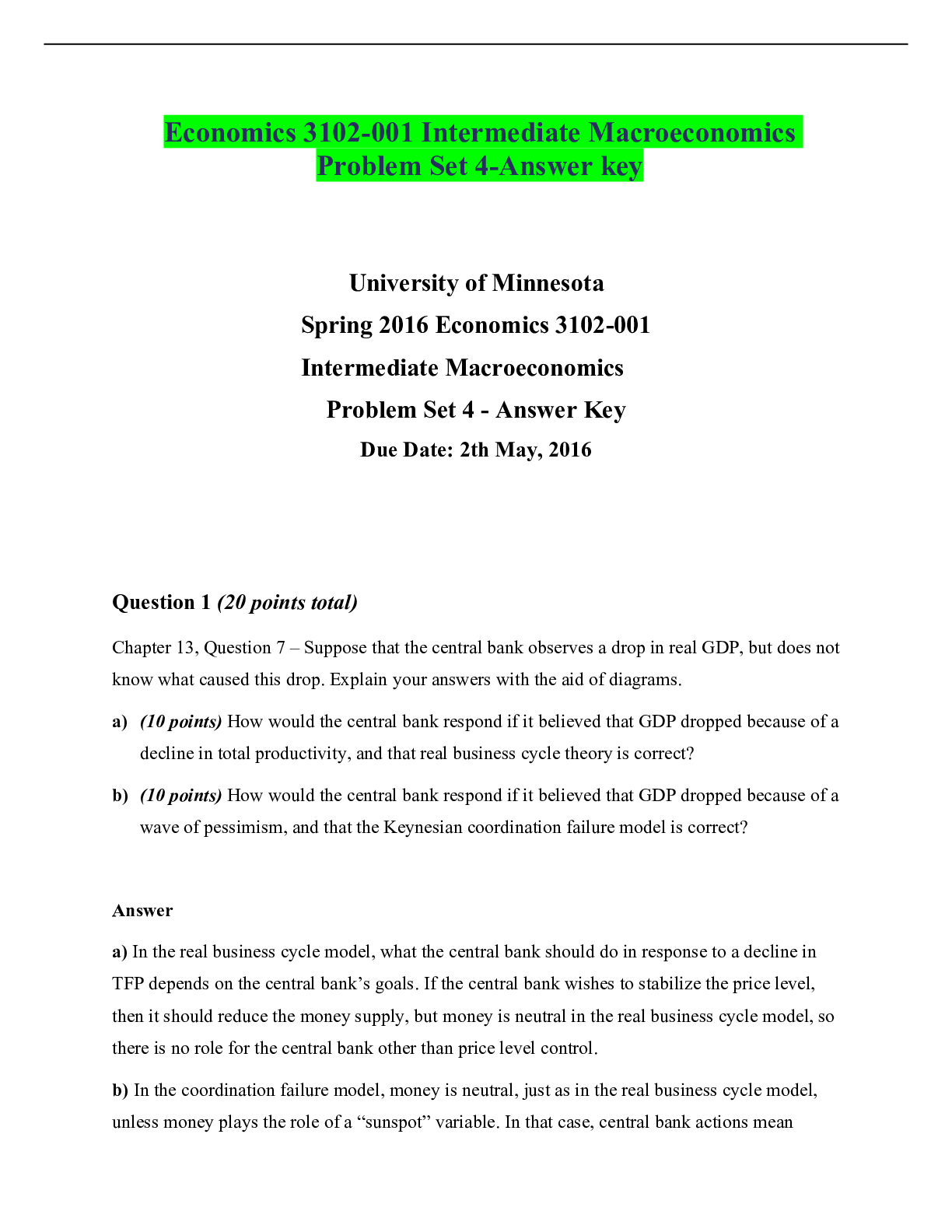
Economics 3102-001 Intermediate Macroeconomics Problem Set 4-A...

$22
302 Pages
Introduction to Economics Social Issues and Economic Thinking...

$25
89 Pages
Introduction to Behavioral Economics 1st Edition By David Just...
More related documents below