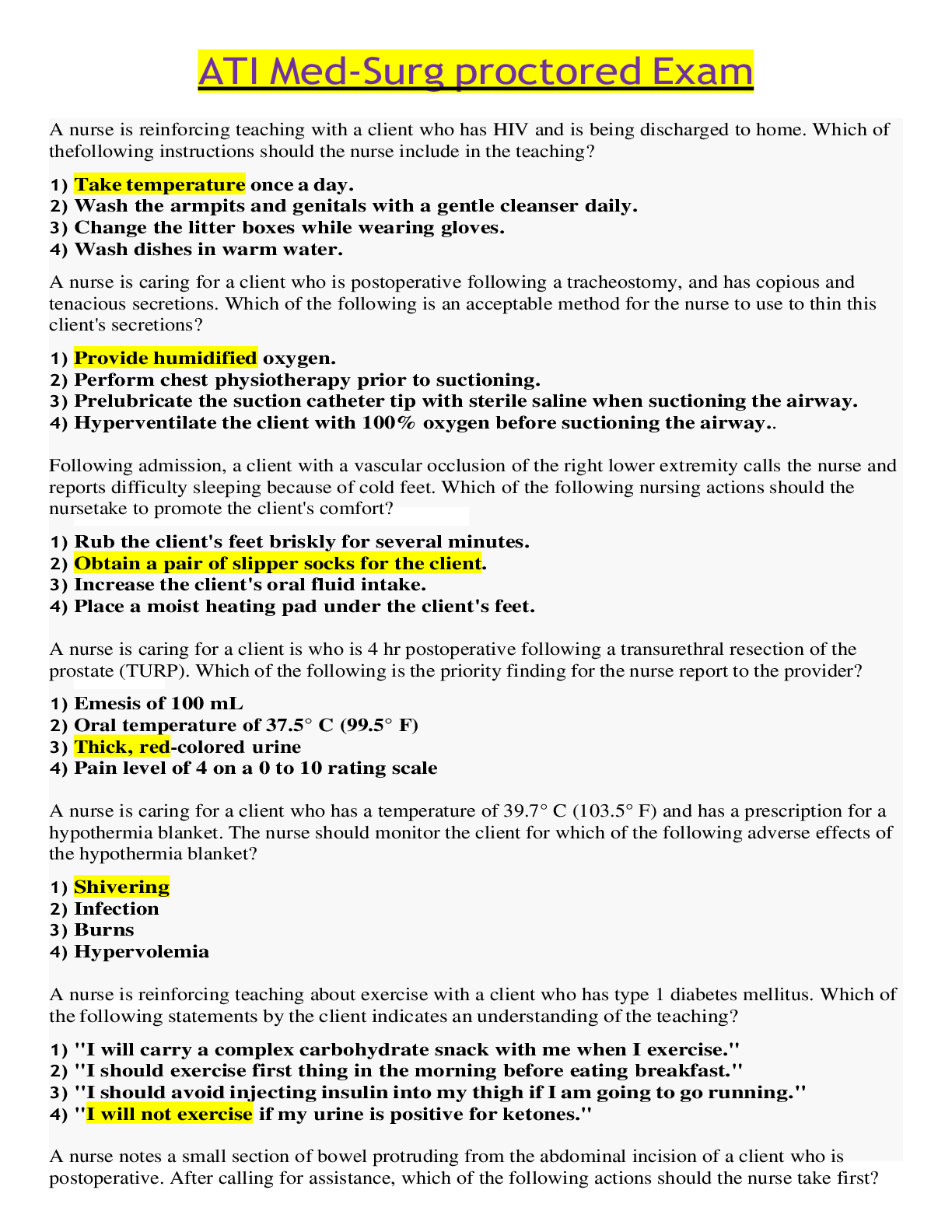
46. A nurse is rewarming a client following coronary artery bypass graft (CABG) surgery. For which of the following complications of the rewarming process should the nurse monitor the client?
47. A nurse is preparin
...
46. A nurse is rewarming a client following coronary artery bypass graft (CABG) surgery. For which of the following complications of the rewarming process should the nurse monitor the client?
47. A nurse is preparing a client for a bone marrow biopsy. Which of the following pieces of information should the nurse include in preoperative teaching?
48. A nurse is caring for a client who has acute lymphocytic leukemia and reports a fever, chills, fatigue, and pallor over the past week. When checking the client's laboratory results, which of the following values should the nurse identify as contributing to the client's fatigue and pallor?
49. A nurse is assessing a client who is 85 years old. Which of the following findings should the nurse identify as a manifestation of myocardial infarction?
50. A nurse is monitoring a client for repercussion following thrombolytic therapy to treat acute myocardial infarction. Which of the following indicators should the nurse identify to confirm reperfusion?
51. A nurse is providing discharge teaching to a client who has aplastic anemia. Which of the following statements indicates that the client understands the instructions?
52. A nurse is caring for a client who has a major burn injury and is experiencing third spacing. Which of the following fluid or electrolyte imbalances should the nurse expect?
53. A nurse observes tachycardia, dyspnea, a cough and distended neck being in a client who is receiving a transfusion of packed red blood cells (RBC's). Which of the following interventions should the nurse use to prevent these manifestations with the client's next transfusion?
54. A nurse is caring for a client who has a demand pacemaker inserted with a set rat of 72/min. Which of the following findings should the nurse expect?
...
[Show More]