Seizures and Epilepsy: Seizure
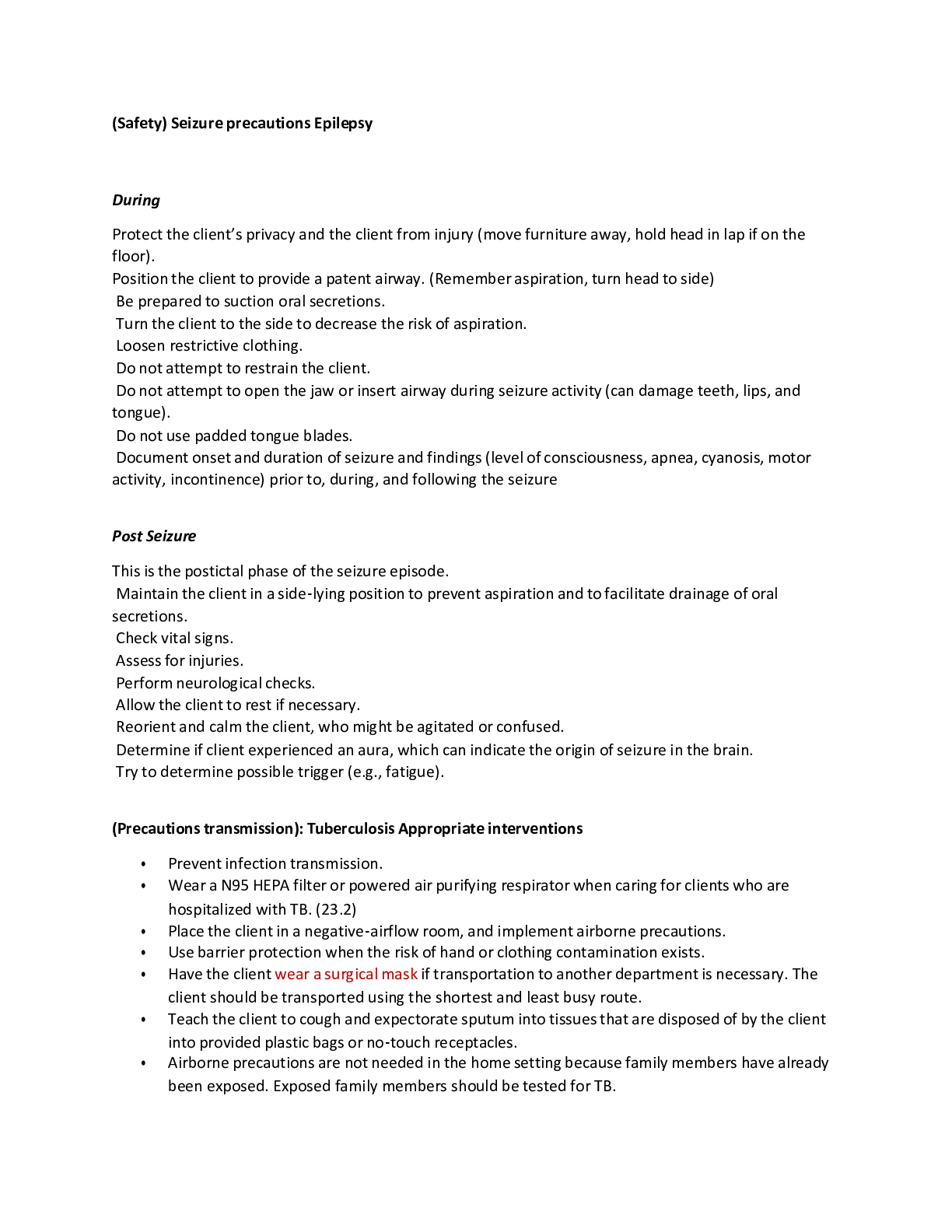
precautions
During a seizure: Position client on the floor
and provide a patent airway, turn client to
side and loosen restrictive clothing
Cancer treatment options: Protective
Isolat
...
Seizures and Epilepsy: Seizure
precautions
During a seizure: Position client on the floor
and provide a patent airway, turn client to
side and loosen restrictive clothing
Cancer treatment options: Protective
Isolation (999)
If WBC drops below 1,000, place the client in a private room and initiate neutropenic precautions.
- Have client remain in his room unless be needs to leave for a diagnostic procedure, in case of transport
place a mask on him
- Protect from possible sources of infection (plants, change water in equipment daily)
- Have client, staff and visitors perform frequent hand hygiene, restrict ill visitors
- Avoid invasive procedures (rectal temps, injections)
- Administer (neupogen, neulasta) to stimulate WBC production
Infection control: Appropriate room
assignment
Standard Precautions:
1. applies to all patients
2. Hand washing
a. alcohol based preferred unless hands visually soiled
3. Gloves - when touching anything that has the potential to contaminate.
4. Masks, eye protection & face shields when care may cause splashing or spraying of body fluids
Droplet:
1. private room or with someone with same illness
2. masks
Airborne:
1 private room
TB: Priority action for a client in the
emergency department (249)
-Wear an N95 or HEPA respirator
-Place client in negative airflow room and implement airborne
precautions
-use barrier protection when the risk of hand or clothing
contamination exists
Immunizations: Recommended
vaccinations for older adult clients (943)
Adults age 50 or older:
-Pneumococcal Vaccine (PPSV)
- Influenza vaccine
- Herpes Zoster Vaccine
-Hepatitis A
- Hepatitis B
- Meningococcal Vaccine
Pulmonary Embolism: Risk factors for
DVT (258)
-Long term immobility
- Oral contraceptives
- Pregnancy
- Tobacco use
- Hypercoagulabilty
- Obesity
- Surgery
- Heart failure or chronic A-Fib
- Autoimmune hemolytic anemia (sickle cell)
-Long bone fractures
-Advanced age
Disorders of the male reproductive system:
Complications of continuous irrigation
following Trans-urethral Resection (743)
-Urethral trauma
-Urinary retention
- Bleeding
- Infection
Stroke: Caring for a client who has left
sided hemiplegia (155)
- Observe extremities for injury
- Apply an arm sling if client is unable to care for the affected extremity
- Ensure foot rest is on wheel chair and ankle brace is on the affected foot
- Instruct client to dress the affected side first
Fractures and immobilization devices:
Prevent complications (787)
-Assess neurovascular status of the affected body part for every hour for 24 hours and Q4
hours after that
- Maintain body alignment
- avoid lifting or removing weights
-Monitor pain level
- Monitor for signs of infection
- Support nutrition
Pain Management: use of non
pharmacological methods of pain relief
- Cutaneous (skin) stimulation- TENS, heat, cold, therapeutic touch and
massage
- Distraction (deep breathing, ambulation, visitors, TV and music)
- Relaxation (meditation, yoga and progressive muscle relaxation
-Imagery (focus on pleasant thoughts)
- Elevation of extremities to promote venous return
[Show More]