NURSING > CASE STUDY > (Answered)Assessing and Treating Patients with Anxiety Disorders / NURS 6630 Week 6 Assignment: Asse (All)
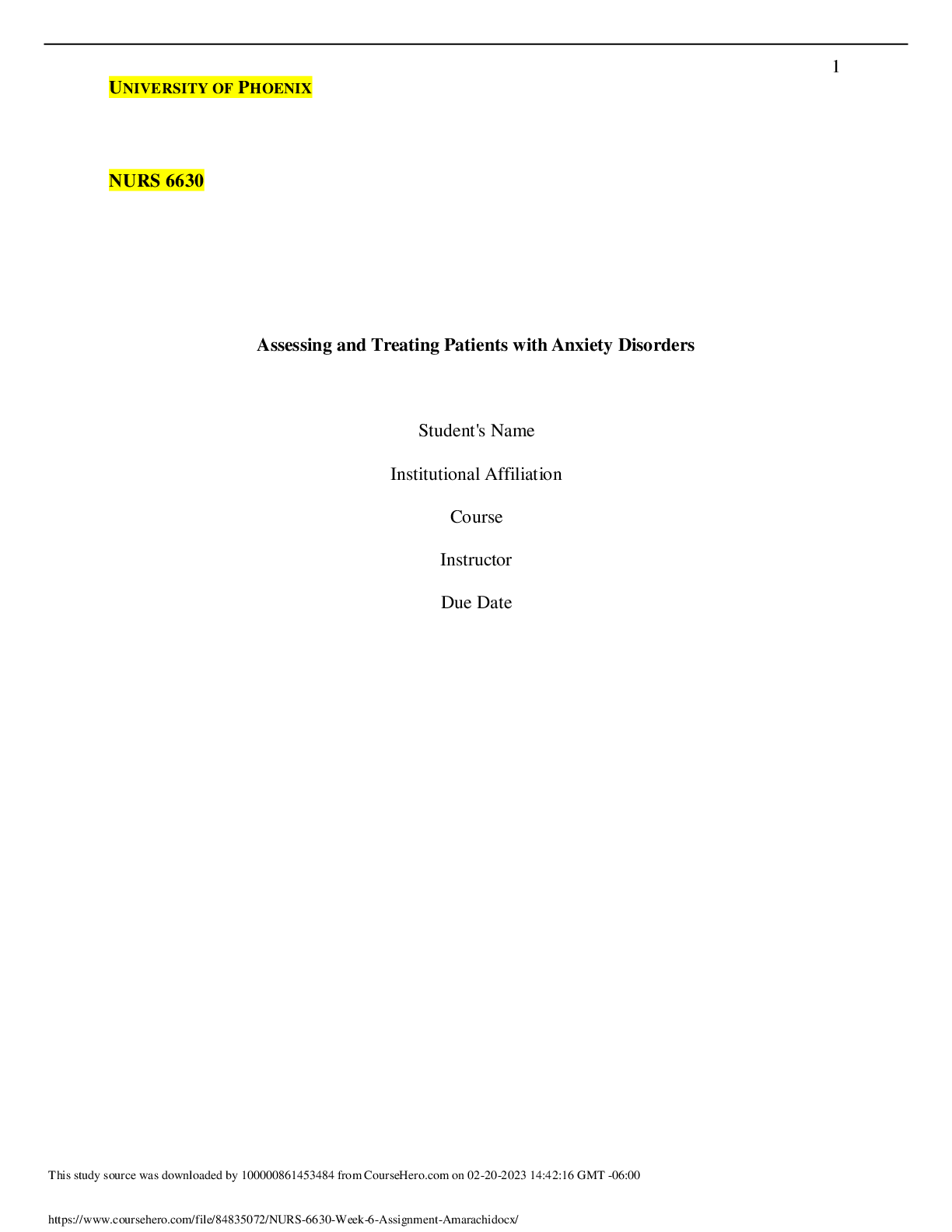
(Answered)Assessing and Treating Patients with Anxiety Disorders / NURS 6630 Week 6 Assignment: Assessing and Treating Patients With Anxiety Disorders_Examined Case Study: A Middle-Aged Caucasian Man With Anxiety
Document Content and Description Below
Last updated: 3 years ago
Preview 1 out of 8 pages
Instant download
Buy this Document to get the Full Access Instantly
Provided by Students Who Aced it
We Verify Document Content to Gurantee Accuracy
Also available in bundle (1)
Click Below to Access Bundle(s)

Summary NURS 612 Shadow Health All Modules Cases Instructor Keys, Complete Latest (2022/2023) Complete A+ Solutions Guide.
Summary NURS 612 Shadow Health All Modules Cases Instructor Keys, Complete Latest (2022/2023) Complete A+ Solutions Guide.
By Native 3 years ago
$29
9
Reviews( 0 )
Document information
Connected school, study & course
About the document
Uploaded On
Jan 26, 2023
Number of pages
8
Written in
All

Additional information
This document has been written for:
Uploaded
Jan 26, 2023
Downloads
0
Views
260
Topic Tags
Recommended For You
Get more on CASE STUDY »
(Solution) NURS 6630 Week 10 Assignment: Assessing and Treati...

NURS 6630 Final Exam Attempt Score 73/75 | Walden University

NURS 6630 / NURS6630: Psychopharmacologic Approaches to Treatm...
NURS 6630 / NURS6630 Midterm Exam Walden University 79 Q&A

Walden University - NURS 6630 midterm | NURS-6630N Midterm Exa...
NURS 6630 / NURS6630: Psychopharmacologic Approaches to Treatm...

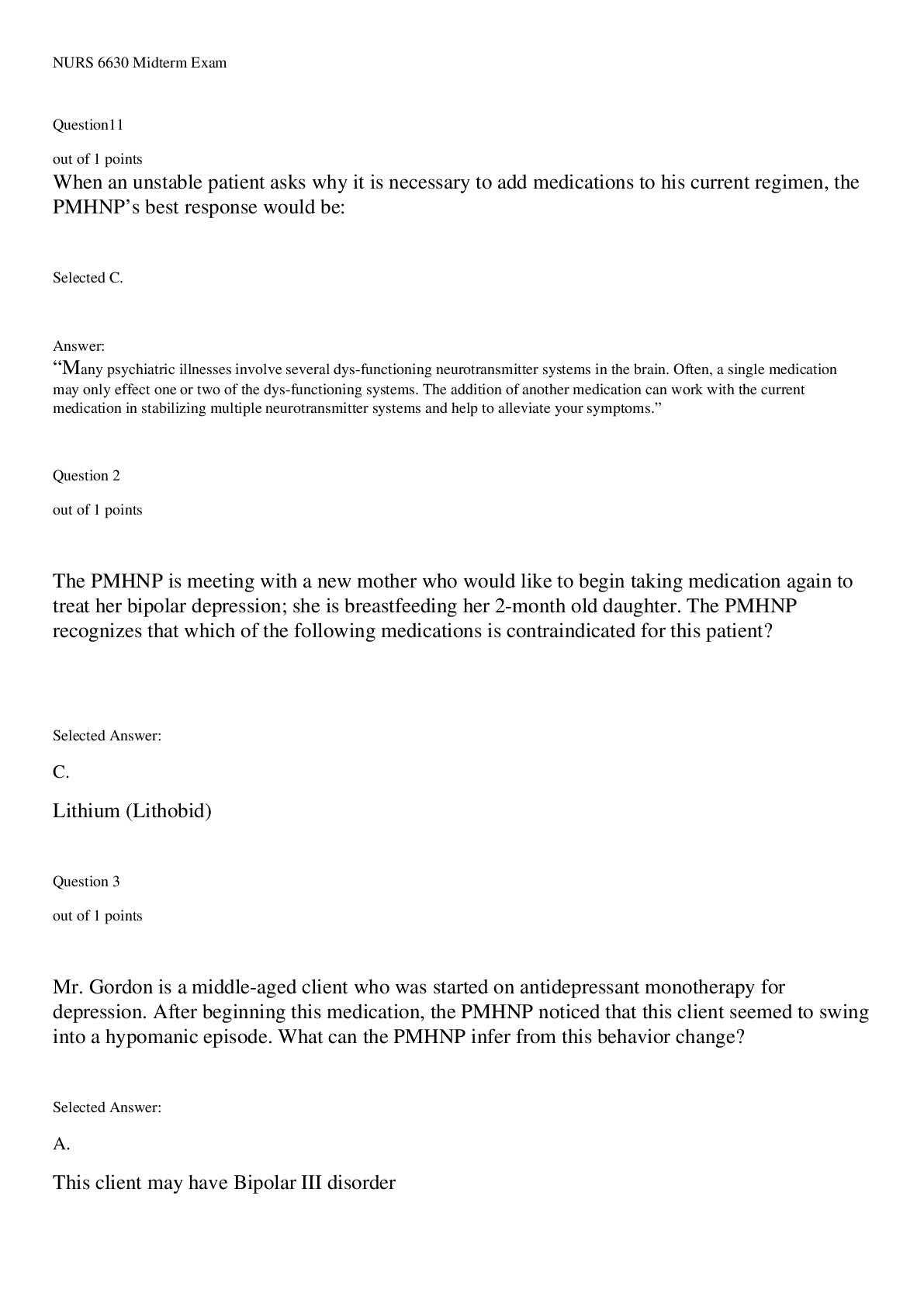
Walden University, Psychopharmacology, NURS 6630 Midterm Exam...
NURS 6630 / NURS-6630N Approaches to Treatment Attempt Score 6...
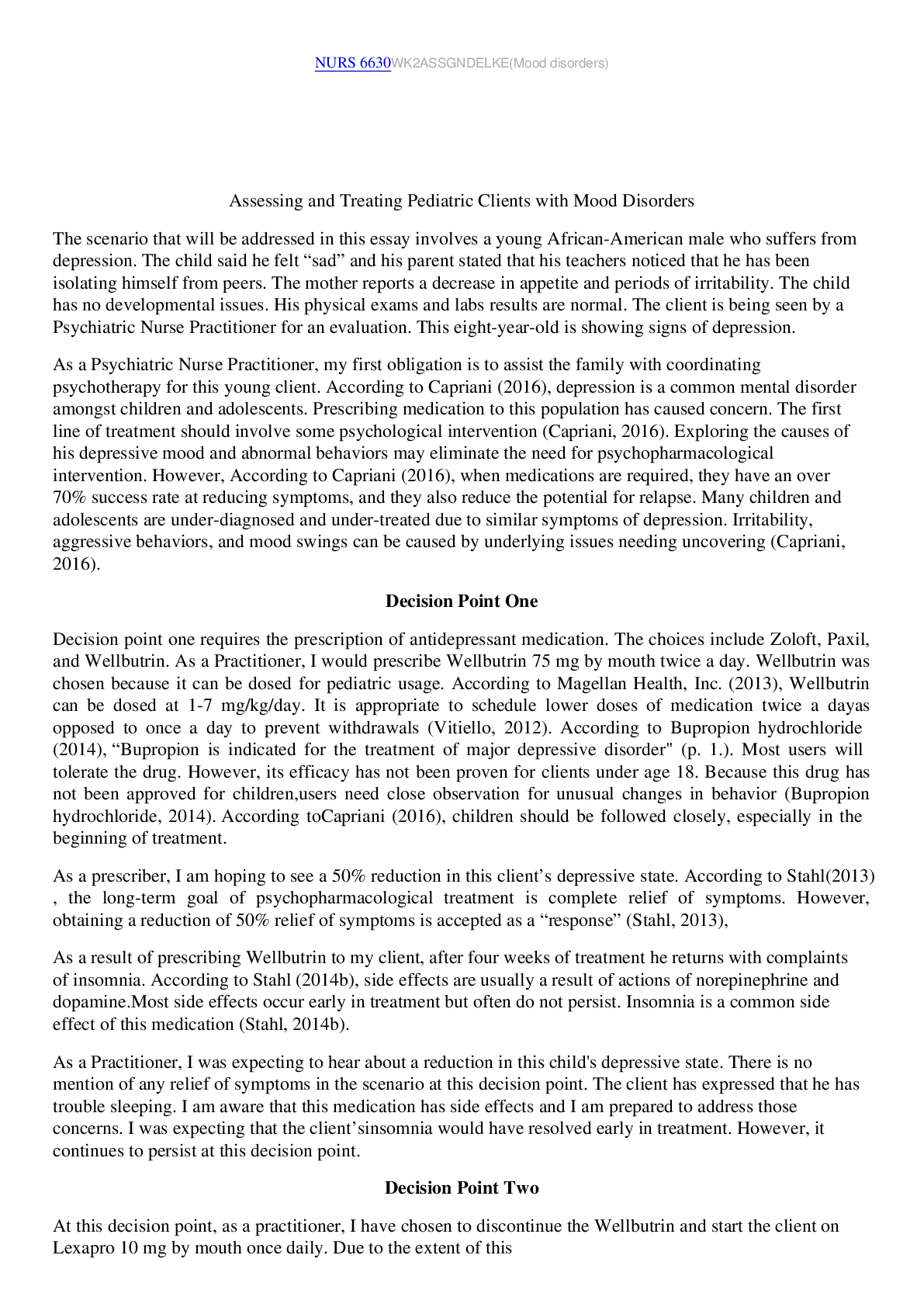
2020- NURS 6630 Assessing and Treating Pediatric Clients with...

(2020) NURS 6630 Week 6 Assignment Assessing and Treating Clie...
.png)
(2020) NURS 6630 BIPOLAR THERAPY Assessing and Treating Client...
TEST BANK for Davis Advantage for Psychiatric Mental Health Nu...

Test Bank For Fundamentals of Nursing 11th Edition Potter Perr...
TEST BANK for Essentials of Psychiatric Mental Health Nursing:...
Essentials of Psychiatric Nursing 2nd Edition Boyd TEST BANK
TEST BANK for Essentials of Psychiatric Nursing 2nd Edition by...