NURS 6521 Week 1 Quiz 2.Q&A
• Question 1
1 out of 1 points
The culture and sensitivity testing of a patient's wound exudate indicates that a specific antibiotic is necessary for treatment. The United States Pharm
...
NURS 6521 Week 1 Quiz 2.Q&A
• Question 1
1 out of 1 points
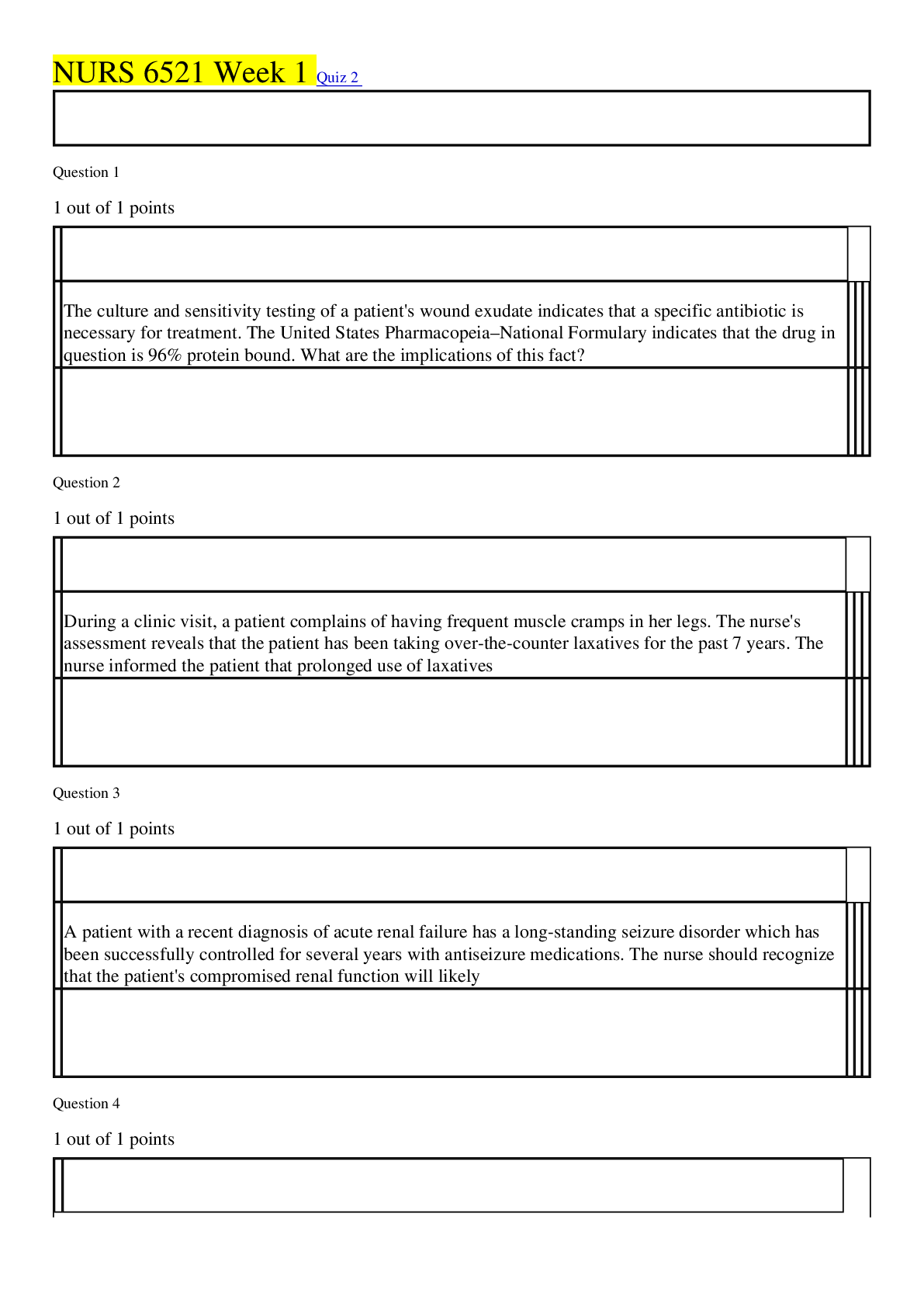
The culture and sensitivity testing of a patient's wound exudate indicates that a specific antibiotic is necessary for treatment. The United States Pharmacopeia–National Formulary indicates that the drug in question is 96% protein bound. What are the implications of this fact?
Response Feedback: A drug that is 96% protein bound has only 4% of ingested molecules free and active, a fact that is likely to necessitate a high dose of the drug. This does not result in rapid absorption and/or excretion and does not indicate a need for increased protein intake.
• Question 2
1 out of 1 points
During a clinic visit, a patient complains of having frequent muscle cramps in her legs. The nurse's assessment reveals that the patient has been taking over-the-counter laxatives for the past 7 years. The nurse informed the patient that prolonged use of laxatives
Response Feedback: Long-term intake of laxatives, antidepressants, and antibiotics has been found to deprive a person of most essential nutrients, such as vitamins. Prolonged use of laxatives is not known to turn urine acidic, cause urinary tract infections, counter the effect of other drugs, or inhibit the biotransformation of drugs.
• Question 3
1 out of 1 points
A patient with a recent diagnosis of acute renal failure has a long-standing seizure disorder which has been successfully controlled for several years with antiseizure medications. The nurse should recognize that the patient's compromised renal function will likely
Response Feedback: Impaired renal function will increase the half-life of drugs that are metabolized by the kidneys. This does not necessarily render such medications ineffective and it does not decrease the first-pass effect. IV administration will not compensate for the patient's impaired renal function.
• Question 4
1 out of 1 points
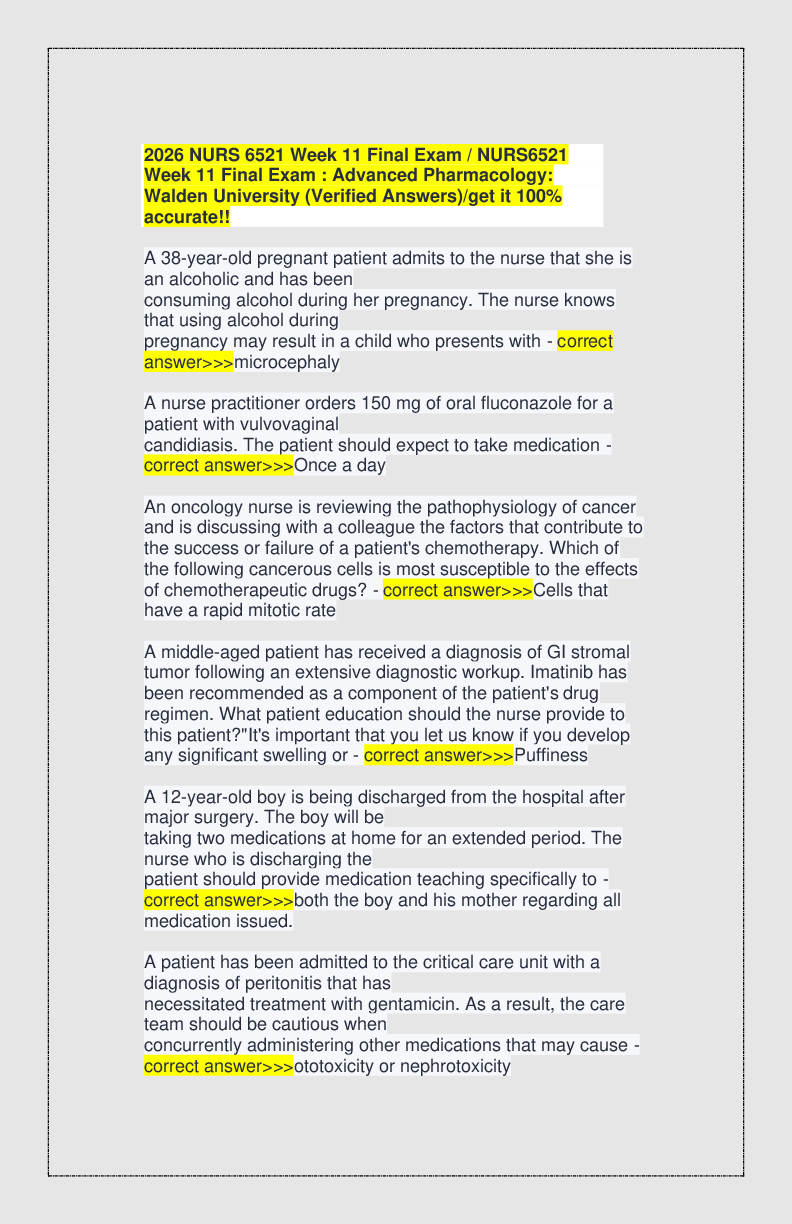
A patient has been prescribed several drugs and fluids to be given intravenously. Before the nurse starts the intravenous administration, a priority assessment of the patient will be to note the
Response Feedback: Baseline body weight and height, heart rate, and blood pressure are all important considerations during the assessment of a patient. However, if a patient has to be given drugs intravenously, it is important to inspect the skin for rashes, moles, or sores, so those areas can be avoided as an insertion or injection site.
• Question 5
1 out of 1 points
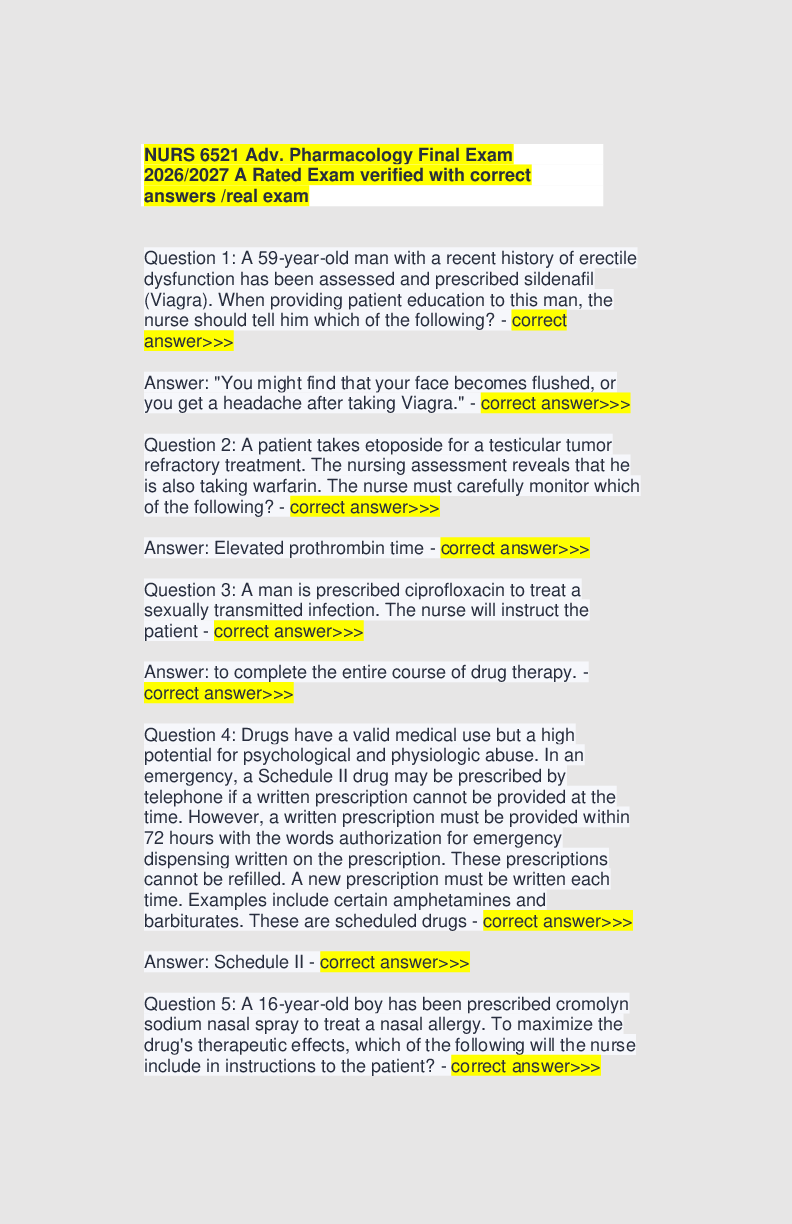
A nurse is caring for a patient who has had part of her small intestine removed due to cancer. She has also now developed hypertension and has been prescribed a new medication to decrease her blood pressure. While planning the patient's care, the nurse should consider a possible alteration in which of the following aspects of pharmacokinetics?
Response Feedback: Because absorption takes place mostly in the small intestine, there could be possible alterations with this process. Distribution takes place in the blood vessels; metabolism in the liver; and elimination via the kidneys. Because these systems are not affected by her surgery, these phases of pharmacokinetics would not be altered.
..........CONTINUED
[Show More]