Auditing Final EXAM | Download for quality grades | solved
Document Content and Description Below
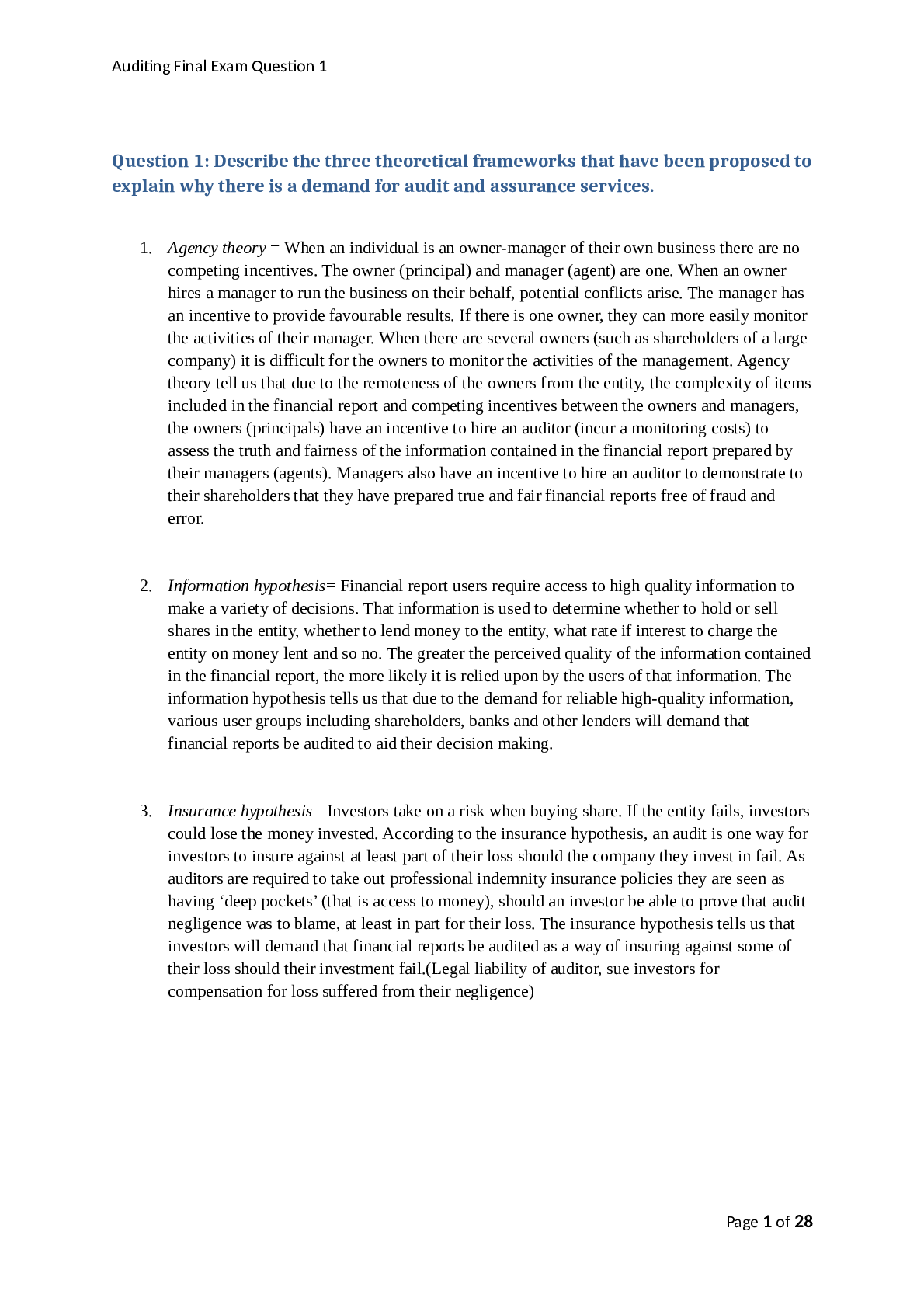
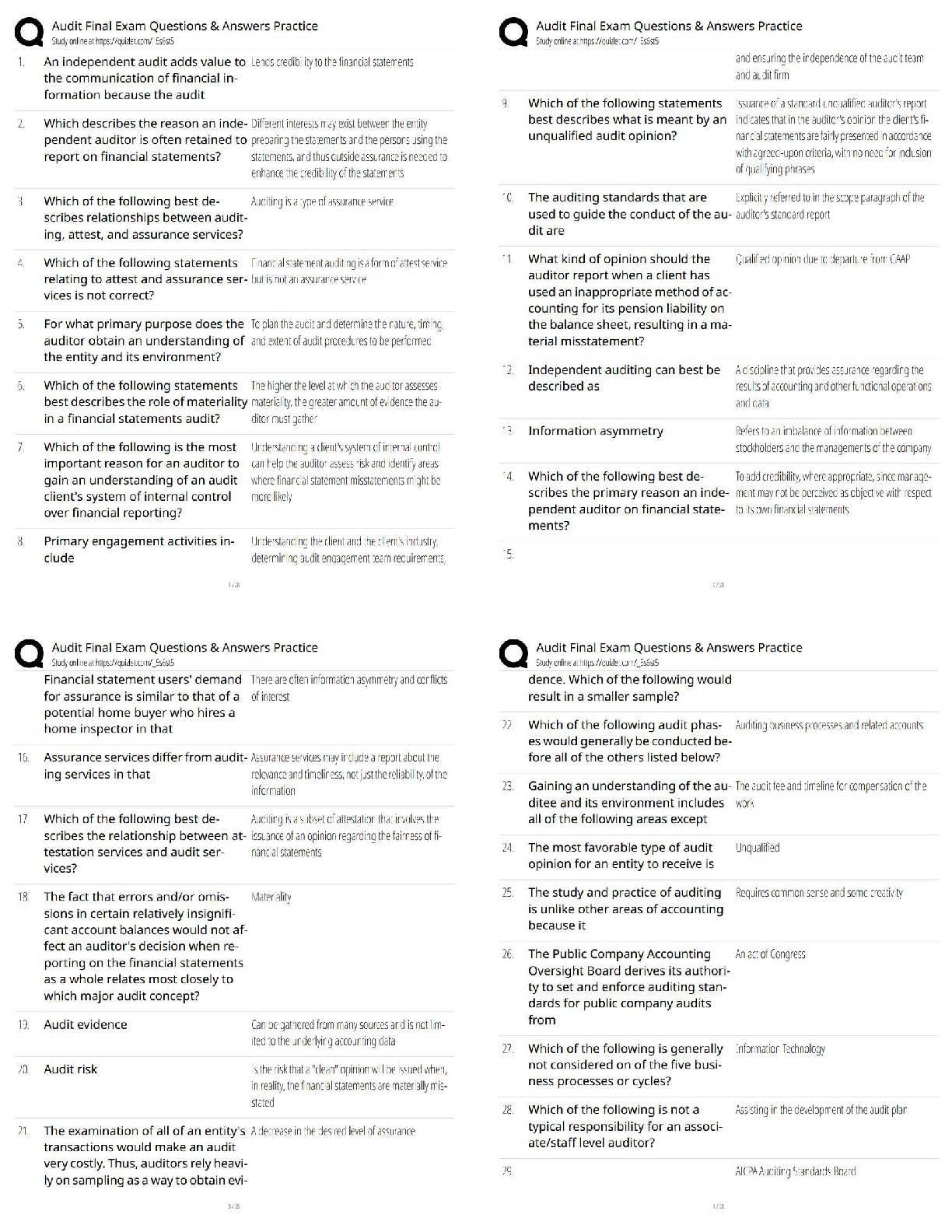
Question 1: Describe the three theoretical frameworks that have been proposed to
explain why there is a demand for audit and assurance services.
1. Agency theory = When an individual is an owner-manager of their own bu
...
[Show More]
Last updated: 3 years ago
Preview 1 out of 28 pages
Instant download
Buy this Document to get the Full Access Instantly
Provided by Students Who Aced it
We Verify Document Content to Gurantee Accuracy
Reviews( 0 )
Document information
Connected school, study & course
About the document
Uploaded On
Feb 11, 2023
Number of pages
28
Written in
All

Additional information
This document has been written for:
Uploaded
Feb 11, 2023
Downloads
0
Views
246
Topic Tags
Recommended For You
Get more on EXAM »

$26
889 Pages
Auditing A Risk-Based Approach to Conducting a Quality Audit,...

$22
365 Pages
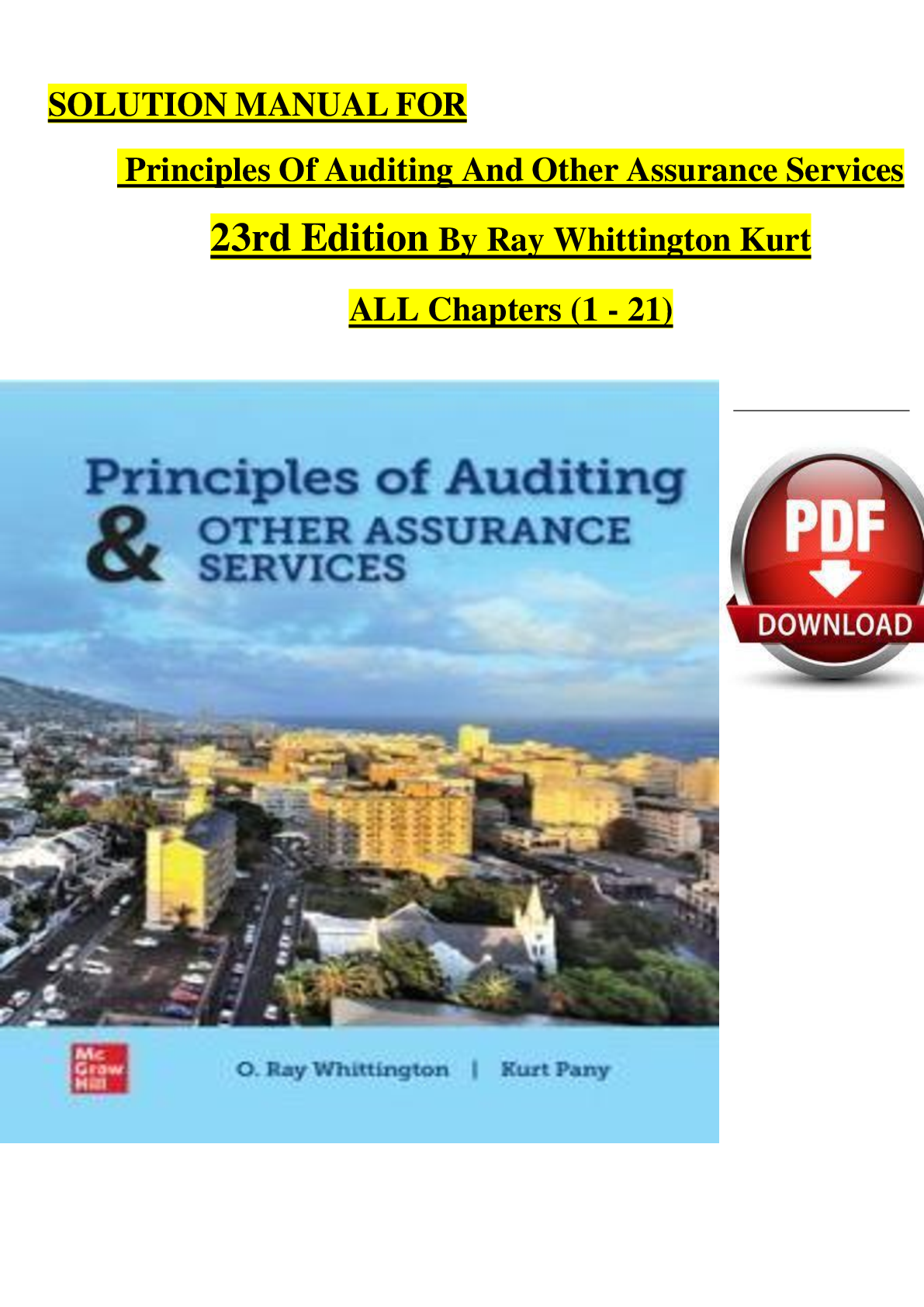
Solution Manual for Principles of Auditing & Other Assurance S...
$15
290 Pages
Contemporary Auditing 12th Edition By Michael Knapp (Solution...
$19.5
21 Pages
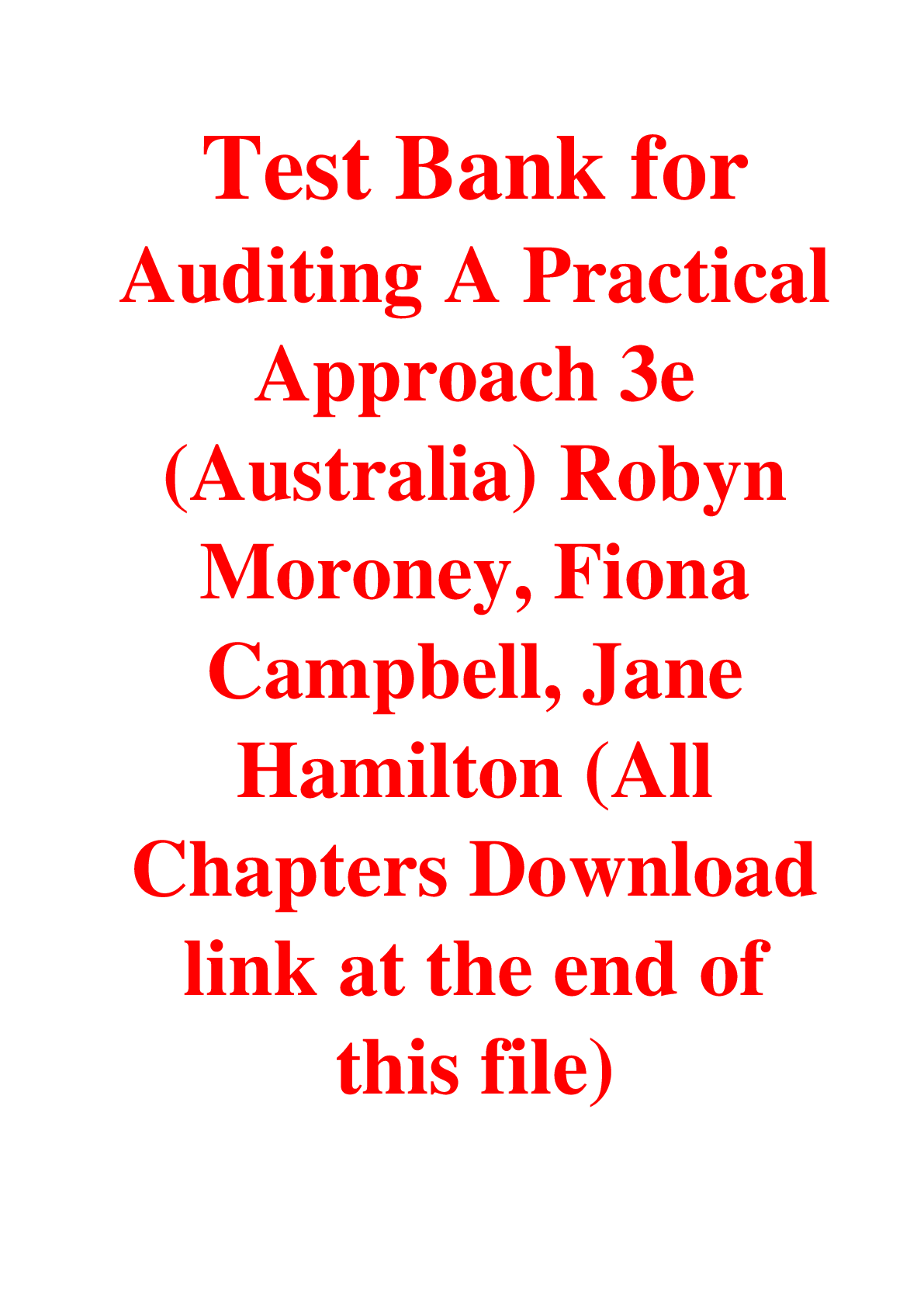
Test Bank for Auditing A Practical Approach 3e (Australia) Rob...
.png)
$25
40 Pages
Cloud 9 Ltd II An Audit Case Study, 1st Canadian Edition, 1e...

$25
79 Pages
Auditing & Assurance Services, 9e Louwers, Bagley, Blay, Straw...
$22
985 Pages
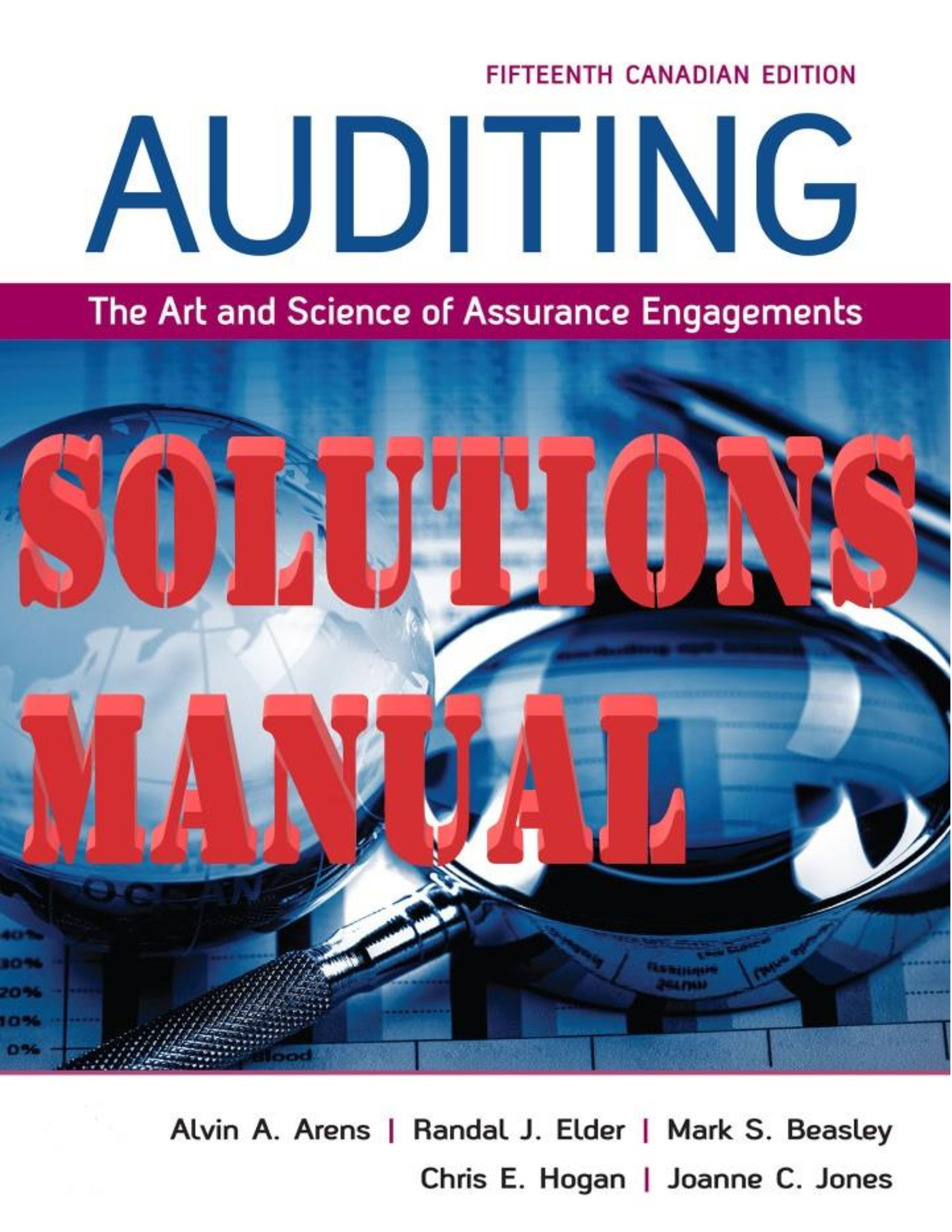
SOLUTIONS MANUAL for Auditing: The Art and Science of Assuranc...
$12
150 Pages
AUDIT AND ASSURANCE- Electronic Question Bank From Exam 1 to E...
$29
69 Pages
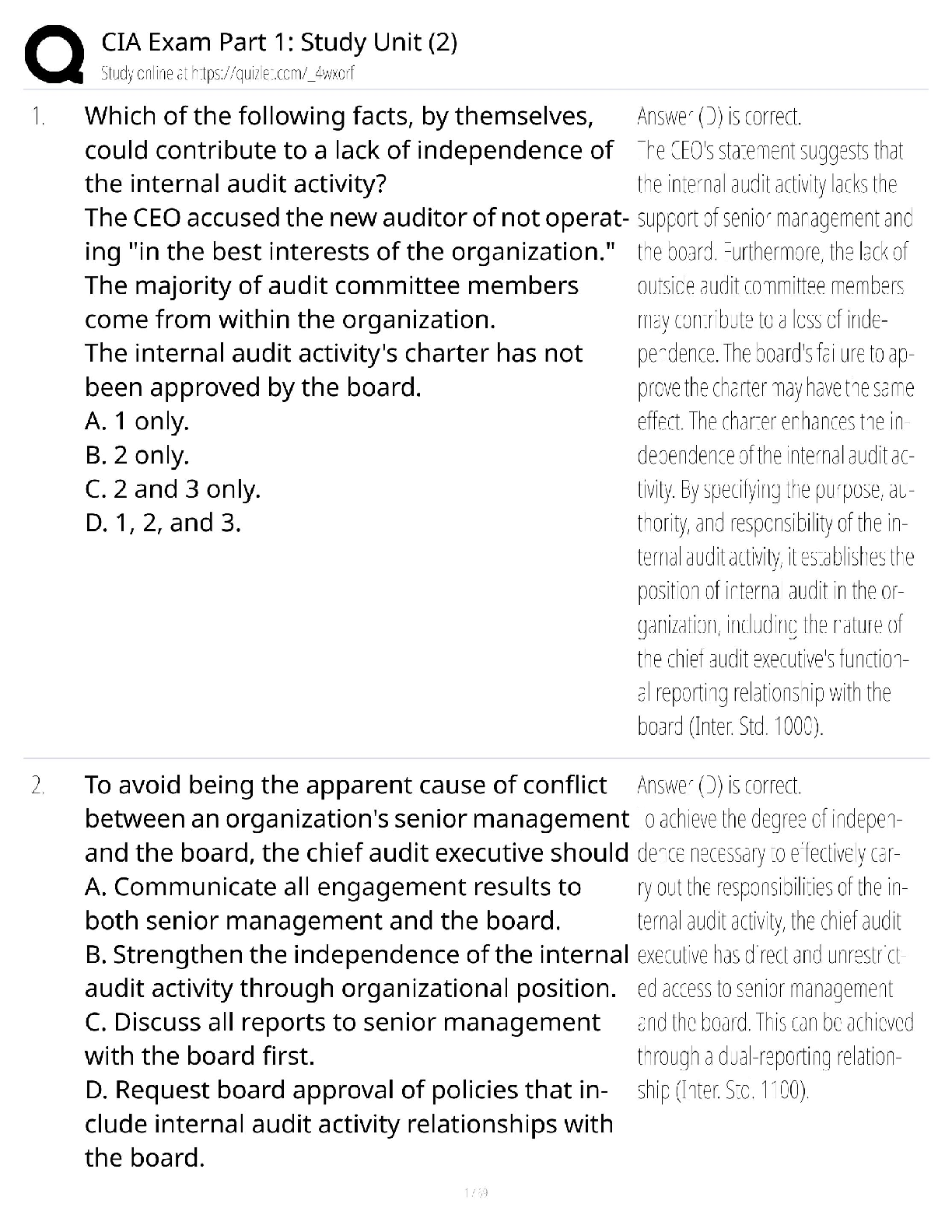
CIA Exam Part 1 Study Unit 2 / Score 100% / New 2025 Update /...
$1
479 Pages
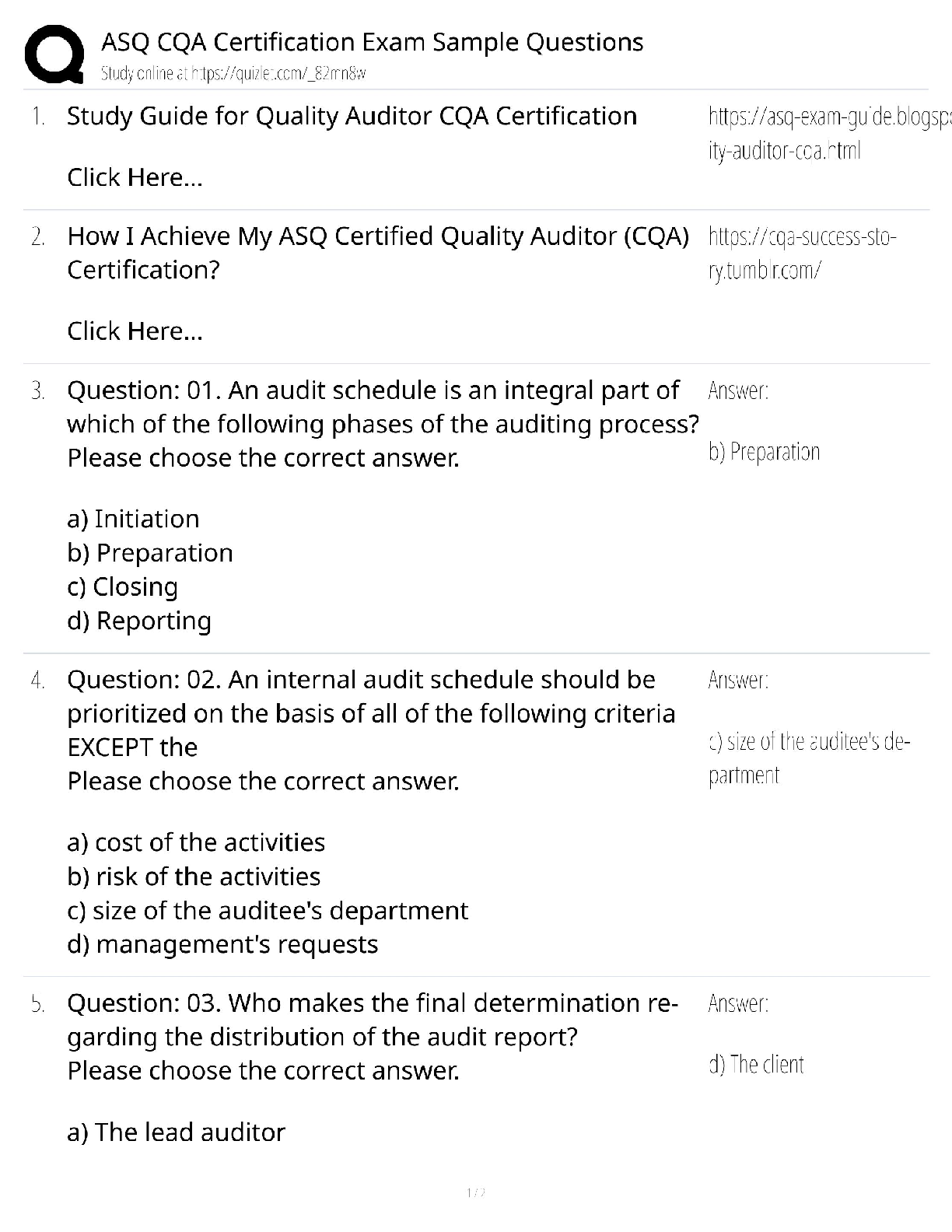
Auditing A Practical Approach with Data Analytics 2nd Edition...
More related documents below