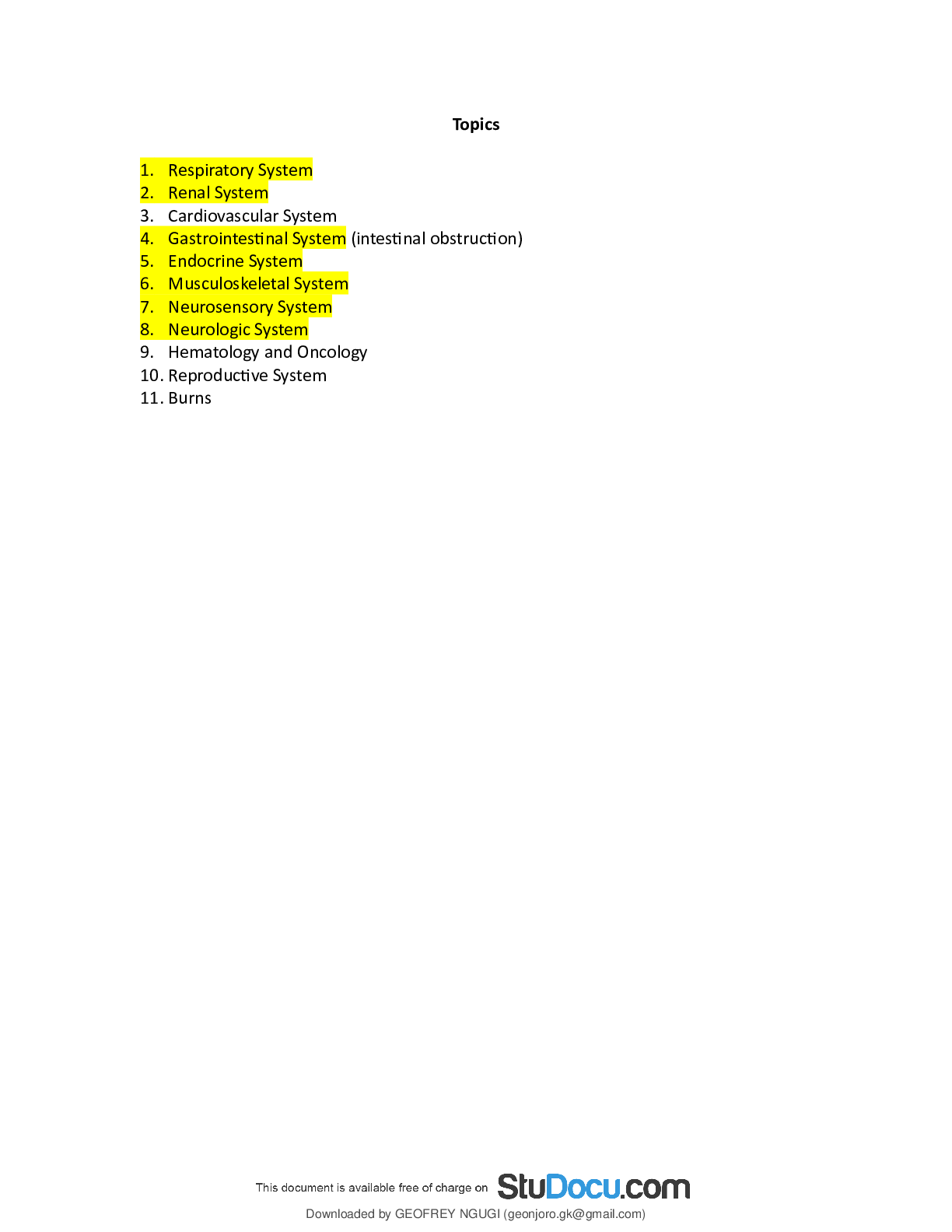
1. Respiratory System
2. Renal System
3. Cardiovascular System
4. Gastrointestinal System (intestinal obstruction)
5. Endocrine System
6. Musculoskeletal System
7. Neurosensory System
8. Neurologic System
9. Hem
...
1. Respiratory System
2. Renal System
3. Cardiovascular System
4. Gastrointestinal System (intestinal obstruction)
5. Endocrine System
6. Musculoskeletal System
7. Neurosensory System
8. Neurologic System
9. Hematology and Oncology
10. Reproductive System
11. Burns
Downloaded by GEOFREY NGUGI (
[email protected])
lOMoARcPSD|14331017
Endocrine System
Hyperthyroidism (Graves’ Disease, Goiter)
[Description]
Excessive activity of thyroid gland
Elevated T3 & T4
Increased rate of body metabolism
Autoimmune process
Etiologies:
o Primary disease state
o Use of replacement hormone therapy
o Excessive TSH production
Diagnostic:
o Low TSH
o High T3/T4
o Thyroid scan – goiter
Treatment:
o Medication:
Propylthiouracil (PTU)
Methimazole (Tapazole)
o Thyroid ablation by medication
o Radioactive iodine therapy
o Thyroidectomy
o Adenectomy – portion of the anterior pituitary where TSH is made is taken out
o NOTE: all treatments cause hypothyroid = lifelong hormone replacement
[Assessment]
Enlarged thyroid gland (goiter)
Acceleration of body processes:
o Weight loss
o Increased appetite
o Diarrhea
o Heat intolerance
o Tachycardia, palpitations, high HP
o Diaphoretic, wet, moist skin
o Nervousness, insomnia
Exophthalmos
[Intervention]
Observe for Thyroid Storm
Teach:
o After treatment, hormone replacement necessary
o Diet: high calorie, high protein, low caffeine, low fiber diet
Downloaded by GEOFREY NGUGI (
[email protected])
lOMoARcPSD|14331017
o Perform eye care for exophthalmos
Artificial tears to maintain moisture
Sunglasses when bright light
Annual eye exams
Thyroidectomy
o Check frequently for bleeding, irregular breathing, neck swelling
o Support neck when moving client
o Check for laryngeal edema (hoarsness)
o Monitor Trousseau and Chvostek sign – removal of parathyroids
[HESI Hint]
Thyroid Storm
o Uncontrolled hyperthyroidism 2/2 Grave’s disease
o Life threatening
o S/S: tachycardia, HTN, agitation, anxiety, fever
o Priority = MAINTAIN AIRWAY
PTU and Tapazole are treatment for thyroid storm
Propranolol can be given to decrease sympathetic stimulation (BB)
After thyroidectomy – possibility of laryngeal edema
o Tracheostomy, O2, suction at bedside
o Calcium gluconate – if parathyroid gland accidently removed
Normal serum calcium:
o 8.5-10.5
o Watch for decrease in calcium level – compare to pre-op value
IF two or more parathyroid glands have been removed, chance of tetany increases
o Monitor serum calcium levels
o Check for tingling in toes/fingers/around mouth
o Chvostek sign
Twitching of lip after tap over facial nerve
o Trousseau sign
Carpopedal spasm after BP cuff is inflated above systolic pressure and
held for 3 min
Hypothyroidism (Hashimoto Disease, Myxedema)
[Description]
Hypofunction of the thyroid gland
Low T3/T4
High TSH
Treatment = thyroid hormone replacement (Levothyroxine)
[HESI Hint]
Downloaded by GEOFREY NGUGI (
[email protected])
lOMoARcPSD|14331017
Myxedema coma
o Decreased metabolism 2/2 lack of T3/T4 – causes heart muscles to become weak
and the chamber size to increase -> low CO -> bradycardia -> shock state
o Precipitated by:
Illness, abrupt withdrawal of thyroid medication, anesthesia, use of
sedatives, or hypoventilation
o Airway patent & ventilator support as needed
[Assessment]
Fatigue
Thin, dry hair, dry skin
Thick, brittle nails
Constipation
Bradycardia
Hypotension
Goiter
Periorbital edema, facial puffiness
Cold intolerance
Weight gain
Slow speech
Husky voice
[Interventions]
Teach:
o Medication regimen
o Take meds in morning before meals & no taking with other meds
o Avoid food/products containing iodine
o s/s of myxedema coma:
hypotension
Bradycardia
Hypoventilation
Hypothermia
Hyponatremia
Hypoglycemia
Lactic acidosis
Respiratory failure
Develop bowel elimination plan – prevent constipation
3L/day of fluid intake
High fiber diet – fruits, veggies
Increased activity
Little/no use of enemas and laxatives
NO SEDATION – can lead to respiratory difficulties
[Show More]