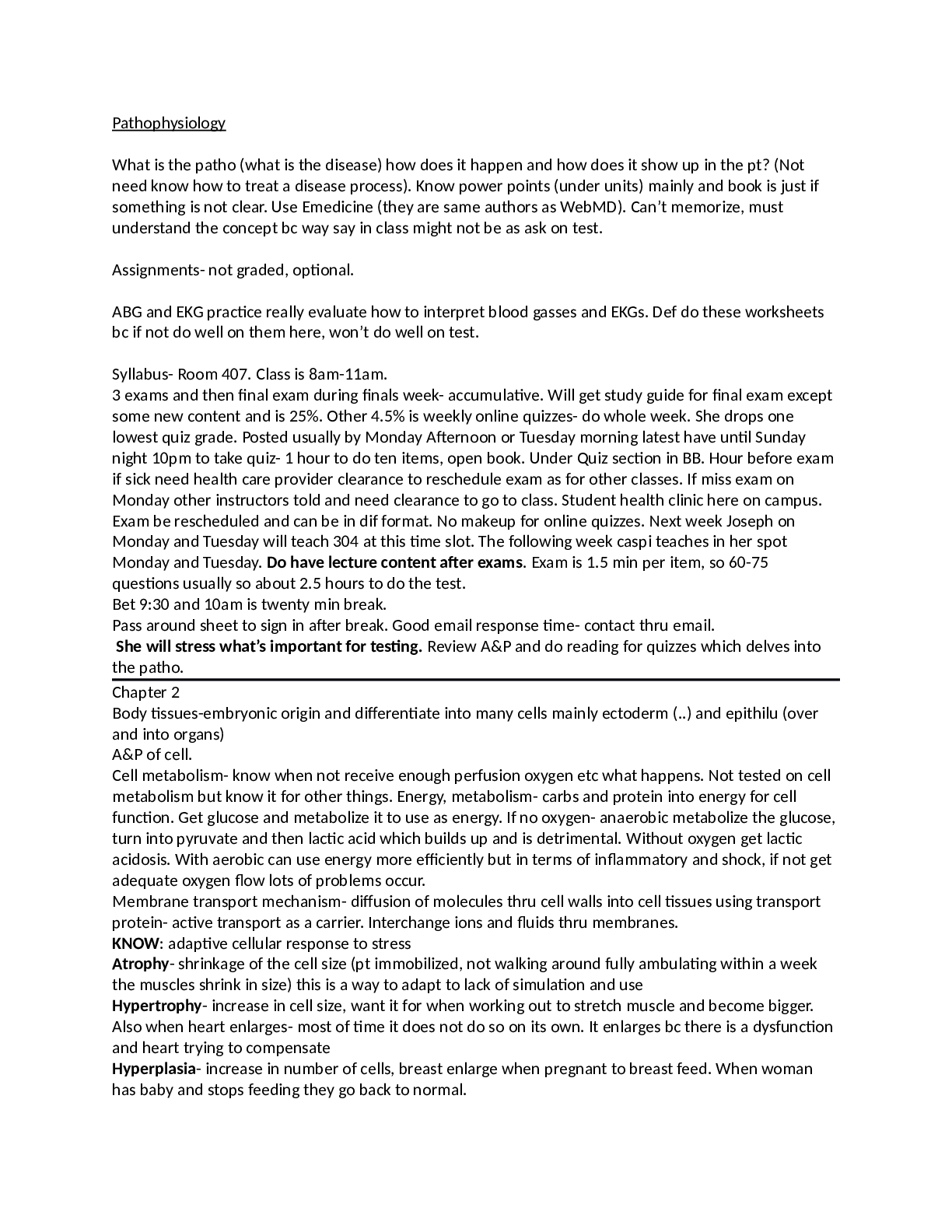
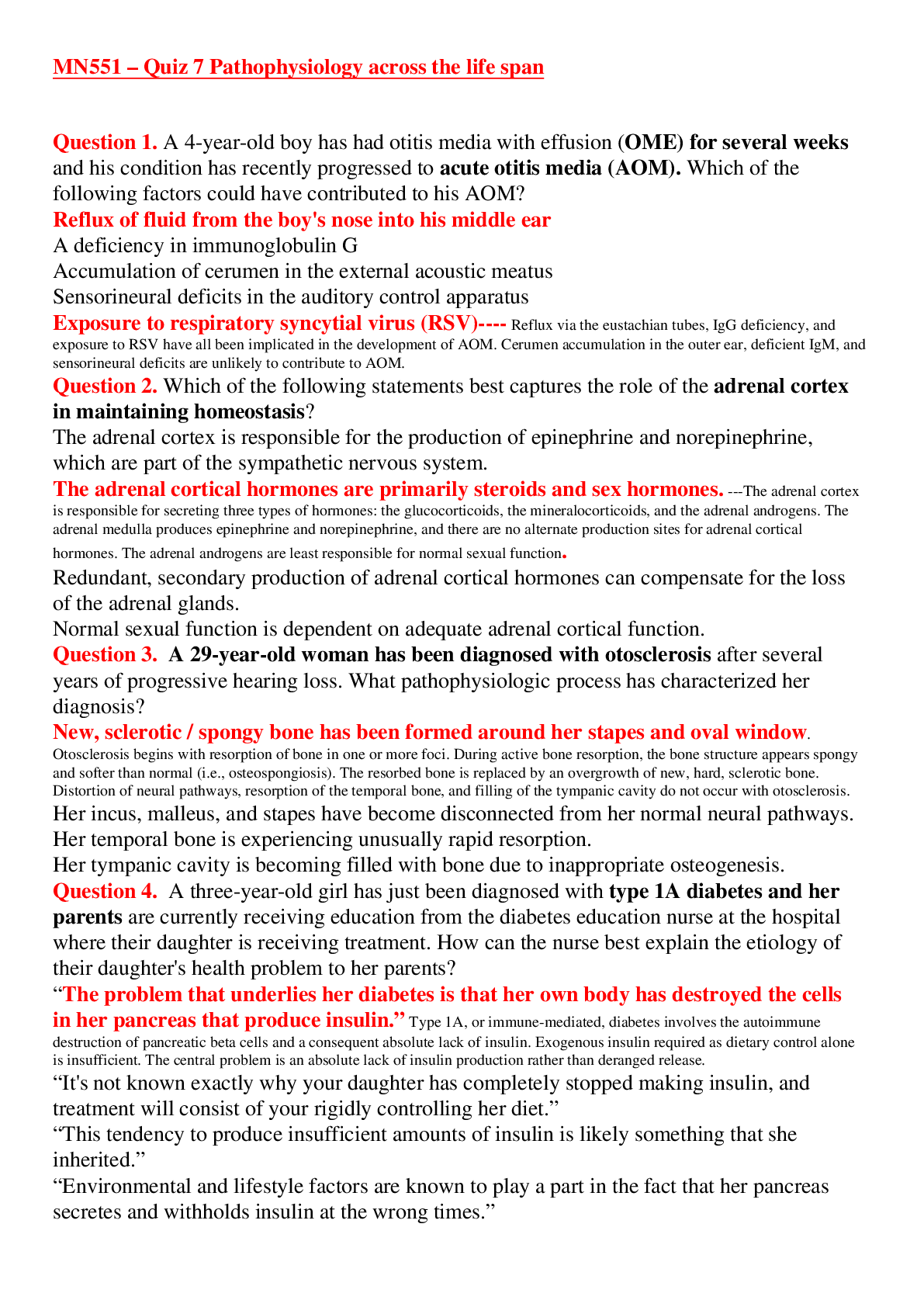
Pathophysiology Final Exam Study Guide i. Altered Cell Biology (1 question) a. Atrophy – decrease in cellular size b. Hypertrophy – increase in cell size c. Hyperplasia – increase in the ... number of cells d. Metaplasia – replacement of one mature cell by another e. Dysplasia – abnormal changes in the size, shape and organization of mature cell f. Cellular Adaptation i. Allows the stressed tissue to survive or maintain function ii. Genetics (2 questions) a. Autosomal dominant disorders i. Male/female offspring affected equally ii. One of the parents is usually affected iii. If one of the parents is heterozygous affected, the children have a 50% chance of being affected iv. If both parents are heterozygous affected, the children have a 75 % chance of being affected b. Marfan Syndrome i. Etiology – disease of the connective tissue 1. Ocular, skeletal, and CV anomalies 2. It is an autosomal dominant disease – linked to chromosome 15 3. Affects men and women equally ii. Signs and symptoms 1. Joint hypermobility 2. Spinal deformity 3. Mitral valve prolapse 4. Aortic valve disease c. Tay Sachs Disease i. Etiology – accumulation of glycolipids in the brain neurons & retina b/c of deficiency in Hexosaminidase A enzyme ii. Signs and symptoms 1. Mental retardation and motor problems 2. Blindness and seizures 3. Death in 2-5 years 4. Cherry red spot in retina will occur d. Turner Syndrome i. Etiology – partial or full inactivation of X chromosomes 1. 45 chromosomes instead of 46, b/c only one X 2. Diagnosed through genetic testing 3. Associated with Coronary Heart Disease ii. Signs and symptoms 1. Affects girls, typically are shorter, no breasts/ovaries, sterile 2. Webbing of neck 3. Amenorrhea 4. May have signs of mental retardation iii. Fluid and Electrolytes / Acid-Base Balance (6 questions) a. Interpret ABGs i. Compensation of disorders Acid/Base Ph Range 7.35-7.45 C02 35-45 mm Hg HC03 22-26 mEq/L PaO2 80-100mm Hg 02 Stat 95% or greater b. Acidosis i. H+ diffuses into cells and drives out K+, elevating K+ concentration in ECF ii. Compensate by excreting hydrogen ions c. Alkalosis i. H+ diffuses out of cells and K+ diffuses in ii. Excrete bicarbonate and hold hydrogen ions d. Compensation i. Acute vs. Chronic 1. Acute compensation of acid base balance is done by the respiratory system 2. Chronic compensation is done by the kidneys to slowly but completely balance the disorder ii. The body’s attempt to return the ratio of acid to base back toward 1:20(1 acid for every 20 bases) to maintain the pH between 7.35-7.45 iii. The patient is not considered to be compensated unless pH is within normal range iv. If changes in tha [Show More]
Last updated: 3 years ago
Preview 1 out of 35 pages
Buy this document to get the full access instantly
Instant Download Access after purchase
Buy NowInstant download
We Accept:
Can't find what you want? Try our AI powered Search
Connected school, study & course
About the document
Uploaded On
Feb 01, 2021
Number of pages
35
Written in
All
This document has been written for:
Uploaded
Feb 01, 2021
Downloads
0
Views
45
Scholarfriends.com Online Platform by Browsegrades Inc. 651N South Broad St, Middletown DE. United States.
We're available through e-mail, Twitter, Facebook, and live chat.
FAQ
Questions? Leave a message!
Copyright © Scholarfriends · High quality services·