AMRT Study Guide, Questions and
answers, 100% Accurate, rated A+
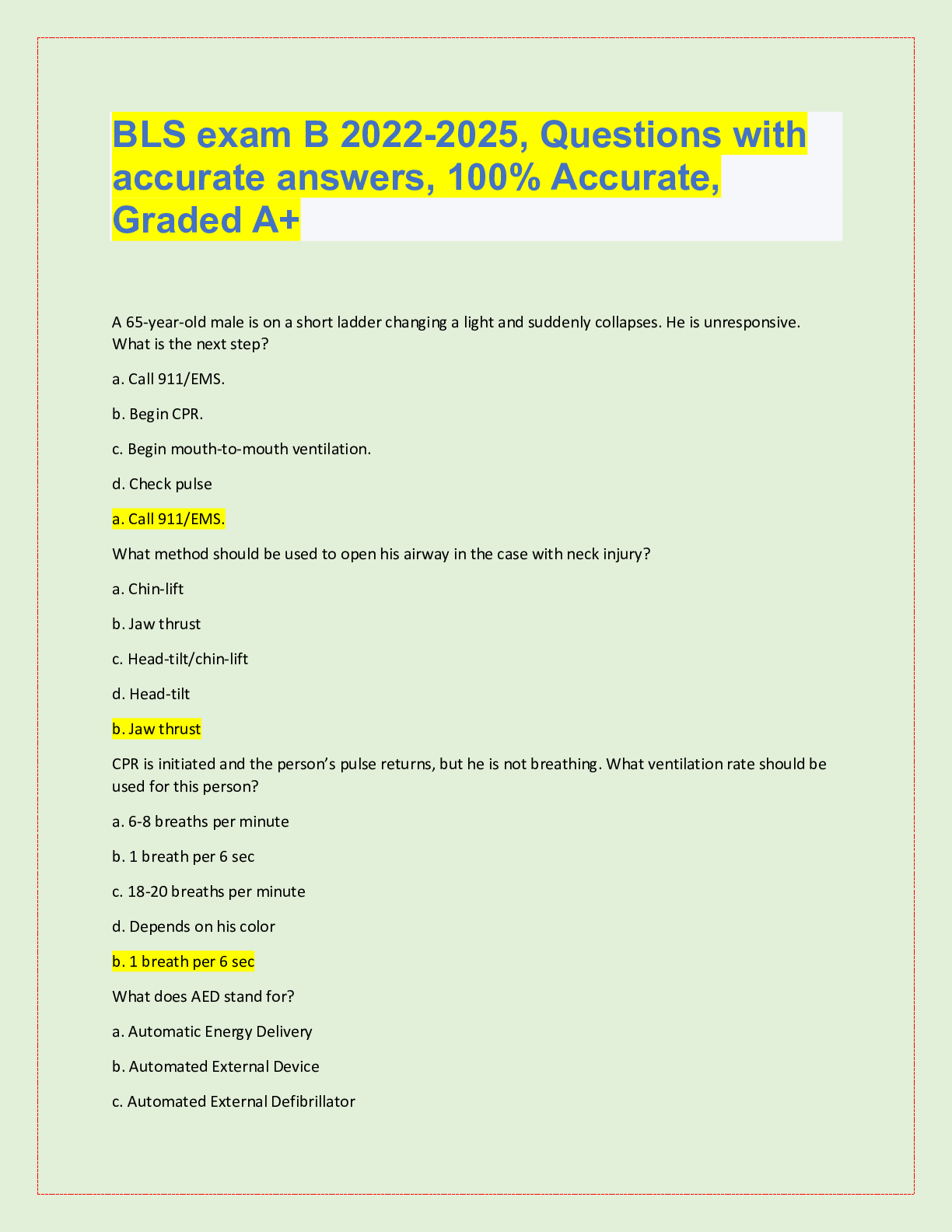
Biology - ✔✔-The study of living things
Microbiology - ✔✔-The study of small biological things
Mycology - ✔✔-The study of mold
Bacteriology - ✔✔-The
...
AMRT Study Guide, Questions and
answers, 100% Accurate, rated A+
Biology - ✔✔-The study of living things
Microbiology - ✔✔-The study of small biological things
Mycology - ✔✔-The study of mold
Bacteriology - ✔✔-The study of bacteria
Virology - ✔✔-The study of viruses
Myco- - ✔✔-mold, fungus
Bioaerosols - ✔✔-Airborne particles that are living or originate from living organisms
(ex. skin cells)
Viable - ✔✔-Capable of germination, alive
Non-viable - ✔✔-Not growing, dead
Respirable - ✔✔-Able to be deeply inhaled
Microbial - ✔✔-Microorganism
Pathogenic - ✔✔-Disease causing organisms
Fungal amplification - ✔✔-Mold growth
Fungal colonization - ✔✔-Mold growth
Active growth - ✔✔-Sufficient water present for growth
Dormant - ✔✔-Lack of water. dormant
Microbe - ✔✔-Small life form, microscopical
3 groups of fungi or molds - ✔✔--Micro fungi or filamentous fungi
-yeasts
-macro fungi or wood decay fungi (Woodrow, mushrooms)
Spores or conidia - ✔✔-Means of fungal reproduction (seeds)
Hyphae - ✔✔-Thread-like growth structure for fungi- similar to a root of branch of a tree. they produce
enzymes to digest substrate
Mycelia - ✔✔-A whole group of fungal hyphae
Vegetative growth of fungal fragments - ✔✔-Fungal hyphae and/or mycelia without spore producing
structures
Size of Penicillium and Aspergillus spores - ✔✔-2-3 um (microns)
Most common size of mold spores related to water damage - ✔✔-2-20 um (microns)
Mycotoxins - ✔✔-Poisonous substances produced by some fungi. also known as fungal toxins
Spores can germinate within ______ hours - ✔✔-12-24 hours
Mold spores can colonize within ______ hours under ideal laboratory conditions - ✔✔-48-72 hours
Viable or non viable spores may be _____ - ✔✔-Allergenic or contain mycotoxins
Thick walled spores - ✔✔-Spores that can survive harsh environment. they are the most durable part
and are very difficult to "kill"
Hydro- - ✔✔-Water
-phobic - ✔✔-Avoiding
-philic - ✔✔-Loving
Meso- - ✔✔-Middle
Xero- - ✔✔-Low
Thermo- - ✔✔-Heat
Name the 4 fungi growth cycles - ✔✔-Germination, Colonization, Sporulation, Dissemination
First step of fungi growth cycle, similar to sprouting of a seed - ✔✔-Germination
Second step of fungi growth cycle, development of hyphae and mycelia - ✔✔-Colonization
Third step of fungi growth cycle. development of reproduction phase, production of spores or conidia -
✔✔-Sporulation
The final step of fungi growth cycle. release of spores or conidia into the air. airborne release and
transport - ✔✔-Dissemination
Hydrophilic fungi - ✔✔-Type of fungi that grows on continuously wet materials. stachybotrys,
penicillium, and aspergillus species
Mesophilic fungi - ✔✔-Type of fungi that grows on damp materials
Xero-tolerant fungi - ✔✔-Type of fungi that grows on relatively dry materials
What category of water can mold begin to grow? - ✔✔-Any category of water
Tools to measure air flows and pressure differentials - ✔✔--Smoke tube/pencil (air flows)
-Digital manometer
-Observation (bowling of plastic)
-U tube manometer
-Magnehelic gauges
The 3 basic principles of remediation - ✔✔-1. Isolation of work area
2. Management of air flows
3. Controlled Demolition (low dust)
Environmental Protection goals - ✔✔--Protect health and safety of workers
-Protect unaffected environments
-Protect occupants
HEPA - ✔✔-High-Efficiency Particulate Air or Arrestor
HEPAs filter __% of particles - ✔✔-99.97%
Thermophilic fungi - ✔✔-Type of fungi that like higher temperatures
Xerophilic Fungi - ✔✔-Type of fungi that grows with little water or moisture. penicillium and aspergillus
species
What conditions do the specific fungi Cladospirium and Aureobasidium prefer to grow in? - ✔✔-
Condensate conditions
What conditions do the specific fungi Penicillium and Aspergillus prefer to grow in? - ✔✔-Damp
conditions
What conditions do the specific fungi Stachybotrys, Trichoderm, Rhizopus, and Fusarium prefer to grow
in? - ✔✔-Very wet conditions
What conditions do the specific fungi Graphium, Orphiostoma, Ceratcystis, and Gliomastixprefer prefer
to grow in? - ✔✔-Lumberyard conditions
What conditions do the specific fungi Basidiospores, Poria Incrassate, and Serpula lacrymans prefer to
grow in? - ✔✔-Wood rot conditions
Shall - ✔✔-REQUIRED.
Mandatory (regulatory requirements) or natural law, expressed by the S500 and S520
Should - ✔✔-REQUIRED.
Component of the "standard or care"
what a qualified, competent and prudent contractor would do, expressed by the S500 and S520
Recommended - ✔✔-NOT REQUIRED.
Is advised or suggested, expressed by the S500 and S520
May - ✔✔-NOT REQUIRED.
Permission expressed by the S500 and S520
Can - ✔✔-NOT REQUIRED.
Possibility open to the user, expressed by the S500 and S520
Standard of care - ✔✔-IICRC S500/S520
Toxigenic chemical compound found in the cell walls of spores and hyphae,
can be carcinogenic, ex. Aflatoxins - ✔✔-Mycotoxins
Fungi known to produce mycotoxins - ✔✔-Aspergillus flavus- Aflotoxins (peanuts & spoiled food)
Stachybotrys chartarum
MVOC - ✔✔-Microbial Volatile Organic Compounds
Musty, earthy, moldy smells come from - ✔✔-Metabolic gases released by actively growing
microorganisms (the gas waste of the fungi). If smell persists after remediation then mold is not gone
Microbial- - ✔✔-Bacteria + mold
Stachybotrys chartarum (atra) - ✔✔-Toxigenic, hydrophilic fungi known to produce mycotoxins. takes 7-
12 days to grow
Macro fungi/ wood decay fungi - ✔✔-Destroys wood, causing structural integrity concerns of a building.
generally not considered health concern.
Aspergillosis - ✔✔-Infectious disease of the lung of immune compromised individuals. this fungal
infection caused by aspergillus fumigatus
Histoplasmosis (Historplasma capsulatum) - ✔✔-Infection of the brain and lung associated with bird,
pigeon, and bat droppings
Cryptococcus neoformans (Yeast) - Cryptococcusis - ✔✔-Infection of the brain, lesions, and lung
infections. associated with bird, pigeon, and bat droppings (dry). can affect healthy people
Shortness of breath, coughing, runny nose, and headaches are all common symptoms of _____ - ✔✔-
Mold exposure
A chronic condition in children that is associated with extended mold exposure - ✔✔-Asthma
General health effect of fungi depends on ___ and the individual's ___ - ✔✔-Exposure and immune
response (sensitivity)
The 3 most susceptible groups of people to infections are? - ✔✔-Infants and young children,
immunocompromised individuals, and the elderl
[Show More]







![Preview of Prescott's Microbiology, 11th Edition By Joanne Willey [eBook] [PDF]](https://browseimages.nyc3.digitaloceanspaces.com/paper-images/2023/Sep/16/INhqfthz2023-09-16-10-23650557eca0fc1.png)
![Preview of eBook [PDF] Microbiology: An Introduction 13th Edition by Gerard Tortora.](https://browseimages.nyc3.digitaloceanspaces.com/paper-images/2025/Jan/21/bnz06W1O2025-01-21-07-39678fcdca414ba.png)