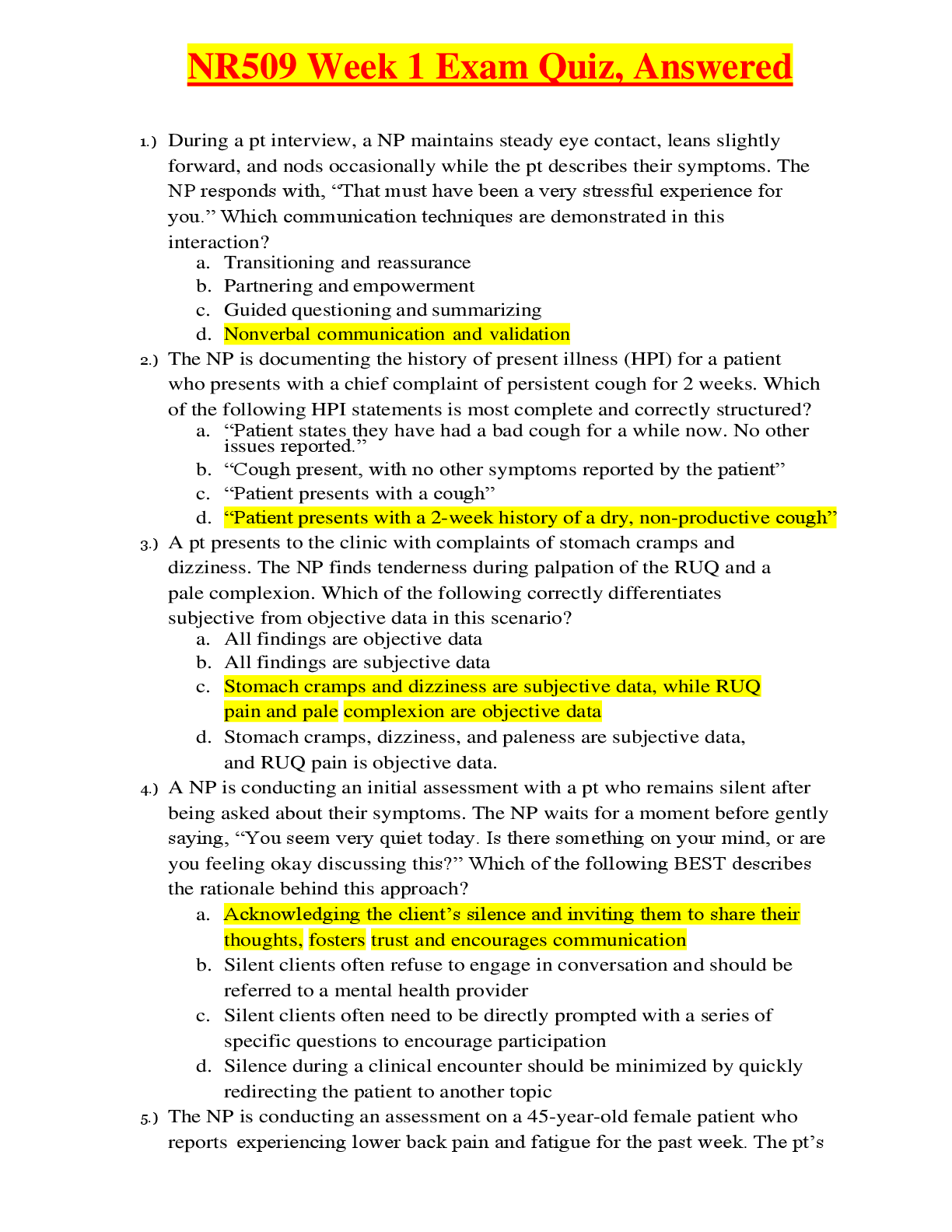
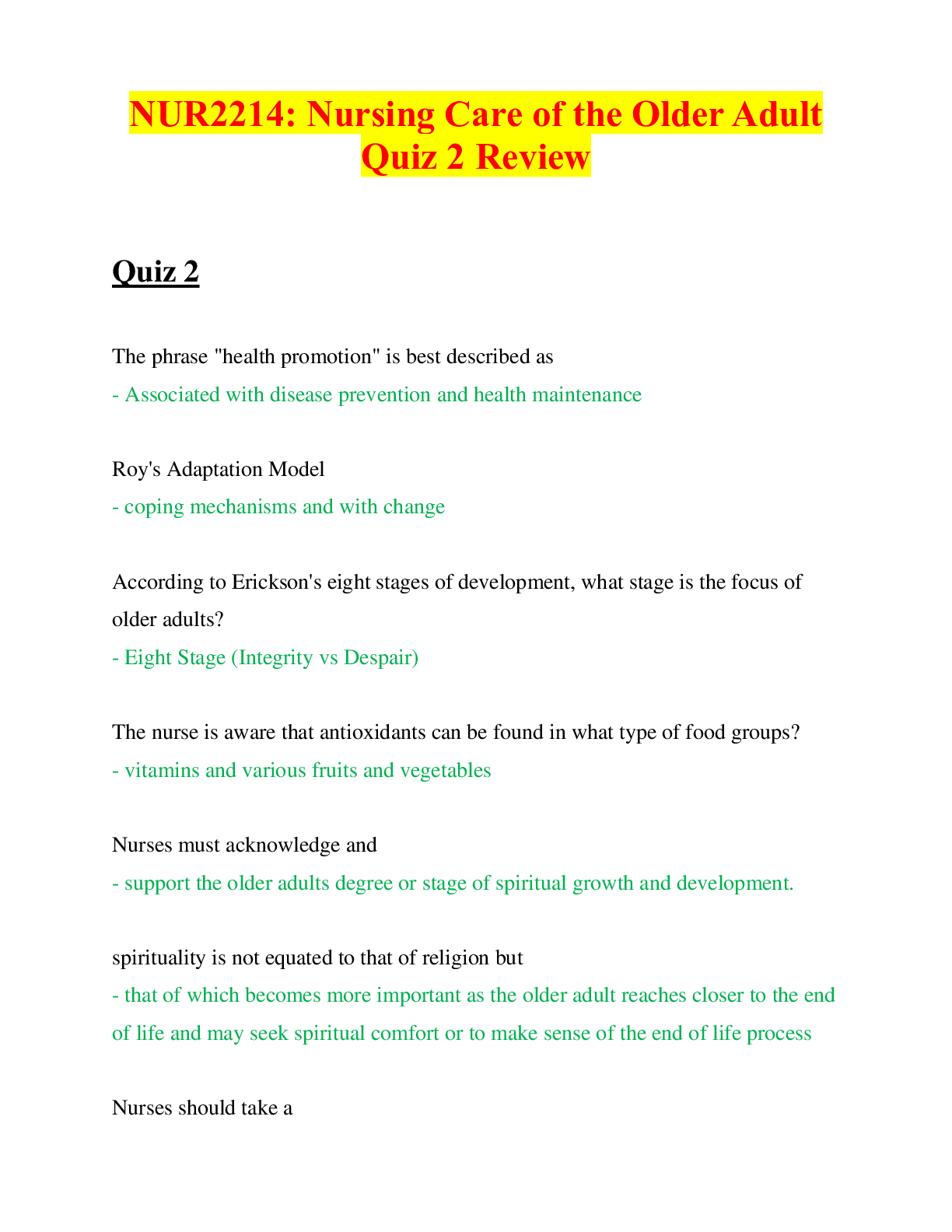
ATI, Endocrine Learning Systems, Exam Questions & Answers-A nurse is assisting with the plan of care for a client who has Cushing's Syndrome due to a chronic corticosteriod use. Which of the following actions should the
...
ATI, Endocrine Learning Systems, Exam Questions & Answers-A nurse is assisting with the plan of care for a client who has Cushing's Syndrome due to a chronic corticosteriod use. Which of the following actions should the nurse include in the plan of care?
A. Check the client's blood glucose for hypoglycemia
B. Check for clients urine specific gravity
C. Weight the client weekly
D. Insert an indwelling urinary catheter for the client - B. Check for clients urine specific gravity
A nurse is caring for a client who has type 2 diabetes mellitus and is displaying manifestations of hyperglycemia. Which of the following findings should indicate to the nurse that the client has hyperglycemia?
A. Hunger
B. Increased urination
C. Cold, Clammy skin
D. Tremors - B. Increased urination
A nurse is reinforcing teaching with a client who has type 1 diabetes mellitus about exercise. Which of the following statements should the nurse include in the teaching?
A. "You should exercise during a peak insulin time."
B. "Wear a medical alert identification tag when you exercise."
C. "Exercise can decrease the effects of insulin and cause the blood glucose levels to increase."
D. "You will get the most benefit when your glucose levels are higher than normal." - B. "Wear a medical alert identification tag when you exercise."
A nurse is preparing a 24-hour urine specimen for a client who is suspected to have pheochromocytoma. Which of the following laboratory tests from the 24-urine specimen should the nurse use to determine the client's condition?
A. Creatinine clearance
B. Vanillylmandelic acid (VMA)
C. 17-hydroxycorticosteroids
D. Protein - B. Vanillylmandelic acid (VMA)
A nurse is caring for a client who had a thyroidectomy to treat hyperthyroidism caused by an adenoma. Which of the following findings should the nurse report to the provider?
A. Tachycardia and hypertension
B. Respiratory rate 16/min
C. Negative Chvostek's sign
D. Laryngeal stridor and hoarseness
E. Positive Trousseau's sign - A. Tachycardia and hypertension
D. Laryngeal stridor and hoarse
[Show More]