Chapter 1: Thinking Critically with Psychological Science Learning Objectives 1. Explain each of the major components of the definition of psychology. Psychology is the science of behavior and mental processes 2. Explain
...
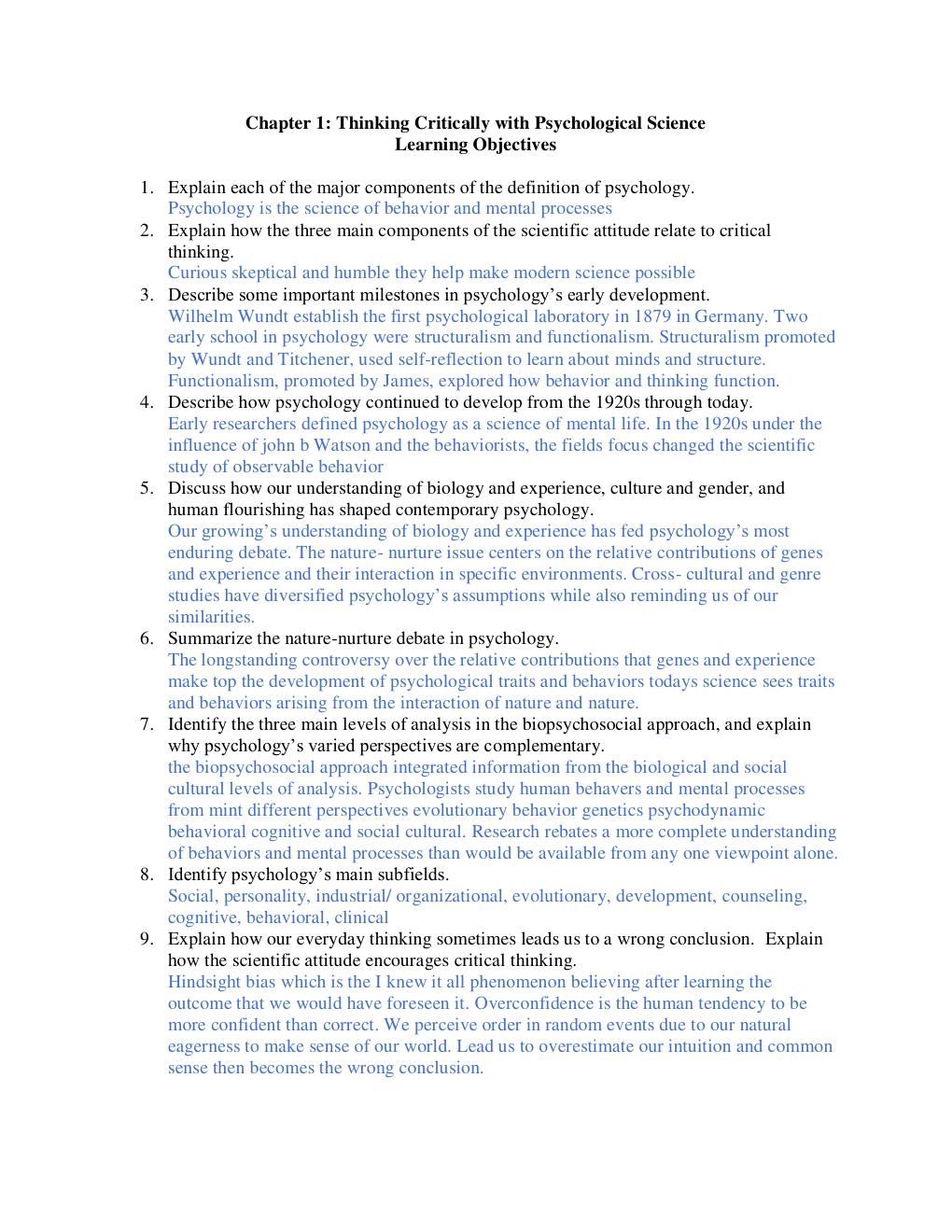
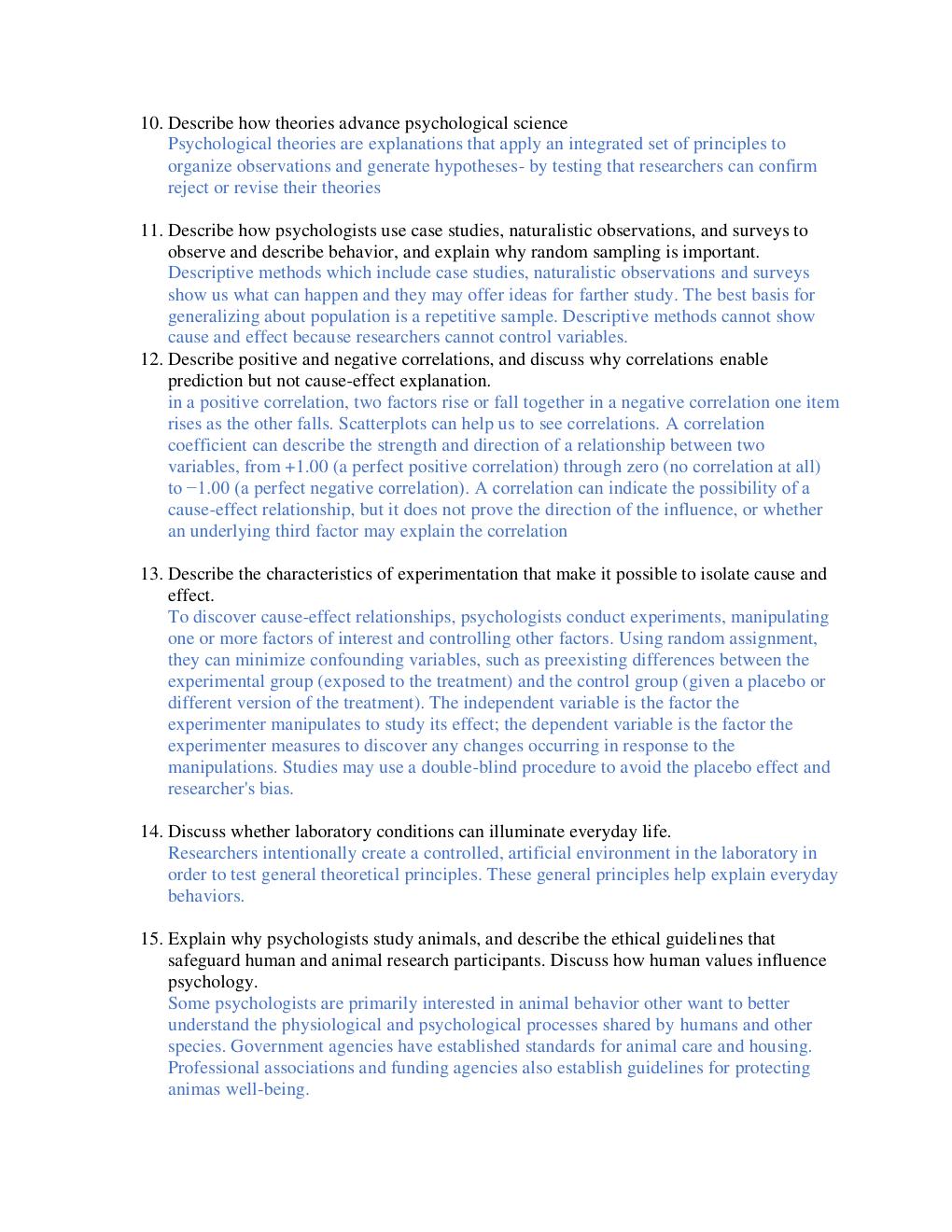
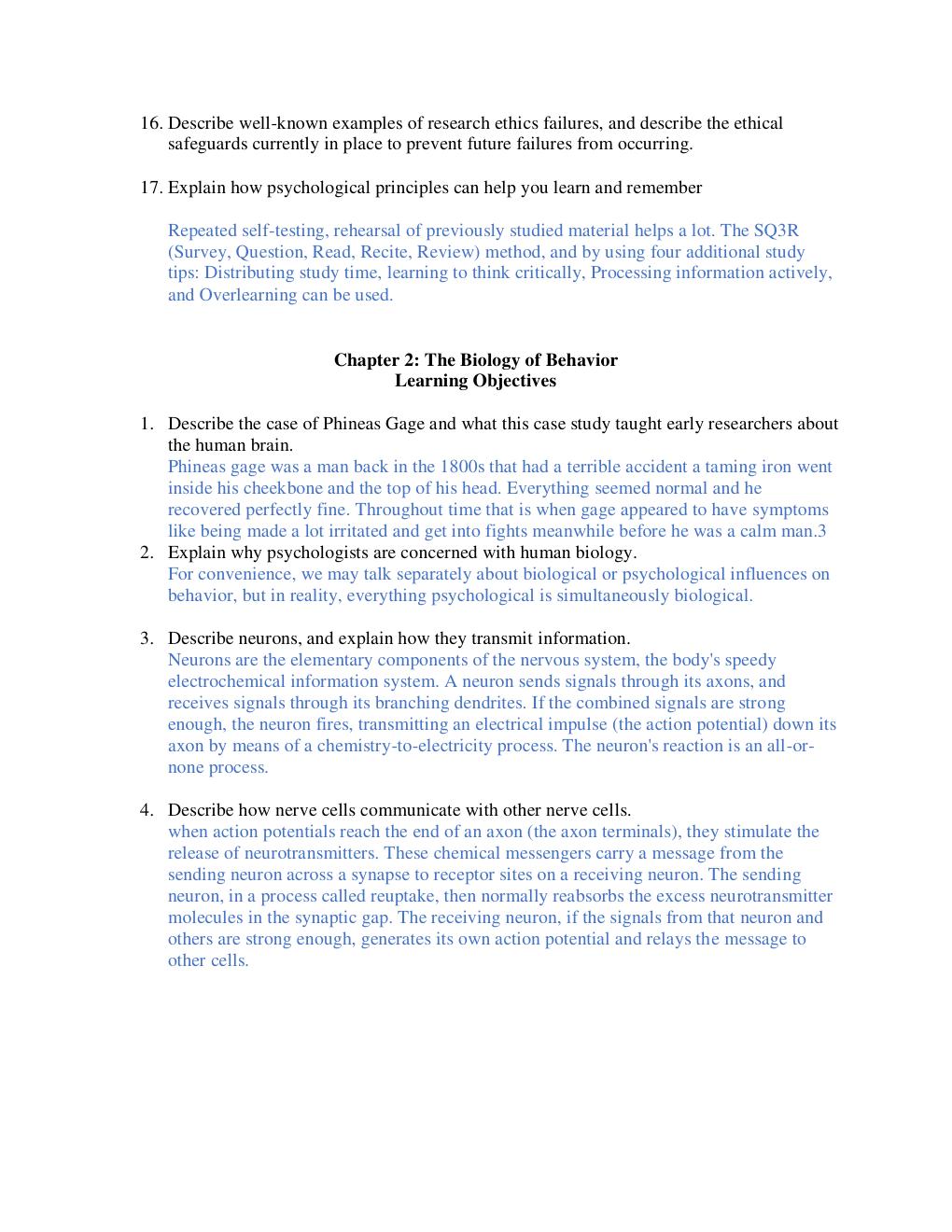
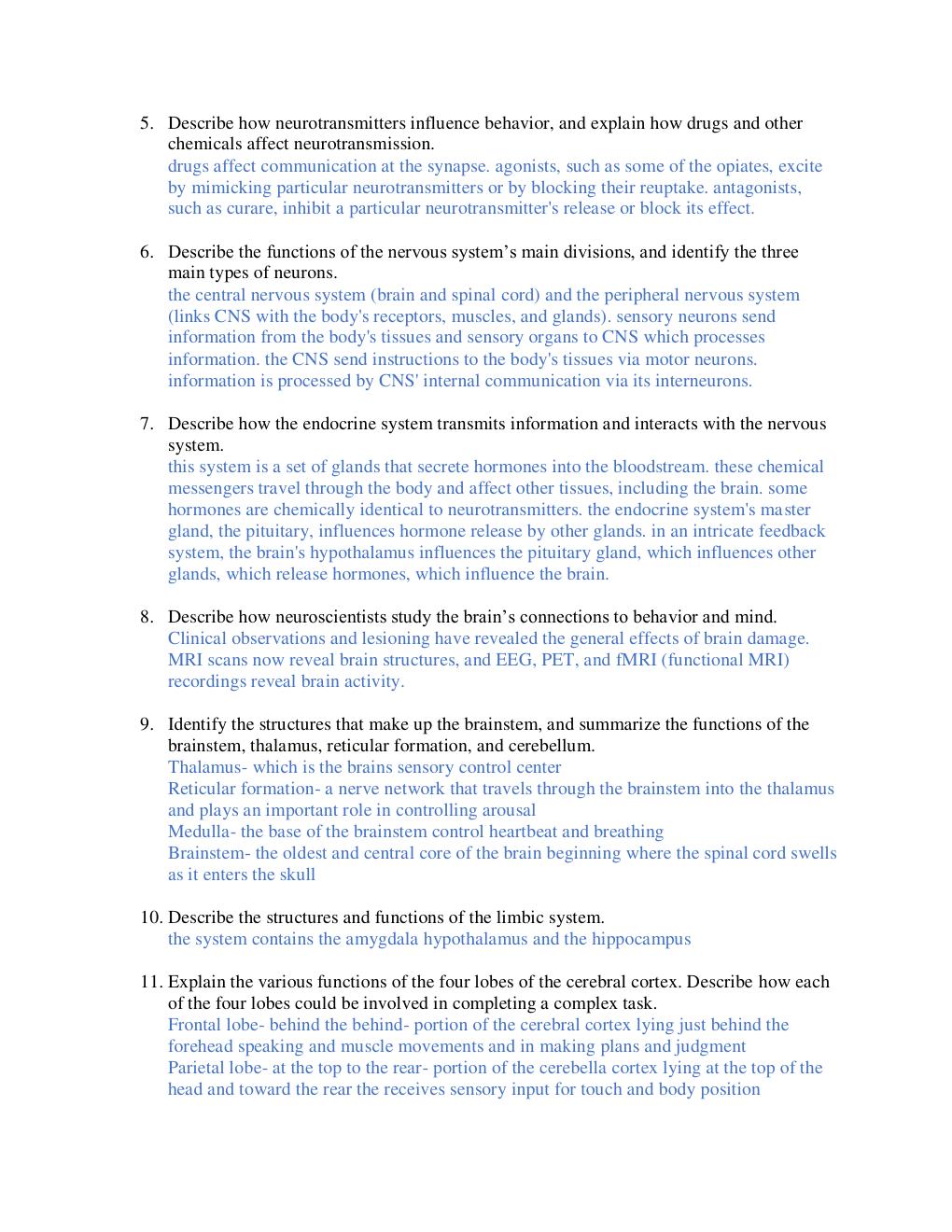
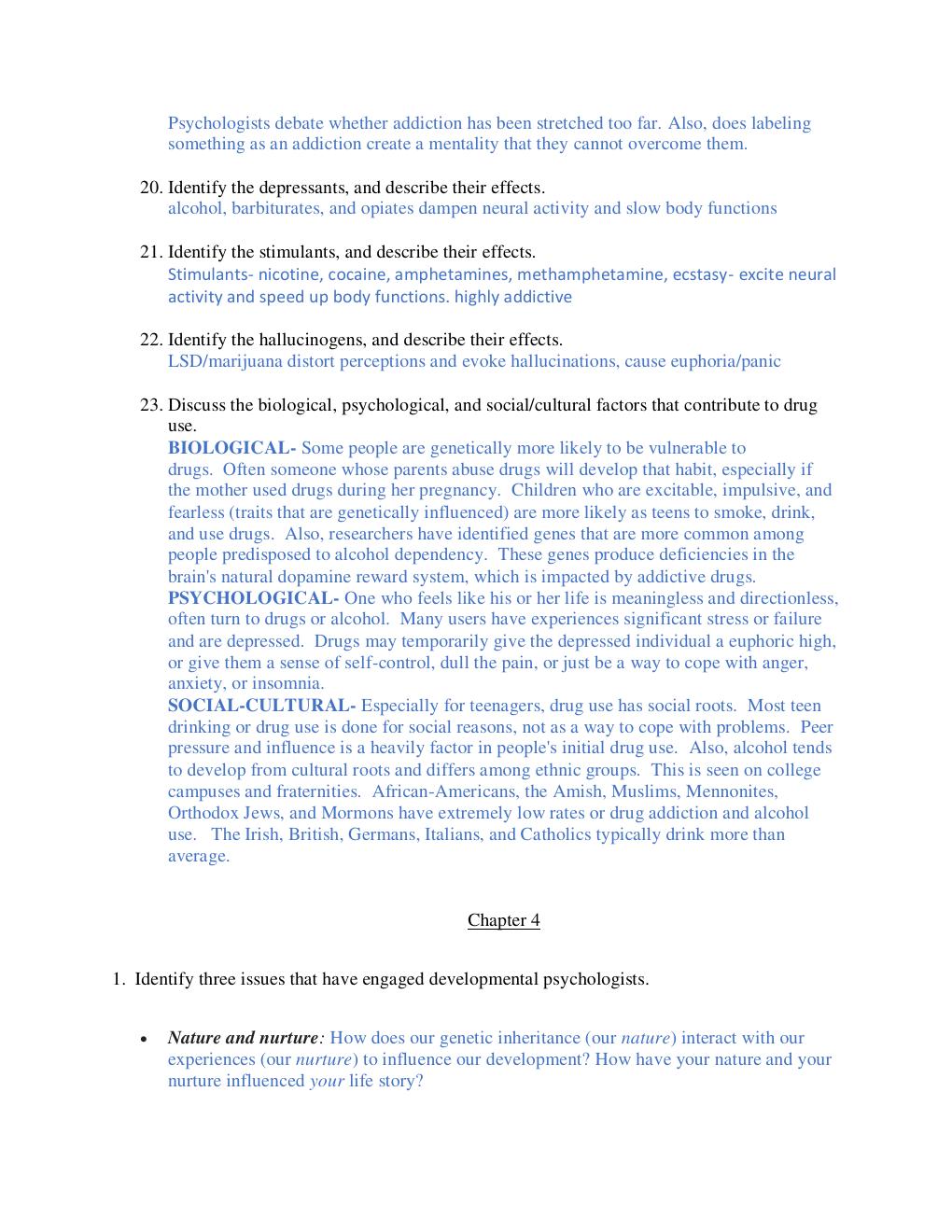
Chapter 1: Thinking Critically with Psychological Science Learning Objectives 1. Explain each of the major components of the definition of psychology. Psychology is the science of behavior and mental processes 2. Explain how the three main components of the scientific attitude relate to critical thinking. Curious skeptical and humble they help make modern science possible 3. Describe some important milestones in psychology’s early development. Wilhelm Wundt establish the first psychological laboratory in 1879 in Germany. Two early school in psychology were structuralism and functionalism. Structuralism promoted by Wundt and Titchener, used self-reflection to learn about minds and structure. Functionalism, promoted by James, explored how behavior and thinking function. 4. Describe how psychology continued to develop from the 1920s through today. Early researchers defined psychology as a science of mental life. In the 1920s under the influence of john b Watson and the behaviorists, the fields focus changed the scientific study of observable behavior 5. Discuss how our understanding of biology and experience, culture and gender, and human flourishing has shaped contemporary psychology. Our growing’s understanding of biology and experience has fed psychology’s most enduring debate. The nature- nurture issue centers on the relative contributions of genes and experience and their interaction in specific environments. Cross- cultural and genre studies have diversified psychology’s assumptions while also reminding us of our similarities. 6. Summarize the nature-nurture debate in psychology. The longstanding controversy over the relative contributions that genes and experience make top the development of psychological traits and behaviors todays science sees traits and behaviors arising from the interaction of nature and nature. 7. Identify the three main levels of analysis in the biopsychosocial approach, and explain why psychology’s varied perspectives are complementary. the biopsychosocial approach integrated information from the biological and social cultural levels of analysis. Psychologists study human behavers and mental processes from mint different perspectives evolutionary behavior genetics psychodynamic behavioral cognitive and social cultural. Research rebates a more complete understanding of behaviors and mental processes than would be available from any one viewpoint alone. 8. Identify psychology’s main subfields. Social, personality, industrial/ organizational, evolutionary, development, counseling, cognitive, behavioral, clinical 9. Explain how our everyday thinking sometimes leads us to a wrong conclusion. Explain how the scientific attitude encourages critical thinking. Hindsight bias which is the I knew it all phenomenon believing after learning the outcome that we would have foreseen it. Overconfidence is the human tendency to be more confident than correct. We perceive order in random events due to our natural eagerness to make sense of our world. Lead us to overestimate our intuition and common sense then becomes the wrong conclusion. 10. Describe how theories advance psychological science Psychological theories are explanations that apply an integrated set of principles to organize observations and generate hypotheses- by testing that researchers can confirm reject or revise their theories 11. Describe how psychologists use case studies, naturalistic observations, and surveys to observe and describe behavior, and explain why random sampling is important. Descriptive methods which include case studies, naturalistic observations and surveys show us what can happen and they may offer ideas for farther study. The best basis for generalizing about population is a repetitive sample. Descriptive methods cannot show cause and effect because researchers cannot control variables. 12. Describe positive and negative correlations, and discuss why correlations enable prediction but not cause-effect explanation. in a positive correlation, two factors rise or fall together in a negative correlation one item rises as the other falls. Scatterplots can help us to see correlations. A correlation coefficient can describe the strength and direction of a relationship between two variables, from +1.00 (a perfect positive correlation) through zero (no correlation at all) to −1.00 (a perfect negative correlation). A correlation can indicate the possibility of a cause-effect relationship, but it does not prove the direction of the influence, or whether an underlying third factor may explain the correlation 13. Describe the characteristics of experimentation that make it possible to isolate cause and effect. To discover cause-effect relationships, psychologists conduct experiments, manipulating one or more factors of interest and controlling other factors. Using random assignment, they can minimize confounding variables, such as preexisting differences between the experimental group (exposed to the treatment) and the control group (given a placebo or different version of the treatment). The independent variable is the factor the experimenter manipulates to study its effect; the dependent variable is the factor the experimenter measures to discover any changes occurring in response to the manipulations. Studies may use a double-blind procedure to avoid the placebo effect and researcher's bias. 14. Discuss whether laboratory conditions can illuminate everyday life. Researchers intentionally create a controlled, artificial environment in the laboratory in order to test general theoretical principles. These general principles help explain everyday behaviors. 15. Explain why psychologists study animals, and describe the ethical guidelines that safeguard human and animal research participants. Discuss how human values influence psychology. Some psychologists are primarily interested in animal behavior other want to better understand the physiological and psychological processes shared by humans and other species. Government agencies have established standards for animal care and housing. Professional associations and funding agencies also establish guidelines for protecting animas well-being. 16. Describe well-known examples of research ethics failures, and describe the ethical safeguards currently in place to prevent future failures from occurring. 17. Explain how psychological principles can help you learn and remember Repeated self-testing, rehearsal of previously studied material helps a lot. The SQ3R (Survey, Question, Read, Recite, Review) method, and by using four additional study tips: Distributing study time, learning to think critically, Processing information actively, and Overlearning can be used
[Show More]

![Preview of eBook [PDF] Abnormal Psychology 6th Edition By Gordon L. Flett, Nancy L. Kocovski, Gerald](https://scholarfriends.com/storage/Abnormal Physcology.png)










![Preview of CON 237 Simplified Acquisition Procedures Course Exam [Answers Provided] REVISED 2023/2024](https://scholarfriends.com/storage/CON_237_Course_Exam.png)





; Answered.png)


