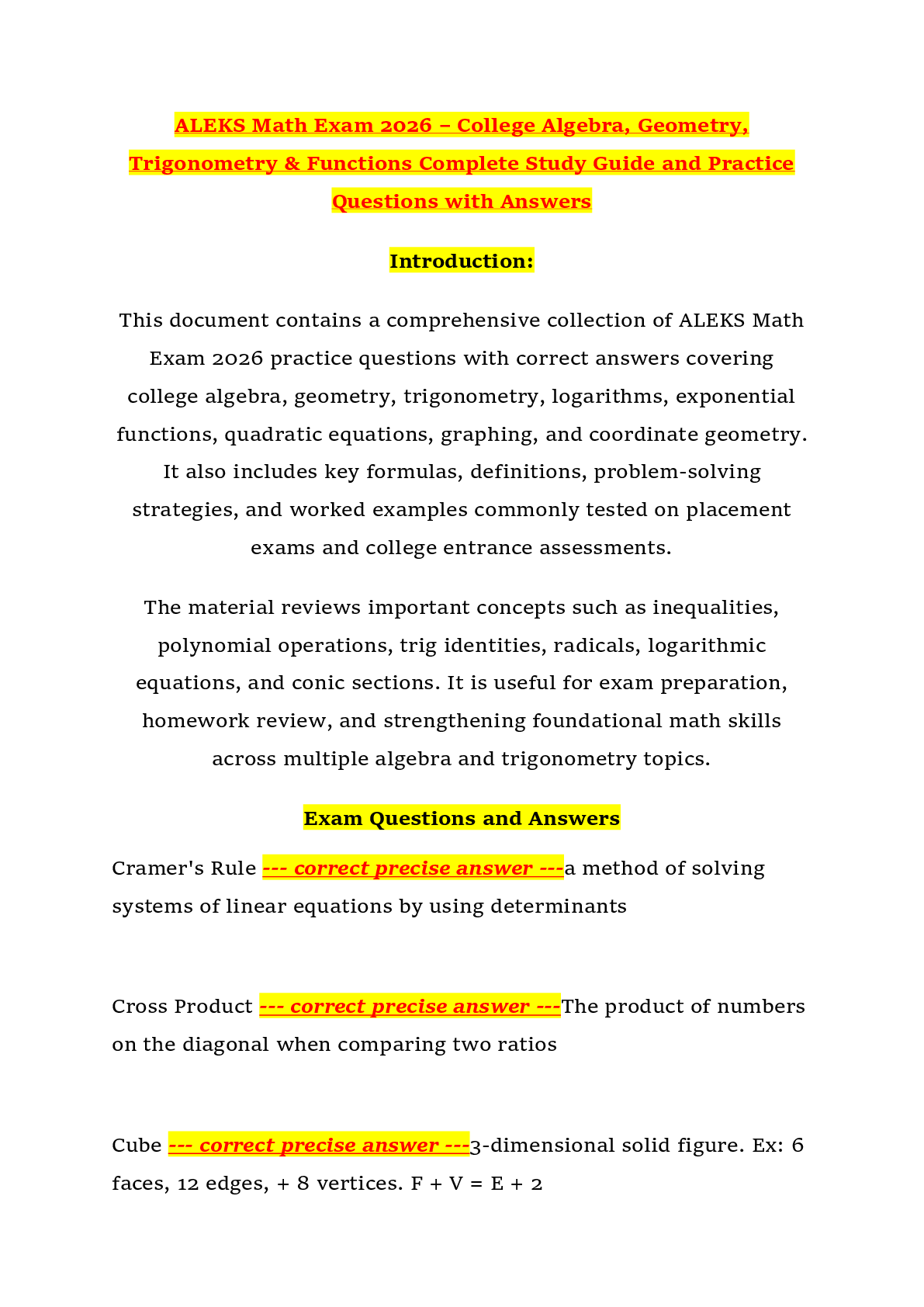
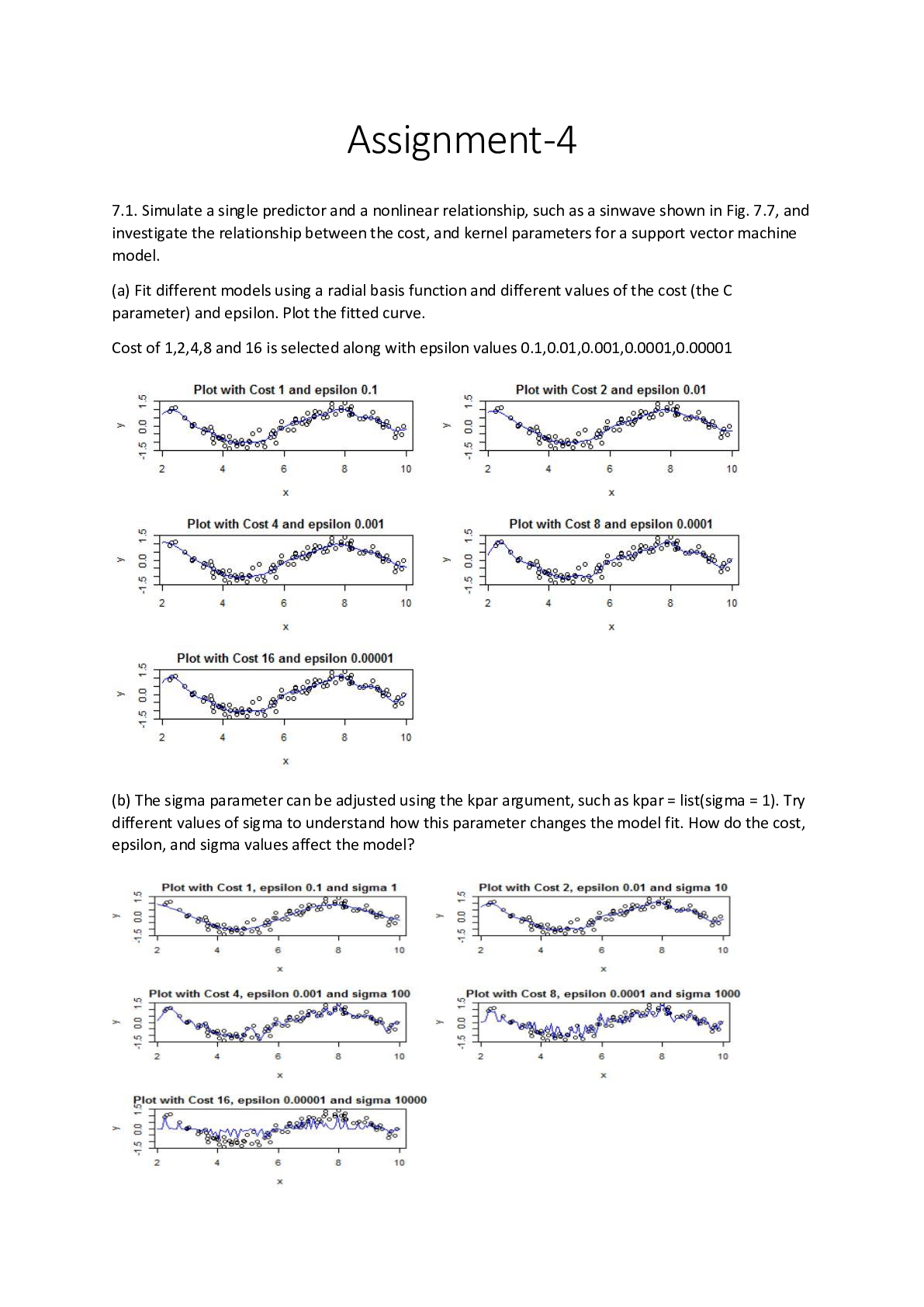
Mathematics > QUESTIONS & ANSWERS > MATH MA 5790 Predictive Modeling - Michigan Technological University. Assignment-4. Q&A (All)
MATH MA 5790 Predictive Modeling - Michigan Technological University. Assignment-4. Q&A
Document Content and Description Below
Last updated: 3 years ago
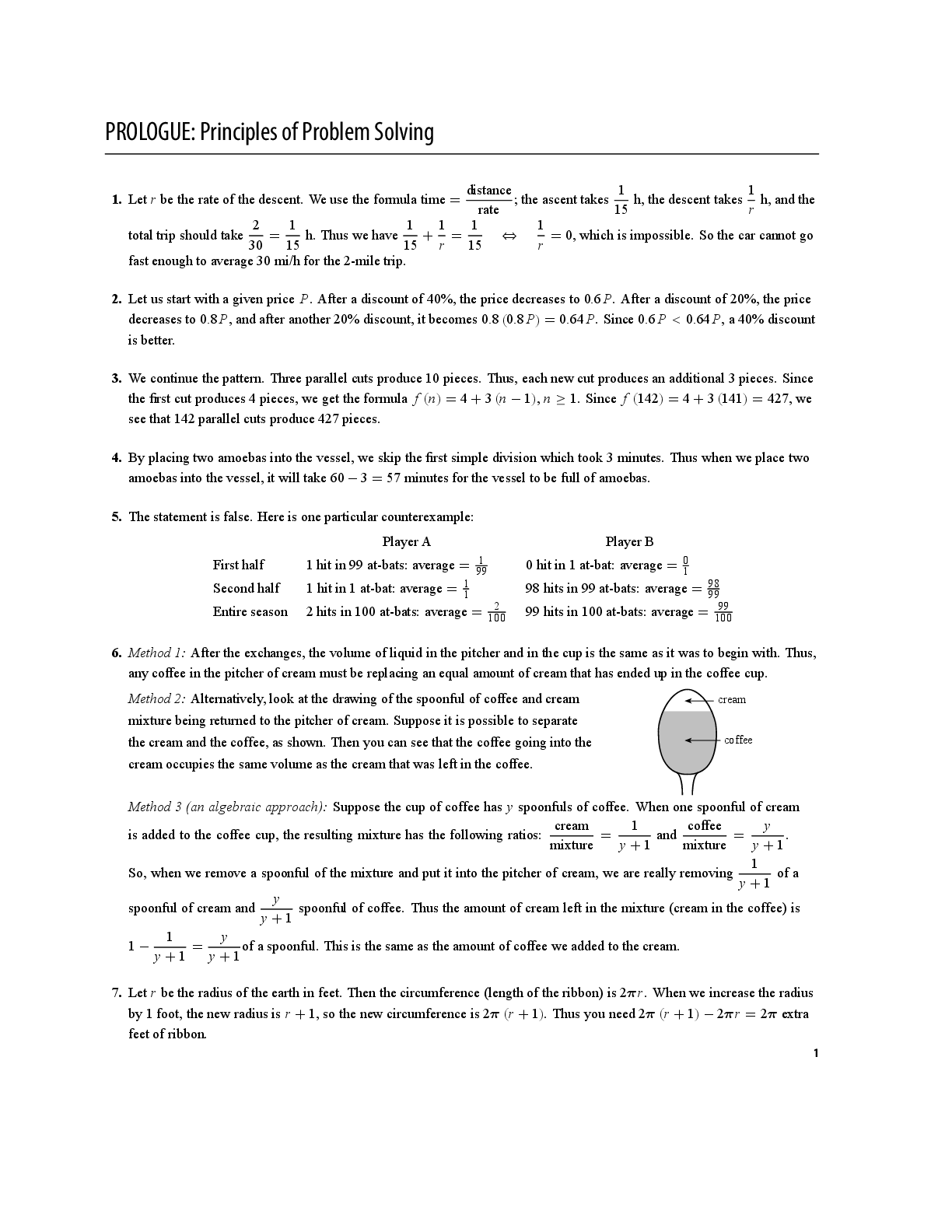
Preview 1 out of 17 pages
Instant download
Buy this Document to get the Full Access Instantly
Provided by Students Who Aced it
We Verify Document Content to Gurantee Accuracy
Reviews( 0 )
Document information
Connected school, study & course
About the document
Uploaded On
Apr 23, 2023
Number of pages
17
Written in
All

Additional information
This document has been written for:
Uploaded
Apr 23, 2023
Downloads
0
Views
60
Document Keyword Tags
Recommended For You
Get more on QUESTIONS & ANSWERS »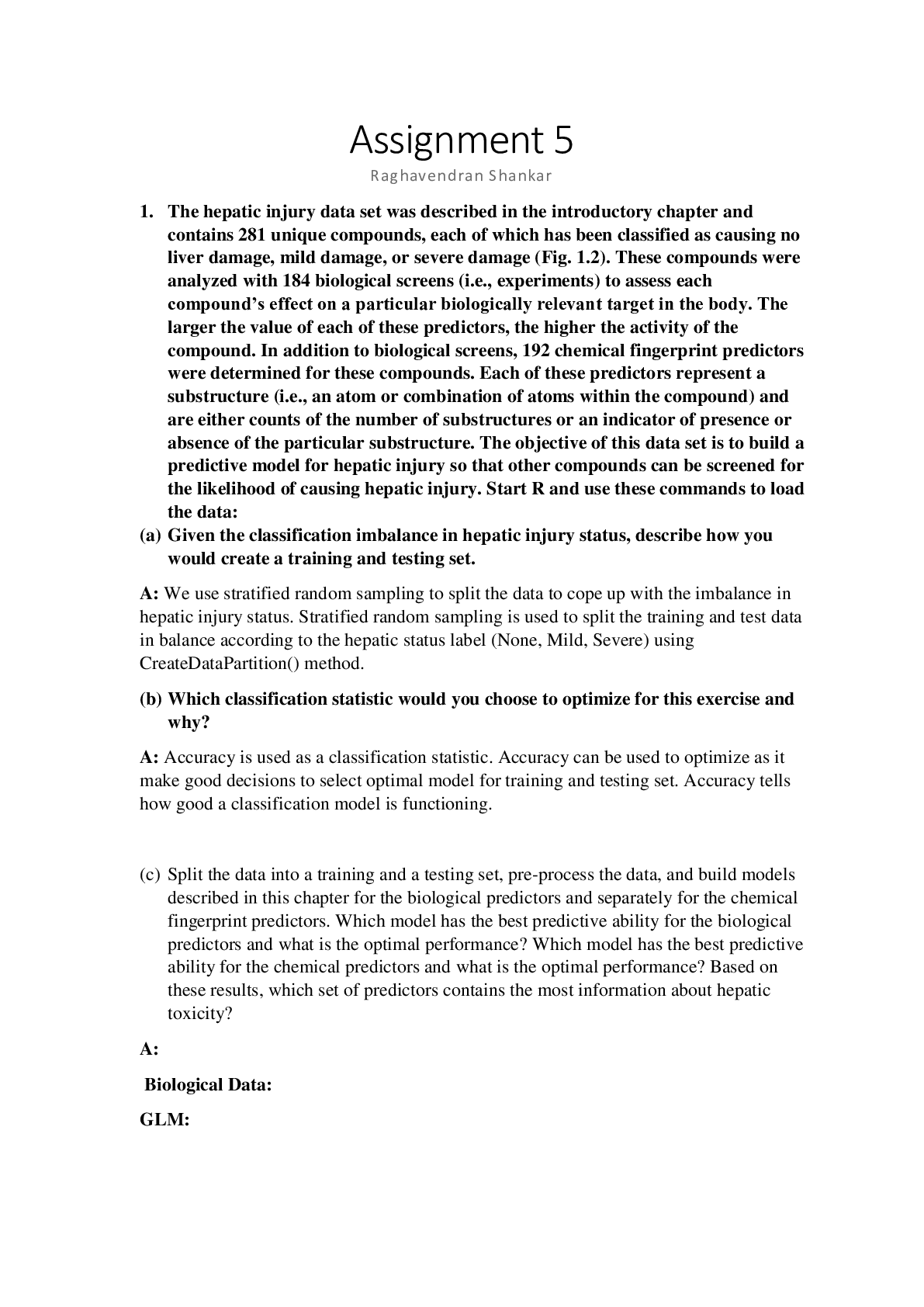
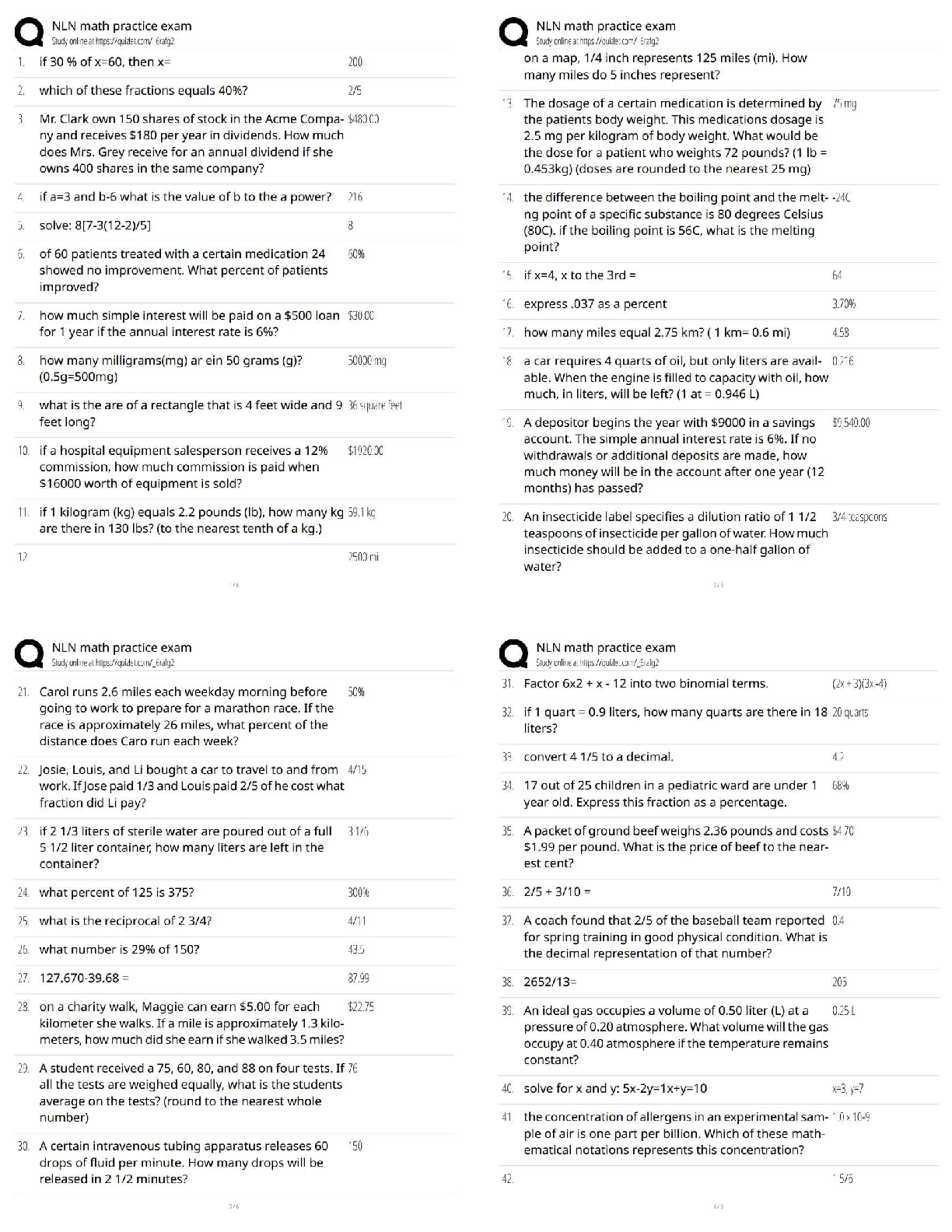
MATH MA 5790 Predictive Modeling - Michigan Technological Univ...
Solutions Manual for Precalculus 11th Edition By Michael Sulli...
Solutions Manual For Applied Linear Algebra By Peter J. Olver,...
eBook Fractional Integrals, Potentials, and Radon Transforms 2...
![Preview of eBook [PDF] Elementary Geometry for College Students 7th Edition By Daniel C. Alexander, G](https://browseimages.nyc3.digitaloceanspaces.com/paper-images/2026/05/19/FNuoi4Be2026-05-19-11-446a0ccbcb69aa3.png)
![Preview of eBook [PDF] Elementary Geometry for College Students 6th Edition By Daniel C. Alexander, G](https://browseimages.nyc3.digitaloceanspaces.com/paper-images/2026/05/19/OVoajDSU2026-05-19-11-446a0ccba317eab.png)