Computer Architecture > PROJECT REPORT > CS 213 -Project: File System - Rutgers University_ Implement a disk-based file system called FSX492, (All)
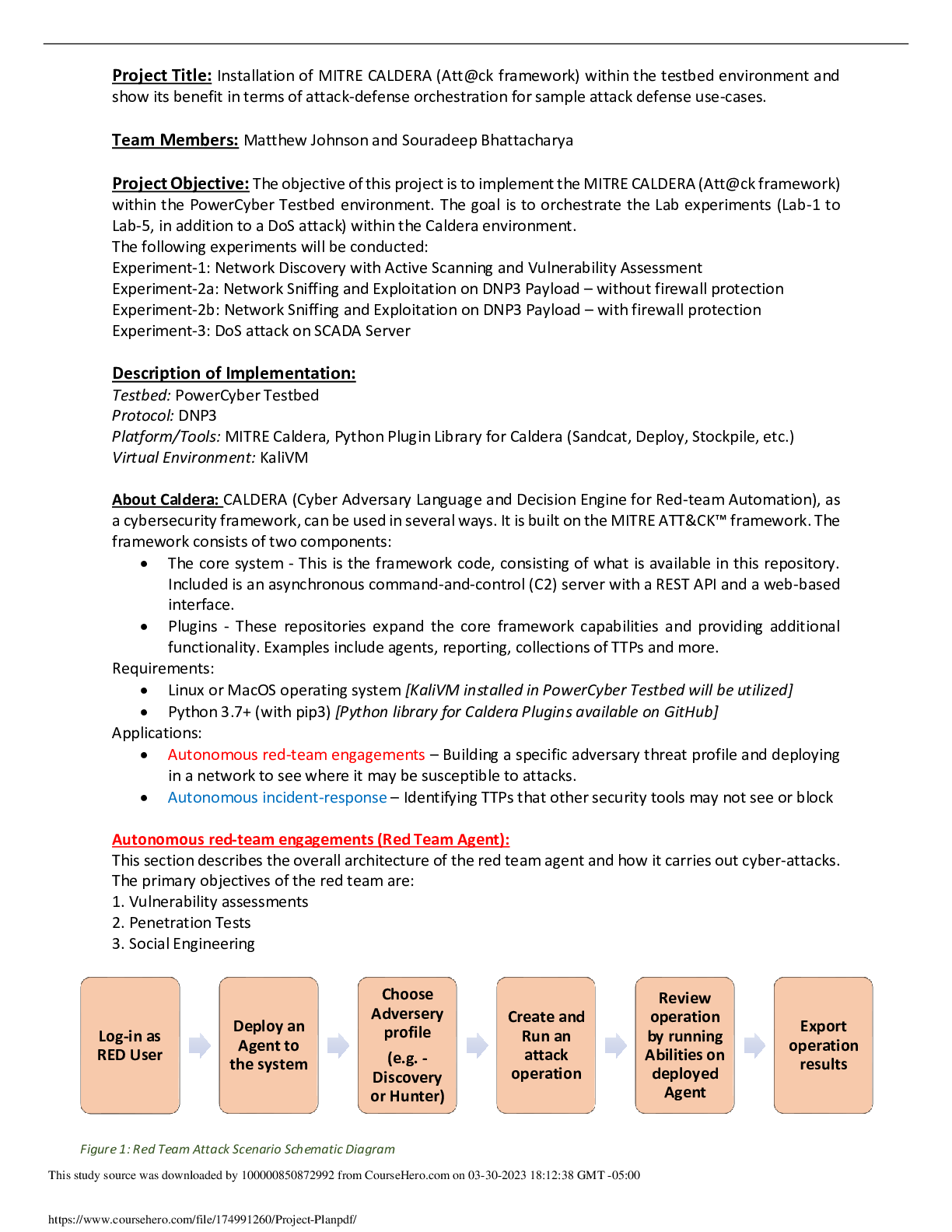
CS 213 -Project: File System - Rutgers University_ Implement a disk-based file system called FSX492, which is a simple derivation of the Unix Fast File System (https://pages.cs.wisc.edu/~remzi/OSTEP/file-ffs.pdf). You will use the FUSE toolkit to implement the file system as a user-space process. Instead of a physical disk, you will be provided a file-based virtual disk, which can be accessed through a customized block device interface.
Document Content and Description Below
Last updated: 3 years ago
Preview 1 out of 8 pages
Instant download
Buy this Document to get the Full Access Instantly
Provided by Students Who Aced it
We Verify Document Content to Gurantee Accuracy
Reviews( 0 )
Document information
Connected school, study & course
About the document
Uploaded On
Apr 28, 2023
Number of pages
8
Written in
All

Additional information
This document has been written for:
Uploaded
Apr 28, 2023
Downloads
0
Views
203
Topic Tags
Related Subjects & Courses
Explore similar study resources and related concepts.
Recommended For You
Get more on PROJECT REPORT »
.png)
Northwestern UniversityEECS 213 HOMEWORK 2 SOLUTION FALL 2020

Solution Manual for Computer Graphics with Open GL 4th Edition...

Computer Organization and Architecture 10e William Stallings (...
Computer Organization and Architecture 10e William Stallings (...

SOLUTIONS MANUAL for Elementary Statistics Using Excel, 7th Ed...
Security+ Renewal - Domain 3.0 / Security Architecture Assessm...
Introduction to Cryptography with Coding Theory, 3rd Edition b...
Solutions Manual for Data Structures And Algorithm Analysis In...

Product-Led SEO: The Why Behind Building Your Organic Growth S...
Test Bank For COMM2 2nd Edition By Verderber Deanna, Rudolph F...
TEST BANK For CompTIA Network+ Guide to Networks 10th Edition...
Test Bank For The New Perspectives Collection, Microsoft® Offi...
Solution Manual for The New Perspectives Collection, Microsoft...
Solution Manual with Test Bank For Exploring Microsoft Office...

Questions and Answers > Agile E1 (CBO) 60566 DOWNLOAD TO GET A...
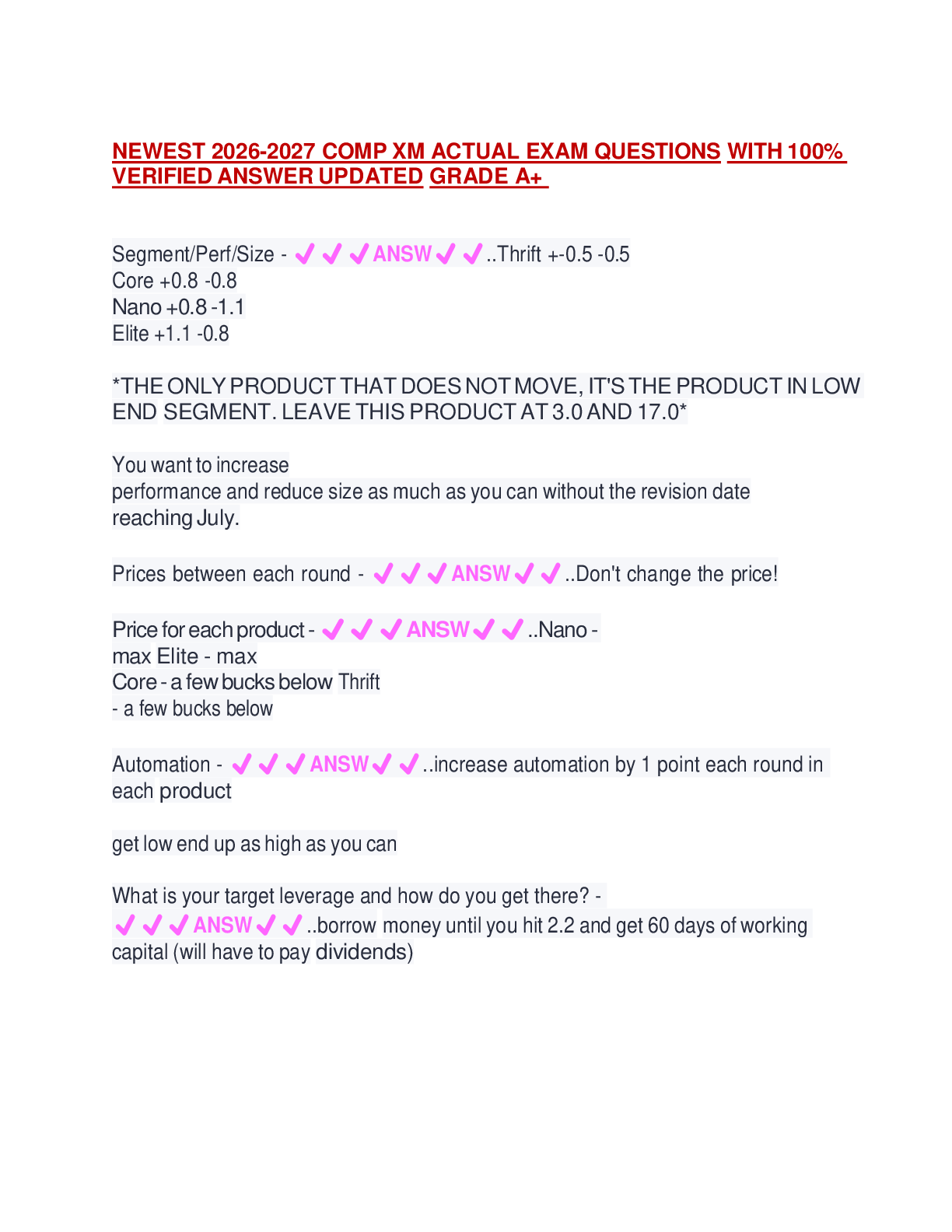

Pennsylvania State University - EA 3L08 & L09 Focus Questi...

CSE 180, Final Exam, Multiple Choice Questions (Part I) Answer...