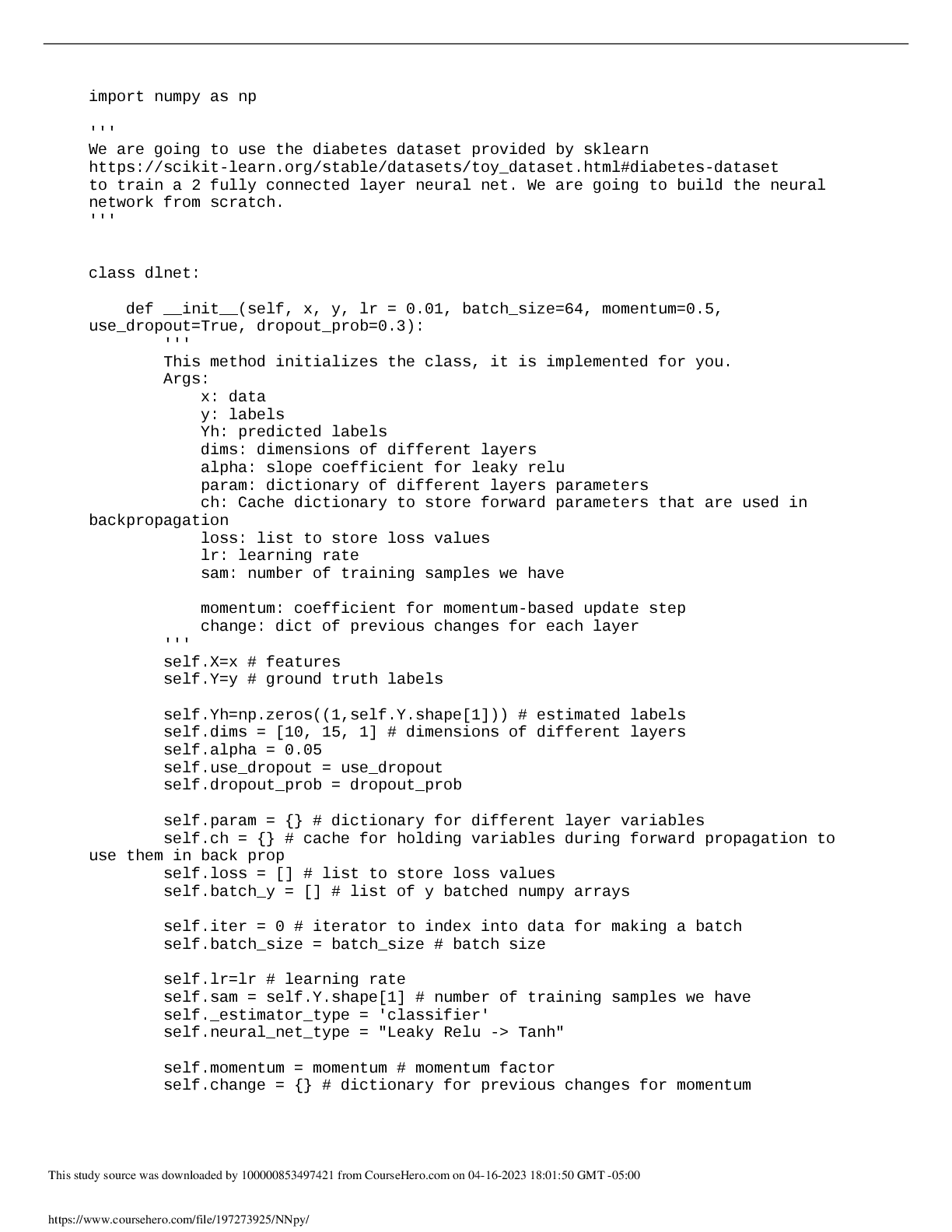
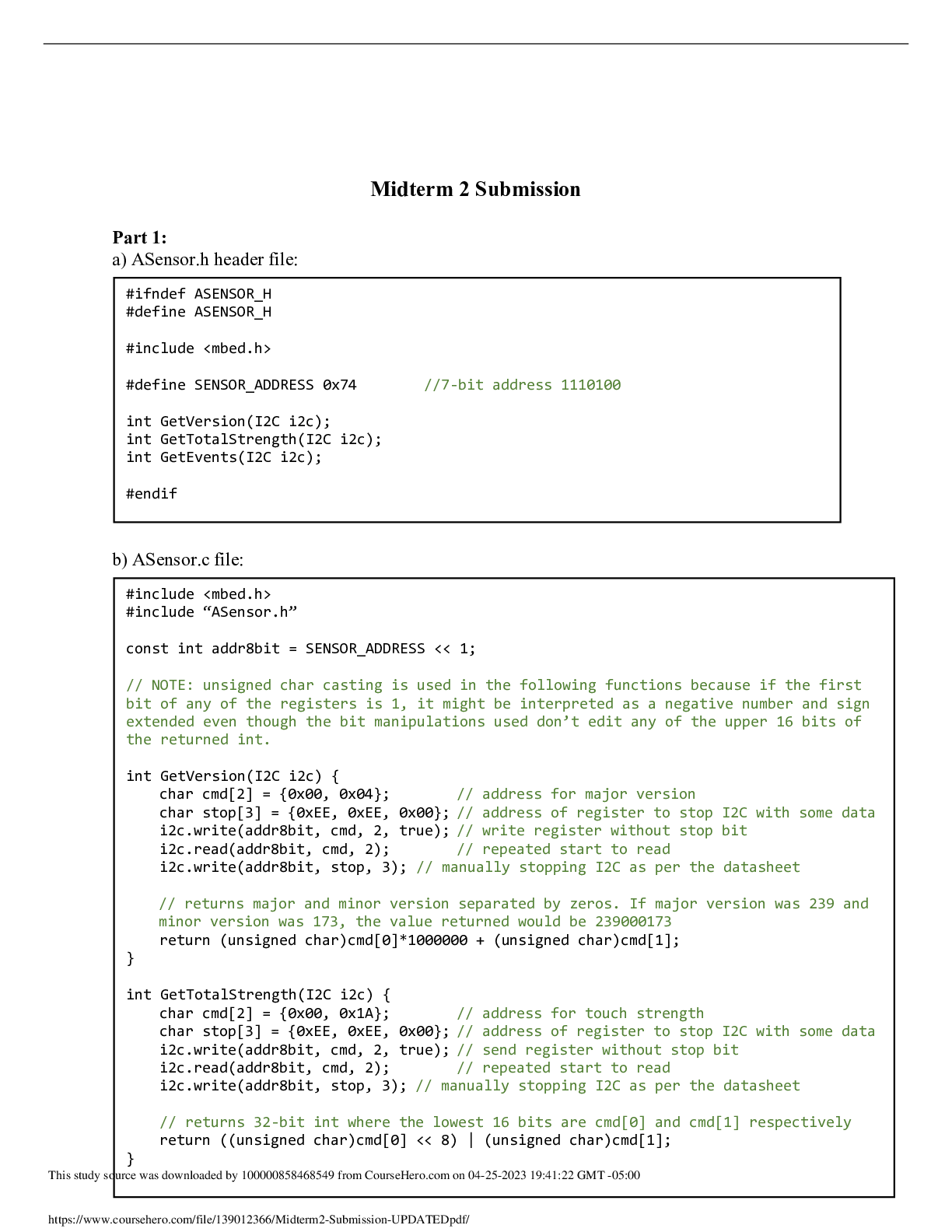
Programming > CODING SOLUTION > ECE-GY 6483 Midterm 2 Submission | New York University. UPDATED (All)
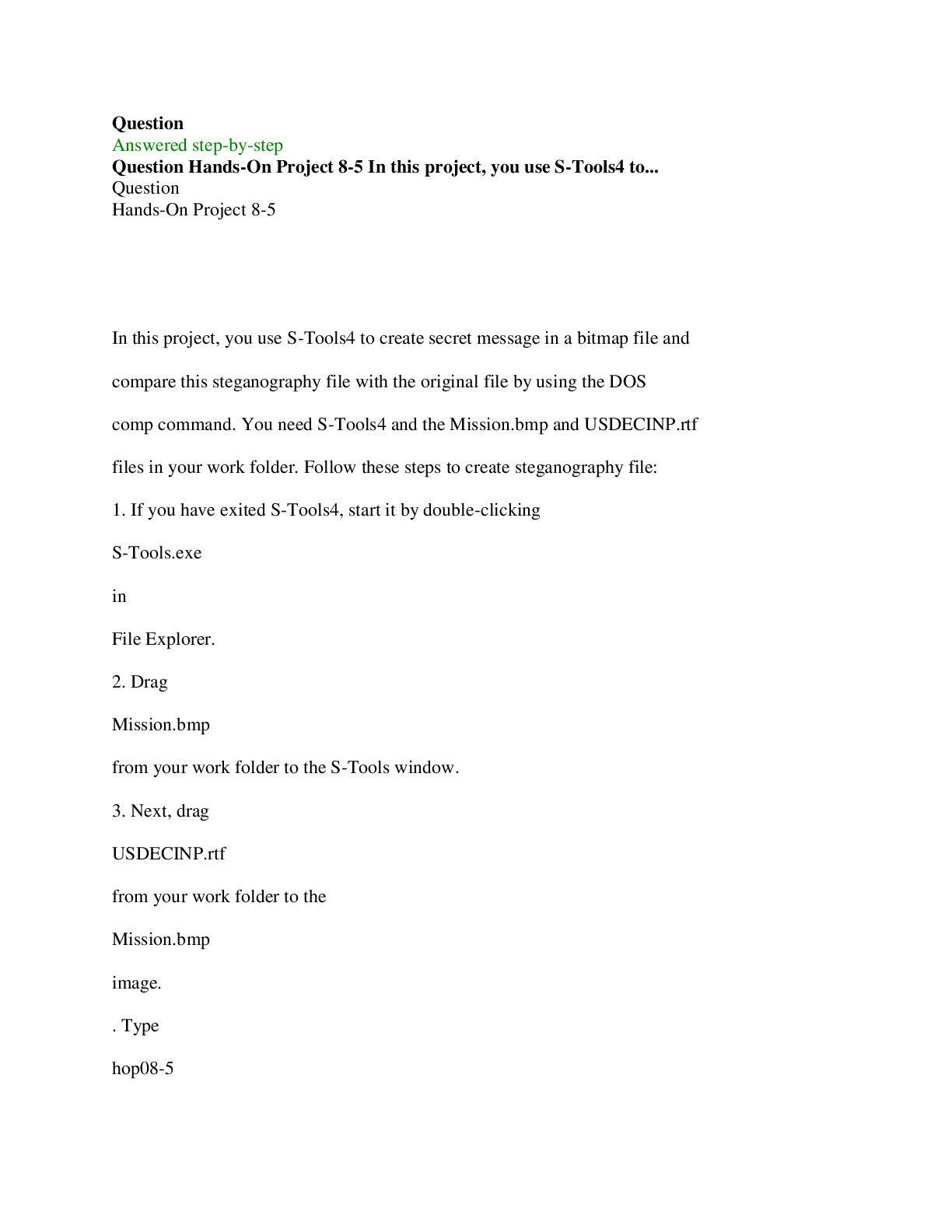
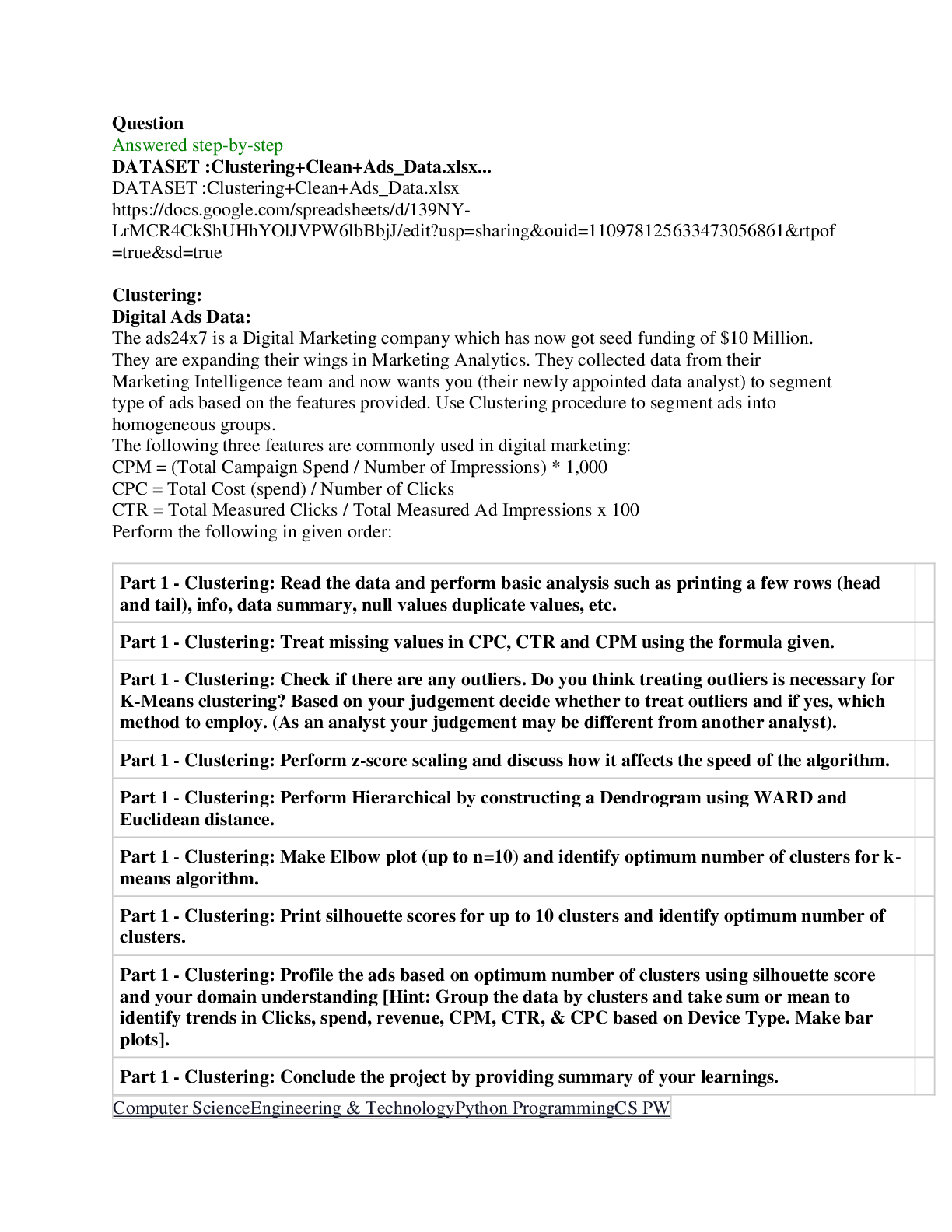
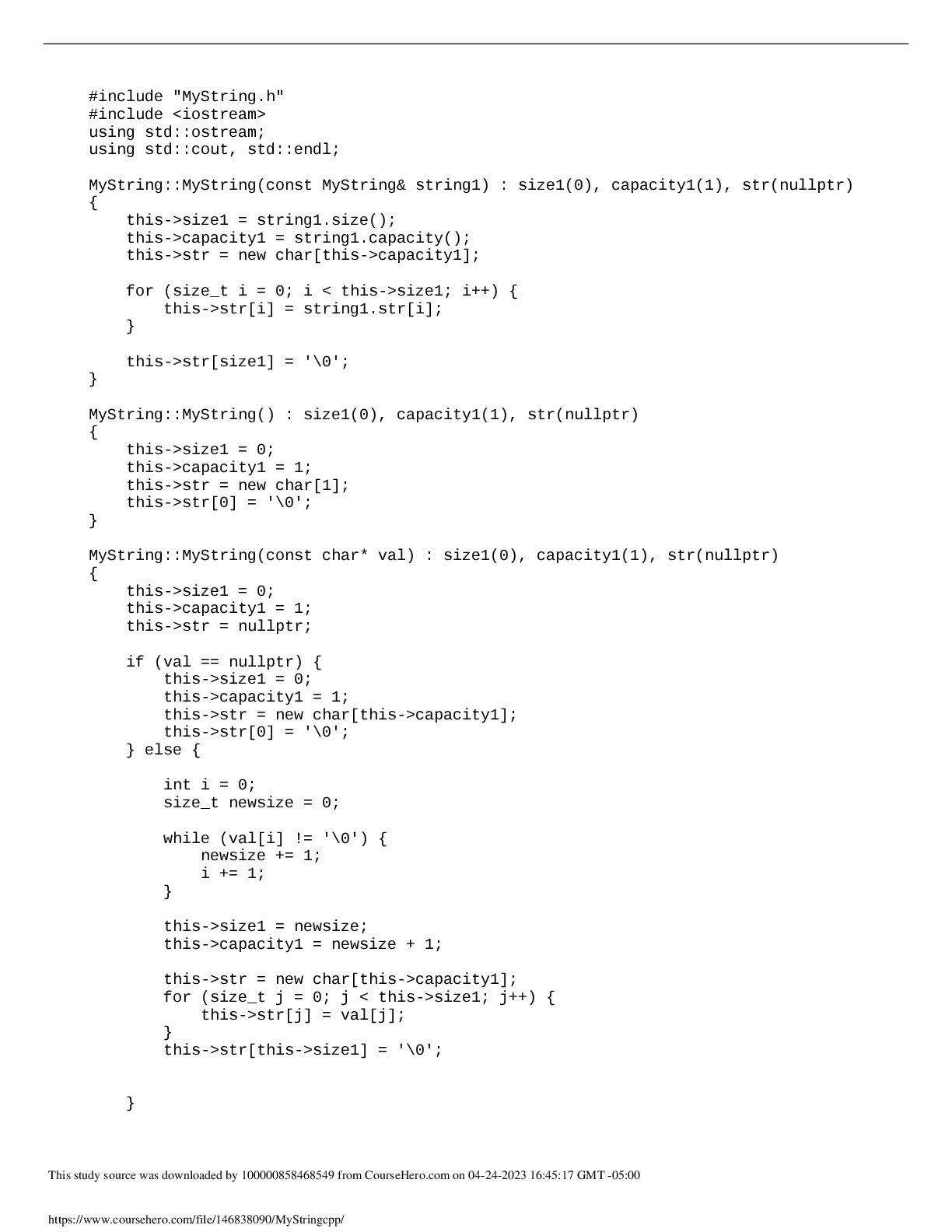
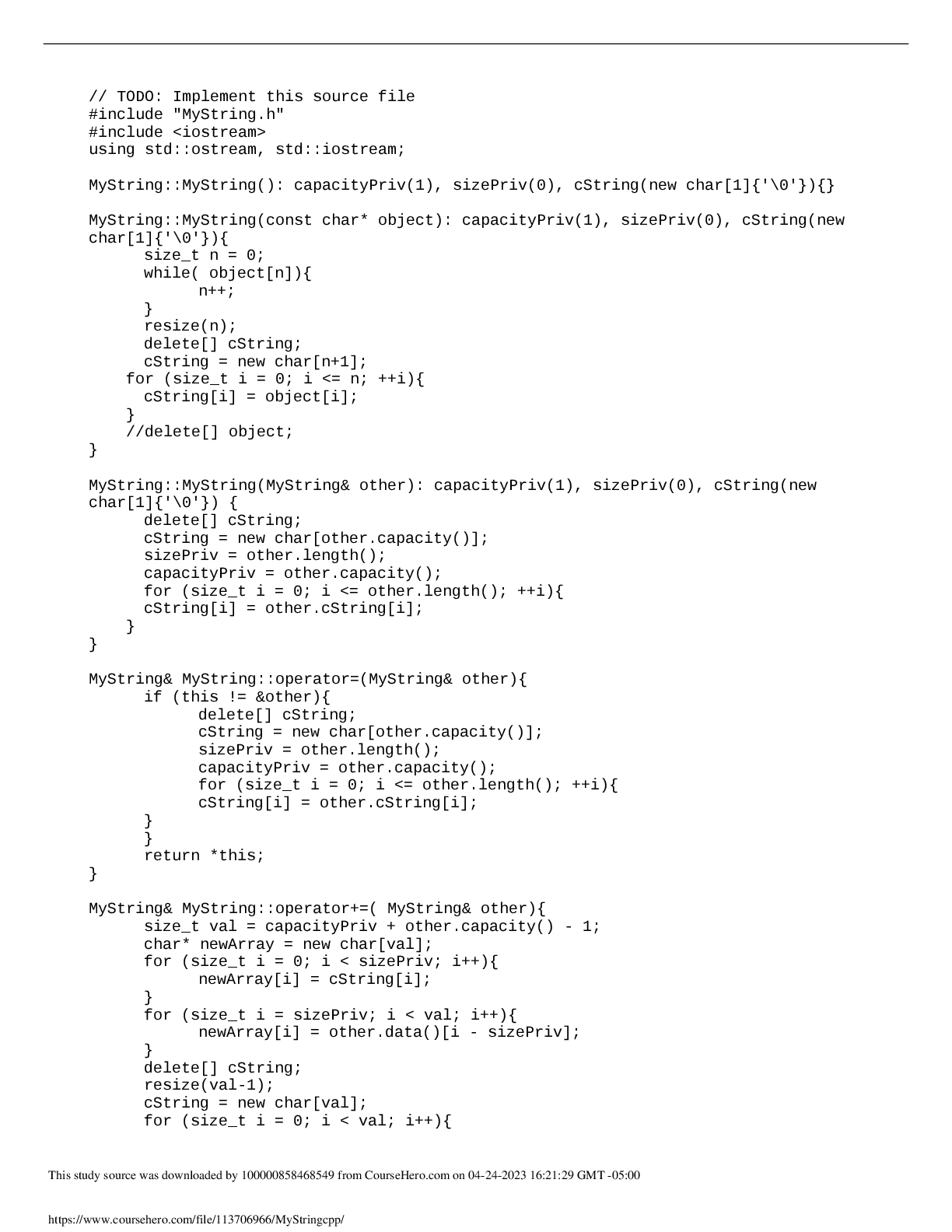
ECE-GY 6483 Midterm 2 Submission | New York University. UPDATED
Document Content and Description Below
Last updated: 1 year ago
Preview 1 out of 5 pages
Instant download
Buy this Document to get the Full Access Instantly
Provided by Students Who Aced it
We Verify Document Content to Gurantee Accuracy
Reviews( 0 )
Document information
Connected school, study & course
About the document
Uploaded On
Apr 29, 2023
Number of pages
5
Written in
All

Additional information
This document has been written for:
Uploaded
Apr 29, 2023
Downloads
0
Views
238
Topic Tags
Recommended For You
Get more on CODING SOLUTION »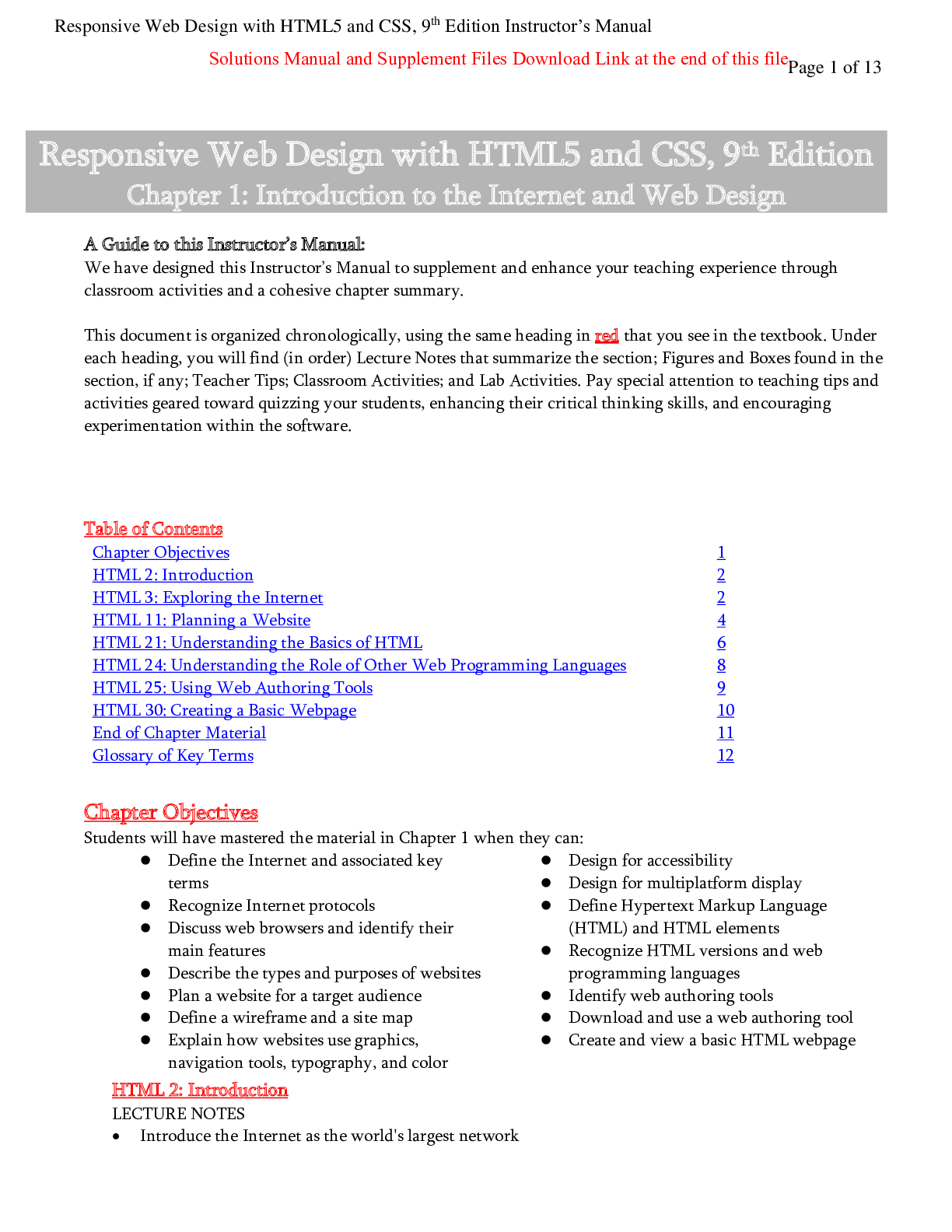
Responsive Web Design with HTML 5 & CSS 9th Edition By Jessica...

MKTG12: Principles of Marketing 12th Edition by Charles Lamb,...

PROGRAMMING_ StudentGradeApplication 4 Hands-on Activity 1 -...
PROGRAMMING_ CashierApplication 10 Hands-on Activity 1. Create...
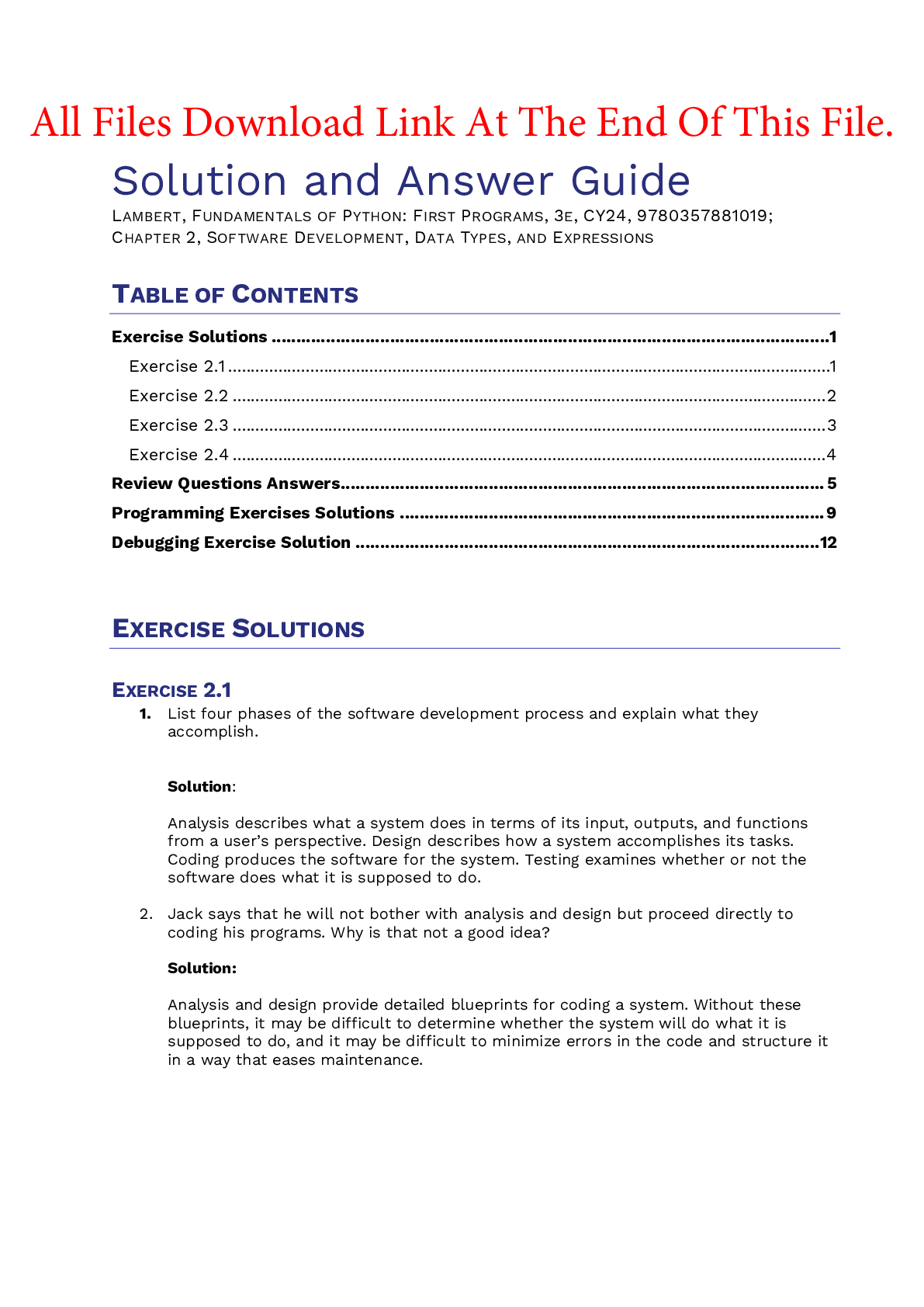
Fundamentals of Python First Programs 3rd Edition By Kenneth L...
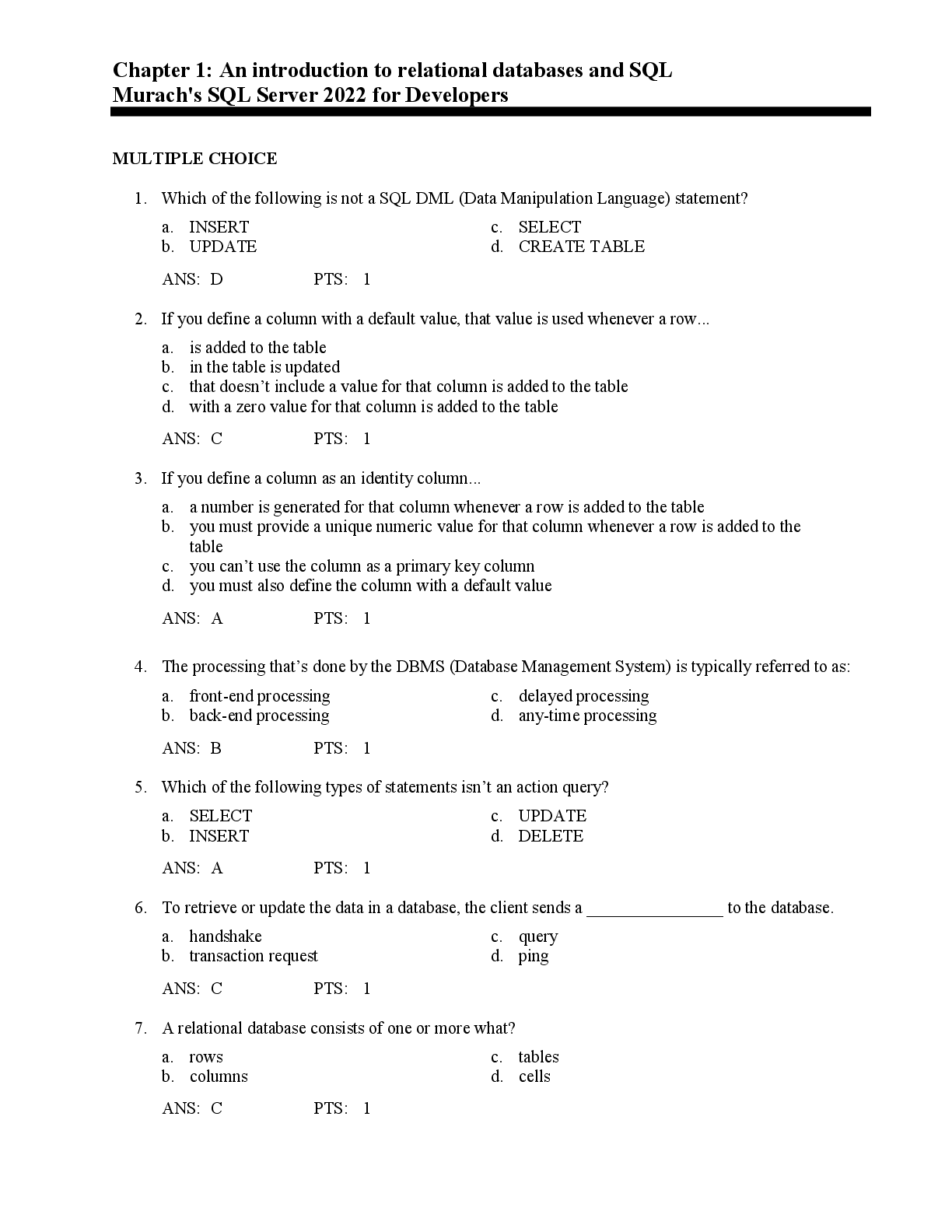
Test Bank for Murach’s SQL Server 2022 for Developers, 1st Edi...
Test Bank for Programming With Microsoft Visual Basic 2019/202...
Test Bank for Starting Out with Python, 5th Edition by Tony Ga...
Test Bank For Python Programming for Engineers and Scientists...
Solution Manual For Programming Massively Parallel Processors...
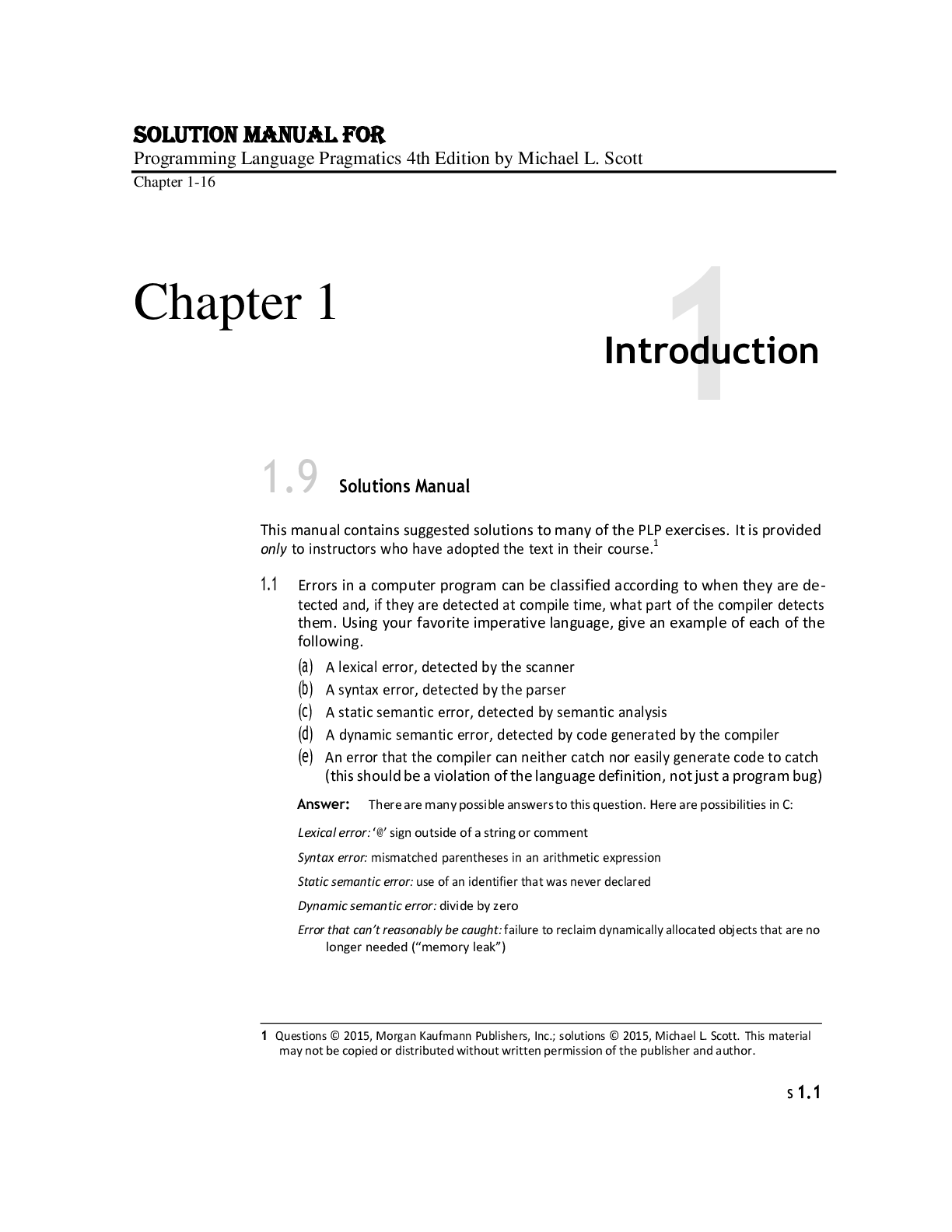
Solution Manual for Programming Language Pragmatics 4th Editio...

relab Exercises Question 1 When discharging, what percentage o...

Ryerson University ITM ITM 200 You may need to refer to tab...
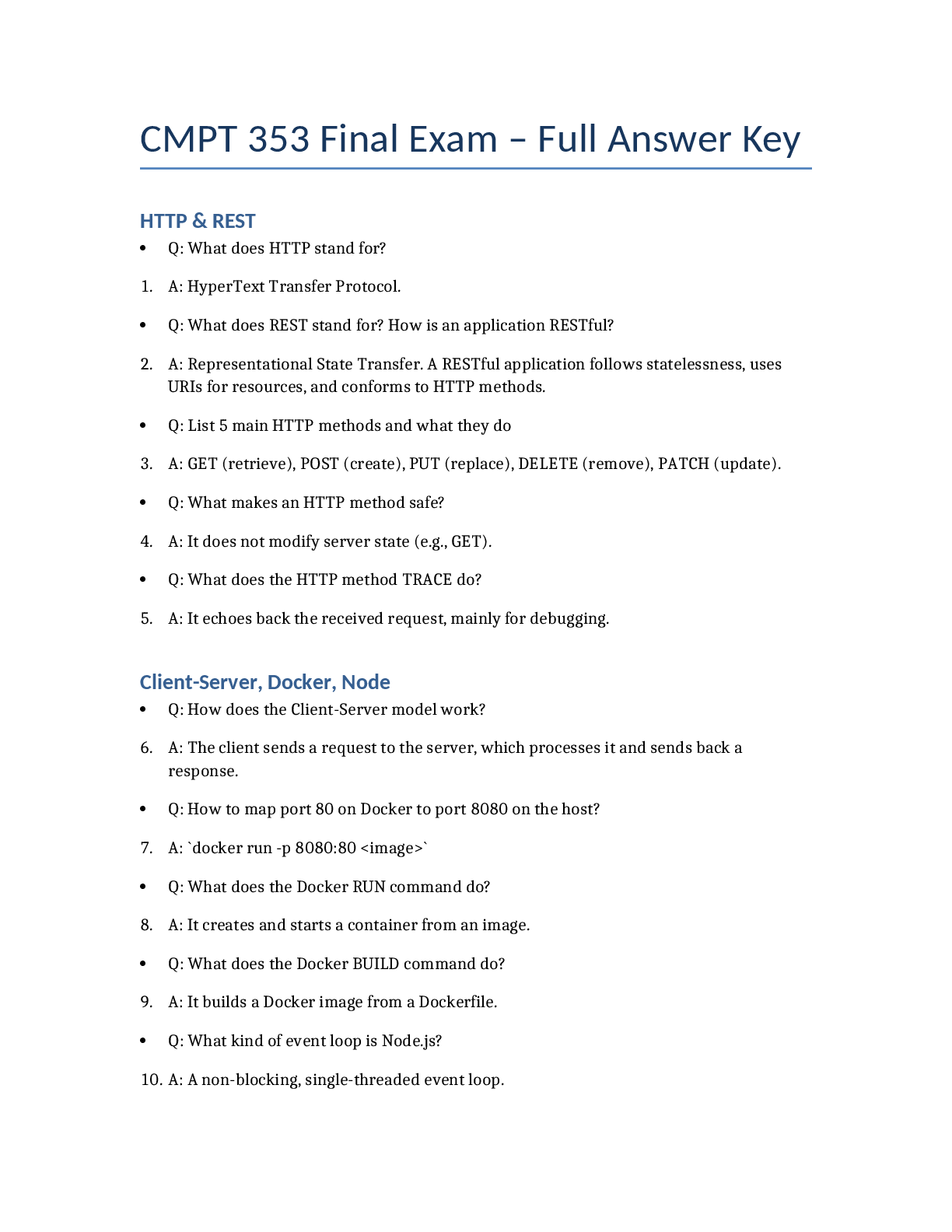
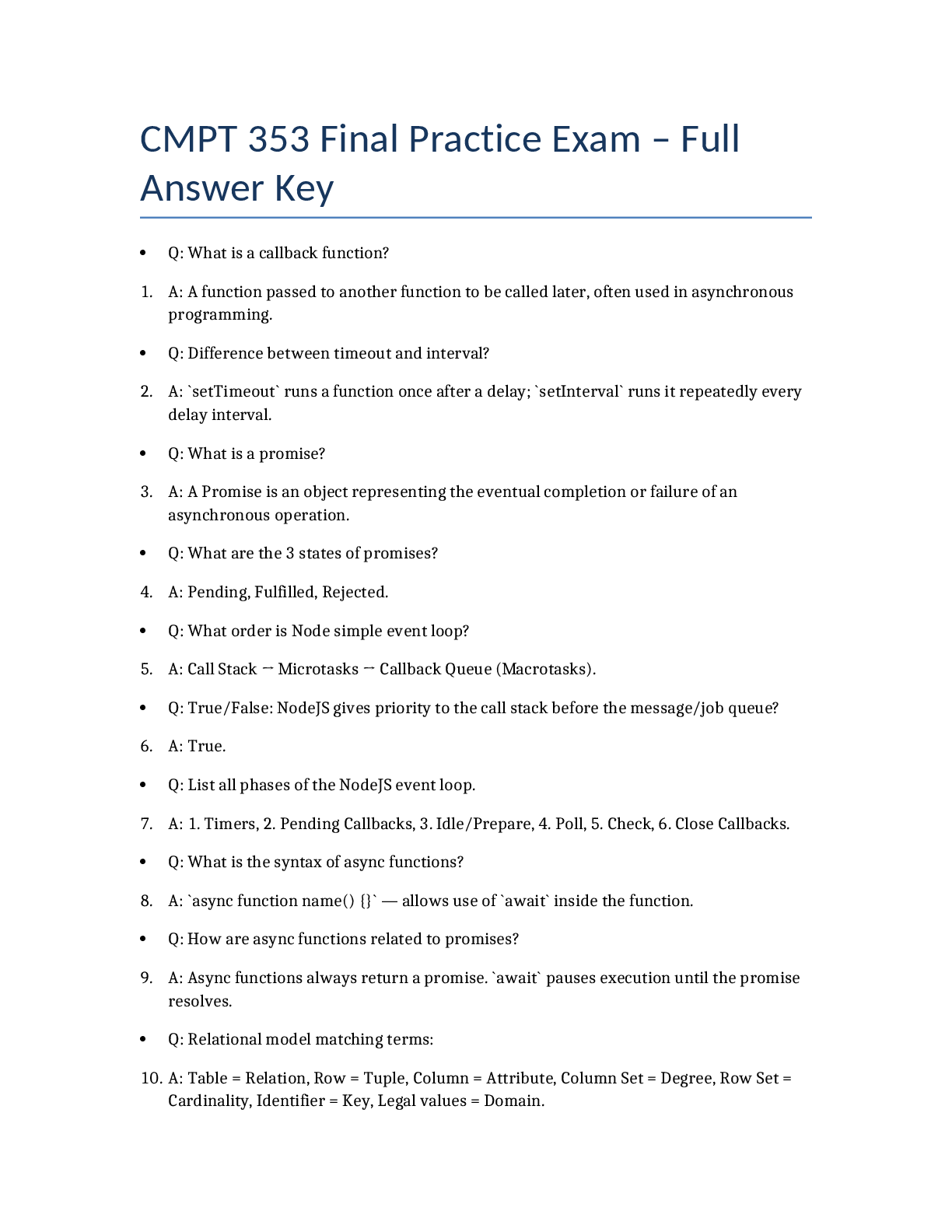
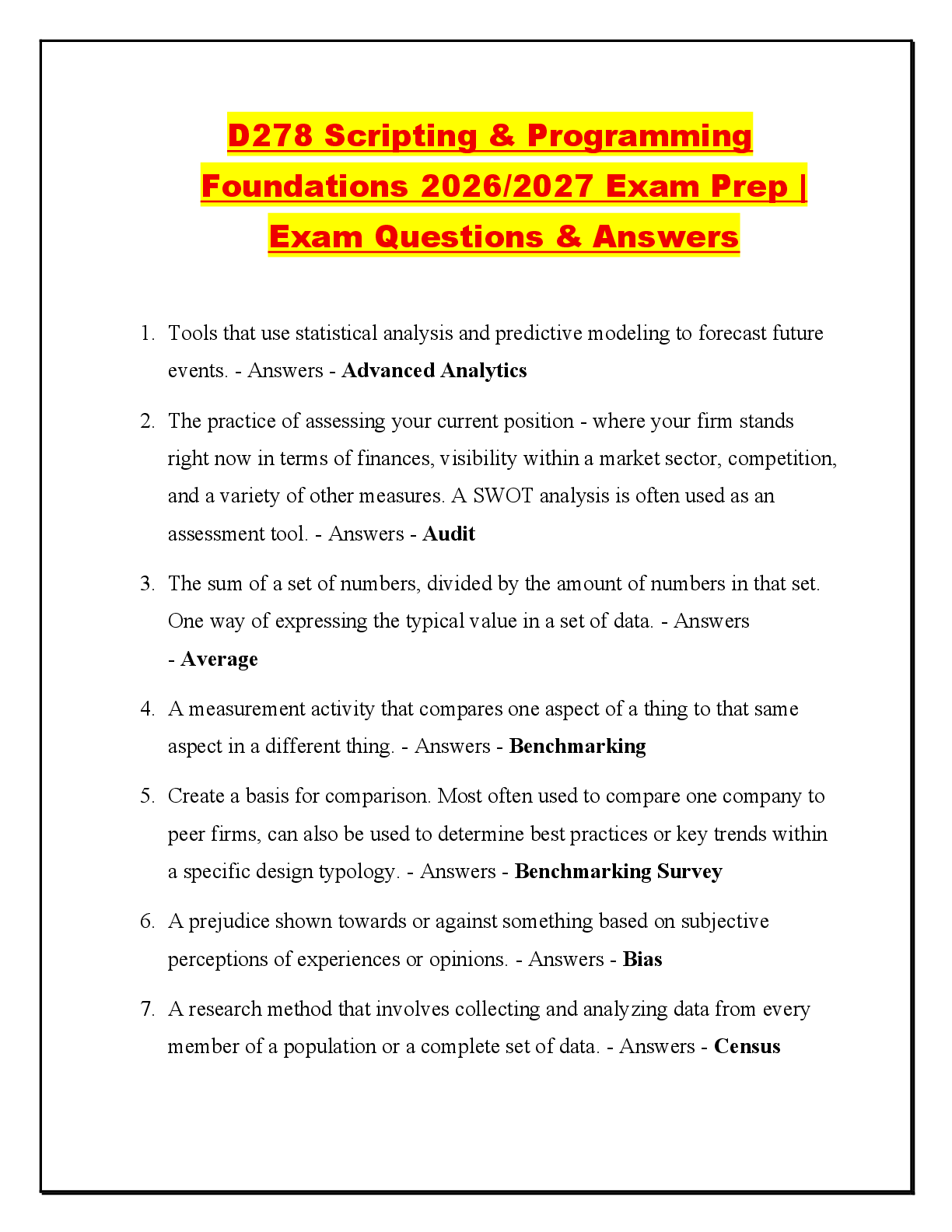

University of California, San DiegoDSE 230Final Exam Quiz - So...