NR 283 Pathophysiology Final Exam Concept Review
***For all previous content covered on previous exams, please consult your previous concept review sheets. This is not an all-inclusive list for topics to be covered. Ple
...
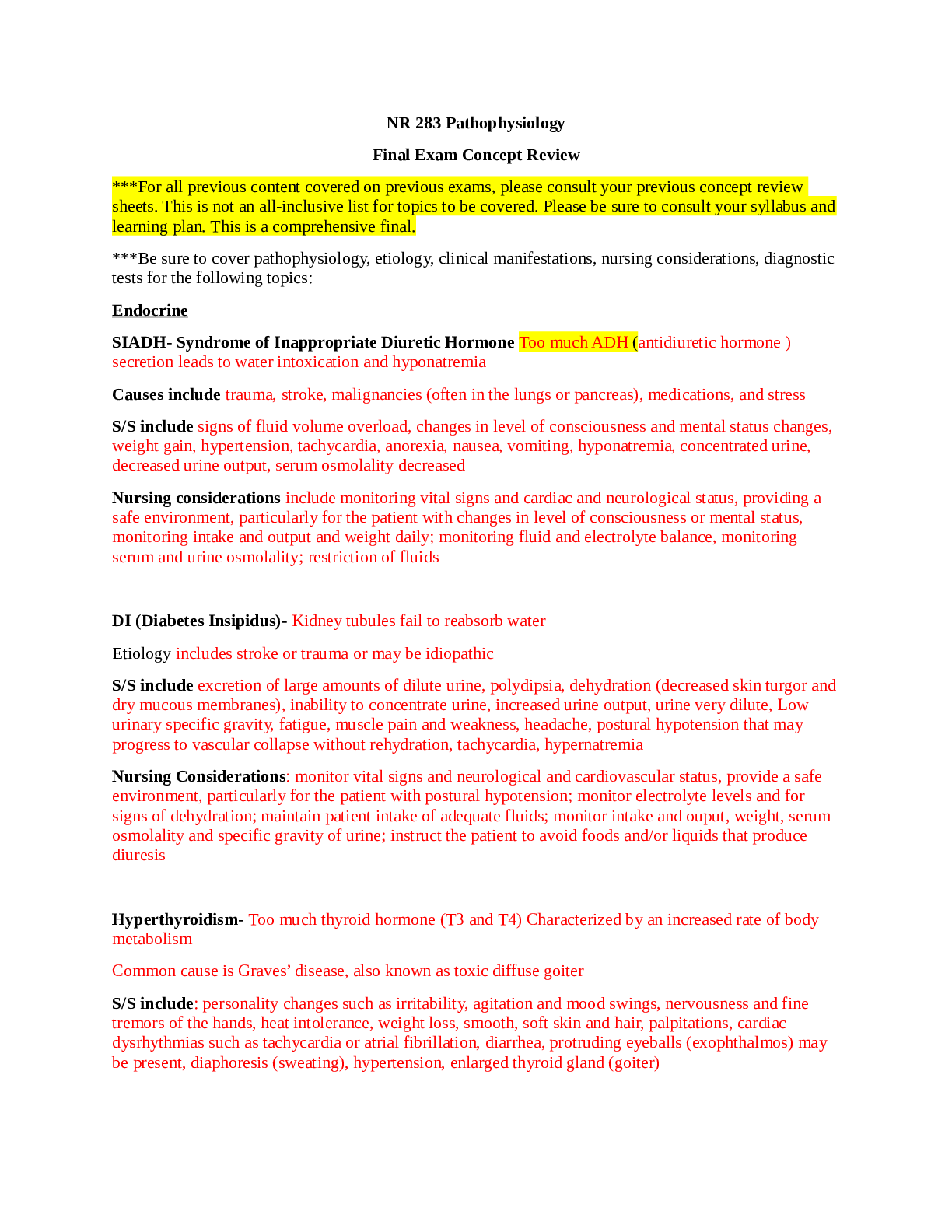
NR 283 Pathophysiology Final Exam Concept Review
***For all previous content covered on previous exams, please consult your previous concept review sheets. This is not an all-inclusive list for topics to be covered. Please be sure to consult your syllabus and learning plan. This is a comprehensive final.
***Be sure to cover pathophysiology, etiology, clinical manifestations, nursing considerations, diagnostic tests for the following topics:
Endocrine
SIADH- Syndrome of Inappropriate Diuretic Hormone Too much ADH (antidiuretic hormone ) secretion leads to water intoxication and hyponatremia
Causes include trauma, stroke, malignancies (often in the lungs or pancreas), medications, and stress
S/S include signs of fluid volume overload, changes in level of consciousness and mental status changes, weight gain, hypertension, tachycardia, anorexia, nausea, vomiting, hyponatremia, concentrated urine, decreased urine output, serum osmolality decreased
Nursing considerations include monitoring vital signs and cardiac and neurological status, providing a safe environment, particularly for the patient with changes in level of consciousness or mental status, monitoring intake and output and weight daily; monitoring fluid and electrolyte balance, monitoring serum and urine osmolality; restriction of fluids
DI (Diabetes Insipidus)- Kidney tubules fail to reabsorb water Etiology includes stroke or trauma or may be idiopathic
S/S include excretion of large amounts of dilute urine, polydipsia, dehydration (decreased skin turgor and dry mucous membranes), inability to concentrate urine, increased urine output, urine very dilute, Low urinary specific gravity, fatigue, muscle pain and weakness, headache, postural hypotension that may progress to vascular collapse without rehydration, tachycardia, hypernatremia
Nursing Considerations: monitor vital signs and neurological and cardiovascular status, provide a safe environment, particularly for the patient with postural hypotension; monitor electrolyte levels and for signs of dehydration; maintain patient intake of adequate fluids; monitor intake and ouput, weight, serum osmolality and specific gravity of urine; instruct the patient to avoid foods and/or liquids that produce diuresis
Hyperthyroidism- Too much thyroid hormone (T3 and T4) Characterized by an increased rate of body metabolism
Common cause is Graves’ disease, also known as toxic diffuse goiter
S/S include: personality changes such as irritability, agitation and mood swings, nervousness and fine tremors of the hands, heat intolerance, weight loss, smooth, soft skin and hair, palpitations, cardiac dysrhythmias such as tachycardia or atrial fibrillation, diarrhea, protruding eyeballs (exophthalmos) may be present, diaphoresis (sweating), hypertension, enlarged thyroid gland (goiter)
[Show More]