NES 051 Professional Knowledge: Elementary > QUESTIONS & ANSWERS > NES 051 Professional Knowledge: Elementary Questions and Answers Already Graded A+ (All)
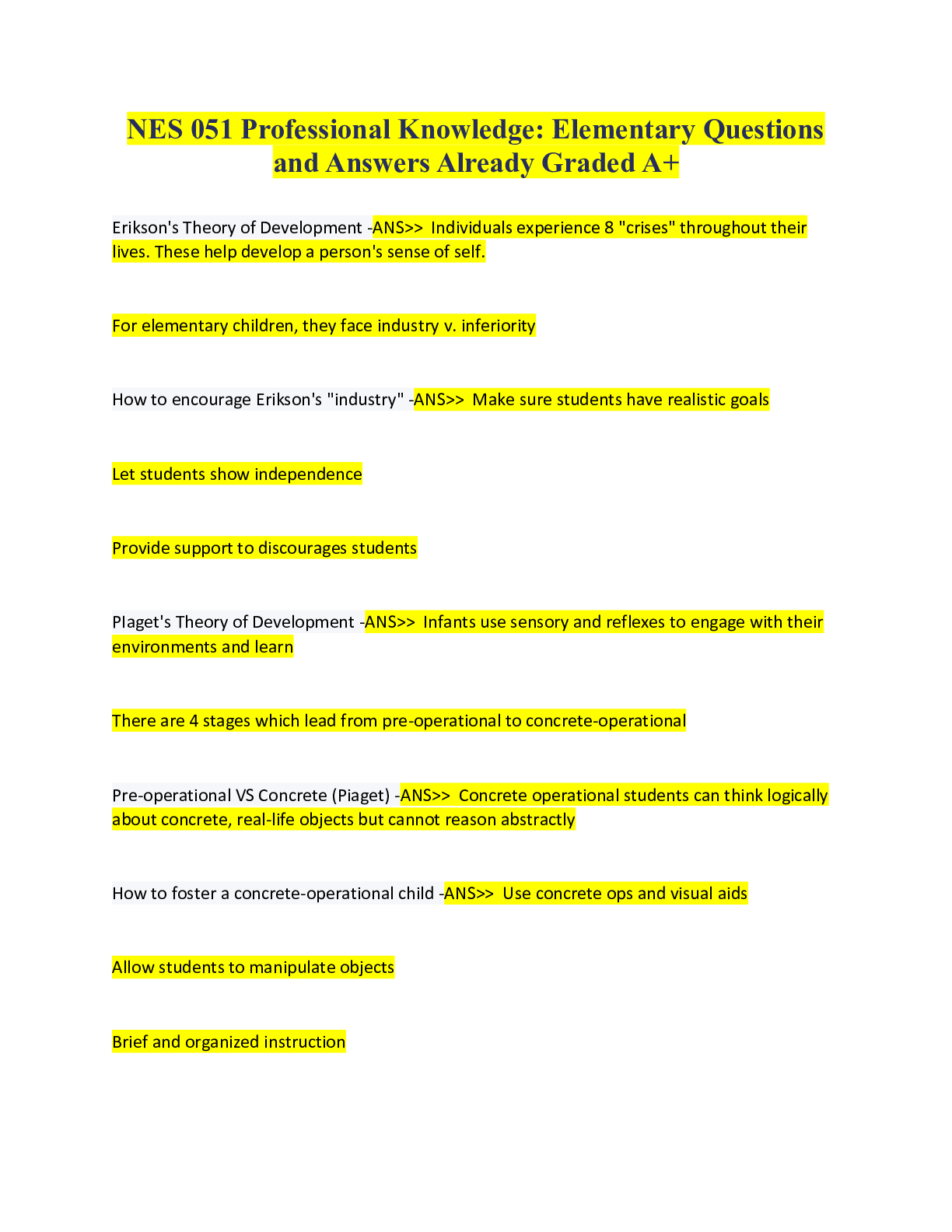
NES 051 Professional Knowledge: Elementary Questions and Answers Already Graded A+
Document Content and Description Below
Last updated: 3 years ago
Preview 1 out of 25 pages
Instant download
Buy this Document to get the Full Access Instantly
Provided by Students Who Aced it
We Verify Document Content to Gurantee Accuracy
Also available in bundle (1)
Click Below to Access Bundle(s)

NES Bundled Exams Questions and Answers (2022/2023) Full Solution Pack Complete
NES Special Education Exam 601 Questions and Answers with Certified Solutions NES Assessment of Professional Knowledge: Elementary - Practice Test Part ¼ (2022/2023) Already Passed NES Elementar...
By Crescent 3 years ago
$20
15
Reviews( 0 )
Document information
Connected school, study & course
About the document
Uploaded On
May 19, 2023
Number of pages
25
Written in
All

Additional information
This document has been written for:
Uploaded
May 19, 2023
Downloads
0
Views
218
Topic Tags
Recommended For You
Get more on QUESTIONS & ANSWERS »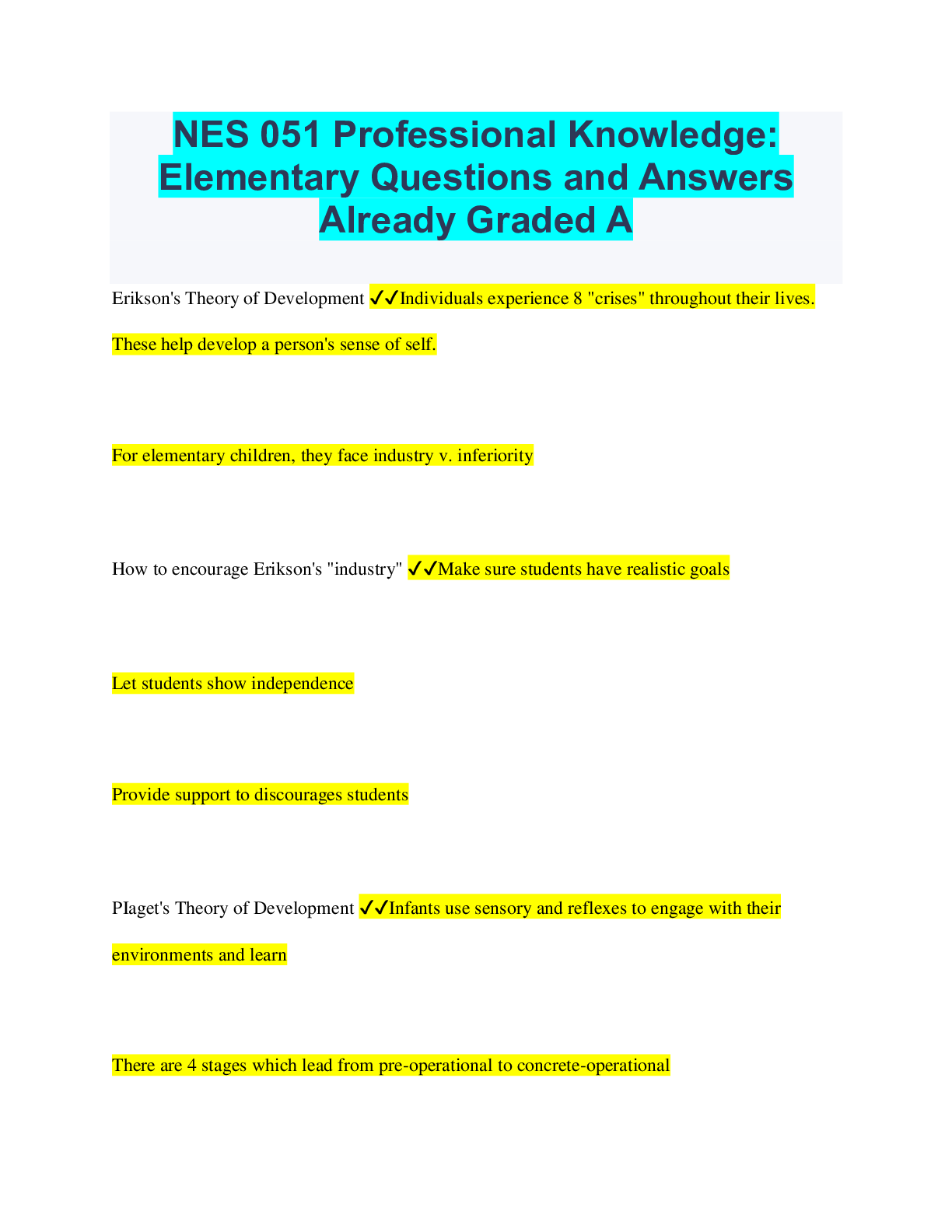
NES 051 Professional Knowledge: Elementary Questions and Answe...

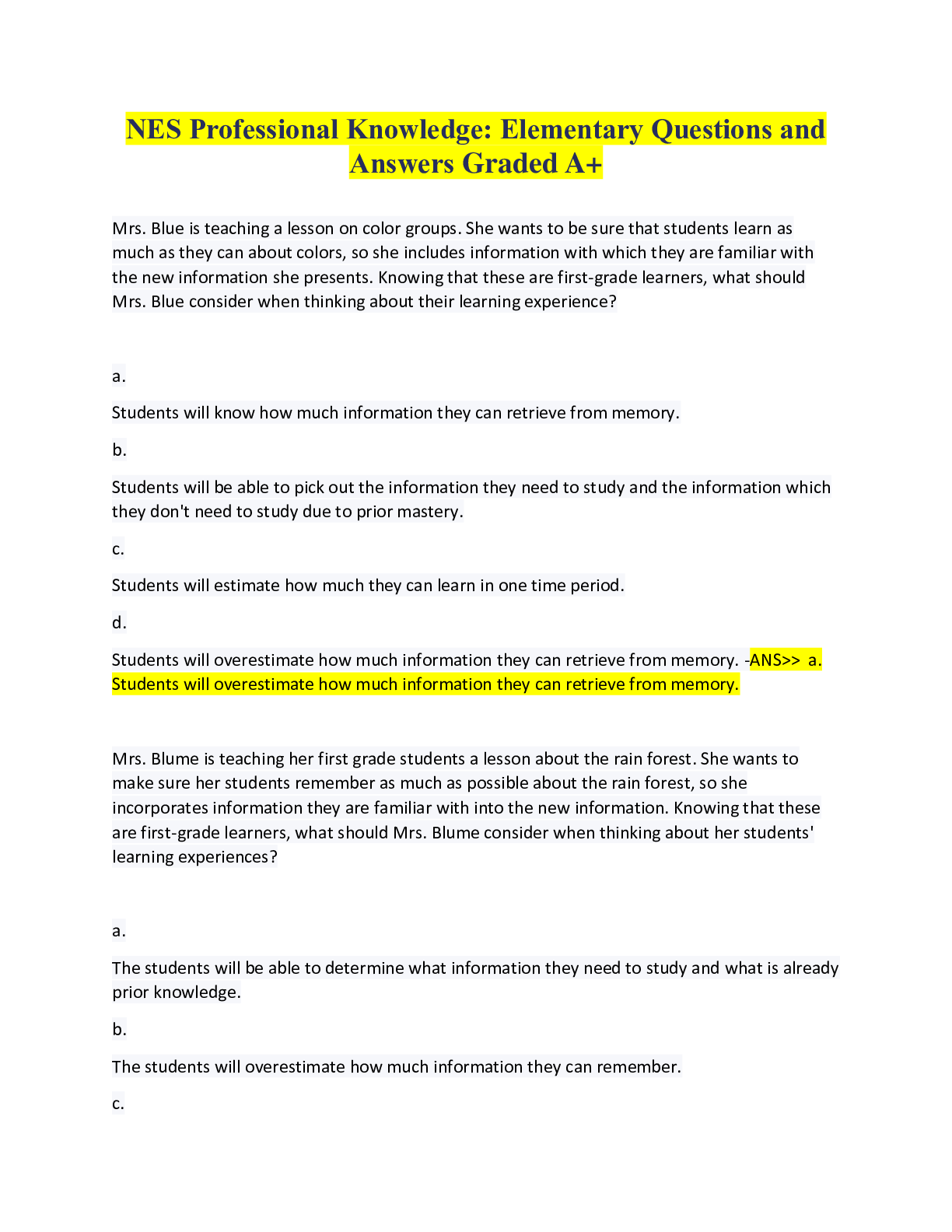
NES Professional Knowledge: Elementary Questions and Answers G...
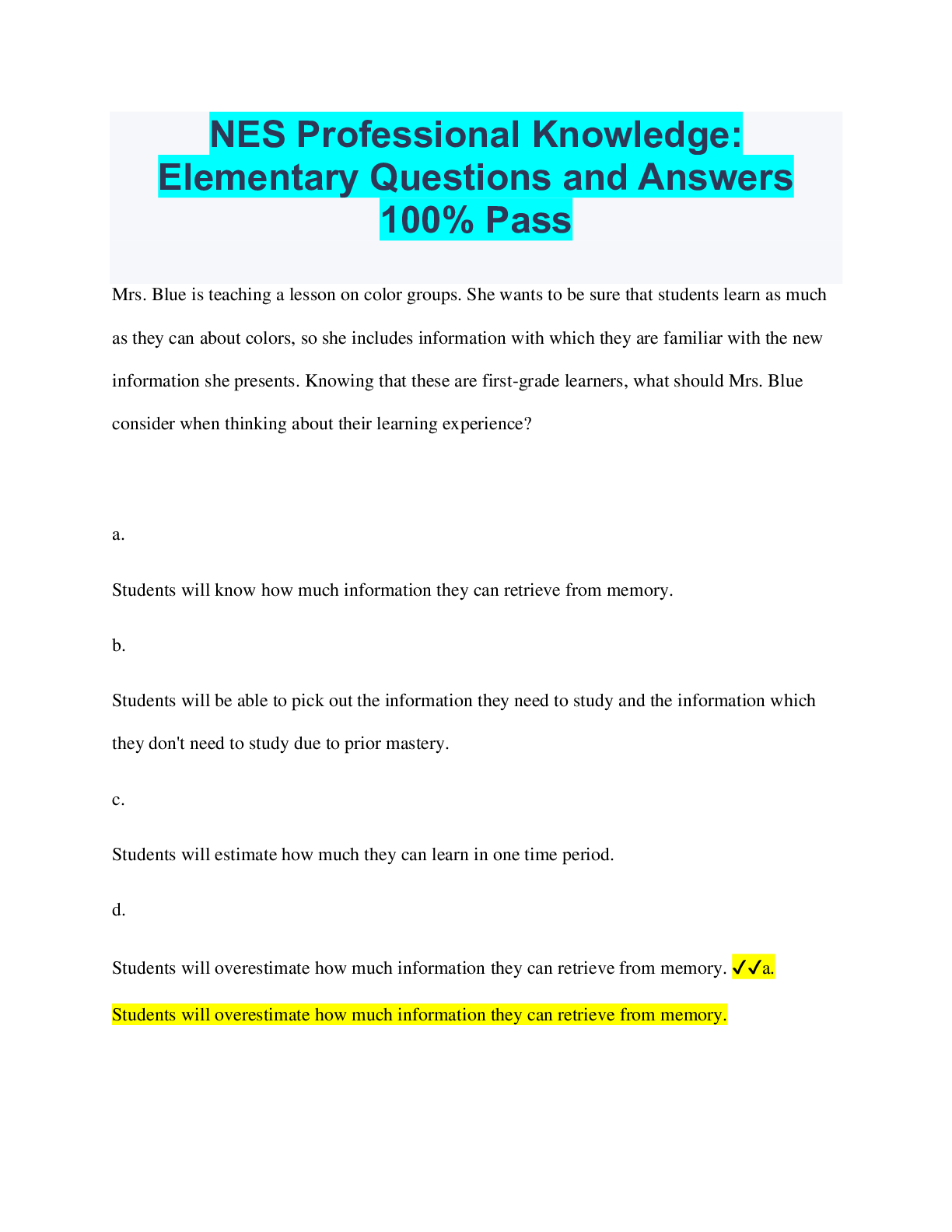
NES Professional Knowledge: Elementary Questions and Answers 1...
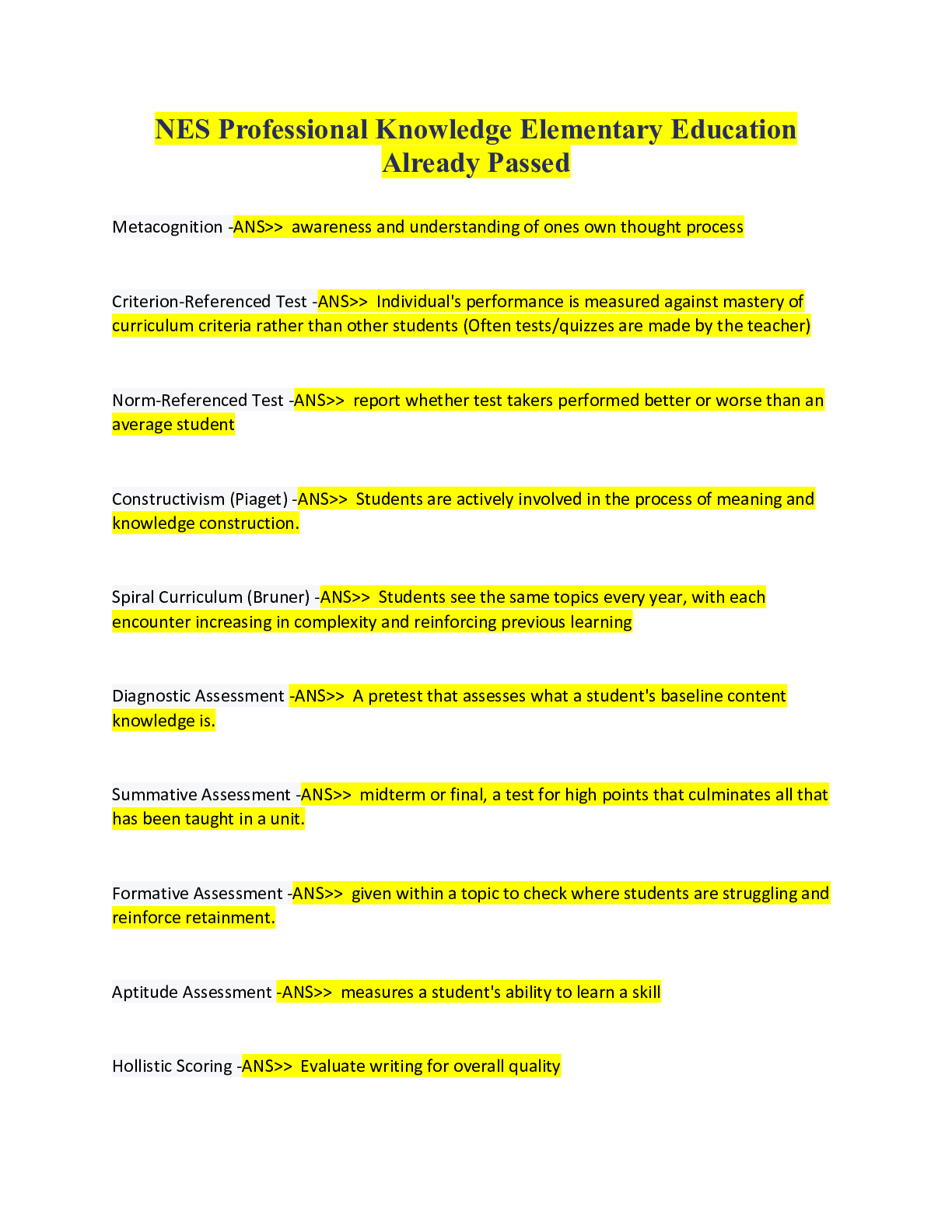
NES Professional Knowledge Elementary Education Already Passed
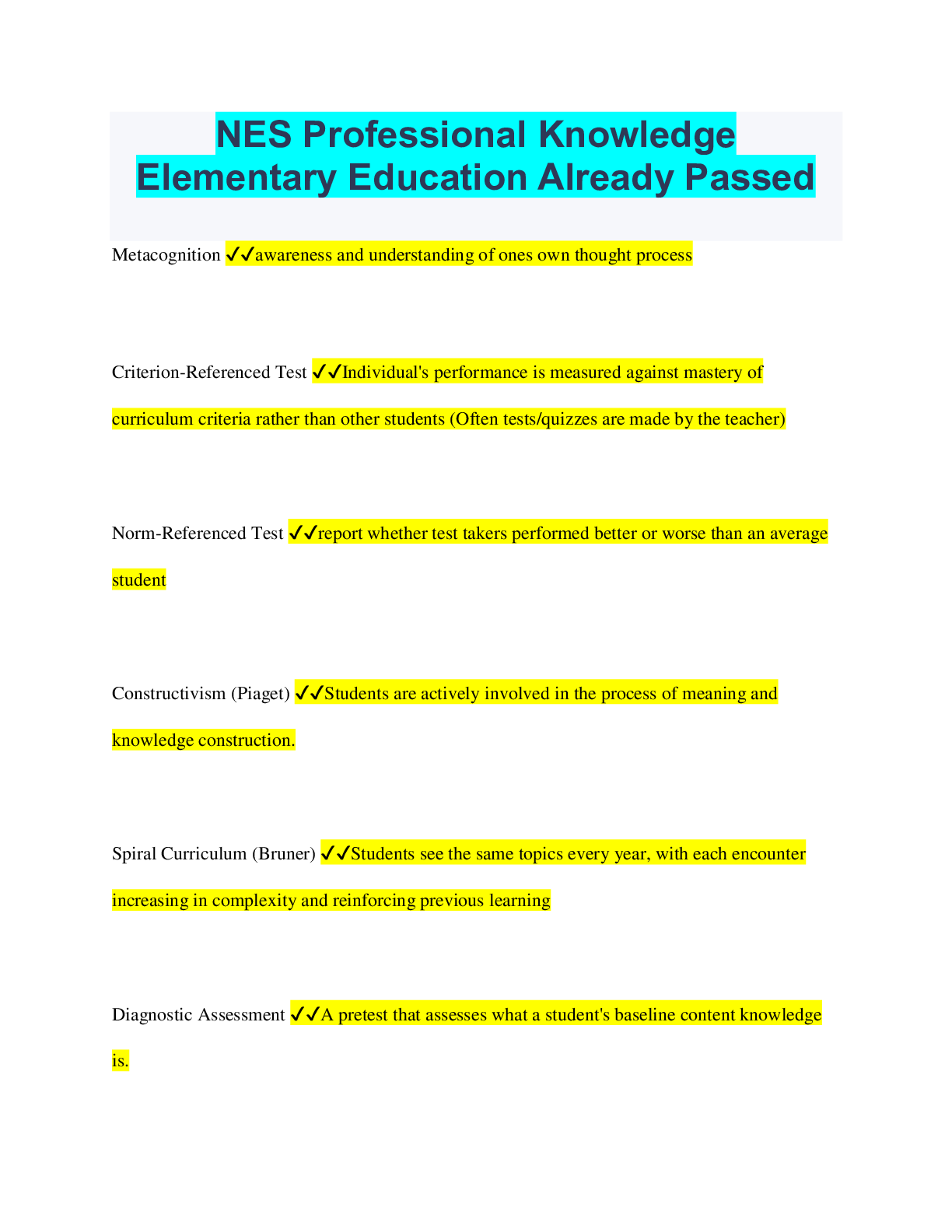
.png)


 Answered 2023.png)