Pathophysiology > Text Book Notes > Alterations of Erythrocyte Function: Reviewed Study Notes for Pathophysiology (PATHO NR282) and Nurs (All)
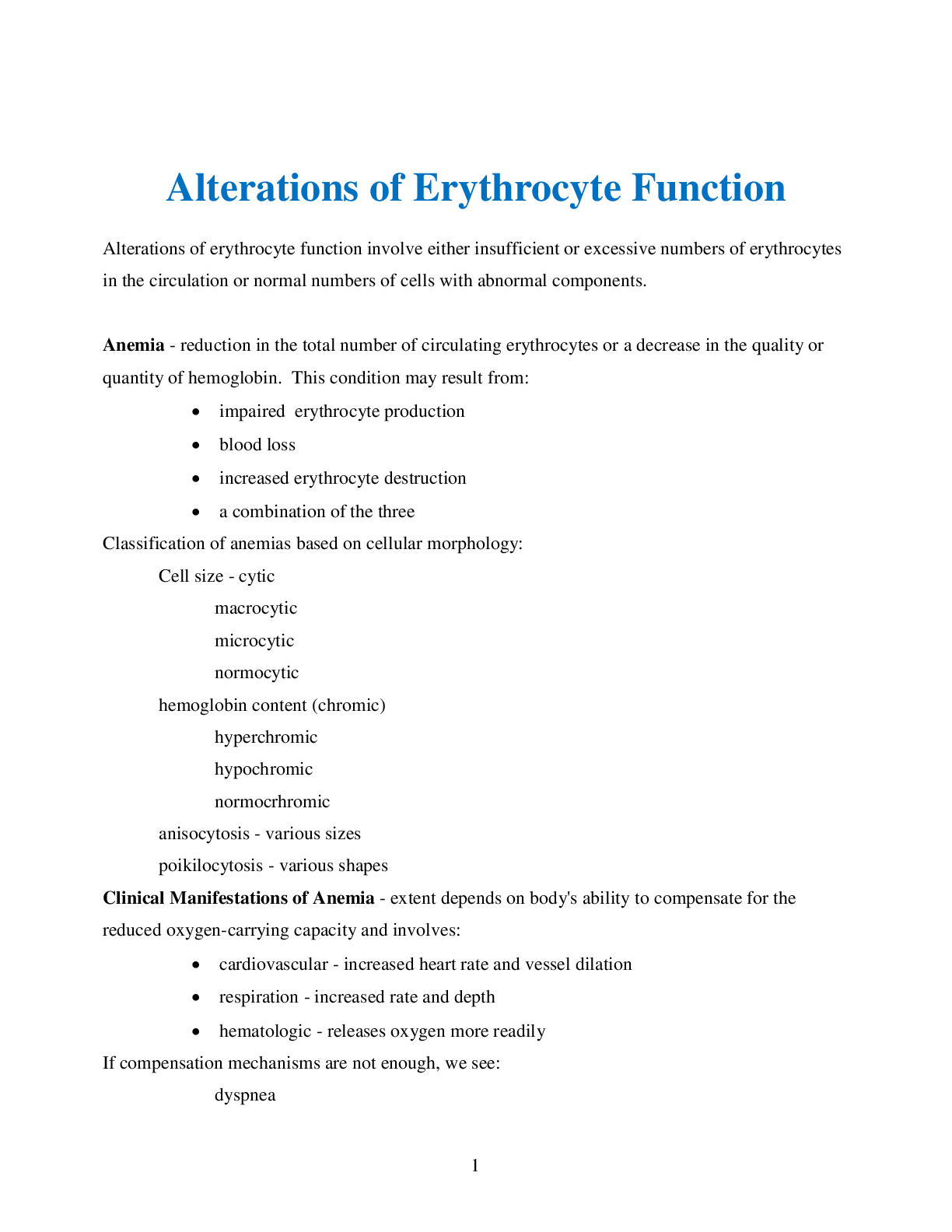
Alterations of erythrocyte function involve either insufficient or excessive numbers of erythrocytes in the circulation or normal numbers of cells with abnormal components. Anemia - reduction in t ... he total number of circulating erythrocytes or a decrease in the quality or quantity of hemoglobin. This condition may result from: Classification of anemias based on cellular morphology: Cell size - cytic macrocytic microcytic normocytic Clinical Manifestations of Anemia - extent depends on body's ability to compensate for the reduced oxygen-carrying capacity and involves: If compensation mechanisms are not enough, we see: dyspnea Hypoxia to skin may lead to: impaired healing Nervous system - affected by low B12 levels causes: demyelinization Macrocytic-Normochromic Anemias (megaloblastic) - unusually large RBCs are formed due to failure of nuclear division, caused by deficiencies of vitamin B12 or folate. Because of increased size, premature cell death occurs. • Replacement therapy - injections intramuscularly or subcutaneously of cobalamin, a form of vitamin B12 containing cobalt. Microcytic-Hypochromic Anemias - abnormally small erythrocytes, containing reduced amounts of hemoglobin. May result from: Three stages of iron deficiency anemia: body's iron stores are becoming depleted - asymptomatic Sideroblastic Anemia (SA)- a type of microcytic-hypochromic anemia resulting from abnormal erythropoiesis. Usually due to sequestration of iron complexes in the mitochondria or erythroblasts Normocytic-Normochromic Anemias - insufficient numbers of red blood cells are produced. Types of this anemia include Posthemorrhagic anemia - caused by sudden loss of blood in an individual with normal iron stores. Within 24 hours the body begins to replace lost plasma and blood cells. Clinical manifestation may Hemolytic anemia - premature accelerated destruction of erythrocytes. Hemolytic anemia may be acquired or extrinsic. Causes include Autoimmune hemolytic anemias include: • warm antibody disease - IgG binds to erythrocytes at normal body Clinical manifestations of autoimmune hemolytic anemias depend on severity. Usually the spleen enlarges, there is jaundice, and acute crises may develop if Evaluation - based on clinical manifestations, bone marrow studies and blood tests.Anemia of Chronic Disease - is associated with chronic infections, inflammatory diseases and malignancies. Because this anemia is associated with so Pathophysiology - Extrinsic factors may accelerate erythrocyte destruction due to destructive agents from a Polycythemia - overproduction of cells. One or more of the blood elements may be involved in excess production due to: Clinical manifestations - include increased blood volume and viscosity and clogging of microcirculatory blood vessels Symptoms - include - headache, dizziness, weakness, elevated blood pressure, itching, sweating, weight loss, Treatment - reduction of erythrocytosis and blood volume, controlling symptoms and preventing thrombosis [Show More]
Last updated: 3 years ago
Preview 1 out of 8 pages
Buy this document to get the full access instantly
Instant Download Access after purchase
Buy NowInstant download
We Accept:
Can't find what you want? Try our AI powered Search
Connected school, study & course
About the document
Uploaded On
Mar 22, 2020
Number of pages
8
Written in
All
This document has been written for:
Uploaded
Mar 22, 2020
Downloads
0
Views
189
Scholarfriends.com Online Platform by Browsegrades Inc. 651N South Broad St, Middletown DE. United States.
We're available through e-mail, Twitter, Facebook, and live chat.
FAQ
Questions? Leave a message!
Copyright © Scholarfriends · High quality services·