Quiz 2 NR 509 week 2.Well elaborated Study guide 2023
Document Content and Description Below
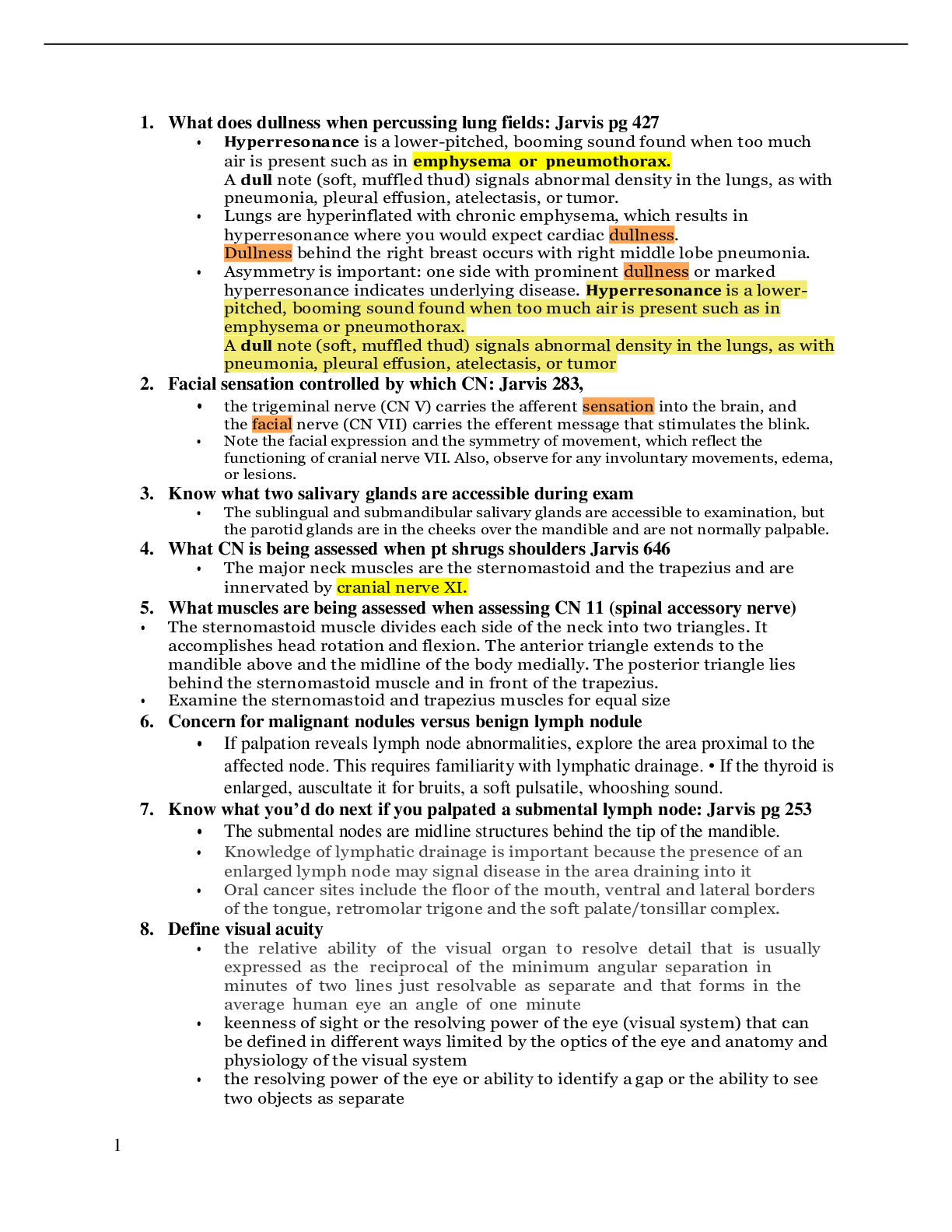
1.What does dullness when percussing lung fields: Jarvis pg 427
•Hyperresonance is a lower-pitched, booming sound found when too much air is present such as in emphysema or pneumothorax.
A dull note (soft, muffled thud
...
[Show More]
Last updated: 3 years ago
Preview 1 out of 4 pages
Instant download
Buy this Document to get the Full Access Instantly
Provided by Students Who Aced it
We Verify Document Content to Gurantee Accuracy
Reviews( 0 )
Document information
Connected school, study & course
About the document
Uploaded On
Jun 13, 2023
Number of pages
4
Written in
All

Additional information
This document has been written for:
Uploaded
Jun 13, 2023
Downloads
0
Views
172
Topic Tags
Related Subjects & Courses
Explore similar study resources and related concepts.
Recommended For You
Get more on Quiz »



$12.5
12 Pages
NR 509 Midterm Exam Advanced Physical Assessment - Chamberl...
$28
6 Pages
I-HUMAN (NR-509 WEEK#6) CASE FILE FOR BEBE BABBITT WITH A FOCU...
$16
496 Pages
Essentials of Psychiatric Mental Health Nursing: Concepts of C...
$15.5
249 Pages
TEST BANK for Essentials of Psychiatric Mental Health Nursing...


$33
15 Pages
i-human Case Week 7: 57-year-old Cardiovascular High Blood Pre...
More related documents below
.png)


.png)

