NCSBN – Lesson 8F: Endocrine System Study Guide
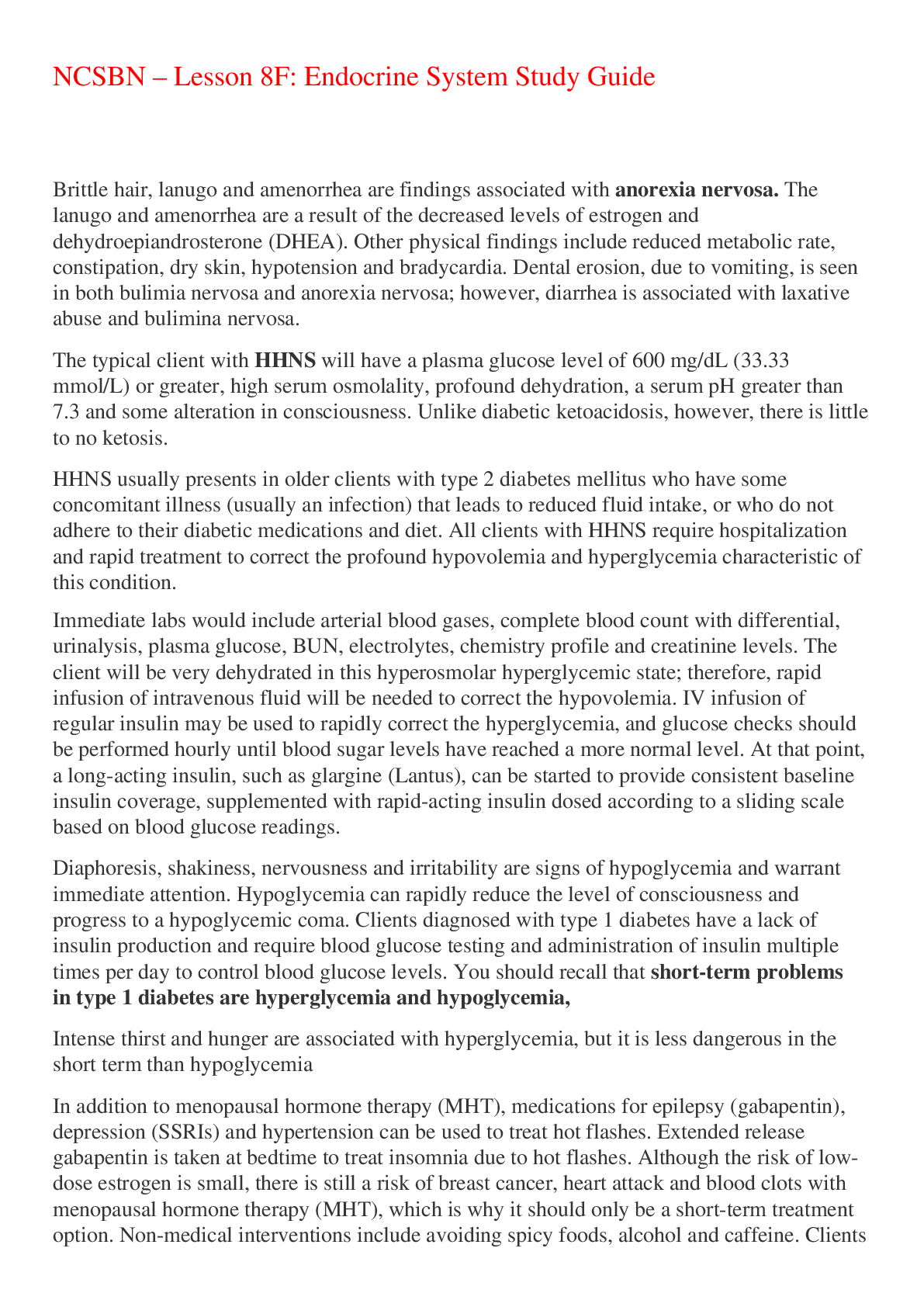
Brittle hair, lanugo and amenorrhea are findings associated with anorexia nervosa. The lanugo and amenorrhea are a result of the decreased levels of estrogen and dehyd
...
NCSBN – Lesson 8F: Endocrine System Study Guide
Brittle hair, lanugo and amenorrhea are findings associated with anorexia nervosa. The lanugo and amenorrhea are a result of the decreased levels of estrogen and dehydroepiandrosterone (DHEA). Other physical findings include reduced metabolic rate, constipation, dry skin, hypotension and bradycardia. Dental erosion, due to vomiting, is seen in both bulimia nervosa and anorexia nervosa; however, diarrhea is associated with laxative abuse and bulimina nervosa.
The typical client with HHNS will have a plasma glucose level of 600 mg/dL (33.33 mmol/L) or greater, high serum osmolality, profound dehydration, a serum pH greater than 7.3 and some alteration in consciousness. Unlike diabetic ketoacidosis, however, there is little to no ketosis.
HHNS usually presents in older clients with type 2 diabetes mellitus who have some concomitant illness (usually an infection) that leads to reduced fluid intake, or who do not adhere to their diabetic medications and diet. All clients with HHNS require hospitalization and rapid treatment to correct the profound hypovolemia and hyperglycemia characteristic of this condition.
Immediate labs would include arterial blood gases, complete blood count with differential, urinalysis, plasma glucose, BUN, electrolytes, chemistry profile and creatinine levels. The client will be very dehydrated in this hyperosmolar hyperglycemic state; therefore, rapid infusion of intravenous fluid will be needed to correct the hypovolemia. IV infusion of regular insulin may be used to rapidly correct the hyperglycemia, and glucose checks should be performed hourly until blood sugar levels have reached a more normal level. At that point, a long-acting insulin, such as glargine (Lantus), can be started to provide consistent baseline insulin coverage, supplemented with rapid-acting insulin dosed according to a sliding scale based on blood glucose readings.
Diaphoresis, shakiness, nervousness and irritability are signs of hypoglycemia and warrant immediate attention. Hypoglycemia can rapidly reduce the level of consciousness and progress to a hypoglycemic coma. Clients diagnosed with type 1 diabetes have a lack of insulin production and require blood glucose testing and administration of insulin multiple times per day to control blood glucose levels. You should recall that short-term problems in type 1 diabetes are hyperglycemia and hypoglycemia,
Intense thirst and hunger are associated with hyperglycemia, but it is less dangerous in the short term than hypoglycemia
In addition to menopausal hormone therapy (MHT), medications for epilepsy (gabapentin), depression (SSRIs) and hypertension can be used to treat hot flashes. Extended release gabapentin is taken at bedtime to treat insomnia due to hot flashes. Although the risk of low-dose estrogen is small, there is still a risk of breast cancer, heart attack and blood clots with menopausal hormone therapy (MHT), which is why it should only be a short-term treatment option. Non-medical interventions include avoiding spicy foods, alcohol and caffeine. Clients should also dress in layers, use fans for cooling and try taking slow, deep breaths when a hot flash starts.
Disorders of the Pituitary
The pituitary gland is located at the base of the brain and the hormones it produces are essential to many body functions. Through the secretion of its hormones, the pituitary gland controls metabolism, growth, sexual maturation, reproduction, blood pressure and many other vital physical functions and processes. This section reviews common disorders of the pituitary gland.
Hypopituitarism – Disorders of the Pituitary
Hypopituitarism (also known as panhypopituitarism) is the under-activity of the anterior pituitary gland.
• Etiology
o Hypopituitarism is most often caused by a benign pituitary tumor (or
adenoma).
▪ deficiency of luteinizing hormone (LH) & follicle stimulating hormone (FSH)
o Other causes include brain surgery, head trauma, infections of the brain, radiation, stroke and subarachnoid hemorrhage.
• Assessment Findings
o These findings may result from hormone deficiency (hypogonadism):
▪ Hypogonadism is experienced in both females and males
▪ Amenorrhea, infertility, decreased libido and impotence
▪ Abdominal pain
▪ Osteoporosis
▪ Sensitivity to cold
▪ Breast, uterine atrophy and vaginal dryness
▪ Loss of axillary and pubic hair
▪ Small, soft testicles
▪ Decreased growth hormone – results in dwarfism (when developed in childhood)
▪ Hypothyroidism – occurs because pituitary regulates the thyroid glands via TSH
▪ Hypoadrenalism – occurs because the pituitary regulates the adrenal glands though production of ACTH
▪ Syndrome of inappropriate antidiuretic hormone (SIADH) – fluid overload and dilutional
▪ Hyponatremia related to increased antidiuretic hormone (ADH) levels
• Diagnostic Studies
o Diagnostic studies include a history and physical exam, a neuro-ophthalmological
exam, an X-ray of pituitary fossa and radio immunoassays of anterior pituitary hormones.
o Imaging tests may include computerized tomogram (CT) or magnetic resonance imaging (MRI) scans of the brain and pituitary gland.
o Laboratory tests will include serum ACTH, cortisol, estradiol, FSH, LH, TSH, T4, testosterone and insulin-like growth factor 1 (IGF-1).
• Management
o Pharmaceutical intervention includes hormone replacement therapy (growth
hormones, estrogens/progestins, androgens or thyroid hormones) and corticosteroid therapy.
o If it is caused by a tumor, surgical removal of the tumor and radiation therapy may be needed.
• Nursing Interventions
o Provide for care of the client undergoing surgery
o Monitor for desired effects of administered medications as ordered
o Provide emotional support with referral to support groups
• Client teaching will include:
o Medications and their desired effects and side effects
o The need for lifelong hormone replacement therapy and regular checks of serum levels
o The need for increased glucocorticoid replacement during stress
o The need to wear MedicAlert identification
Hyperpituitarism – Disorders of the Pituitary
Hyperpituitarism is when the anterior pituitary secretes too much GH and/or ACTH. Acromegaly occurs when the growth plates are closed and giantism occurs when the growth plates are still open.
• Etiology
o Hyperpituitarism can be caused by carcinomas of the adenohypophysis or by
the secretion of hormones from non-pituitary tumors.
o Also other hypothalamic disorders and carcinoid tumors can cause hyperpituitarism.
o The overproduction of ACTH leads the adrenal gland to overproduce cortisone (Cushing's disease).
• Assessment Findings
o The findings will differ depending upon which hormone is over-secreted:
▪ Excess prolactin: typically includes
• Headache
• visual disturbances
• growth failure
• pubertal arrest (with menstrual abnormalities in girls) is seen during puberty
▪ Excess ACTH
• weight gain with concurrent growth failure
▪ Excess GH:
• Mild-to-moderate obesity
• Gigantism in a child with longitudinal growth acceleration
• Macrocephaly
• Coarse facial features
• Cardiovascular disease, i.e., hypertrophy or hypertension
• Tumors
• Endocrinopathies, i.e., diabetes or hypogonadism
• Diagnostic Studies
o Diagnostic studies include a history and physical exam, CT scan and plasma
hormone levels (positive for an increased GH and ACTH).
• Management
o Pituitary microsurgery to remove tumor
o Pituitary radiation
o Gamma knife radiation
o Pharmacologic intervention: growth hormone suppressant, e.g., bromocriptine
or octreotide
o The physical changes of acromegaly are irreversible.
• Nursing Interventions
o Provide appropriate nursing care for clients who: exhibit increased intracranial
pressure, are undergoing surgery, or are receiving radiation therapy.
o Explain to the client the importance of restricting their sodium intake.
o Assess the client for signs of diabetes insipidus (removal of a pituitary tumor may injure the posterior pituitary glands and decrease antidiuretic hormone secretions, resulting in drastic fluid loss).
o Teach the client that treatment usually produces hypopituitarism.
o Lifelong hormone replacement therapy with regular check-ups are required.
Diabetes Insipidus (DI – Disorders of the Pituitary
Diabetes insipidus (DI) occurs when the posterior pituitary gland makes too little antidiuretic hormone (ADH), causing failure of tubular reabsorption of water in the kidneys and diuresis, resulting in increased plasma osmolality and increased sodium levels.
• Etiology
o Central DI is the most common form.
▪ It is usually caused by damage to the hypothalamus or pituitary gland as a result of a head injury, infection, surgery, loss of blood supply to the gland, or a tumor.
o Nephrogenic DI
▪ is a defect in tubular reabsorption of water back into the bloodstream.
▪ This condition tends to run in families.
• Assessment Findings
o Clients will present with
▪ excessive thirst (polydipsia)
▪ polyuria,
▪ nocturia,
▪ signs of dehydration and constipation.
• Diagnostic Studies
o Water deprivation tests, inability to concentrate urine, also differentiates
between central DI and nephrogenic DI
o Osmotic stimulation
o CT scan or MRI
• Management
o Pharmacologic Intervention:
▪ Hormonal agents used to manage DI include
• Desmopressin
• vasopressin.
▪ Non-hormonal agents include
• Chlorpropamide
• Carbamazepine
• diuretics.
• IV fluid replacement therapy may also be necessary.
▪ The surgical removal of the tumor is an option if a tumor is the cause. If nephrogenic DI is caused by medication (e.g., lithium), the medication
must be discontinued or the damage may become permanent.
• Nursing Interventions
o Monitor for findings of dehydration; measure urine and specific gravity
o Administer medications as ordered
o Monitor fluids and give IV fluids as ordered
o Measure intake and output (I/O)
o Weigh the client daily
o Monitor and care for the client with signs of increased intracranial pressure (ICP)
o Care of the client undergoing surgery
• Client teaching will include:
o How to record I/O
o About medications and side effects
o About fluids with diuretic effects
o How to check urine specific gravity
o The need to wear MedicAlert identification
Syndrome of Inappropriate Antidiuretic Hormone - Disorders of the Pituitary
Syndrome of inappropriate antidiuretic hormone (SIADH) is the hypersecretion of ADH with water intoxication and a decrease in sodium concentration.
• Etiology
o SIADH can be divided into four main categories:
1. Nervous system disorders
• e.g., acute psychosis, brain abscess and tumors, delirium tremens and encephalitis
2. Neoplasia (new abnormal growth of tissue)
3. Pulmonary diseases
• e.g., COPD, acute respiratory failure, asthma, pneumonia and pneumothorax
4. Drug-induced
• e.g., barbiturates, haloperidol, halothane, opiates (morphine), MAOIs and tricyclic antidepressants
• Assessment Findings
o The client will present with changes in LOC and mental status
o Tachycardia
o Hyponatremia
o weight gain.
o The urine specific gravity will be greater than 1.030 and the
o client will be hypertensive.
• Management
o Loop diuretics, e.g., furosemide (along with hypertonic sodium solution)
o CAREFUL IV administration of 3% hypertonic sodium for hyponatremia (too rapid infusion can cause permanent neurologic deficits)
o Osmotic diuretics, e.g., urea and mannitol
o Vasopressin receptor antagonists (aquaretics), e.g., conivaptan and tolvaptan
o Chemotherapy
• Nursing Interventions
o The nurse will monitor the client's I/O and vital signs for symptoms of
fluid overload and hyponatremia.
o Weigh the client daily, monitor electrolytes and restrict water intake as ordered.
o The client will be on seizure precautions if they are hyponatremic. Disorders of the Thyroid Gland
The thyroid gland is critical for normal growth and development. It secretes thyroxine and triiodothyronine and also acts on many tissues by increasing the metabolic activity and protein synthesis. This section reviews common disorders of the thyroid gland.
Hypothyroidism – Disorders of the Thyroid Gland
Hypothyroidism is a condition in which the thyroid gland does not make enough thyroid hormone. This is also known as an underactive thyroid.
Myxedema crisis or coma is a loss of brain function as a result of severe, longstanding
hypothyroidism. It is usually precipitated by a secondary insult (hypothermia, infection or
another systemic condition or drug therapy).
• Etiology
o Etiology of hypothyroidism includes thyroiditis (most common), including
autoimmune thyroiditis (also called Hashimoto's thyroiditis) and atrophic thyroiditis.
o Other causes are related to medications, such as lithium, amiodarone and interferon alpha.
o It can also be caused by genetics, radiation treatments to the neck or brain, radioactive iodine and the surgical removal of all or part of the thyroid gland.
• Assessment Findings
o Early symptoms include:
▪ Constipation
▪ increased sensitivity to cold
hypothermia
▪ fatigue/ confusion
▪ Bradycardia
▪ heavy menstrual period
▪ joint and muscle pain
▪ pale dry skin
▪ depression
▪ brittle hair and nails
• coarse/sparse hair
▪ weight gain.
o If left untreated, symptoms will include
▪ decrease in taste and smell
▪ hoarseness
▪ puffy face, hands and feet
• Macroglossia
▪ slow speech
▪ thickening of skin
▪ thinning of eyebrows
• ptosis
• Diagnostic Studies
o History and physical exam
o Labs:
▪ Thyroid-stimulating hormone (TSH) – increased
▪ Serum T3 and T4 – decreased
▪ Complete blood count – anemia
▪ Cholesterol and triglycerides – elevated
▪ Liver enzymes – elevated
▪ Prolactin – increased
▪ Sodium – low
▪ Serum glucose – hypoglycemia
• Management
o Pharmacologic intervention will include administering synthetic thyroid
hormone (levothyroxine sodium; liothyronine sodium).
o Myxedema crisis/coma management will include
▪ mechanical ventilation
▪ treatment of the associated infection
▪ correct hypothermia
▪ IV thyroid hormone replacement therapy.
• Nursing Interventions
o Give medications as ordered
o Watch client for signs of myxedema
o Provide a restful environment
o Protect the client from cold
• Client teaching will include:
o How to conserve energy
o How to avoid or manage stress
o About the medications and side effects
▪ Take levothyroxine in the morning on an empty stomach at least one hour before any other medications or vitamins or ingestion of milk
▪ Take with a full eight ounce glass of water – tablets may get stuck and cause choking or gagging
▪ Life-threatening side effects of thyroid medications include cardiac dysrhythmias
▪ Importance of not changing brands of thyroid medication
o Importance of lifelong therapy
Hyperthyroidism – Disorders of the Thyroid Gland
Hyperthyroidism is when an overactive thyroid makes too much thyroid hormone.
A thyrotoxic crisis (thyroid storm) is a rare but potentially fatal complication of hyperthyroidism, which is precipitated by factors such as stress, infection and pregnancy.
• Etiology
o Hyperthyroidism is considered an autoimmune response. The etiology includes:
▪ Graves' disease – accounts for most cases of hyperthyroidism
▪ Too much iodine
▪ Thyroiditis
▪ Non-cancerous growths of the thyroid gland, due to viral infections or other causes
▪ Over dosage of thyroid hormone
• Assessment Findings
o Clients will have
▪ Difficulty concentrating
▪ Fatigue/weaknes/anx iety
▪ Hyperphagia
(abnormal hunger)
▪ Weight loss
▪ Diarrhea
▪ goiter or thyroid
nodules
▪ heat intolerance
• Diagnostic Studies
▪ exophthalmos
▪ tachycardia
▪ palpitations
▪ restlessness
▪ thin, brittle hair
▪ pliable nails
("plummer's" nails)
▪ irregular menstrual periods in women
▪ insomnia.
o History and physical exam: palpable thyroid enlargement (goiter), hyperactive reflexes.
o Labs:
▪ Serum T3 and T4 levels – elevated
▪ Radioactive iodine uptake – elevated
▪ Presence of thyroid autoantibodies
▪ TSH levels – decreased
• Management
o The goal is to reduce the excess hormone secretion and to prevent
complications.
o Pharmacologic Intervention:
▪ Sodium 131I (radioactive iodine)
▪ Methimazole
▪ Antithyroid agents, e.g., propylthiouracil (PTU)
▪ Beta-adrenergic blocking agents, e.g., propranolol
o Surgical intervention may include thyroidectomy (the partial or total removal of
the thyroid gland).
o The nurse will promote a diet high in calories, protein and carbohydrates.
• Nursing Interventions
o Monitor vital signs, especially blood pressure and heart rate
o Provide quiet, restful, cool environment
o Monitor diet therapy, provide extra fluids and administer medications as ordered
• Client teaching will include:
o Medications
o Stress avoidance
o Energy conservation
o Provide the following care to the post-thyroidectomy/post-sub thyroidectomy client:
▪ Assess for laryngeal nerve damage
▪ Assess for excessive swallowing or pooling of blood behind neck
(indicating hemorrhage)
▪ Report changes in voice or findings of hypocalcemia
▪ Avoid Fowler's position (due to strain on incision)
Disorders of the Parathyroid Gland
The parathyroid glands are located behind the thyroid gland and secrete PTH (parathyroid hormone), which helps regulate calcium and levels and control bone formation. Hyposecretion of the parathyroid hormone can lead to seizures and hypersecretion can led to cardiac arrhythmia, muscle and bone weakness and renal calculi. This section reviews the disorders of the parathyroid glands.
Hypoparathyroidism – Disorders of the Parathyroid Gland
Hypoparathyroidism occurs when the parathyroid produces too little parathyroid hormone. It
results in hypocalcemia.
• Etiology
o The cause of hypoparathyronidism is most often a result of an injury to
parathyroid glands (during thyroid surgery).
o Other causes include low blood magnesium levels, and metabolic alkalosis.
• Assessment Findings
o Neuromuscular irritability/muscular weakness or cramping
o Personality changes
o Numbness of fingers and carpopedal spasms
▪ Tingling of the lips, fingers, toes
o Tetany
o Laryngospasm
o Seizures
o Dry, scaly skin and hair loss
o Abdominal cramping
• Diagnostic Studies
o History and physical exam
o Positive Chvostek's sign (facial muscle twitching when cheek is stroked)
o Positive Trousseau's sign (carpopedal spasm as inflated BP cuff is released)
o ECG shows abnormal heart rhythms
o Labs:
▪ Serum calcium – decreased
▪ Serum phosphate – increased
▪ Magnesium – low
▪ PTH levels – low
▪ Urine – calcium levels
• Management
o Calcium replacement therapy – ideal serum calcium level 8.6 mg/dL
o Vitamin D preparations – facilitate uptake of calcium
o Calcium-rich, low-phosphorous diet
• Nursing Interventions
o Monitor carefully for signs of tetany and place the airway, suction and
tracheotomy tray at the client's bedside.
o Implement seizure precautions and monitor vital signs
o Have an ampule of calcium gluconate and a syringe at the client's bedside and administer if client demonstrates signs of tetany, positive Chvostek's or Trousseau's signs post-op as ordered.
• Client teaching will include:
o Medications
o How to identify signs of vitamin D toxicity
o To consume more calcium and get vitamin D from sun exposure to skin
o To reduce phosphorus intake by restricting the intake of fish, eggs, cheese and cereals
Hyperparathyroidism – Disorders of the Parathyroid Gland
Hyperparathyroidism occurs when the parathyroid secretes too much parathyroid hormone. It results in increased serum calcium (hypercalcemia) and the development of kidney stones.
• Etiology
o Primary hyperparathyroidism
▪ enlargement of one or more of the parathyroid glands – there is usually no known cause
o Secondary hyperparathyroidism
▪ the body produces extra parathyroid hormone because calcium levels are too low
o Tertiary hyperparathyroidism
▪ the parathyroid glands continue to produce too much parathyroid hormone even though the calcium levels are back to normal (usually occurs with kidney disease)
• Assessment Findings
o Gastrointestinal: constipation, nausea, vomiting and anorexia
o Skeletal: bone pain, demineralization, deformities and pathological fractures
o Kidney stones – due to increased calcium levels
o Blurred vision – due to cataracts
o Muscle weakness and fatigue
o Depression
• Diagnostic Studies
o History and physical exam
o Labs:
▪ Serum calcium – elevated
▪ Serum phosphorus levels – decreased
▪ X-rays and dual-energy radiographic absorptiometry reveal bone demineralization
▪ Imaging studies (CT scan and MRI) and ultrasound of the neck
• Management
o The client will drink more fluids (to prevent kidney stones from forming) and
avoiding thiazide-type diuretics.
o Surgical interventions to remove the parathyroid glands may be necessary.
o For tertiary hyperparathyroidism (caused by kidney failure)
▪ treat with extra calcium and vitamin D and avoid phosphate in the diet.
• Nursing Interventions
o Postoperatively, observe for signs of hypocalcemia, monitor for laryngeal
damage (change in voice/hoarseness) and monitor renal involvement, i.e., evaluate and strain urine and evaluate back pain.
• Client teaching will include:
o The importance of mobility is because immobility increases demineralization
of bones
o To increase their fluid intake to dilute calcium levels in blood and urine
o Consume a diet rich in calcium and vitamin D
o Wear MedicAlert identification Disorders of the Adrenal Gland
The adrenal gland produces steroids, amines, epinephrine and norepinephrine. Hyposecretion or hypersecretion of these substances can lead to a variety of disorders.
Addison's Disease – Disorders of the Adrenal Gland
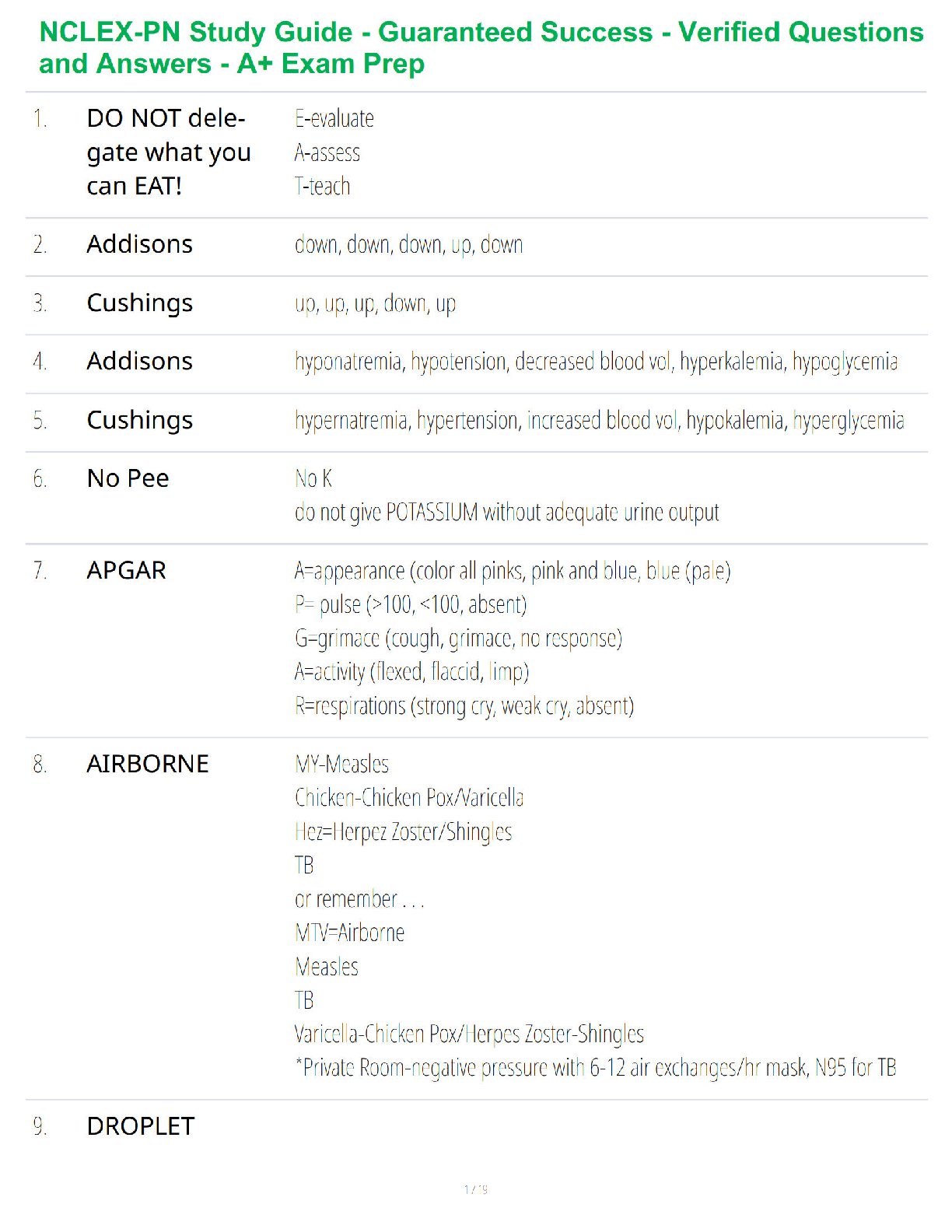
Addison's disease is the gradual destruction of the adrenal cortex, resulting in decreased production of cortisol and often aldosterone.
• Etiology
o The cause of Addison's disease is the destruction of the adrenal cortex due to an
autoimmune disease, infection, hemorrhage, tumor or the use of anticoagulants.
• Assessment Findings
o Fatigue, weakness and dehydration
o Low BP and decreased resistance to stress
o Hyperpigmentation and alopecia
o Weight loss
o Muscle weakness
o Pathological fractures
o Depression, lethargy and emotional lability
• Addisonian Crisis Assessment Findings
o Nausea and vomiting
o Abdominal pain
o Fever
o Extreme weakness
o Severe hypoglycemia, hyperkalemia and dehydration develop rapidly
o BP falls, which could lead to shock and coma
o Death can occur if not treated promptly
• Diagnostic Studies
o History and physical exam
o Labs:
▪ ACTH stimulation test – low cortisol level
▪ Serum glucose – hypoglycemia
▪ Electrolytes – low blood levels of sodium, high levels of potassium
▪ 24-hour urine collection – decreased levels of free cortisol
• Management
o Glucocorticoid replacement therapy: hydrocortisone
o Mineralocorticoid replacement therapy: fludrocortisone acetate
o Diet high in protein, carbohydrates and sodium and low in potassium
• For Clients in Addisonian Crisis
o Emergency management of circulatory collapse
o Intravenous hydrocortisone
o Carefully monitor IV infusion of 0.9% NaCl or D5W/NaCl
o Administer IV glucose or glucagon as ordered
o Administer insulin with dextrose in normal saline as ordered
o Administer potassium-binding and excreting resin as ordered
o Monitor vital signs
• Nursing Interventions
o Take the client's weight daily
o Monitor electrolytes and report abnormal results
o Preserve the client's energy by assisting with activities of daily living (ADL) as indicated
o Collaborate with dietician about diet and fluid intake
o Measure I/O
o Observe for hypoglycemia
• Client teaching will include:
o Medications
o Lifelong hormone-replacement therapy
o Wear MedicAlert identification
o How to avoid or manage stress
• Guidelines for diet:
o Add more sodium to the diet
o AVOID extra potassium (avoid salt substitutes)
o Have a quick sugar source available
o Increase fluid intake (3000 mL/day) Cushing's Syndrome – Disorders of the Adrenal Gland
Cushing's syndrome occurs when the adrenal gland secretes too much cortisol.
• Etiology & Pathophysiology
o Overproduction of cortisol, due to one of the following:
▪ Cushing's disease: the pituitary gland makes too much ACTH, which causes the adrenal glands to produce cortisol (often due to a tumor of the pituitary gland)
▪ Tumor of the pituitary gland
▪ Tumors in other organs and glands in the body that produce cortisol or
ACTH (such as the pancreas, lungs or thyroid)
• Assessment Findings
o Upper body obesity with thin arms and legs
o Round, red and full face (moon face)
o Slow growth rate in children
o Skin changes – acne, striae (purple marks) on the skin of the abdomen, thighs
and breasts; easy bruising
o Muscle/bone changes – backache, bone pain or tenderness, buffalo hump and rib/spine fractures
o Women with hirsutism on face, neck, chest, abdomen and thighs
o Men may be impotent, decreased libido
o Other – personality/behavior changes, fatigue
• Diagnostic Studies
o History and physical exam
o Labs - three standard case detection tests:
▪ 24-hour urinary free cortisol (UFC)
▪ Late-night salivary cortisol
▪ 1mg overnight dexamethasone suppression test
o Laboratory findings will include an increase in the level of cortisol, sodium and
glucose and a decrease in potassium levels.
o Other tests: bone density, abdominal CT and pituitary MRI.
• Management
o The treatment of Cushing's syndrome depends on the cause.
o If Cushing's syndrome is caused by corticosteroid use, the nurse will slowly decrease medication under medical supervision.
o If Cushing's syndrome is caused by a pituitary tumor or tumor that releases ACTH, the tumor will be removed (transsphenoidal surgery).
▪ Radiation therapy will be administered after surgery and followed up with hydrocortisone (cortisol) replacement therapy.
o If Cushing's syndrome is due to an adrenal tumor or other tumors, the tumor
will be removed (adrenalectomy).
▪ If the tumor cannot be removed, medication will be needed to block the
release of cortisol.
o Pharmacologic interventions include agents that inhibit steroidogenesis, e.g.,
metyrapone, mitotane and ketoconazole.
o A diet including sufficient calcium and vitamin D will be ordered.
• Nursing Interventions
o The nurse will administer medications as ordered, monitor diet and for signs of
hypokalemia and hypernatremia.
o Client teaching will include:
▪ The need for lifelong treatment
▪ Medication management
▪ The need to wear MedicAlert identification
▪ Increase activities slowly
o Body changes from the disease may reverse but it can take months to years to see the changes.
o Monitor the client for signs of depression or difficulty coping.
o Surgical treatment may cause adrenal or pituitary insufficiency.
Pheochromocytoma – Disorders of the Adrenal Gland
Pheochromocytoma occurs when the adrenal medulla secretes too much epinephrine and norepinephrine (catecholamines), which causes excessive stimulation of the sympathetic nervous system.
• Etiology
o Pheochromocytoma is usually caused by an otherwise benign tumor of the
adrenal medulla.
• Assessment Findings
o Clients will present with:
▪ abdominal pain
▪ chest pain
▪ irritability
▪ nervousness
▪ severe stress response
o They will have:
▪ unusual skin pallor
▪ palpitations with tachycardia.
o They may complain of a severe headache, diaphoresis and weight loss.
o Some may experience hand tremors, hypertension and difficulty sleeping.
• Diagnostic Studies
o Adrenal biopsy
o Abdominal CT scan and MRI
o Metaiodobenzylguanidine (MIBG) scintiscan
o Labs:
▪ 24-hour urine collection – increased urinary catecholamines
▪ Glucose
• Management
o Surgical removal of the tumor will be scheduled only after the client has been
normotensive (denoting normal BP) at least one week.
• Pharmacologic Intervention:
o Antihypertensive agents as needed preoperatively
o Antidysrhythmic agents as needed preoperatively: nitroprusside
o Alpha-adrenergic blocking agents – postoperatively: phenoxybenzamine
o Beta adrenergic blocking agent (beta blockers): propranolol and nadolol
o Tyrosine inhibitors: alpha methyl-para-tyrosine (decreases circulating catecholamines)
o The client's post-op diet should be high in calories, vitamins and minerals.
• Nursing Interventions
o Post-operative care in intensive care: monitor arterial line, cardiac monitor and
Swan-Ganz catheter
o Monitor vital signs, especially blood pressure
o Administer medications as ordered
o Keep phentolamine available for treatment of hypertensive crisis
o Never palpate the abdomen of a client with a pheochromocytoma
o If bilateral adrenalectomy is performed, lifelong steroid therapy will be
required
• Client teaching will include:
o Medication management
o The need for lifelong follow-up
o Diet Disorders of the Pancreas
The pancreas produces glucagon and insulin. Glucagon stimulates the release of stored glucose to raise blood sugar levels and insulin aids in glucose transport into the cells and promotes its storage. Insulin deficiency or resistance is the cause of diabetes mellitus.
Diabetes Mellitus (DM) – Disorders of the Pancreas
Diabetes mellitus (DM) is a chronic condition in which the pancreas produces too little insulin, or cells stop responding to insulin. It results in hyperglycemia.
• Etiology
o Type 1 DM is thought to be a genetic autoimmune response.
o Type 2 DM has lifestyle causes such as obesity.
• Assessment Findings
o Laboratory results will show hyperglycemia.
o The client will complain of fatigue, weight loss (with type 1 only), blurred vision, possible vaginal infections and slow wound healing.
o The three "polys" of DM:
▪ Polydipsia (increased thirst)
▪ Polyuria (increased urine production)
▪ Polyphagia (increased hunger)
• Diagnostic Studies
o History and physical exam
o Labs:
▪ Fasting blood sugar – elevated serum glucose levels
▪ Oral glucose tolerance test (GTT)
▪ Glycosylated hemoglobin test (Hemoglobin A1c or HbA1c)
• Management
o Diet therapy and weight loss – eat foods high in nutrition and low in fat and
calories
o Exercise to lower glucose levels, improve circulation and decrease total cholesterol and triglycerides
o Insulin:
▪ Used routinely in type 1 DM and in type 2 DM when better glycemic control is needed
▪ Types of insulin – rapid-acting, short-acting, intermediate-acting, long- acting and very long-acting
▪ Comes in vials, prefilled syringes, cartridges (used in pen-like devices) and insulin pumps (to deliver rapid-acting insulin continuously throughout the day)
o Other medications for type 1 DM:
▪ Hypertensive medications, including angiotensin-converting enzyme (ACE) inhibitors or angiotensin II receptor blockers (ARBs)
▪ Cholesterol-lowering drugs (the statins)
▪ Pramlintide – injectable medication prior to eating that slows the movement of food through the stomach and curbs the rise in blood sugar
o Oral hypoglycemic medications – sulfonylureas, meglitinides, biguanides, thiazolidinediones and alpha-glucosidase inhibitors:
▪ Prescribed for clients with type 2 DM
▪ Metformin is the first line therapy for most clients (metformin is a biguanide)
▪ Therapy can be a single oral agent or a combination of oral agents if adequate blood glucose control is not attained
o Investigational treatments – pancreas transplant, islet cell transplant and stem cell transplant
• Complementary & Integrative Health
o There is little evidence that any herbs or dietary supplements, including
cinnamon, can help control diabetes.
• Complications
o Hypoglycemia (Insulin Shock)
▪ Hypoglycemia occurs when the blood sugar falls below 50 mg/dL (2.78 mmol/L) and is caused by too much insulin, too little food or excessive physical activity. It may also result from delayed meals or vomiting. Hyperglycemia's onset is rapid.
▪ Findings include
Diaphoresis
• Cold
• clammy skin
• anxiety
• tremors
• headache
• slurred speech.
• The client will be weak,
perhaps complain of nausea and may experience mental
confusion, personality changes or an altered LOC.
o Management of Hypoglycemia
▪ If the client is conscious, give at least 15-20 grams of carbohydrates, such as four ounces of juice or regular soda, two tablespoons of raisins, 4-5 saltine crackers, four teaspoons sugar or one tablespoon of honey or corn syrup.
▪ If unconscious: give 1 mg glucagon IM or SubQ (children weighing less than 44 pounds should receive 0.5 mg).
• Nursing Interventions
o The nurse will give medications as ordered and monitor for findings of hyperglycemia or hypoglycemia. Refer the client to a dietician for meal planning.
o Teach the client about medication interactions with insulin and oral hypoglycemic medications, including:
▪ Medications that can increase blood glucose levels: glucocorticoids, thiazide diuretics, thyroid agents, oral contraceptives and estrogen
▪ Medications that can further decrease blood glucose levels: aspirin, alcohol, oral anticoagulants, beta blockers, tricyclic antidepressants, tetracycline and monoamine oxidase inhibitors
• Client teaching will include:
o The importance of maintaining a balanced, consistent daily focus on diet and
exercise
o Eat a carbohydrate shake with protein before strenuous exercise
o Carry extra, rapid-absorbing carbohydrates on person at all times
o How to self-monitor blood glucose
o How to recognize findings of hypoglycemia and hyperglycemia
o Hypoglycemic medications and their side effects
o The importance of rotating injections within one region (the abdomen absorbs insulin the most rapidly)
o Not to cross legs and need for special foot care
o Early reporting of complications, e.g., ketoacidosis or local allergic reactions to insulin
o Insulin administration
o To wear MedicAlert identification
o The need for regular eye exams
o Although it's extremely oversimplified, think of the relationship between insulin and glucose as a see-saw. When one is higher, the other tends to be lower.
Diabetes - Foot Care
• Wash feet daily with mild soap with tepid water
• Do not soak feet
• Pat dry thoroughly especially in between toes – do not rub
• Corns, calluses or ingrown toenails:
o Never cut corns or calluses
o Consult a foot health care provider for treatment options
• Use lotion to prevent dryness and to keep skin soft and smooth, but do not use lotion in between toes
• Wear cotton socks and change them several times each day if feet perspire
• Toenails:
o Cut toenails straight across
o Trim only after bathing, when they are soft and pliable
• Never go barefoot
• Do not wear circular garters or anything that constricts blood flow to feet and be careful of TEDs or other elastic stockings or Ace wraps
• Avoid shoes that fit poorly
• Treat cuts and scratches right away with antiseptic and topical antibiotic
• Call health care provider for any sign of infection, blisters or sores on feet
• Keep blood flowing to the feet:
o Elevate feet when sitting
o Wiggle toes and move ankles up and down
o Don't cross legs for long periods of time
• Protect feet from hot and cold temperatures:
o Test bath water temperature before putting feet in water
o Do not use hot water bottles, heating pads or electric blankets on feet or legs
Diabetic Ketoacidosis (DKA) – Disorders of the Pancreas
Diabetic ketoacidosis (DKA) is an acute complication of DM. DKA results from severe insulin deficiency and has a sudden onset.
• Etiology
o DKA is typically caused by the undiagnosed DM or the inadequacy of
prescribed therapy.
o Physical stress such as surgery, illness or trauma can cause DKA in a person with DM.
o Other causes can include the increase of gluconeogenesis from amino acids and glycogenolysis in the liver.
• Assessment Findings
o Blood sugar levels > 300 mg/dL (16.67 mmol/L)
o Serum pH < 7.35
o Elevated ketone levels – causes sweet odor in the breath, which may also have the odor of someone drinking alcohol
o Metabolic acidosis – Kussmaul's respirations, flushed appearance and dry skin
o Thirst
o Polyuria
o Drowsiness
o Anorexia or vomiting
o May lead to shock and coma
• Management
o Correct fluid depletion – IV fluids
o Correct electrolyte depletion – especially potassium
o Correct metabolic acidosis – (regular) insulin IV
Hyperosmolar Hyperglycemic State – Disorders of the Pancreas
Hyperosmolar hyperglycemic state (HHS), formerly called hyperglycemic hyperosmolar nonketonic coma (HHNC), is rare but has a high mortality rate. HSS is a complication of diabetes mellitus. High blood sugar results in high osmolarity without significant ketoacidosis.
It has a gradual onset and is more common in the older adult.
• Assessment Findings
o Severe hyperglycemia; usually > 600 mg/dL (33.33 mmol/L)
o pH > 7.4
o Ketones – negative
o Profound dehydration
o Altered LOC
o Usually precipitated by physical stress such as an infection
▪ In non-diabetics, HHNC can occur due to tube feedings without supplemental water, or a too rapid rate of infusion for parenteral nutrition.
• Complications
o Diabetic Triopathy
▪ Retinopathy: chronic and progressive impairment of the retinal circulation that eventually causes hemorrhage
▪ Nephropathy: progressive decrease in kidney function
▪ Neuropathy: general deterioration of the nervous system throughout the
body with complications leading to development of non-healing ulcers of the feet
o Macrovascular Complications
▪ Coronary artery disease
▪ Peripheral vascular disease
[Show More]











.png)