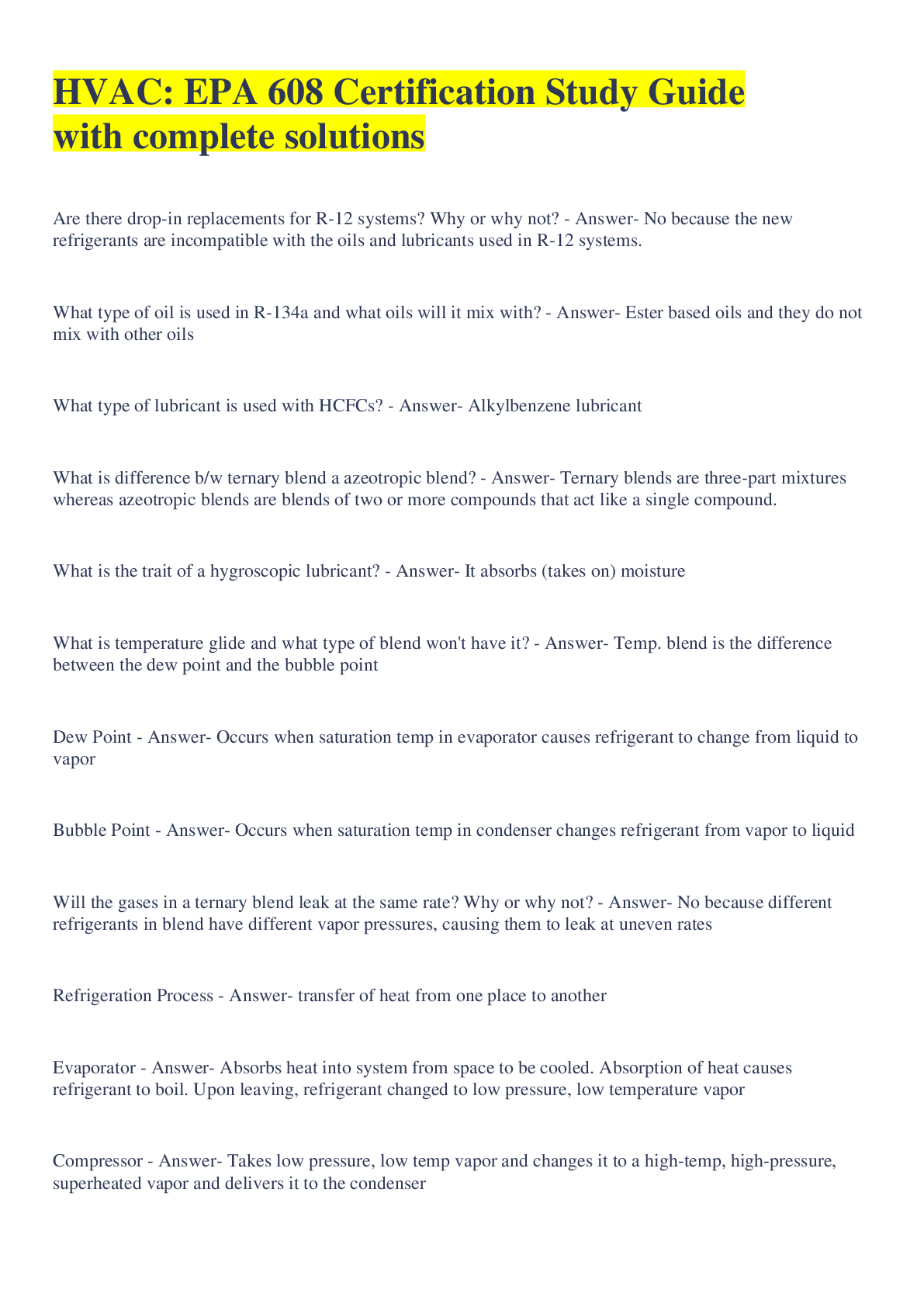
Are there drop-in replacements for R-12 systems? Why or why not? - Answer- No because the new refrigerants are incompatible with the oils and lubricants used in R-12 systems.
What type of oil is used in R-134a and wha
...
Are there drop-in replacements for R-12 systems? Why or why not? - Answer- No because the new refrigerants are incompatible with the oils and lubricants used in R-12 systems.
What type of oil is used in R-134a and what oils will it mix with? - Answer- Ester based oils and they do not mix with other oils
What type of lubricant is used with HCFCs? - Answer- Alkylbenzene lubricant
What is difference b/w ternary blend a azeotropic blend? - Answer- Ternary blends are three-part mixtures whereas azeotropic blends are blends of two or more compounds that act like a single compound.
What is the trait of a hygroscopic lubricant? - Answer- It absorbs (takes on) moisture
What is temperature glide and what type of blend won't have it? - Answer- Temp. blend is the difference between the dew point and the bubble point
Dew Point - Answer- Occurs when saturation temp in evaporator causes refrigerant to change from liquid to vapor
Bubble Point - Answer- Occurs when saturation temp in condenser changes refrigerant from vapor to liquid
Will the gases in a ternary blend leak at the same rate? Why or why not? - Answer- No because different refrigerants in blend have different vapor pressures, causing them to leak at uneven rates
Refrigeration Process - Answer- transfer of heat from one place to another
Evaporator - Answer- Absorbs heat into system from space to be cooled. Absorption of heat causes refrigerant to boil. Upon leaving, refrigerant changed to low pressure, low temperature vapor
Compressor - Answer- Takes low pressure, low temp vapor and changes it to a high-temp, high-pressure, superheated vapor and delivers it to the condenser
Condenser - Answer- Rejects heat from system and changes refrigerant from high-temp, high-pressure vapor into high-pressure, high-temp liquid
Metering Device - Answer- reduces pressure of refrigerant and changes the high-pressure, high-temp liquid into low pressure, low temp liquid.
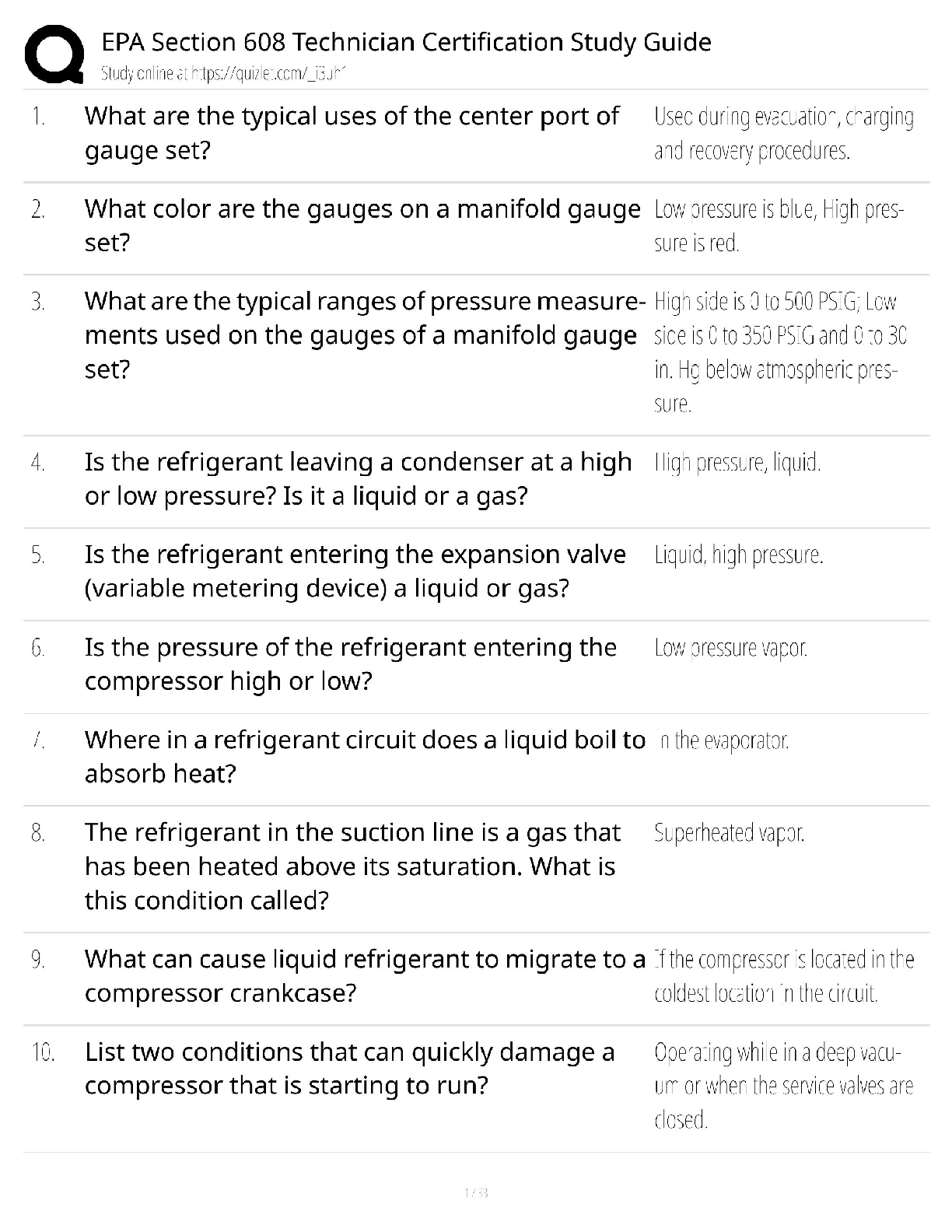
Compound Gauge - Answer- Typically blue and measures low pressure (psig) and vacuum (inHg).
High Pressure Gauge - Answer- Red and measures high side (discharge) pressure. 0 to 500 psi
What does a compressor compress? - Answer- Vapor
Why will refrigerant migrate to the crankcase in a compressor? - Answer- Because of the vapor pressure difference between refrigerant and oil
What color is the high pressure gauge? - Answer- Red
What color is the low pressure gauge? - Answer- Blue
What needs to happen if oil has been contaminated by burnout? - Answer- Triple evacuate system, install permanent filter-drier, conduct deep vacuum before recharging
What are three Rs of refrigeration? - Answer- Recover, recycle, reclaim
Recover - Answer- to remove any refrigerant in any condition from system and store in external container without necessarily testing or processing in any way
Recycle - Answer- To clean refrigerant for immediate reuse by separating oil from refrigerant and removing moisture and acidity from refrigerant by use of products like filter driers
Reclaim - Answer- To process refrigerant to level of new product specifications as determines by chemical analysis
What standards must refrigerant recovery equipment meet and what components must all Type I and Type II refrigerant systems have? - Answer- EPA-approved equipment testing organization. Service aperture or process stub
System-Dependent Devices - Answer- Capture refrigerant with assistance of compressor and/or pressure of refrigerant in appliances from which refrigerant is being recovered
Self-contained Devices - Answer- Have independent means to draw refrigerant out of appliances
What is nitrogen and a filter-drier used for after recovery? - Answer- Use nitrogen to flush debris out of system after recovering refrigerant. Filter-drier should be installed to trap any debris that may cause damage to new compressor
What must be done before starting an evacuation? - Answer- Recover all refrigerant and attain the mandated vacuum level
ASHRAE Standard 15-1994 - Answer- Requires refrigerant sensor that will sound alarm and automatically start ventilation system in occupied equipment rooms where refrigerant from leak will concentrate
How often should refillable cylinders be hydrostatically tested? - Answer- 5 years
What are the three ways you can control fill level of refillable cylinder? - Answer- Mechanical floats, electronic floats, or weight
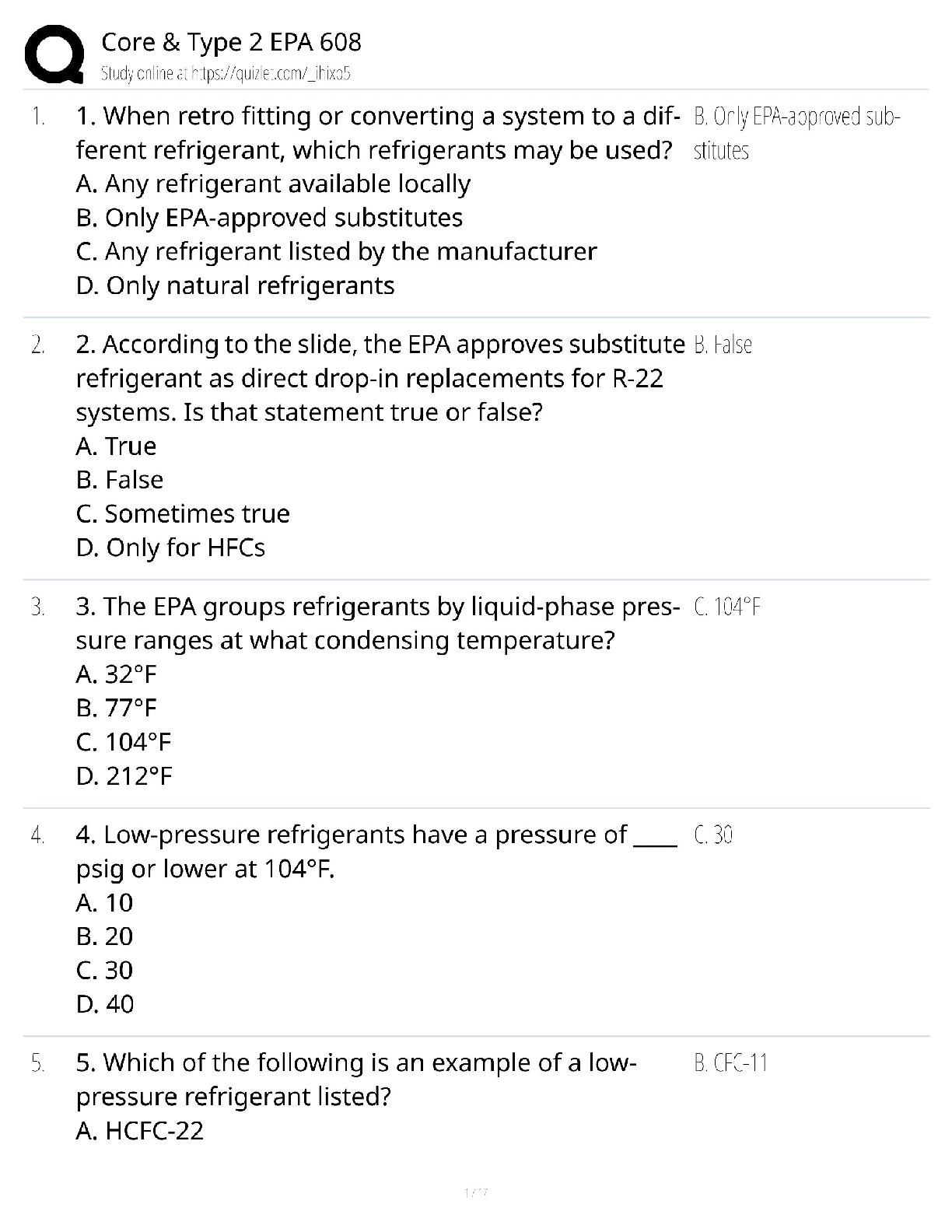
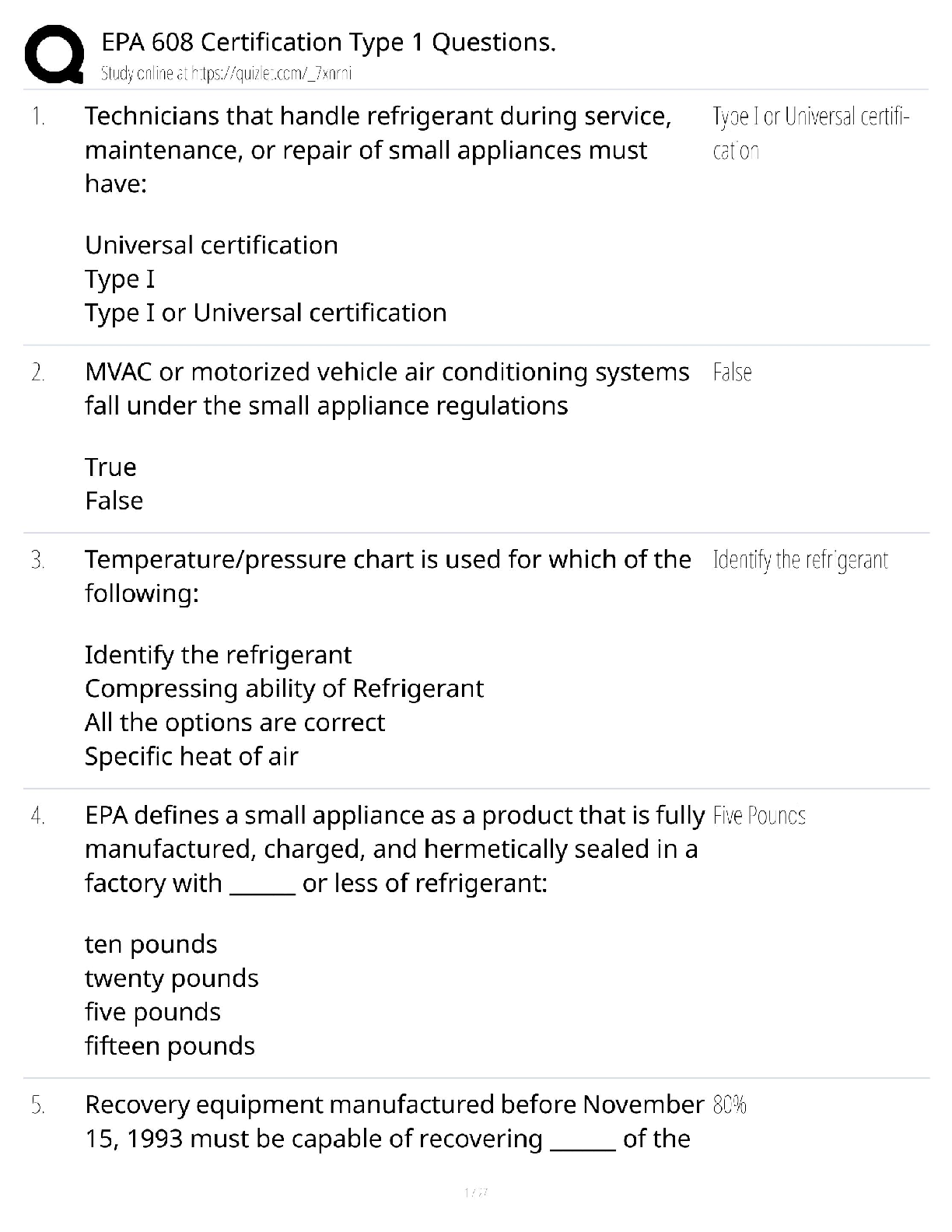
What is the EPA definition of a small appliance? - Answer- One that is manufactured, charged, and hermetically sealed in factory and contains five lbs. or less of refrigerant
What standards must recovery equipment manufactured before Nov. 15th, 1993 meet? - Answer- Capable of recovering 80% of refrigerant whether or not compressor is operating or achieve a 4-inch vacuum under conditions of ARI 740
What standards must recovery equipment manufactured AFTER Nov. 15th, 1993 meet? - Answer- Capable of recovering 80% of refrigerant without compressor operating or achieve 4-inch vacuum under conditions of ARI 740; be capable of recovering 90% of refrigerant with compressor operating or achieve 4-inch vacuum under conditions of ARI 740; and must be approved by EPA approved third-party laboratory
Low-loss Fittings - Answer- Can be manually or automatically closed when disconnecting hoses in order to prevent refrigerant loss
Service Aperture - Answer- Typically straight piece of tubing that is entered with piercing access valve
Find the pressure for R-12 at 80 degrees F. - Answer- 84.4 psi
Find pressure for R-22 at 70 degree F. - Answer- 121.4 psi
R-134A at 90 degree F - Answer- 104.3 psi
What might happen if cylinder containing mixed refrigerants is given to reclamation center? - Answer- Refuse to process it and ship back to sender or destroy it for a substantial fee
What is difference between self-contained recovery tank and system-dependent recovery tank? - Answer- A self-contained recovery tank uses its own power to recover refrigerant from systems and is capable of reaching required recovery rates with or without compressor operating. Stores in pressurized tank.
A system-dependent recovery tank captures refrigerant into a non-pressurized container. Uses system's compressor, an external heat source, or vacuum pump to recover refrigerant.
What are two things that can cause high discharge pressures? - Answer- Not opening tank inlet valve or having excess air will cause higher d
[Show More]