List seven variations in the nurse's individual style that are appropriate wen examining older adults. (7)
a. Do not stereotype about aging patients's level of cognition
b. Be sensitive to sensory or physical limitat
...
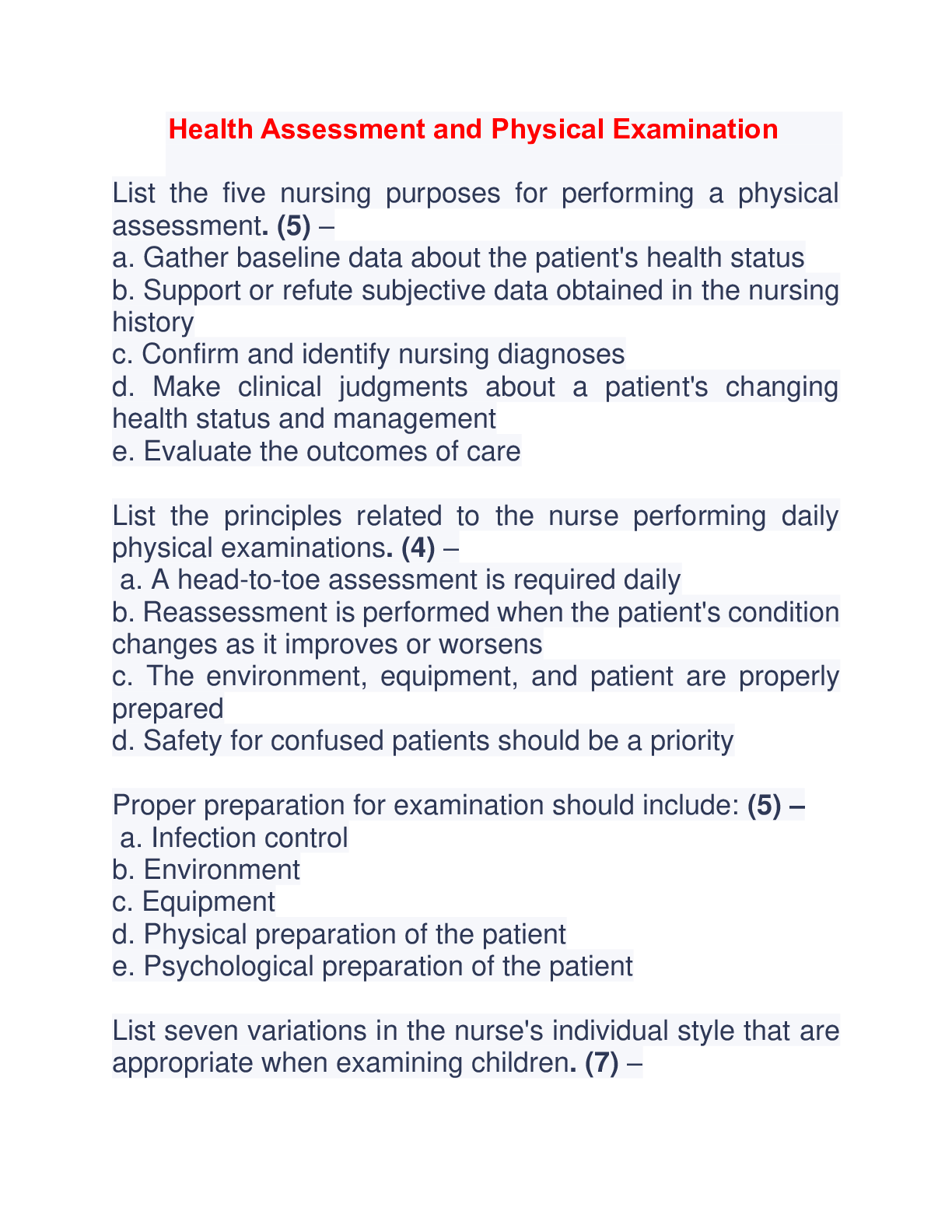
List seven variations in the nurse's individual style that are appropriate wen examining older adults. (7)
a. Do not stereotype about aging patients's level of cognition
b. Be sensitive to sensory or physical limitations (more time)
c. Adequate space is needed
d. use patience, allow for pauses, and observe for details
e. Certain types of information may be stressful to give
f. Perform the examination near bathroom facilities
g. Be alert for signs of increasing fatigue
Identify the principles to follow to keep an examination well organized. (7) –
a. Compare both sides for symmetry
b. If a patient is ill, first assess the systems of the body part most at risk
c. Offer rest periods if the patient becomes fatigued
d. Perform painful procedures near the end of the examination
e. Record assessments in specific terms in the record
f. Use common and accepted medical terms and abbreviations
g. Record quick notes during the examination to avoid delays
Define inspection. - Looking, listening, and smelling to distinguish normal from abnormal findings
Identify the guidelines to achieve the best results during inspection. (6)
a. Adequate lighting is available
b. Use direct light source
c. Inspect each area for size, shape, color, symmetry, position, and abnormality
d. Position and expose body parts as needed, maintaining privacy
e. Check for side-to-side symmetry
f. Validate findings with the patient
Define
palpation - Using the hands to touch body parts.
Light palpation - Pressing inward 1 cm (superficial)
Deep palpation - Depressing the area 4 cm to assess the conditions of organs.
[Show More]