NSG 6001 Final Exam 1 (Questions and Answers)
NSG 6001 Final Exam
Maintenance of an Isometric ST-segment during exercise is the response of?
Student Answer: An abnormal heart
A normal heart (Maintenanc
...
NSG 6001 Final Exam 1 (Questions and Answers)
NSG 6001 Final Exam
Maintenance of an Isometric ST-segment during exercise is the response of?
Student Answer: An abnormal heart
A normal heart (Maintenance of an Isometric ST-segment during exercise is the response of a normal heart. )
CAD
Hypo profusion
Points Received: 5 of 5
Comments:
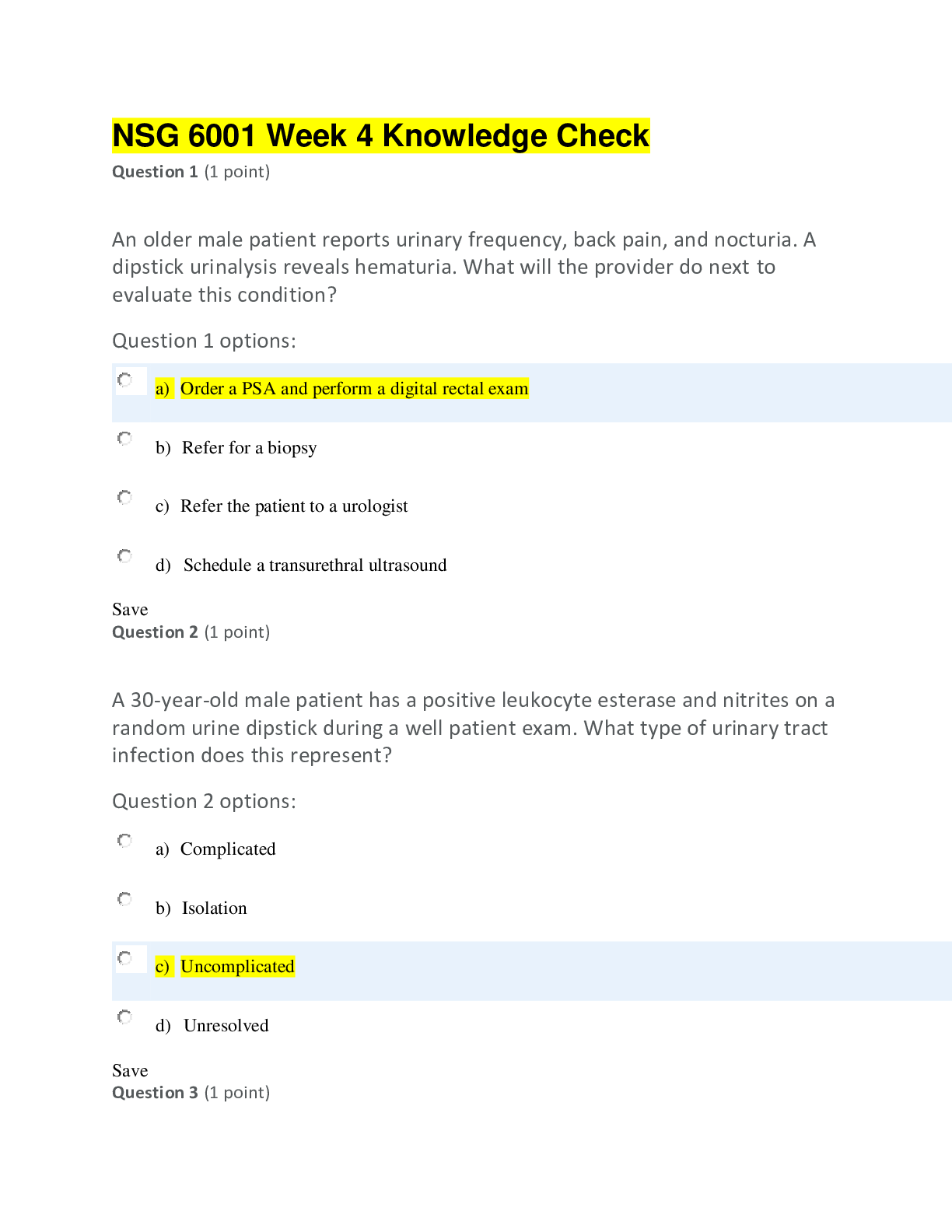
Question 2. Question : What is one of the common causes of a Saccular Abdominal Aneurysm?
Student Answer: Drugs: illicit and prescribed
Age
Trauma (One of the common causes of a saccular abdominal aneurysm is trauma.)
Poor kidney functioning
Points Received: 5 of 5
Comments:
Question 3. Question : Your patient of 58 years of age has chronic hypertension. You follow the guidelines for management as described by the American Heart Association and now have your patient fully medicated and dosed with three separate antihypertensive medications without control of the blood pressure. What should be your next step in the management of this patient?
Student Answer: Increase exercise recommendations to include marathons
Add a fourth agent
Physician consult (As a nurse practitioner it is important to know when to seek consultation with a physician. The next step would be a physician consult after prescribing three antihypertensive agents.)
Continue to observe for an additional three months without any changes
Points Received: 0 of 5
Comments:
Question 4. Question : The diagnostic accuracy of stress testing is decreased among women compared to men for what reasons?
Student Answer: Women cannot exercise as vigorously as men
Women typically have multiple vessel disease
Women having thinner ventricular and septal muscles
Women usually have single vessel or non-obstructive disease (The diagnostic accuracy of stress testing is decreased among women compared to men because women usually have single vessel or non-obstructive disease.)
Points Received: 5 of 5
Comments:
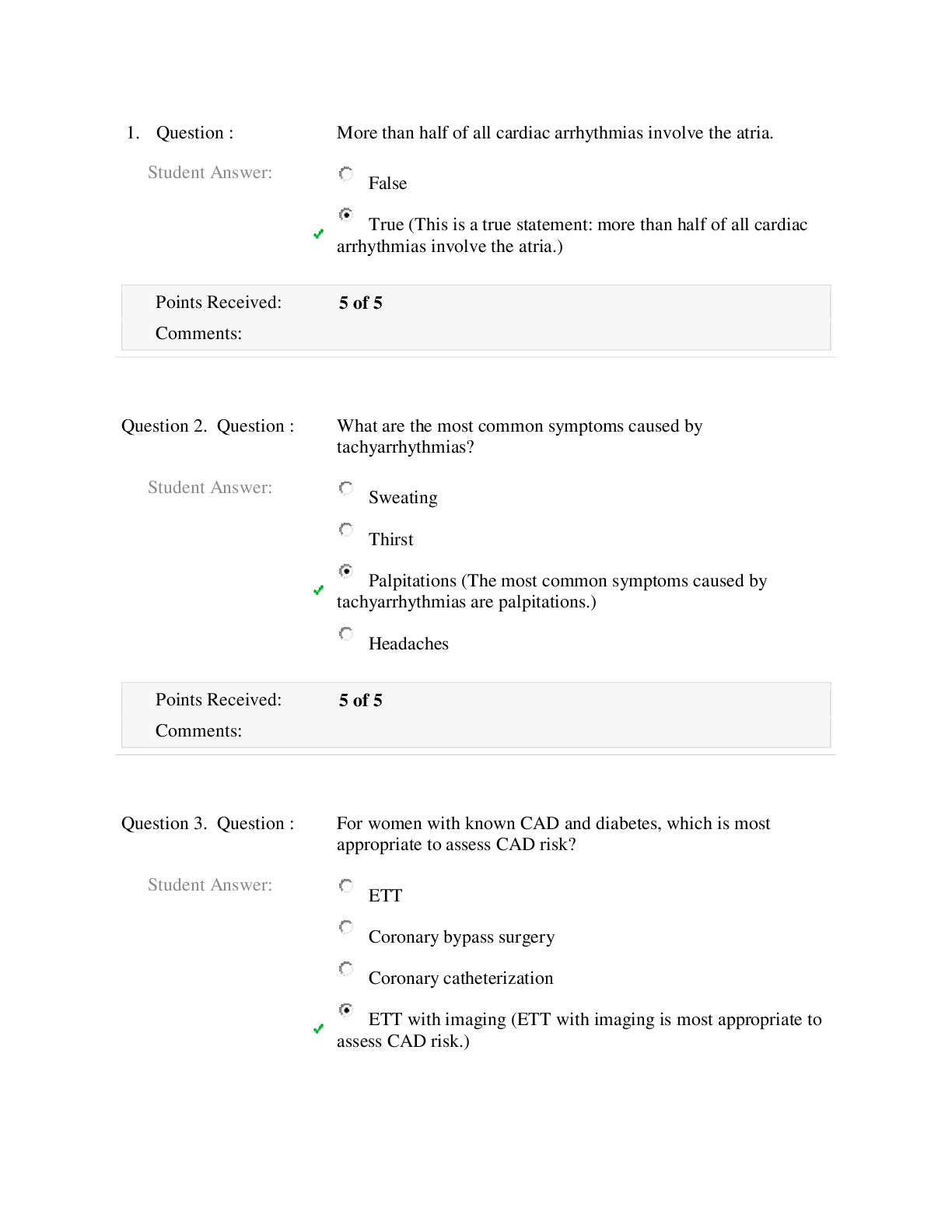
Question 5. Question : Any patient presenting with symptomatic bradycardia should be referred to a cardiologist for management. Is this statement true or false?
Student Answer: False
True (This statement is true: any patient presenting with symptomatic bradycardia should be referred to a cardiologist for management.)
Points Received: 5 of 5
Comments:
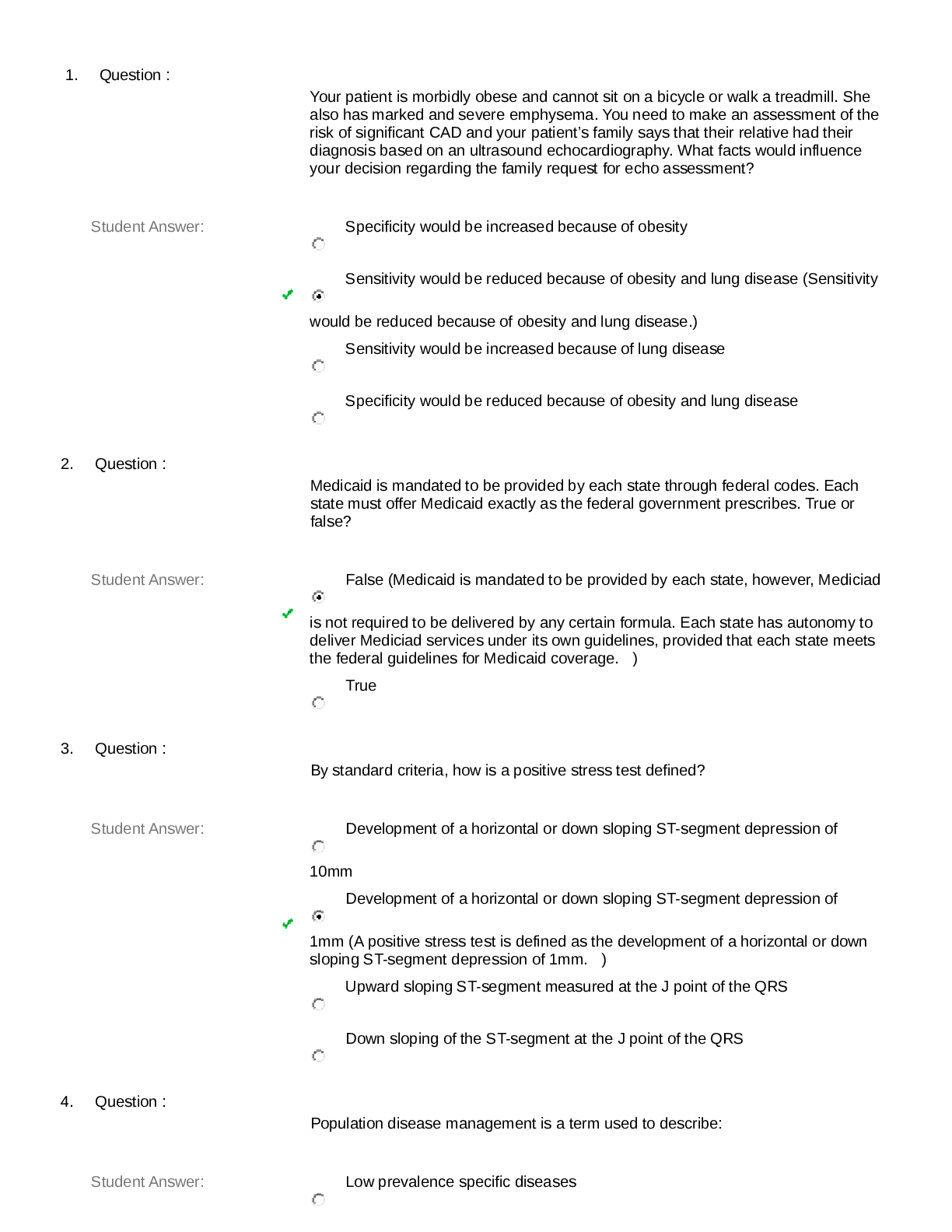
Question 6. Question : Chronic, non-communicable diseases account for disproportionate costs to the healthcare system. According to the World Health Organization, what percent of preventable deaths and disabilities occur in the Americas related to chronic non-communicable diseases?
Student Answer: 80%-90%
60%-70% (According to the World Health Organization, 60%--7 0% of preventable deaths and disabilities occur in the Americas related to chronic non-communicable diseases.
)
10%-15%
35%-45%
Points Received: 5 of 5
Comments:
Question 7. Question : On the echocardiography during the ETT you notice the following change: abnormal left ventricular ejection fraction. What do these changes suggest related to this patient?
Student Answer: Ischemia of the myocardium (Abnormal left ventricular ejection fraction suggests ischemia of the myocardium.)
Weak ventricular muscles
Rise in heart rate without evidence of ischemia
Non-ischemic changes of the baseline ECG
Points Received: 5 of 5
Comments:
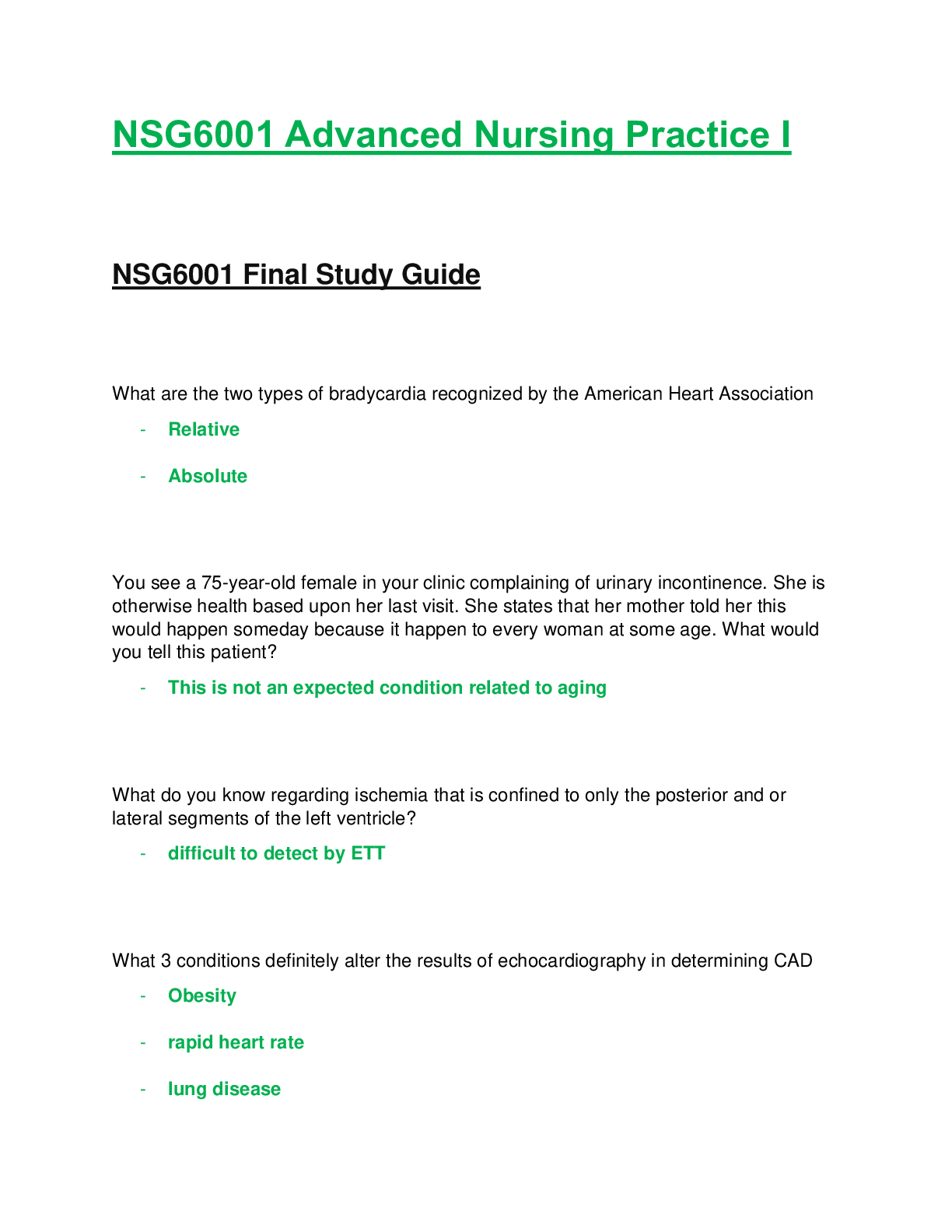
Question 8. Question : What are the two types of bradycardia recognized by the American Heart Association?
Student Answer: Relative and dynamic
Absolute and pending
Refractory and non-refractory
Relative and absolute (The two types of bradycardia recognized by the American Heart Association are relative and absolute.)
Points Received: 5 of 5
Comments:
Question 9. Question : Aortic aneurysms are described based on their shape. Aneurysms may be fusiform or saccular. When an aneurysm forms as a weakness or bleb on one side of the aorta, it is described as what form of aneurysm?
Student Answer: Fusiform
Saccular (When an aneurysm forms as a weakness or bleb on one side of the aorta, it is described as saccular form of aneurysm.)
Points Received: 5 of 5
Comments:
Question 10. Question : There is a wide range of antibiotic agents that can be selected to treat a urinary tract infection. Unfortunately, there is often failure of treatment noticed. From the list below, which would be considered a common reason for treatment failure in UTI?
Student Answer: Race or ethnicity of patient
Inadequate treatment duration (A common reason for treatment failure in UTI inadequate treatment duration.)
Therapeutic dosing of the antibiotic
Selecting the appropriate antibiotic the first time
Points Received: 0 of 5
Comments:
Question 11. Question : You see a 60-year old African American male in your clinic with a recent diagnosis of hypertension. He asks you what he should restrict in his diet, and is particularly interested in limiting his sodium intake. What amount of sodium intake would you recommend on a daily basis for this patient?
Student Answer: 3.0 g/day
No added table salt
2.3 g/day
1.5 g/day (The recommended daily intake is 1.5g per day.)
Points Received: 5 of 5
Comments:
Question 12. Question : A 35 year old female arrives at your clinic. She has had diabetes and peripheral artery disease for the past 5 years. You decide to obtain an ETT. The insurance company argues that this is inappropriate. You justify the ETT because you are planning secondary strategies to prevent future heart disease. Where could one find the supporting data for these guidelines?
Student Answer: Medicaid guidelines
Medicare guidelines
Do not exist
Framingham risk score (These guidelines come from the Framingham risk score.)
Points Received: 5 of 5
Comments:
Question 13. Question : A 65-year old white male arrives in your clinic with general complaints of slight abdominal discomfort. He has a known history of smoking two packs per day for 40 years and hypertension. He also has COPD and has been treated numerous times with oral steroids. You consider several optional diagnoses. Of the ones listed below, which should be included as a potential top suspect in your choice of diagnosis?
Student Answer: Appendicitis
Abdominal aortic aneurysm (Abdominal aortic aneurysm should be included as a potential top suspect in your choice of diagnosis.)
Chronic bowel obstruction
Meglacolon
Points Received: 5 of 5
Comments:
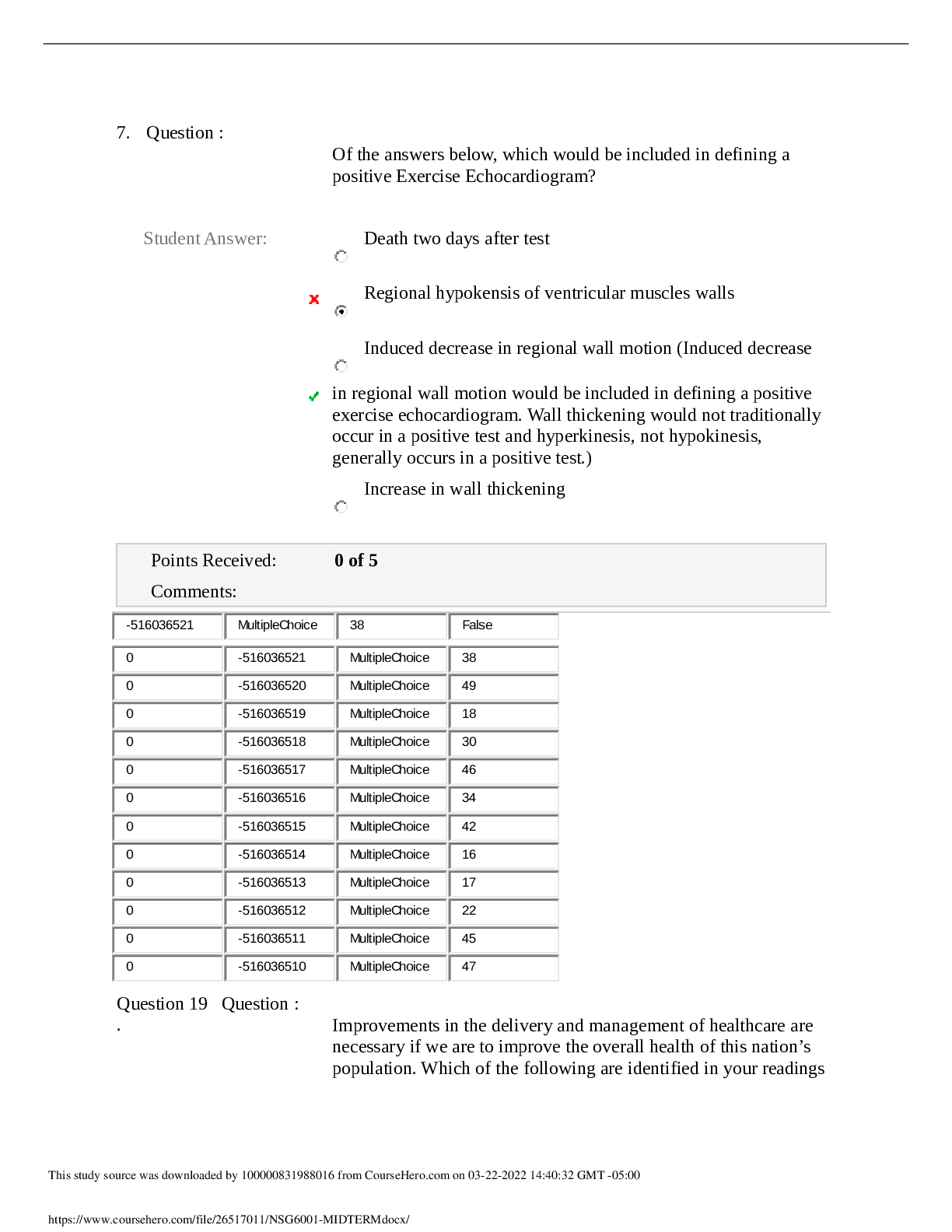
Question 14. Question : Of the answers below, which would be included in defining a positive Exercise Echocardiogram?
Student Answer: Induced decrease in regional wall motion (Induced decrease in regional wall motion would be included in defining a positive exercise echocardiogram. Wall thickening would not traditionally occur in a positive test and hyperkinesis, not hypokinesis, generally occurs in a positive test.)
Regional hypokensis of ventricular muscles walls
Increase in wall thickening
Death two days after test
Points Received: 5 of 5
Comments:
Question 15. Question : You receive a report back on the suspected abdominal aortic aneurysm for your patient. It confirms your suspicion of AAA. The report describes the aneurysm as a symmetric weakness of the entire circumference of the aorta. You know that this form of aneurysm is referred to as what kind of aneurysm?
Student Answer: Fusiform aneurysm (This form of aneurysm is referred to as a fusiform aneurysm.)
Saccular aneurysm
Thoracic aneurysm
Budging sac aneurysm
........continued
[Show More]