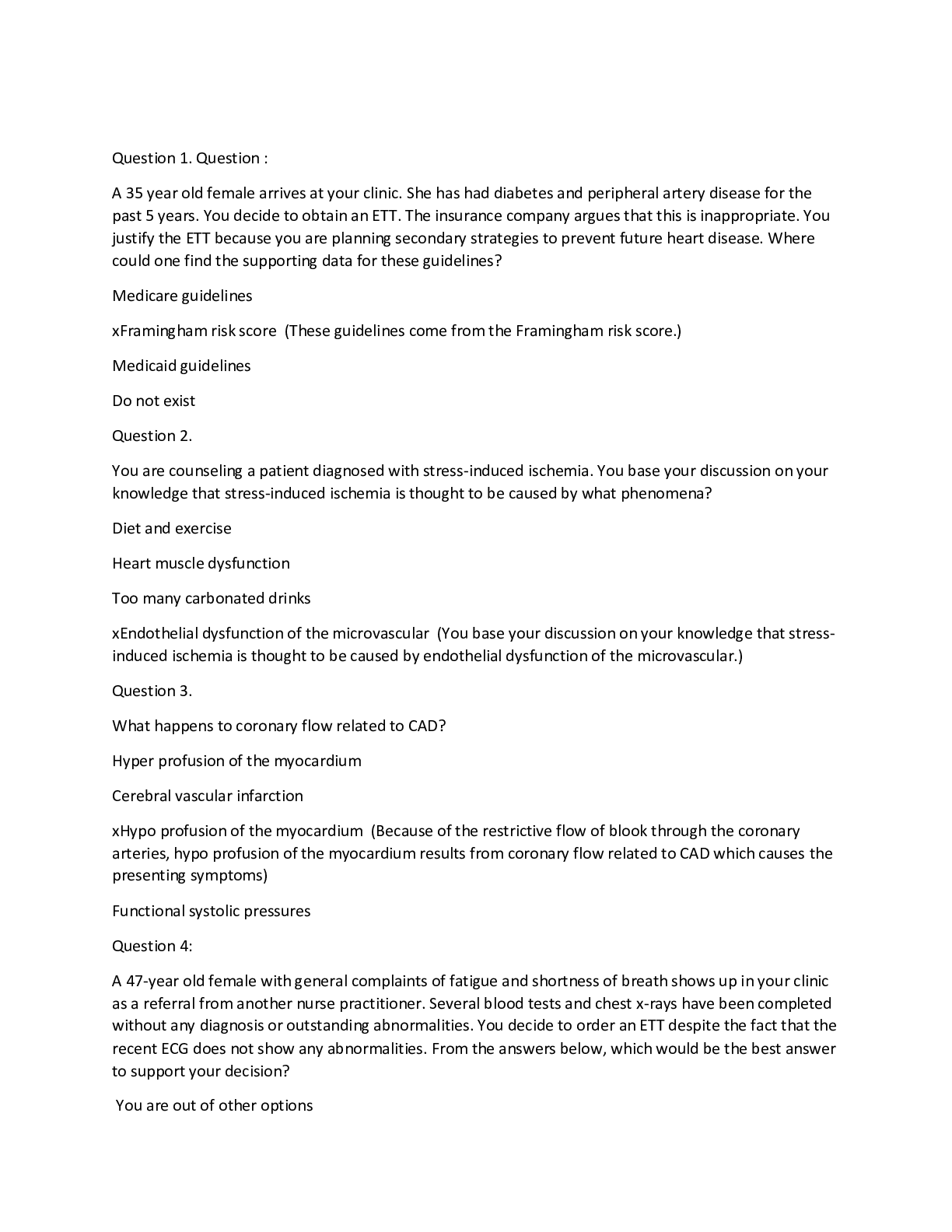
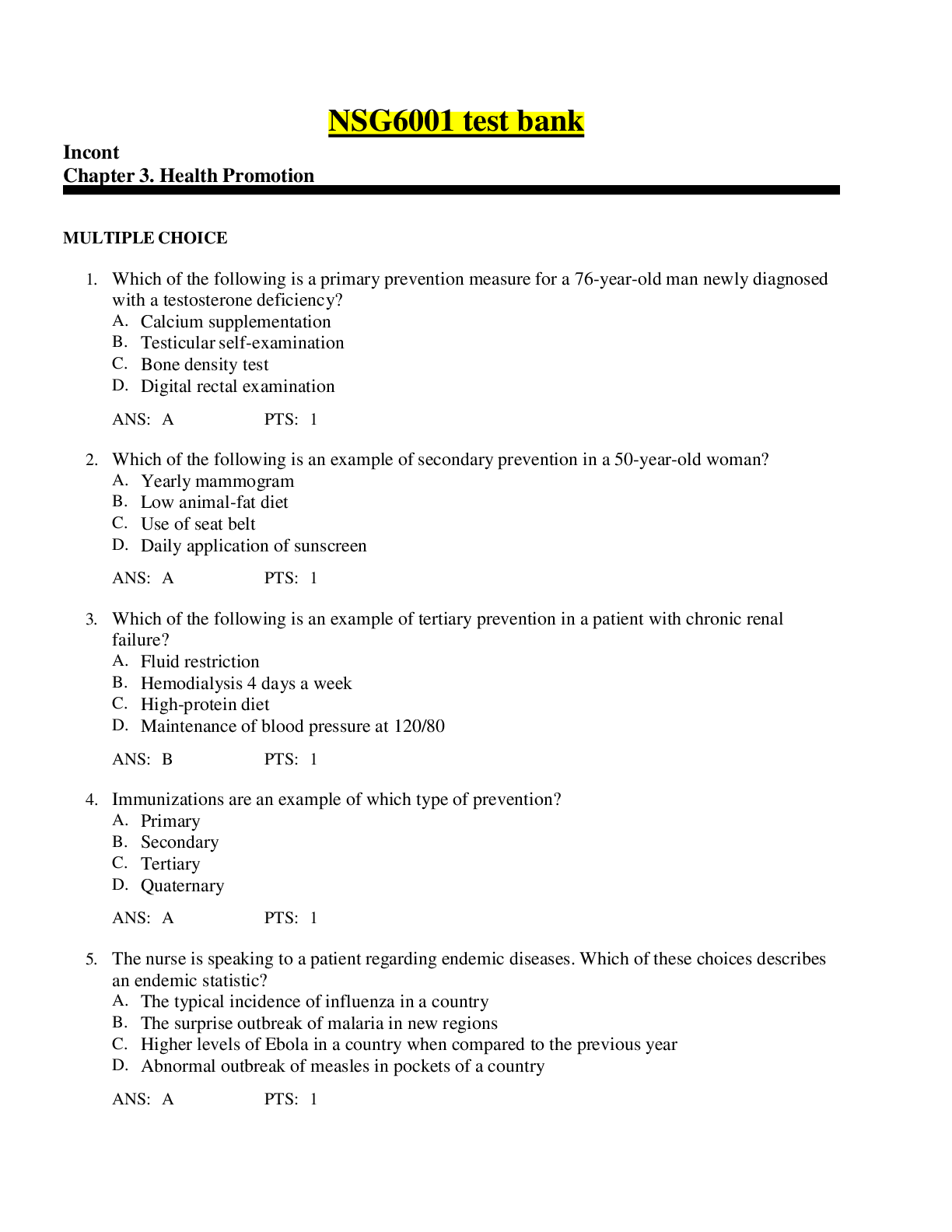
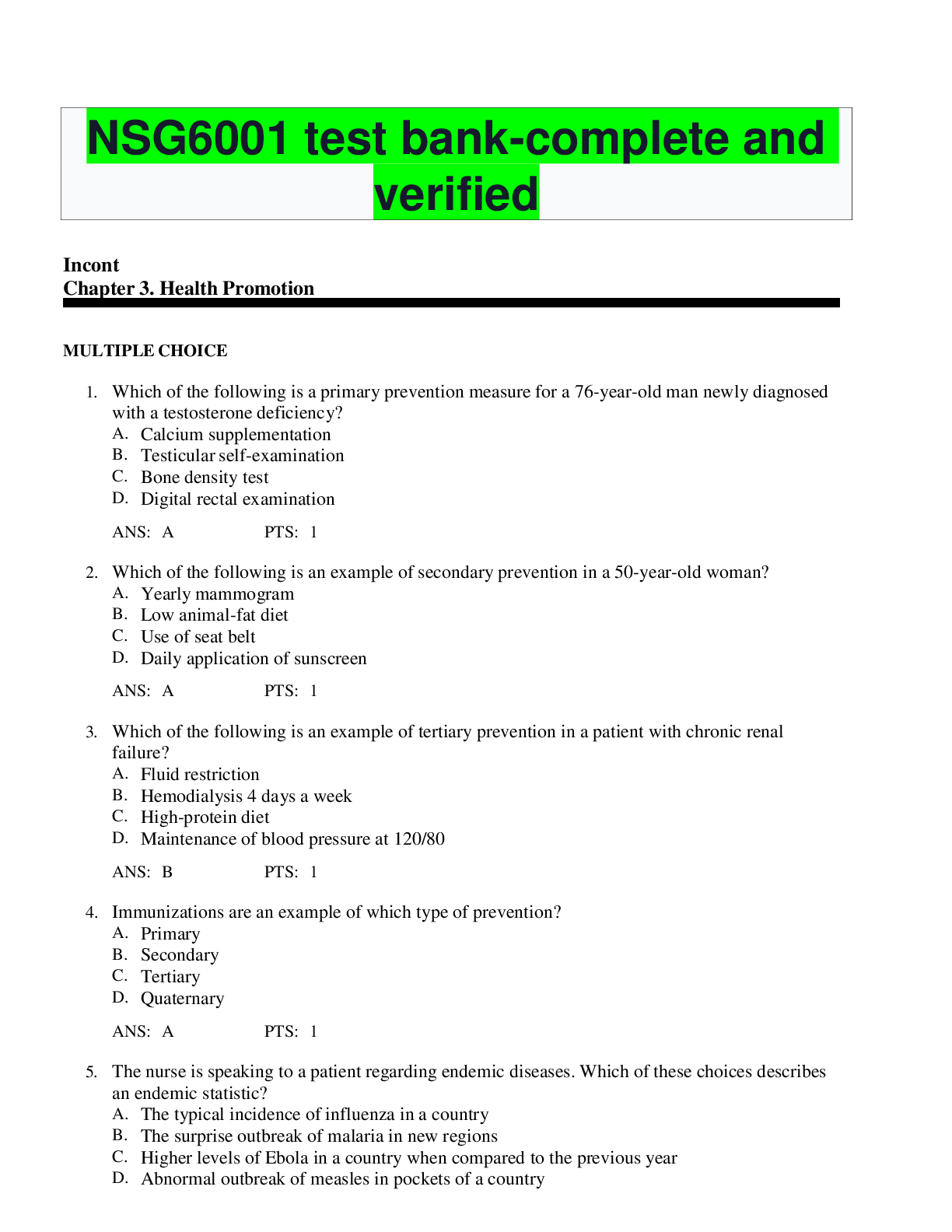
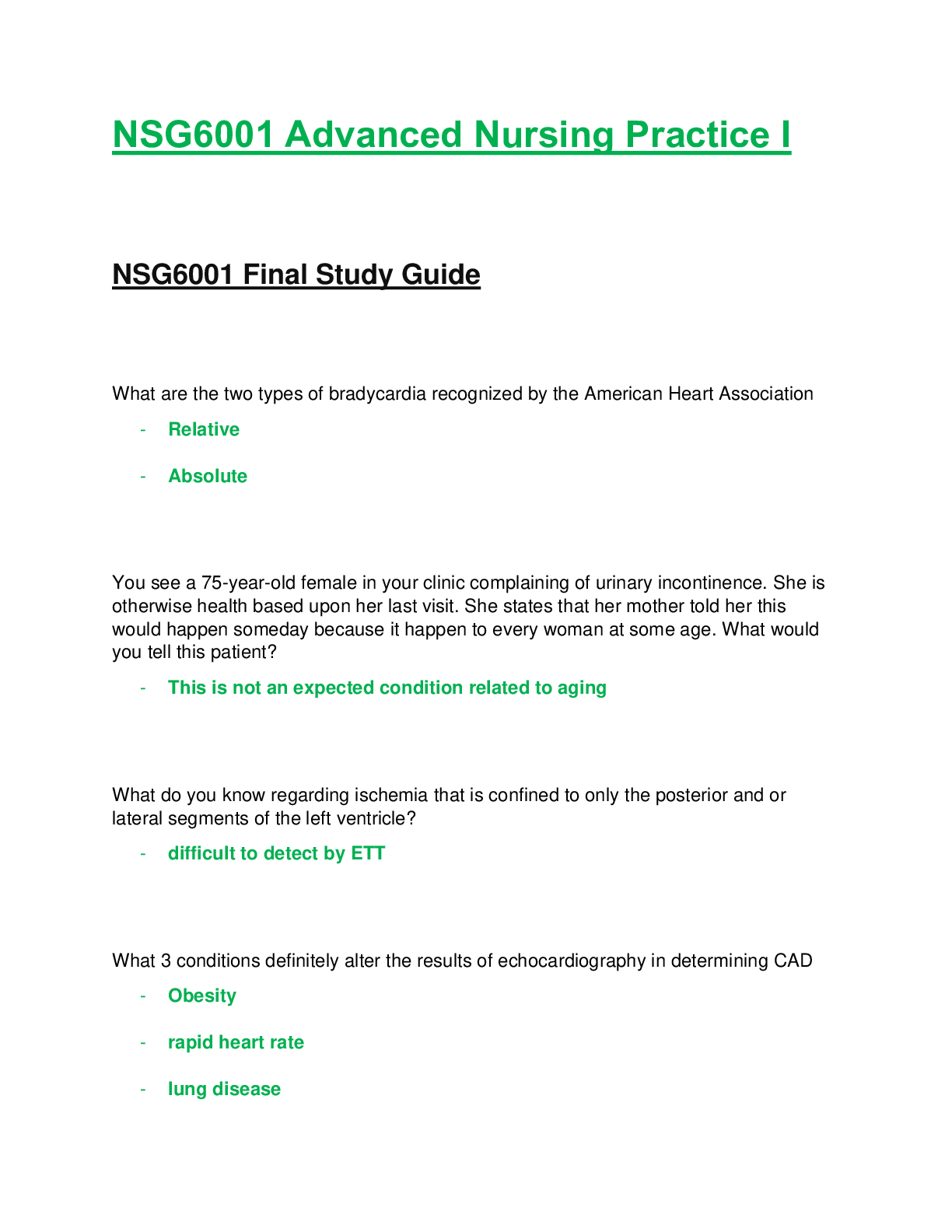
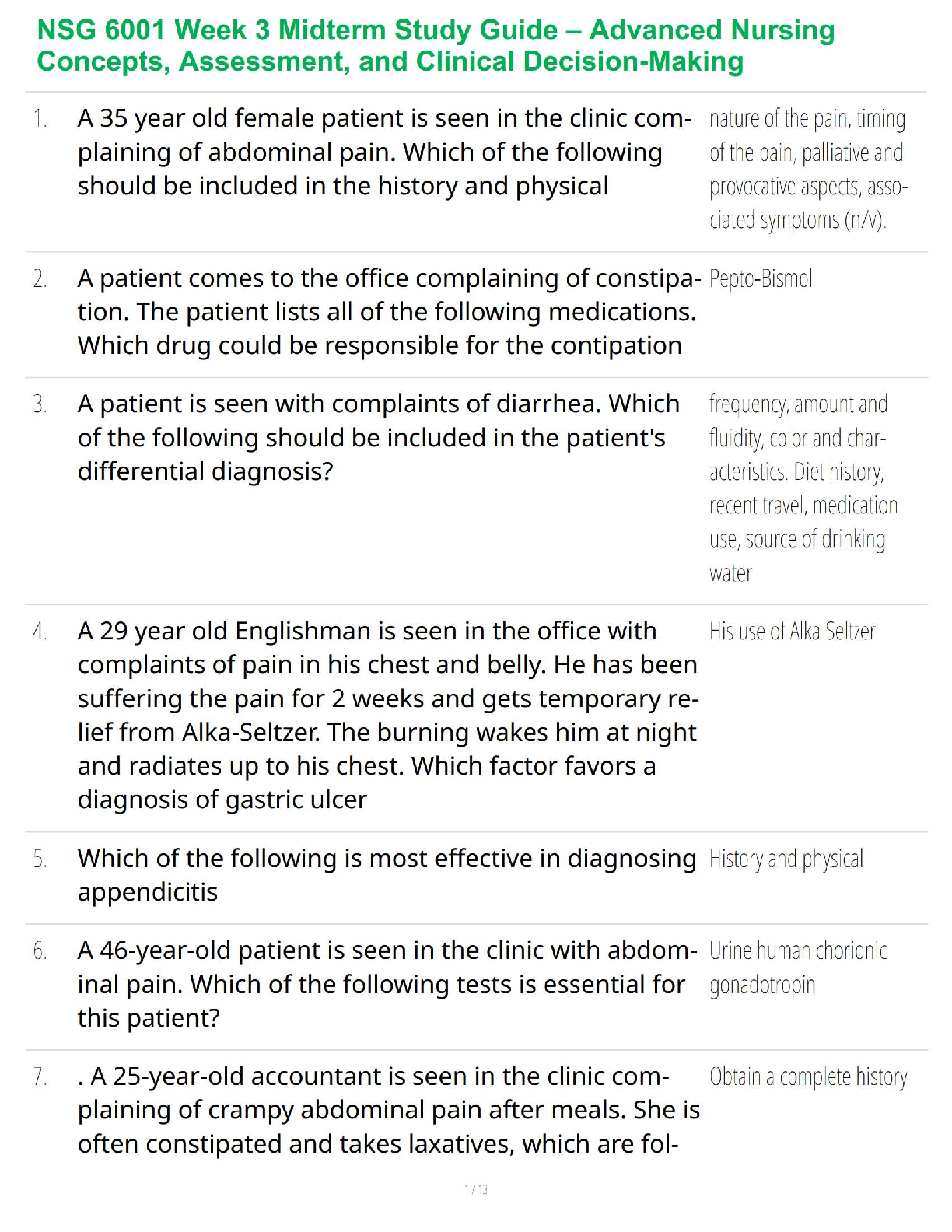
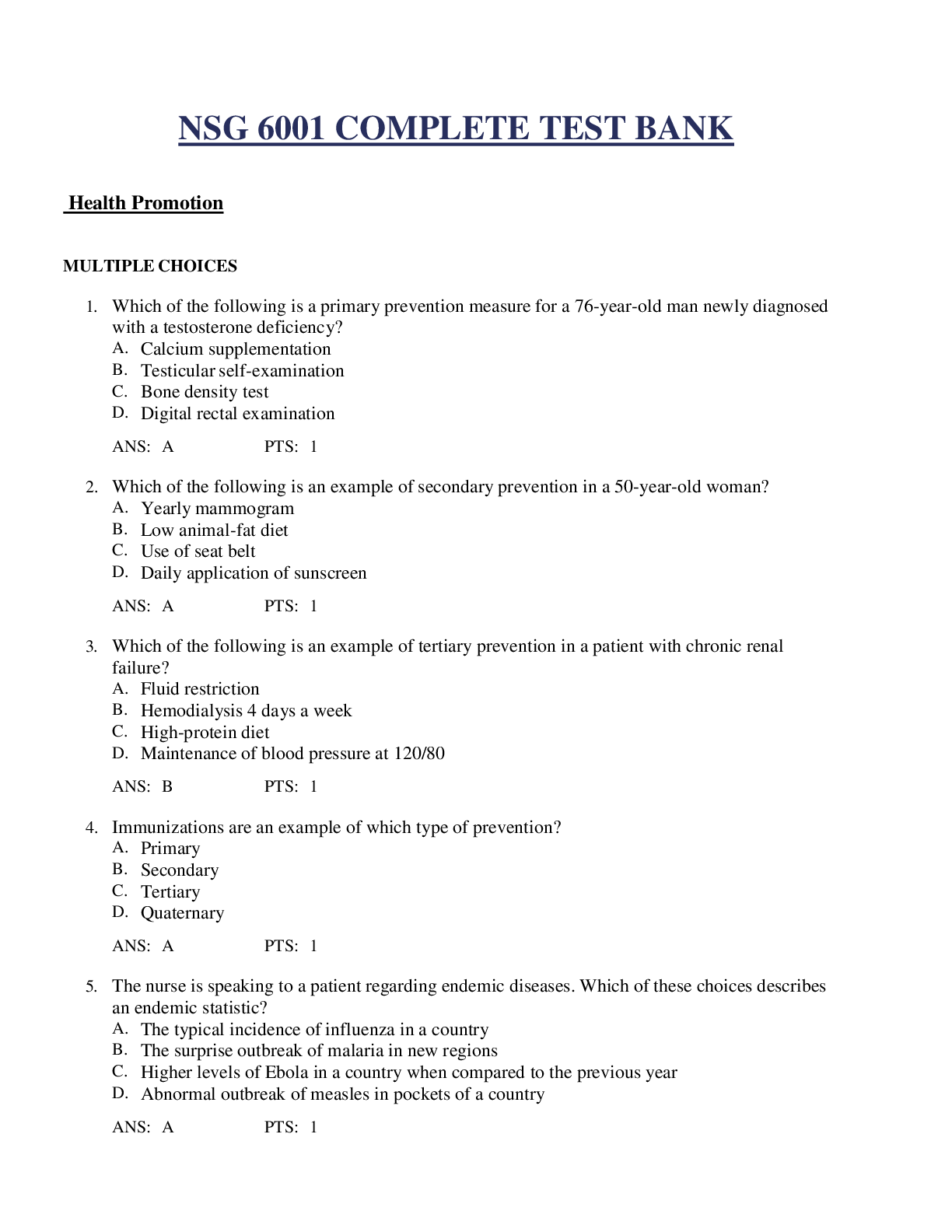
NSG 6001 Midterm Exam 2 Question 1. Question : A 35 year old female arrives at your clinic. She has had diabetes and peripheral artery disease for the past 5 years. You decide to obtain an ETT. T ... he insurance company argues that this is inappropriate. You justify the ETT because you are planning secondary strategies to prevent future heart disease. Where could one find the supporting data for these guidelines? Medicare guidelines xFramingham risk score (These guidelines come from the Framingham risk score.) Medicaid guidelines Do not exist Question 2. You are counseling a patient diagnosed with stress-induced ischemia. You base your discussion on your knowledge that stress-induced ischemia is thought to be caused by what phenomena? Diet and exercise Heart muscle dysfunction Too many carbonated drinks xEndothelial dysfunction of the microvascular (You base your discussion on your knowledge that stress-induced ischemia is thought to be caused by endothelial dysfunction of the microvascular.) Question 3. What happens to coronary flow related to CAD? Hyper profusion of the myocardium Cerebral vascular infarction xHypo profusion of the myocardium (Because of the restrictive flow of blook through the coronary arteries, hypo profusion of the myocardium results from coronary flow related to CAD which causes the presenting symptoms) Functional systolic pressures Question 4: A 47-year old female with general complaints of fatigue and shortness of breath shows up in your clinic as a referral from another nurse practitioner. Several blood tests and chest x-rays have been completed without any diagnosis or outstanding abnormalities. You decide to order an ETT despite the fact that the recent ECG does not show any abnormalities. From the answers below, which would be the best answer to support your decision? You are out of other options Women present with the same pattern of CAD as do males xCAD in women is under diagnosed (You make this choice because you are aware that CAD in women is under diagnosed.) To please the patient Question 5: You are in the clinic with your mentor observing the Echocardiogram exercise test of a 45-year old male that has been experiencing slight chest pressure almost daily during exercise. While observing your patient, your mentor points out that the left ventricle wall is thinning and there is some hyperkinesias of the ventricular wall. From your time in the clinic, you know that this test will be considered to be what type of result? Impossible Negative xPositive (From your time in the clinic, you know because of wall thinning and hyperkinesis that this test will be considered to be positive.) Non-readable Question 6: On the echocardiography during the ETT you notice the following change: abnormal left ventricular ejection fraction. What do these changes suggest related to this patient? Non-ischemic changes of the baseline ECG xIschemia of the myocardium (Abnormal left ventricular ejection fraction suggests ischemia of the myocardium.) Rise in heart rate without evidence of ischemia Weak ventricular muscles Question 7: Population disease management is a term used to describe: High specificity disease states Low specificity diseases states Low prevalence specific diseases xHigh prevalence specific diseases (Population disease management is a term used to describe the high prevalence of specific diseases.) Question 8: Why would inability to exercise reduce the specificity of the routine ETT? ......continued [Show More]
Last updated: 3 years ago
Preview 1 out of 9 pages
Buy this document to get the full access instantly
Instant Download Access after purchase
Buy NowInstant download
We Accept:
NSG 6001 Midterm Exam (03 Versions)
By YourTutor 4 years ago
$30.5
3
Can't find what you want? Try our AI powered Search
Connected school, study & course
About the document
Uploaded On
Feb 12, 2021
Number of pages
9
Written in
All
This document has been written for:
Uploaded
Feb 12, 2021
Downloads
0
Views
86
Scholarfriends.com Online Platform by Browsegrades Inc. 651N South Broad St, Middletown DE. United States.
We're available through e-mail, Twitter, Facebook, and live chat.
FAQ
Questions? Leave a message!
Copyright © Scholarfriends · High quality services·