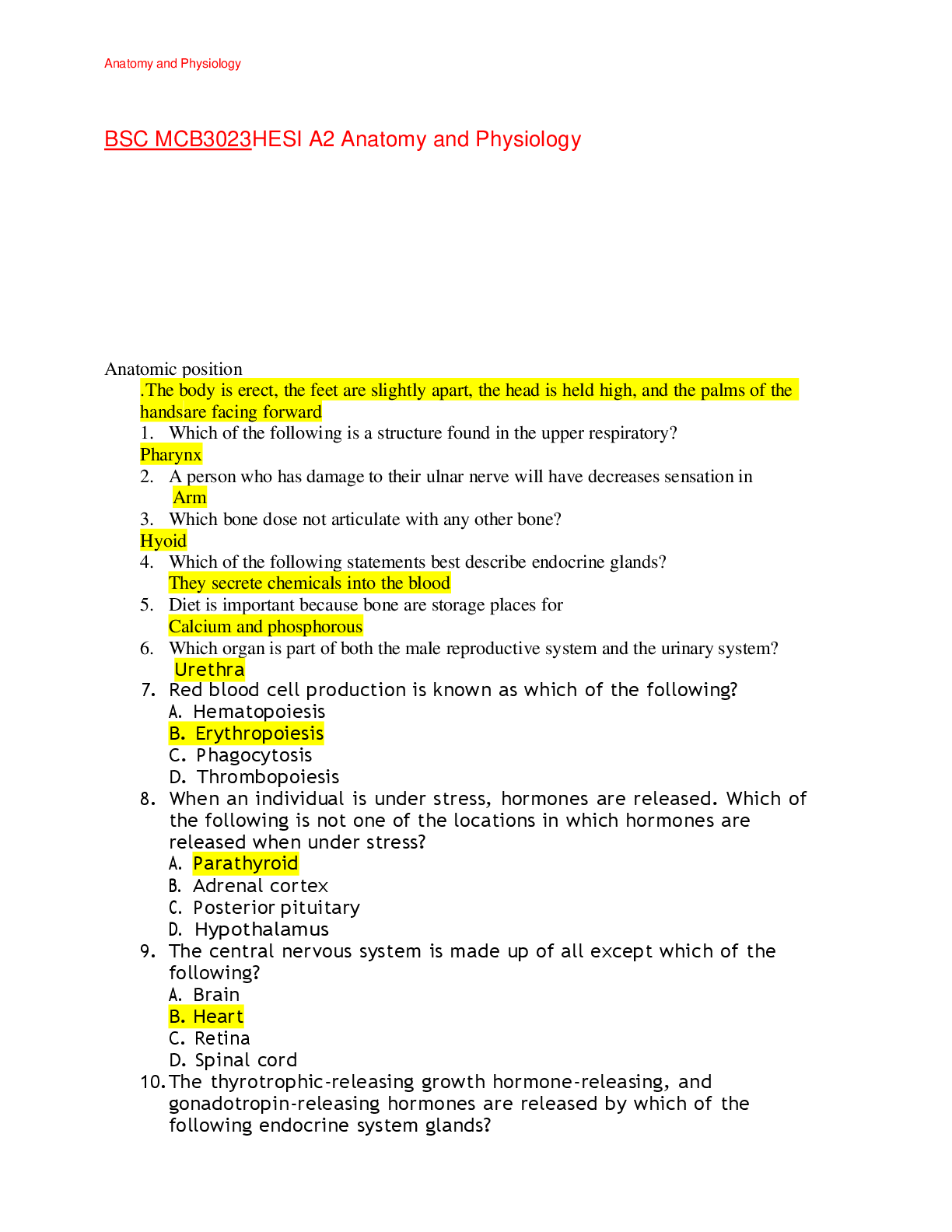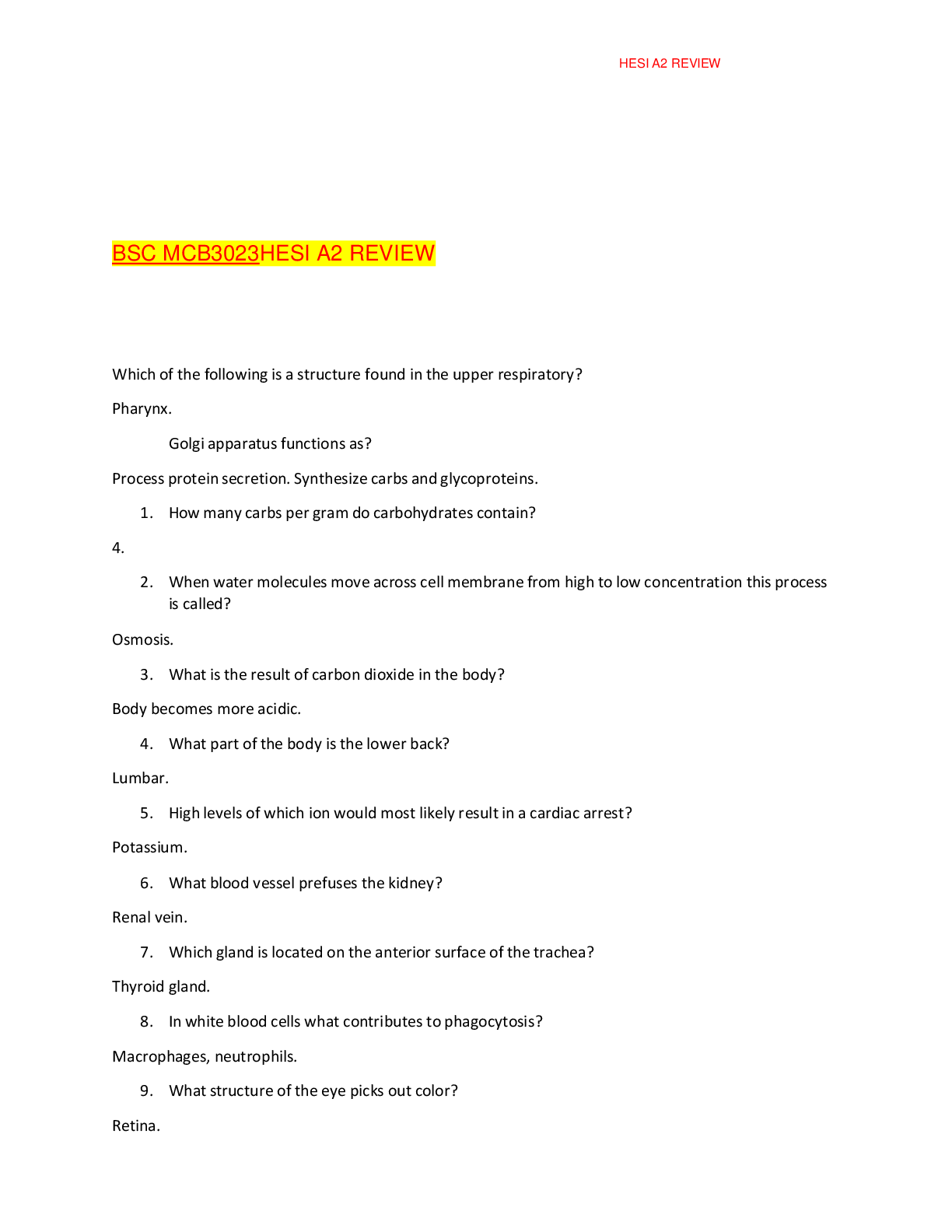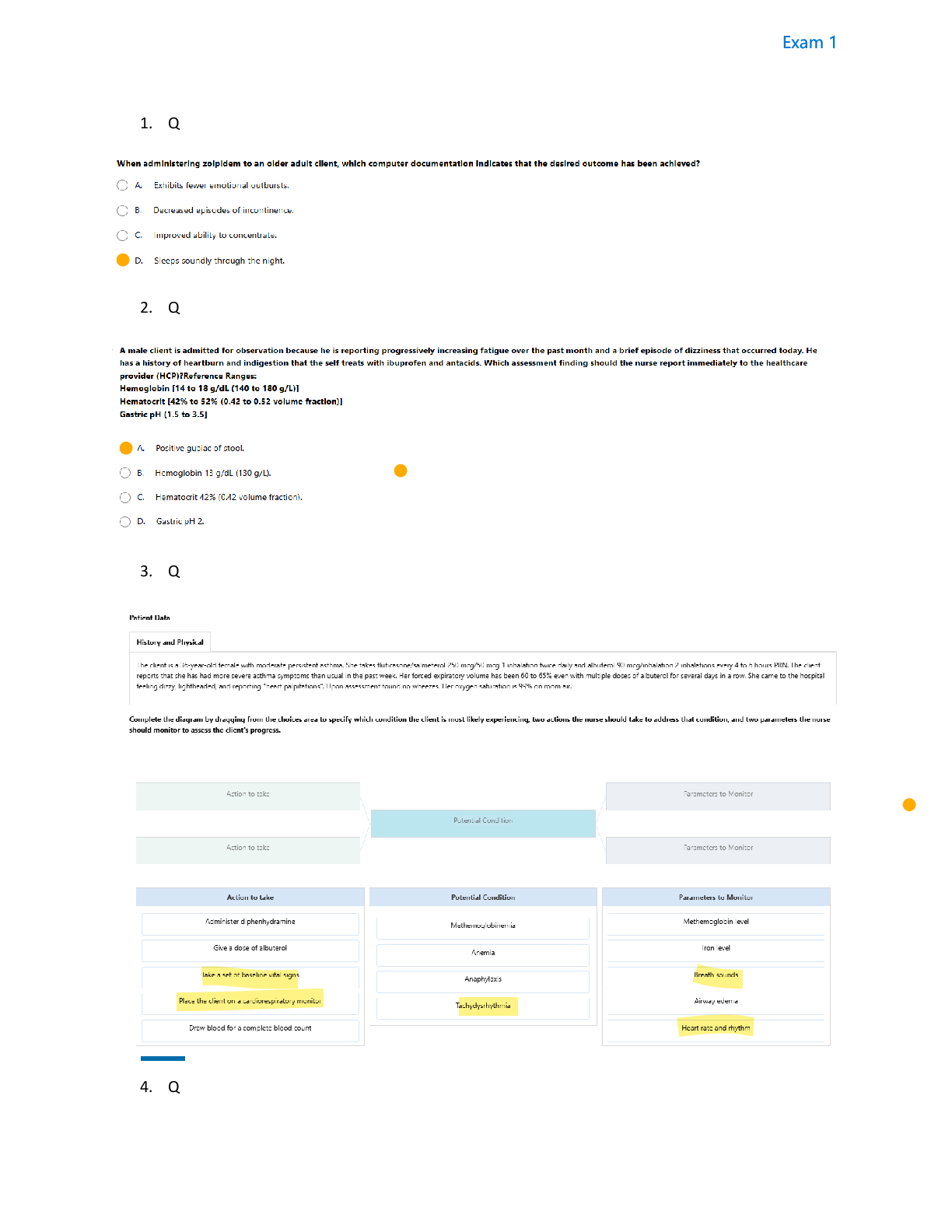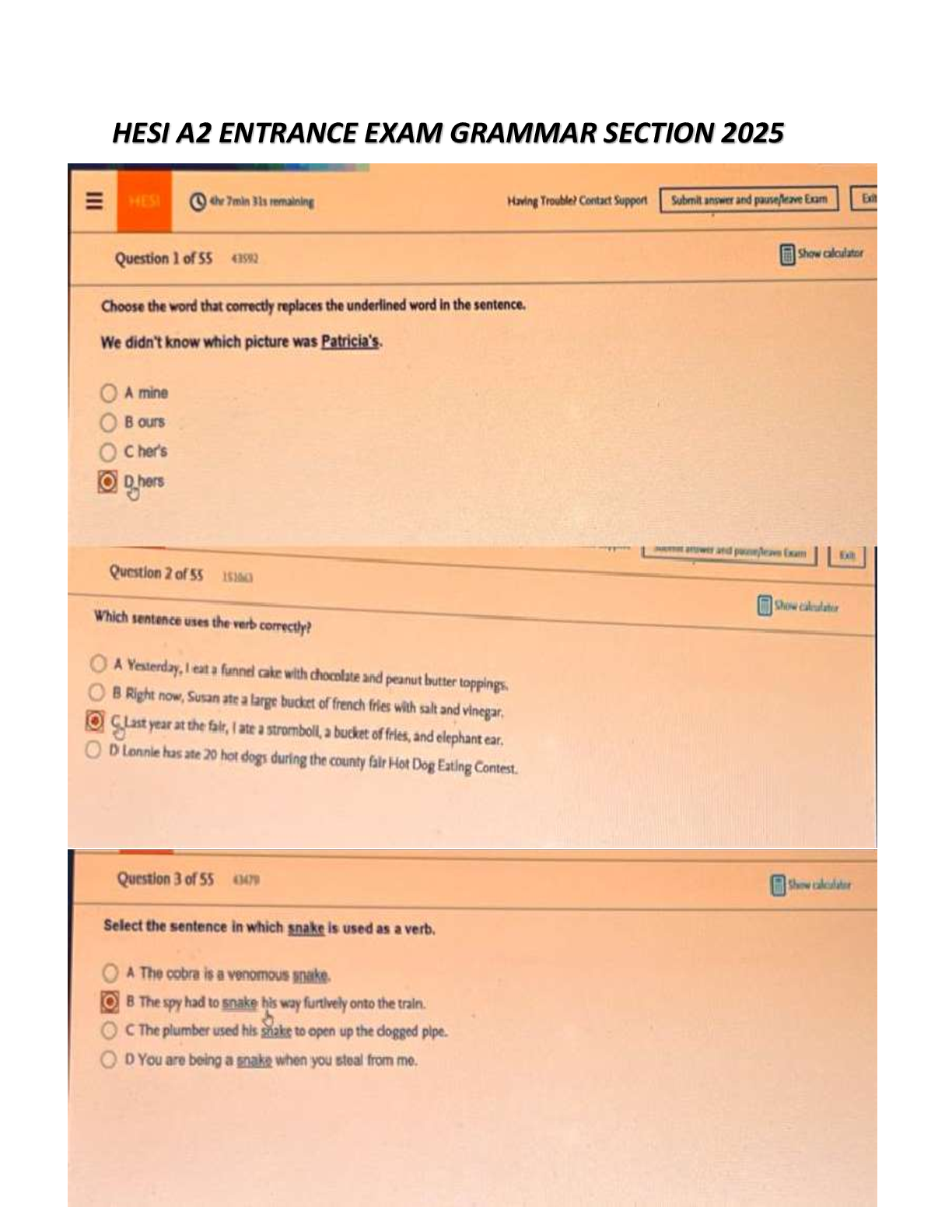
CNA Practice Test #1 100 Questions with 100% Verified Correct Answers
$ 11.5

Course NURS-6521N-30-Advanced Pharmacology-QTR-Term-wks-1-thru-11-(03/01/2021-05/16/2021)-PT27
HESI Med Surg > HESI > Med-Surg HESI Final Practice Questions and Answers 100% Verified 2023/2024 (All)
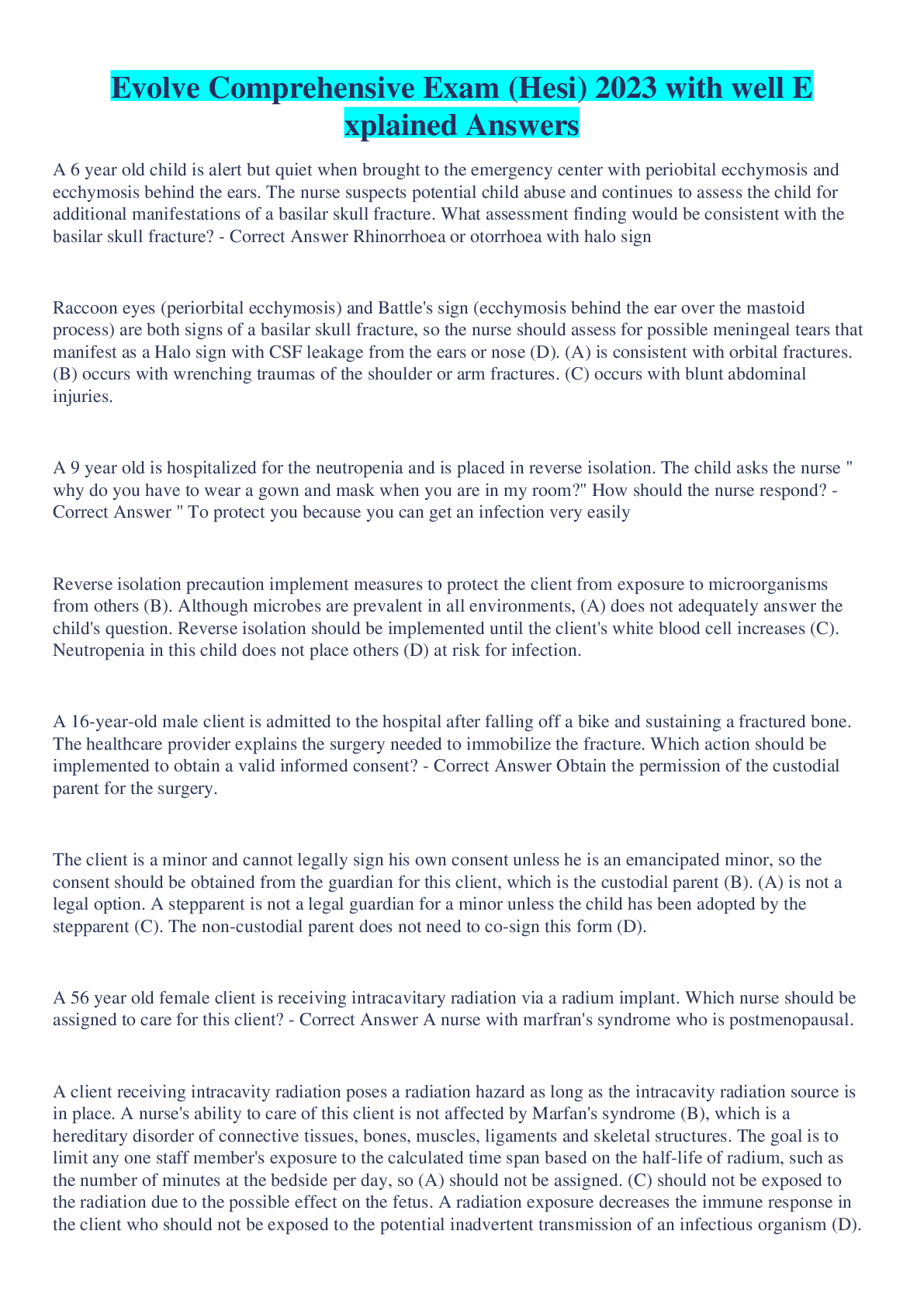
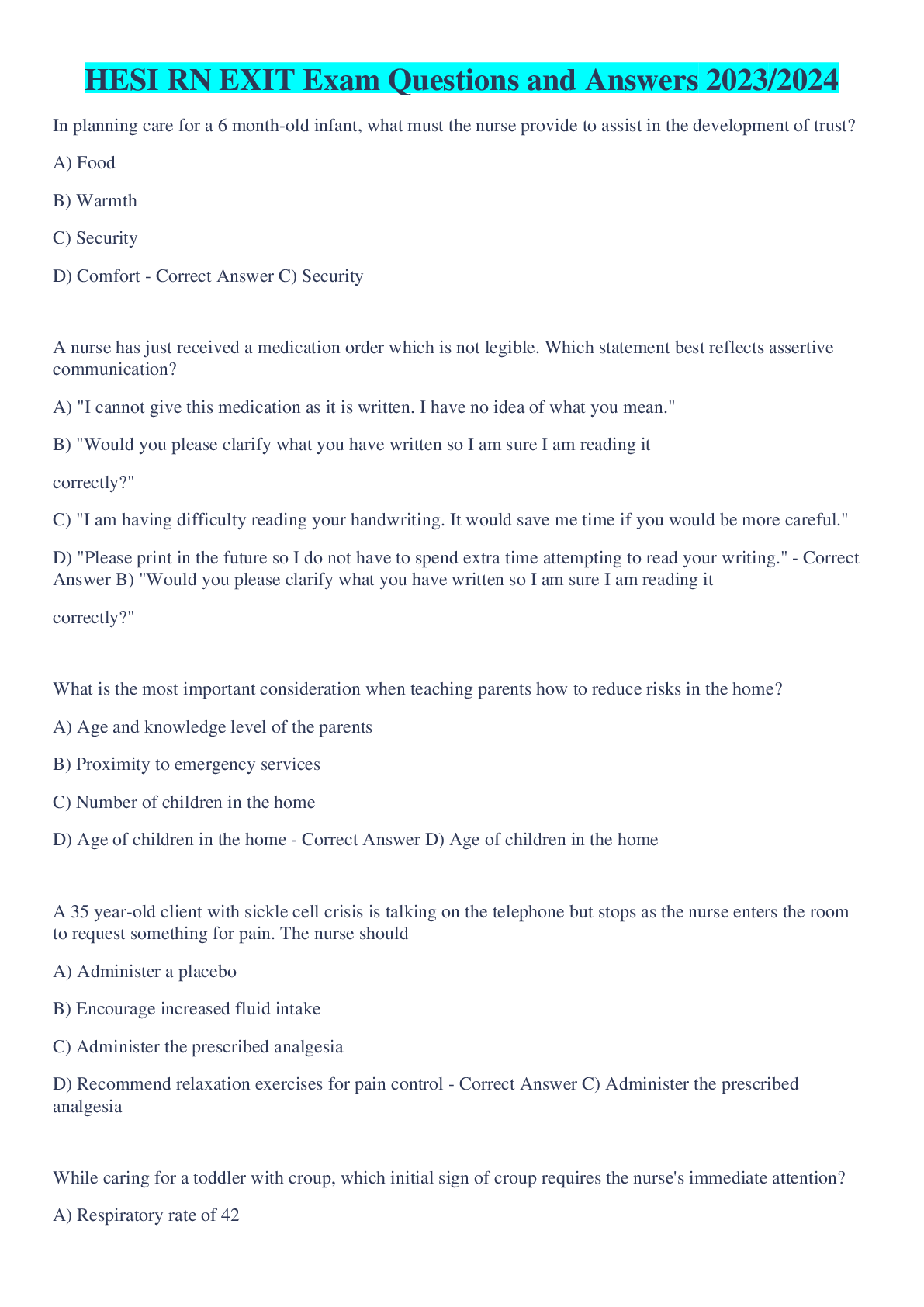
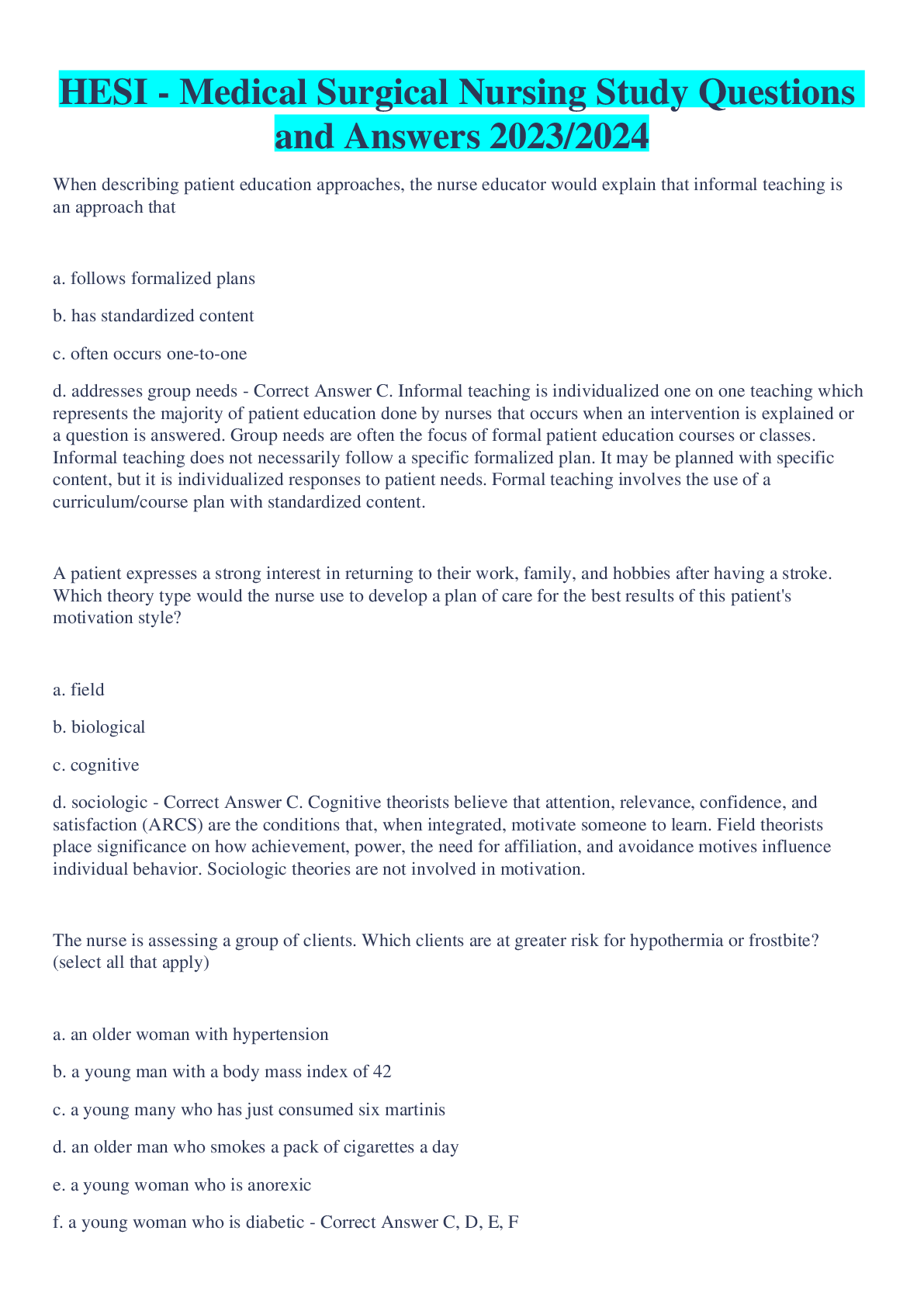
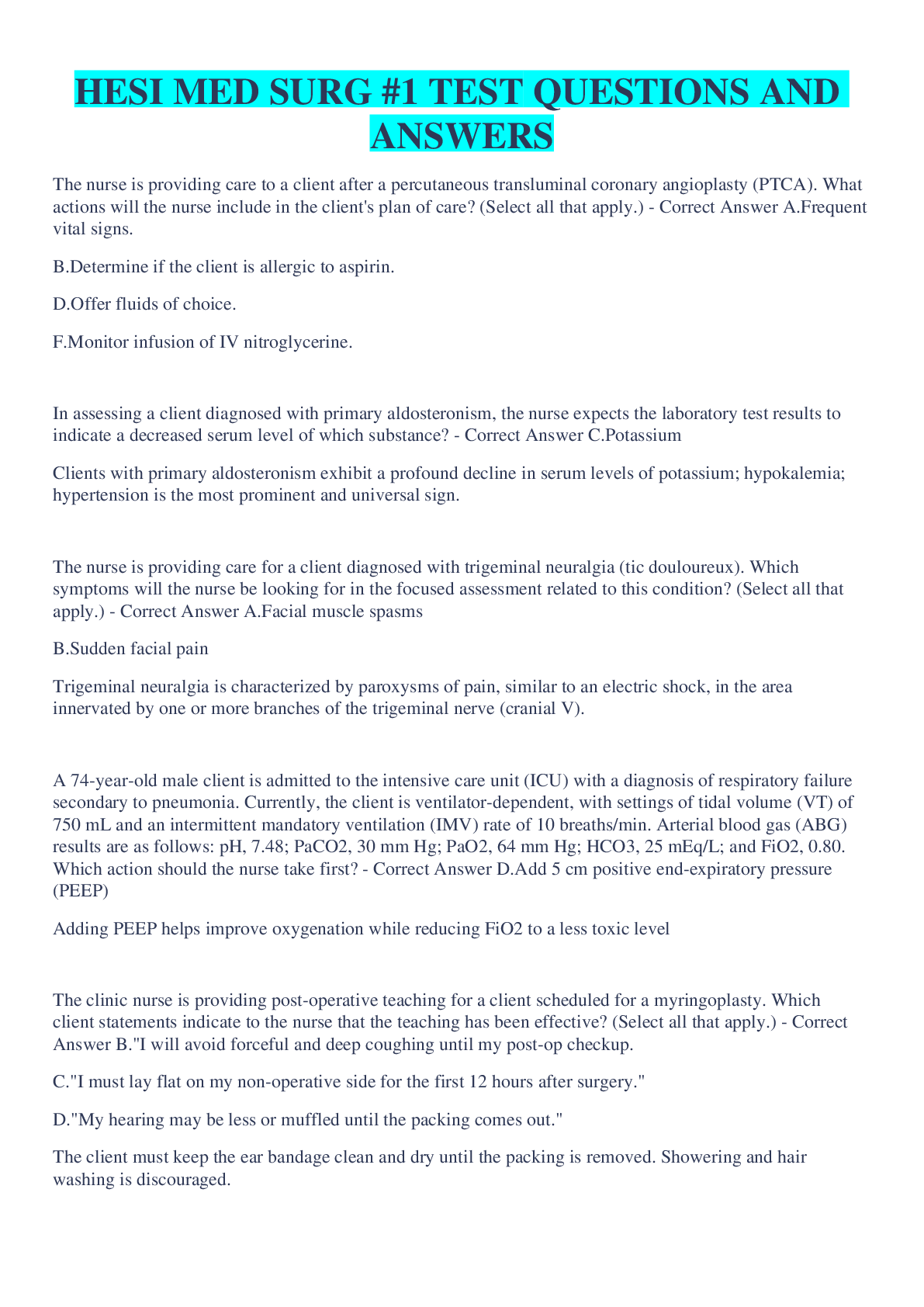
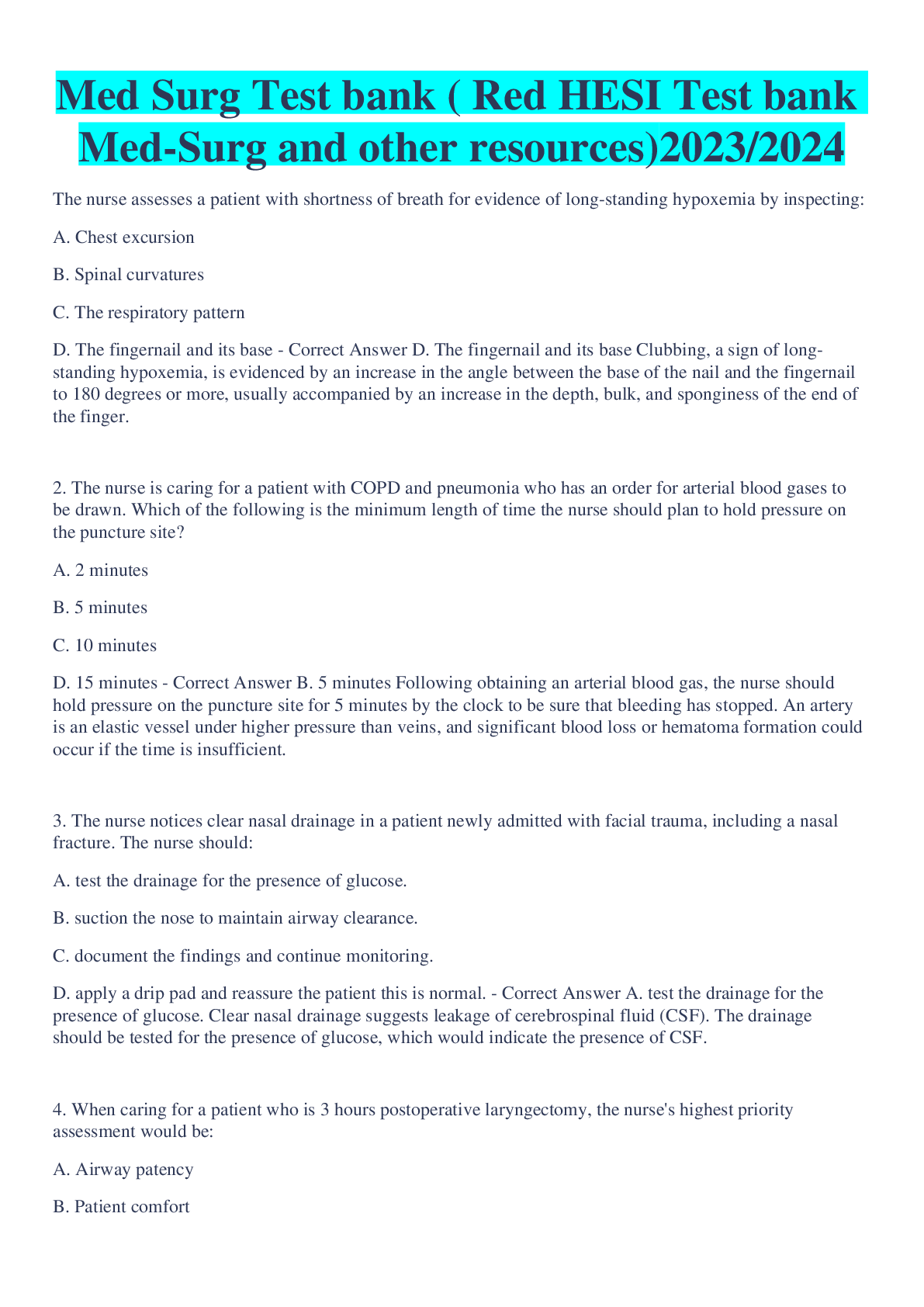
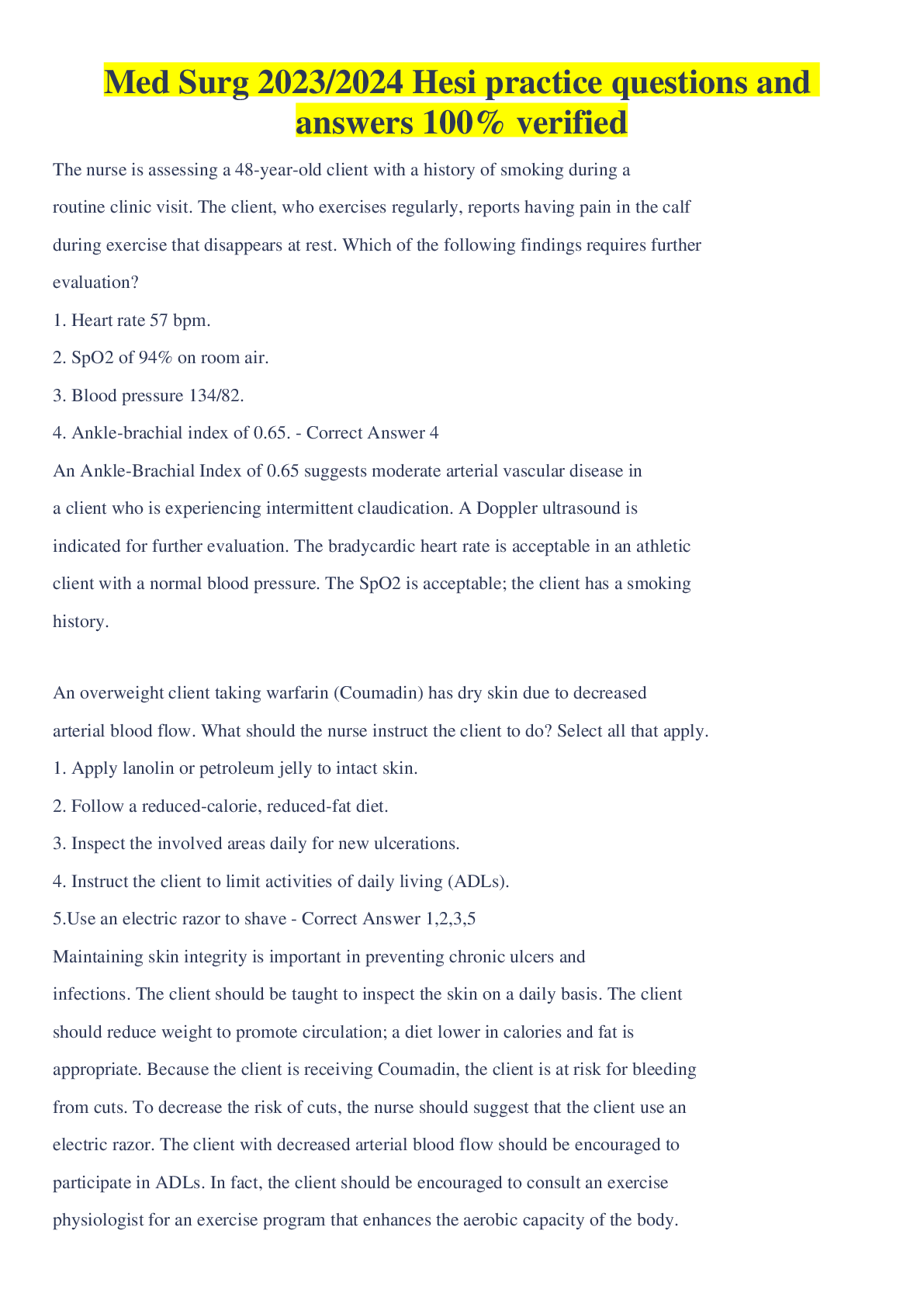
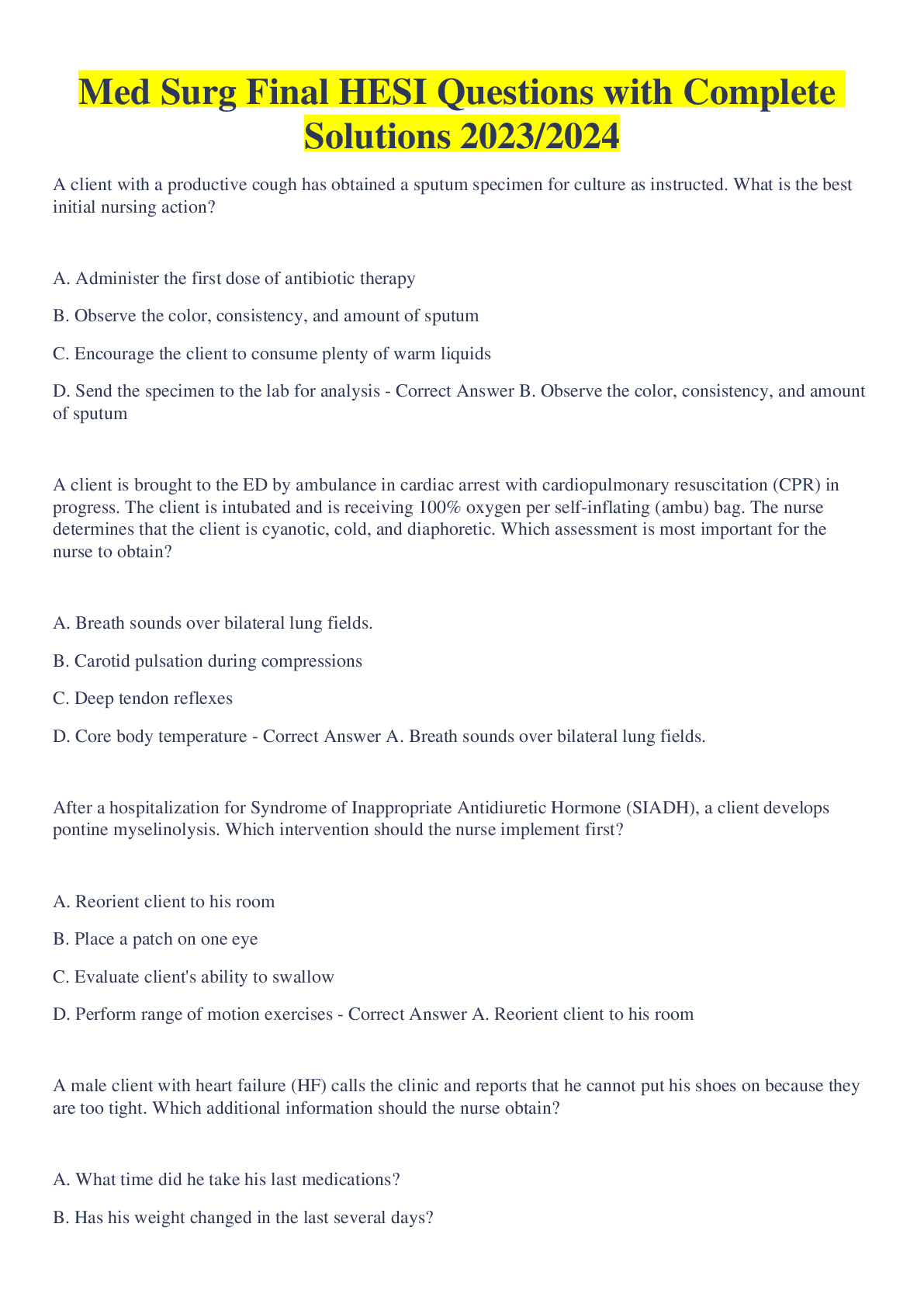
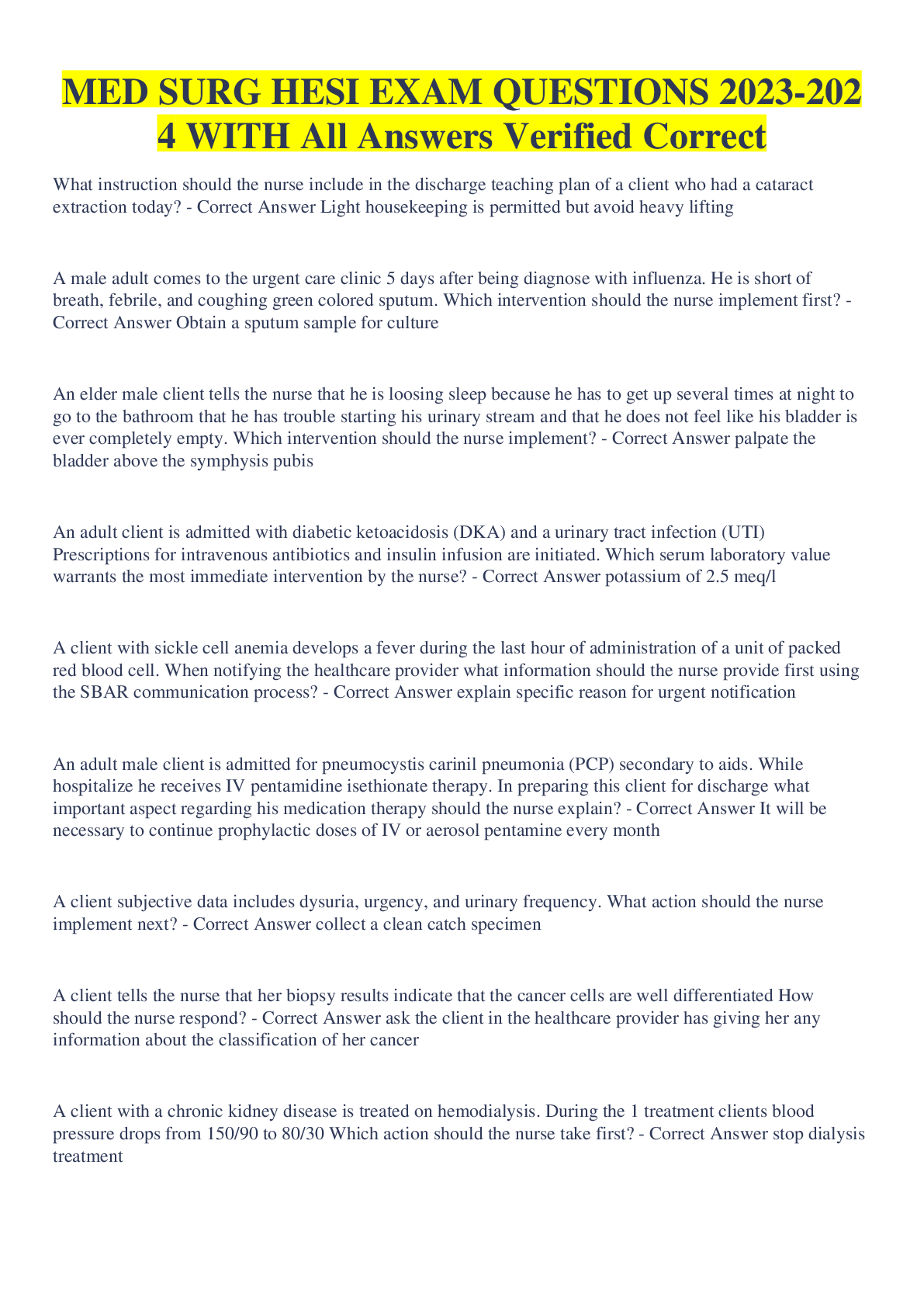
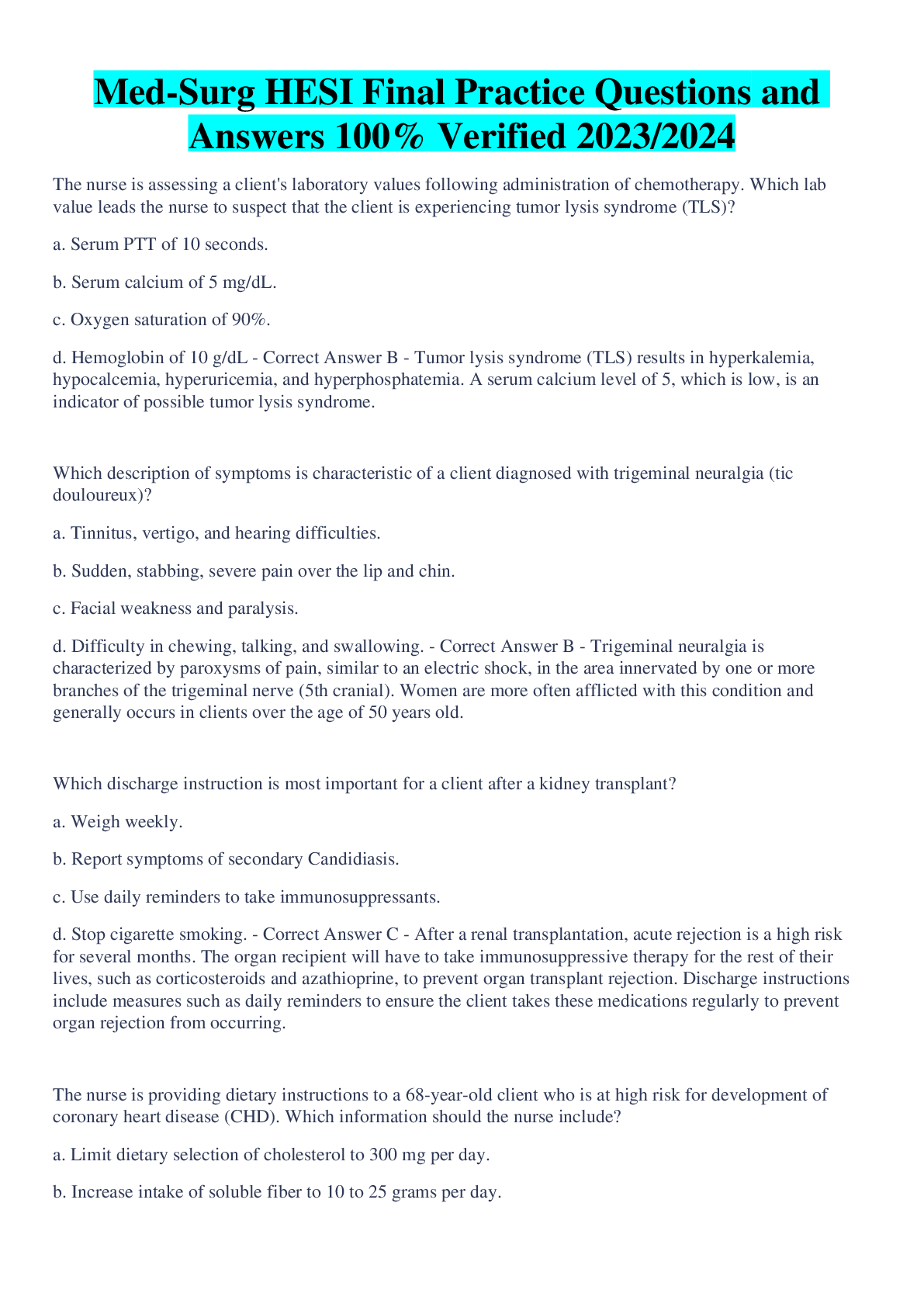
The nurse is assessing a client's laboratory values following administration of chemotherapy. Which lab value leads the nurse to suspect that the client is experiencing tumor lysis syndrome (TLS)? a. ... Serum PTT of 10 seconds. b. Serum calcium of 5 mg/dL. c. Oxygen saturation of 90%. d. Hemoglobin of 10 g/dL - Correct Answer B - Tumor lysis syndrome (TLS) results in hyperkalemia, hypocalcemia, hyperuricemia, and hyperphosphatemia. A serum calcium level of 5, which is low, is an indicator of possible tumor lysis syndrome. Which description of symptoms is characteristic of a client diagnosed with trigeminal neuralgia (tic douloureux)? a. Tinnitus, vertigo, and hearing difficulties. b. Sudden, stabbing, severe pain over the lip and chin. c. Facial weakness and paralysis. d. Difficulty in chewing, talking, and swallowing. - Correct Answer B - Trigeminal neuralgia is characterized by paroxysms of pain, similar to an electric shock, in the area innervated by one or more branches of the trigeminal nerve (5th cranial). Women are more often afflicted with this condition and generally occurs in clients over the age of 50 years old. Which discharge instruction is most important for a client after a kidney transplant? a. Weigh weekly. b. Report symptoms of secondary Candidiasis. c. Use daily reminders to take immunosuppressants. d. Stop cigarette smoking. - Correct Answer C - After a renal transplantation, acute rejection is a high risk for several months. The organ recipient will have to take immunosuppressive therapy for the rest of their lives, such as corticosteroids and azathioprine, to prevent organ transplant rejection. Discharge instructions include measures such as daily reminders to ensure the client takes these medications regularly to prevent organ rejection from occurring. The nurse is providing dietary instructions to a 68-year-old client who is at high risk for development of coronary heart disease (CHD). Which information should the nurse include? a. Limit dietary selection of cholesterol to 300 mg per day. b. Increase intake of soluble fiber to 10 to 25 grams per day. c. Decrease plant stanols and sterols to less than 2 grams/day. d. Ensure saturated fat is less than 30% of total caloric intake. - Correct Answer B - To reduce risk factors associated with coronary heart disease, the daily intake of soluble fiber should be increased to between 10 and 25 grams per day. According to the American Heart Association, soluble fibers helps reduce LDL cholesterol levels. [Show More]
Last updated: 2 years ago
Preview 1 out of 29 pages
Buy this document to get the full access instantly
Instant Download Access after purchase
Buy NowInstant download
We Accept:


Hesi Med Surg Study Guide 2023/2024 with Complete Solutions Package Deal
By Winfred 2 years ago
$20
7
Can't find what you want? Try our AI powered Search
Connected school, study & course
About the document
Uploaded On
Jul 27, 2023
Number of pages
29
Written in
All
This document has been written for:
Uploaded
Jul 27, 2023
Downloads
0
Views
117
Scholarfriends.com Online Platform by Browsegrades Inc. 651N South Broad St, Middletown DE. United States.
We're available through e-mail, Twitter, Facebook, and live chat.
FAQ
Questions? Leave a message!
Copyright © Scholarfriends · High quality services·