latest NSG6001 Week 5 Final Exam 2020/2021.docx
Document Content and Description Below
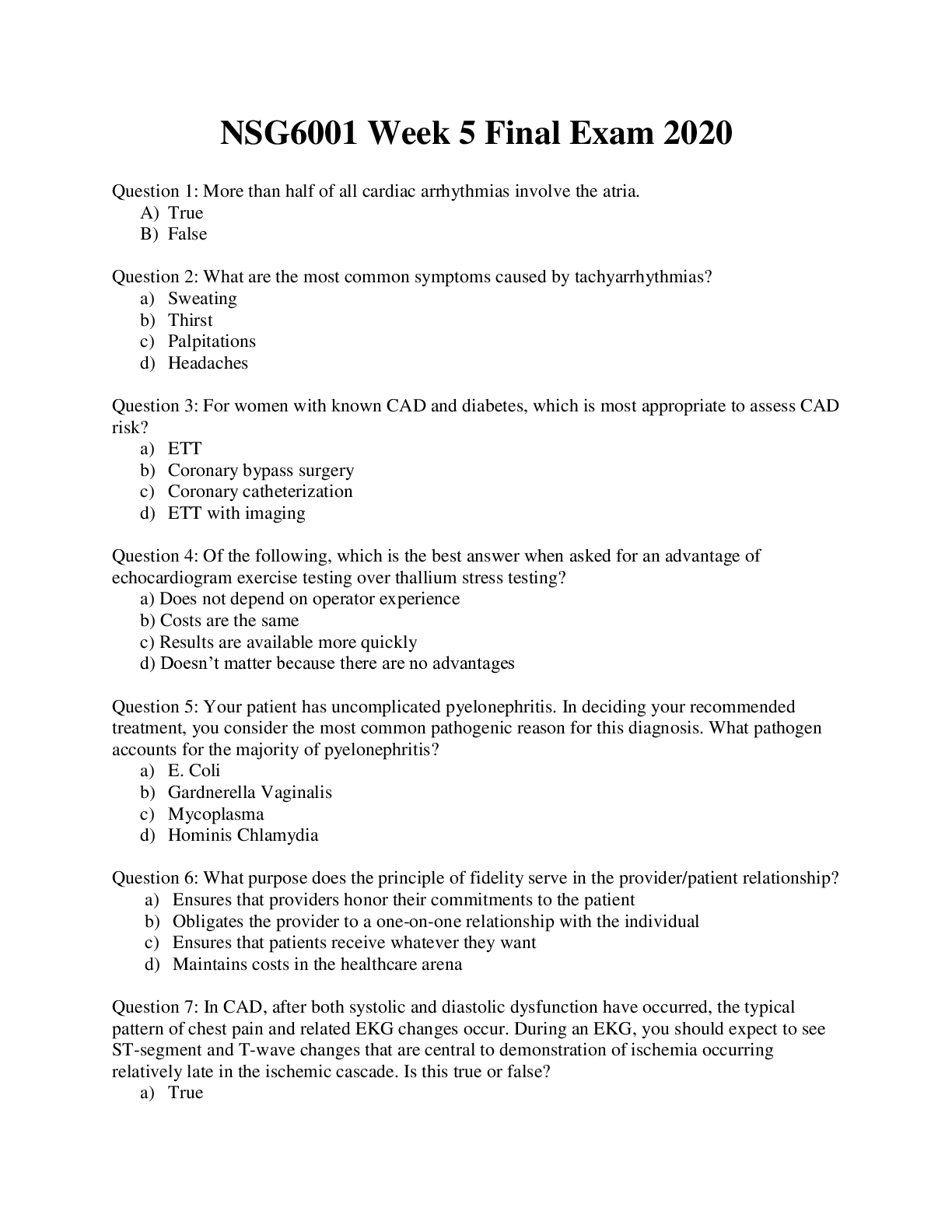
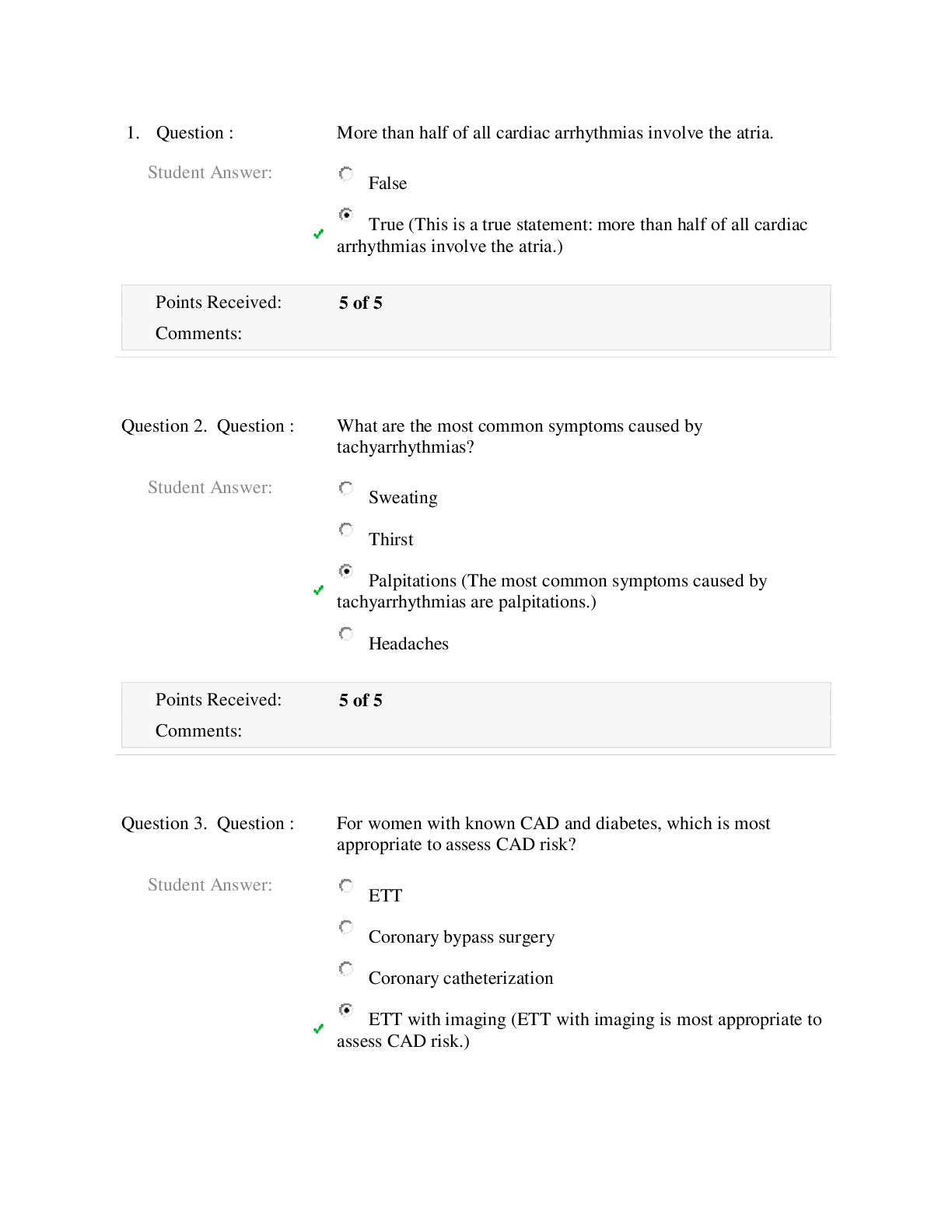
Question 1: More than half of all cardiac arrhythmias involve the atria.
A) True
B) False
Question 2: What are the most common symptoms caused by tachyarrhythmias?
a) Sweating
b) Thirst
c) Palpitations
d) Headache
...
[Show More]
Last updated: 3 years ago
Preview 1 out of 6 pages
Instant download
Buy this Document to get the Full Access Instantly
Provided by Students Who Aced it
We Verify Document Content to Gurantee Accuracy
Reviews( 0 )
Document information
Connected school, study & course
About the document
Uploaded On
Feb 18, 2021
Number of pages
6
Written in
All

Additional information
This document has been written for:
Uploaded
Feb 18, 2021
Downloads
0
Views
208
Topic Tags
Related Subjects & Courses
Explore similar study resources and related concepts.
Recommended For You
Get more on EXAM »
$1
3 Pages
South University, Savannah - NSG 6001 Week 4 Knowledge Check L...
$11
27 Pages
NSG6001 Week 5 Final Exam Latest > South University - All Answ...

$12
9 Pages
NSG 6001 Midterm Exam 2 – Question and Answers – South Univers...


$18
51 Pages
NSG 6001 Final Test 2 Latest Revised Complete Solution, All An...
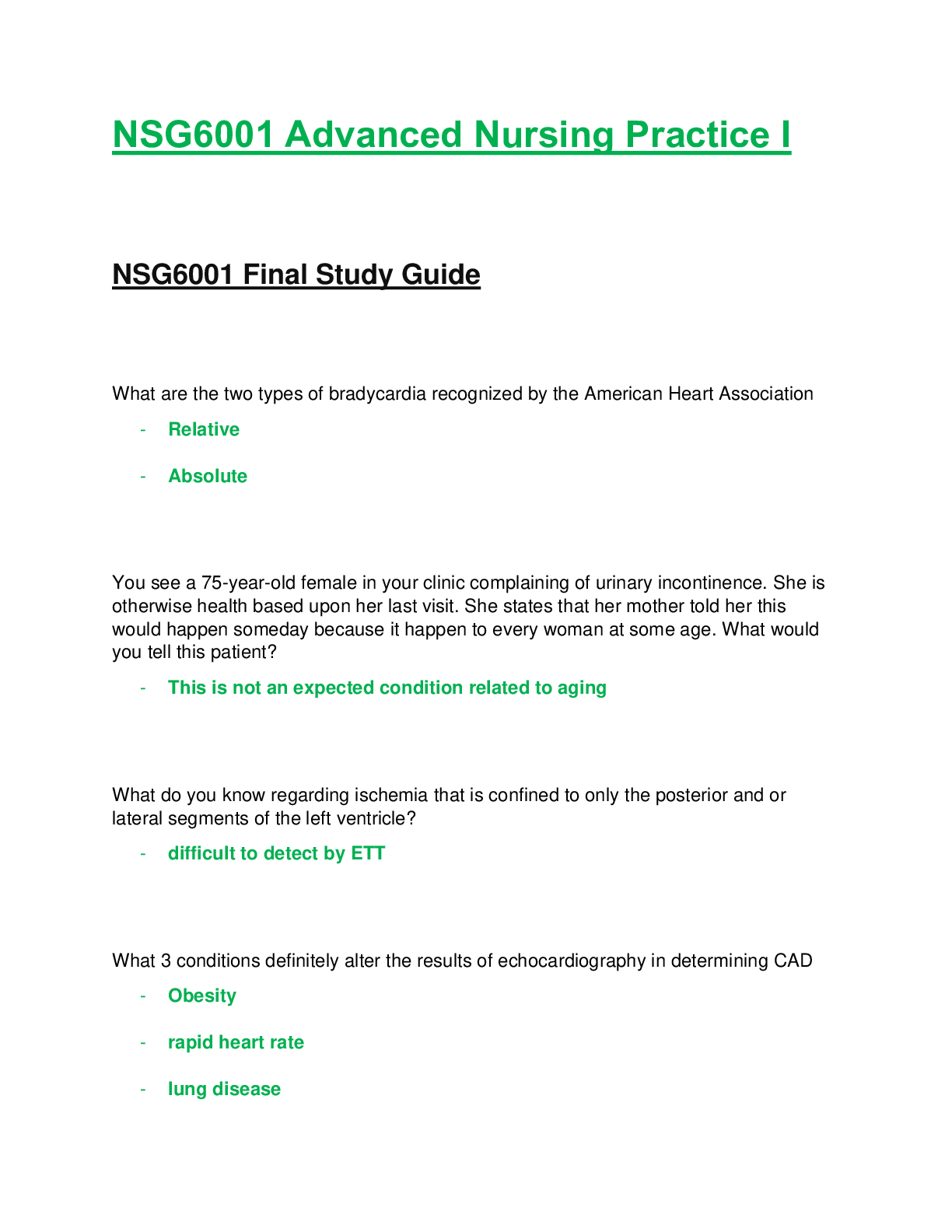
$10
17 Pages
NSG6001 / NSG 6001: Advanced Nursing Practice I Final Study Gu...
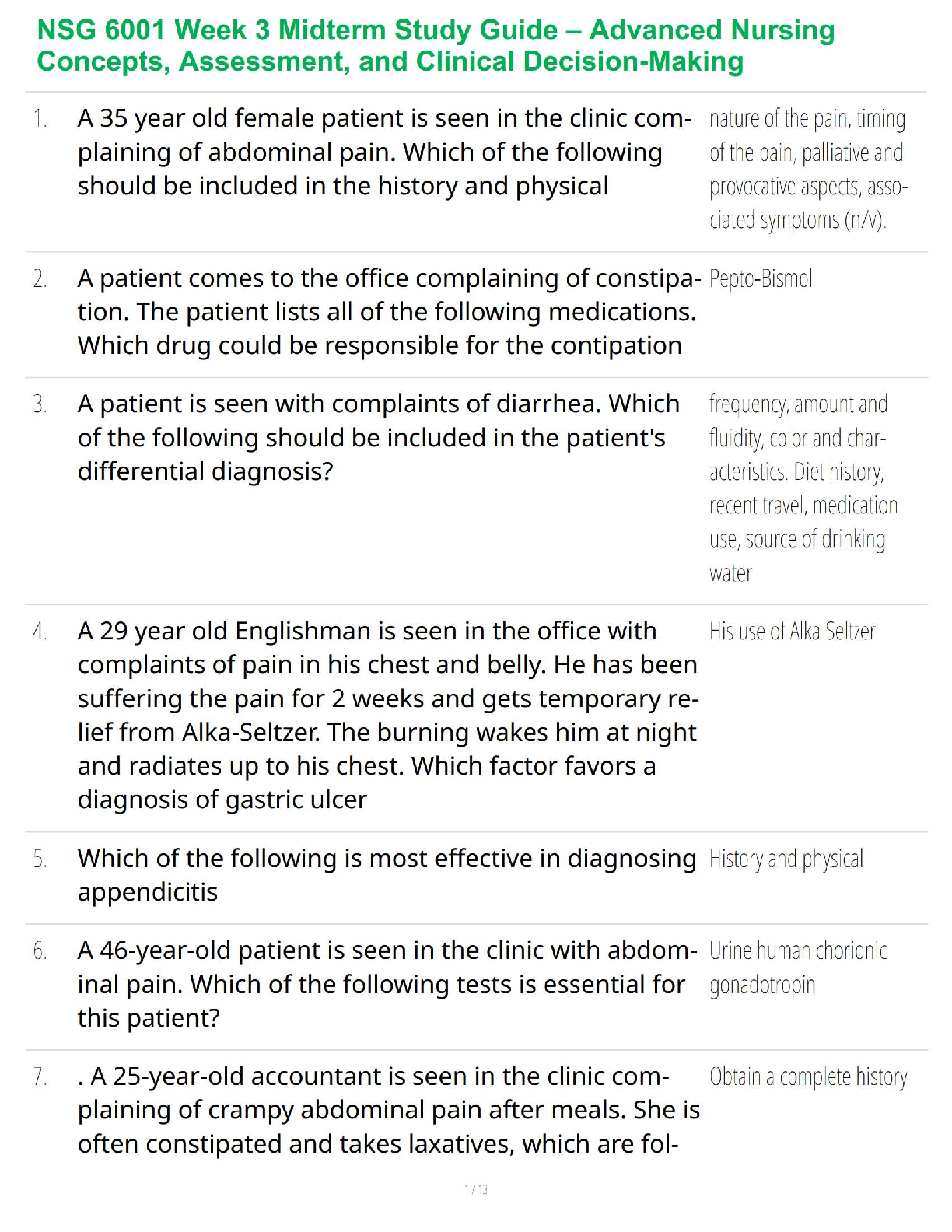
$10
13 Pages
NSG 6001 Week 3 Midterm Study Guide – Advanced Nursing Concept...

$10
4 Pages
NSG 6001 / NSG6001 ADVANCED NURSING PRACTICE UNIT03CHAPTER 76....
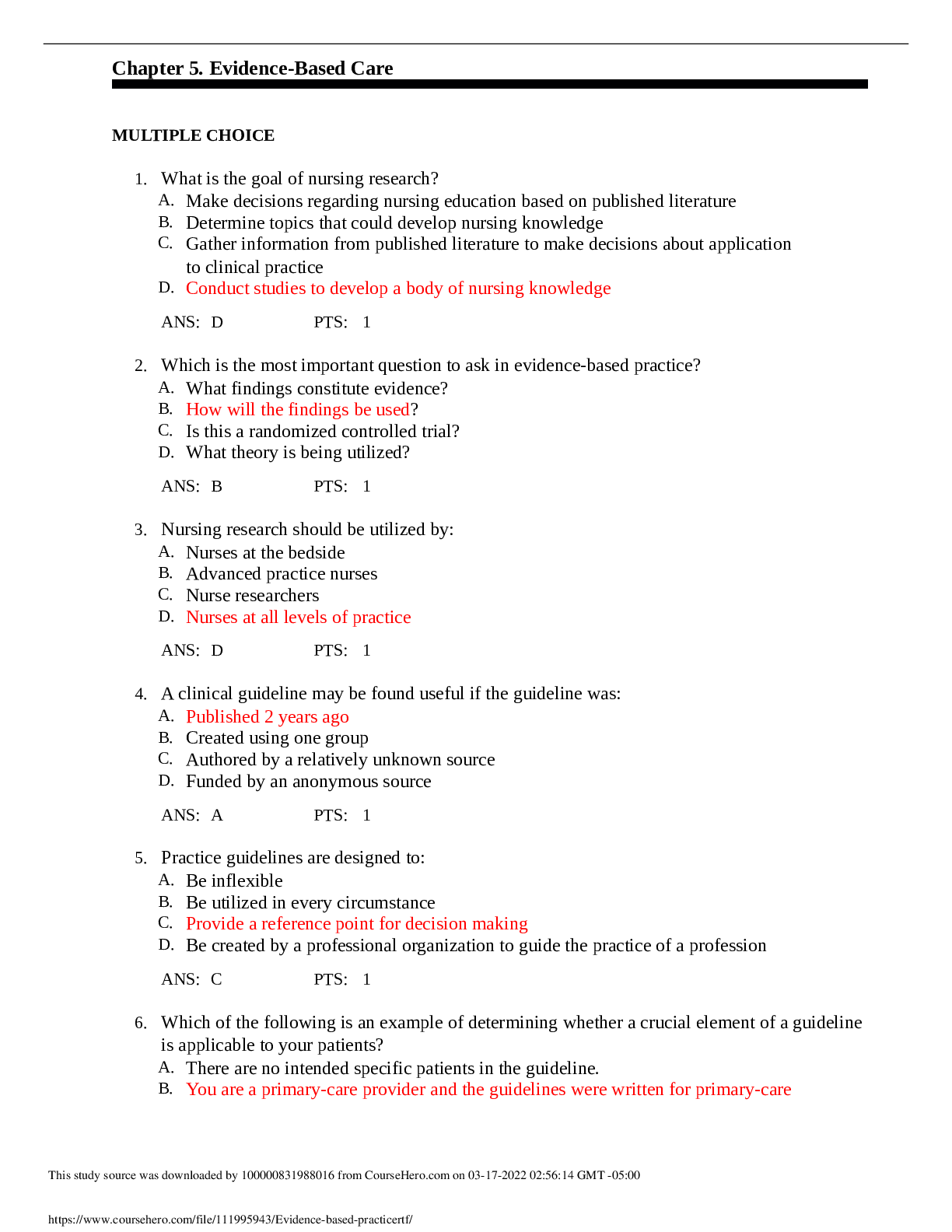
$10
3 Pages
NSG 6001 / NSG6001 ADVANCED NURSING PRACTICE UNIT01 CHAPTER 5....
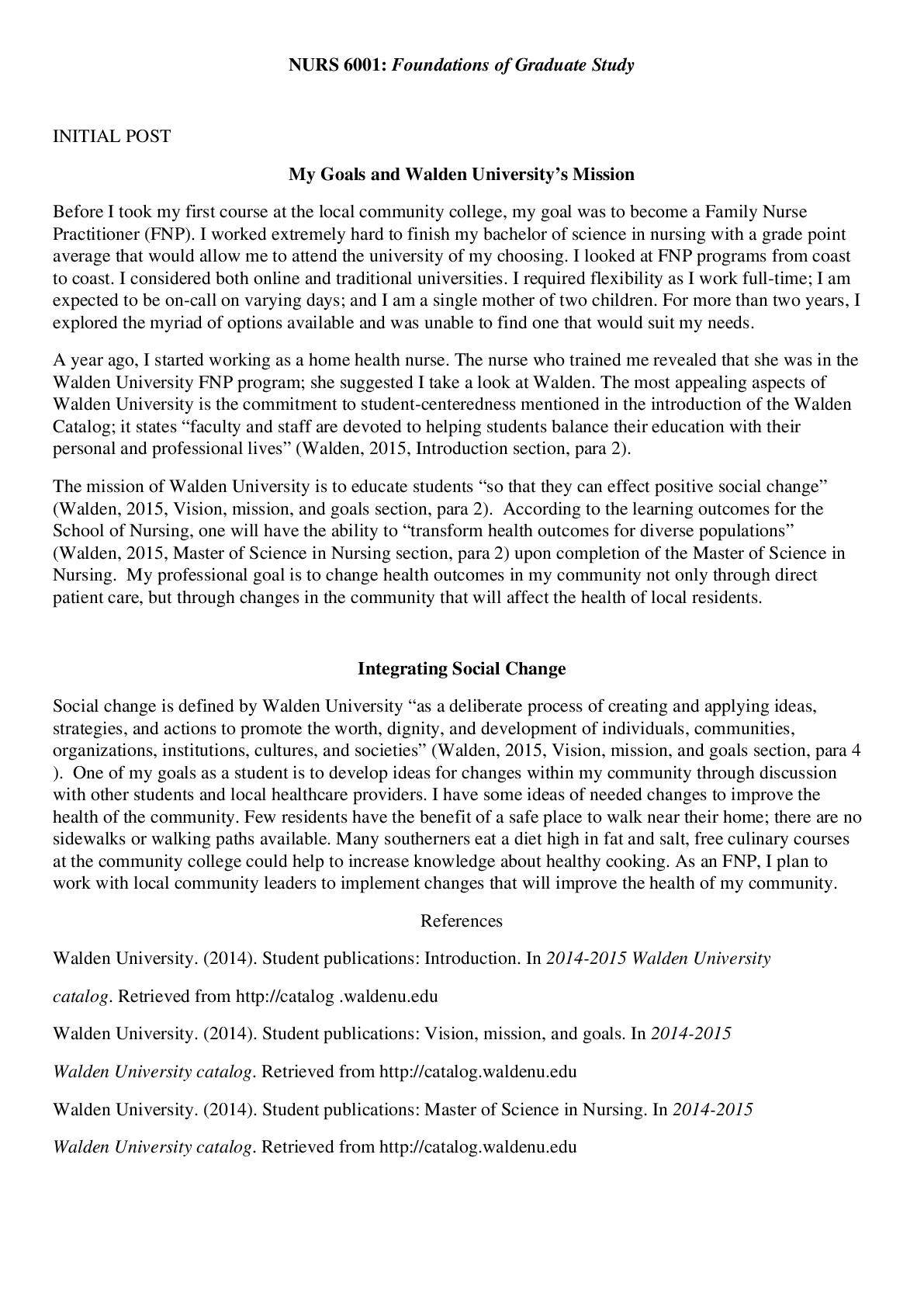

$10
754 Pages