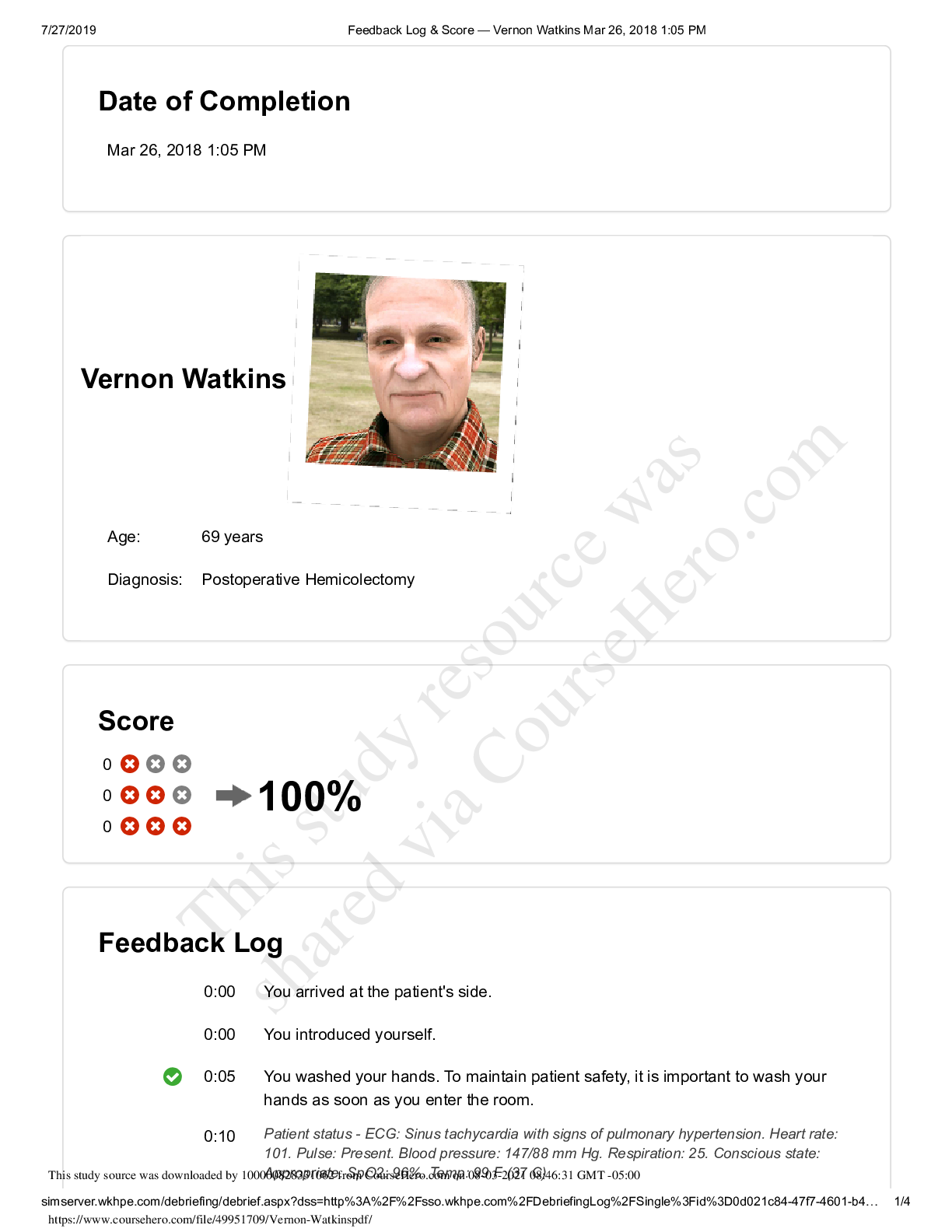
NURSING > VSIM for NURSING FUNDAMENTALS > Feedback Log & Score; Vernon Watkins. Diagnosis: Postoperative Hemicolectomy. Includes Feedback Log. (All)
Feedback Log & Score; Vernon Watkins. Diagnosis: Postoperative Hemicolectomy. Includes Feedback Log. 100% Score.
Document Content and Description Below
Last updated: 3 years ago
Preview 1 out of 4 pages
Instant download
Buy this Document to get the Full Access Instantly
Provided by Students Who Aced it
We Verify Document Content to Gurantee Accuracy
Reviews( 0 )
Document information
Connected school, study & course
About the document
Uploaded On
Feb 20, 2021
Number of pages
4
Written in
All

Additional information
This document has been written for:
Uploaded
Feb 20, 2021
Downloads
0
Views
266
Topic Tags
Related Subjects & Courses
Explore similar study resources and related concepts.
Recommended For You
Get more on VSIM for NURSING FUNDAMENTALS »
Lloyd Bennett Diagnosis: Postoperative Hip Arthroplasty Feedb...

Vernon Russell | Diagnosis: Right-sided stroke. Includes Feedb...
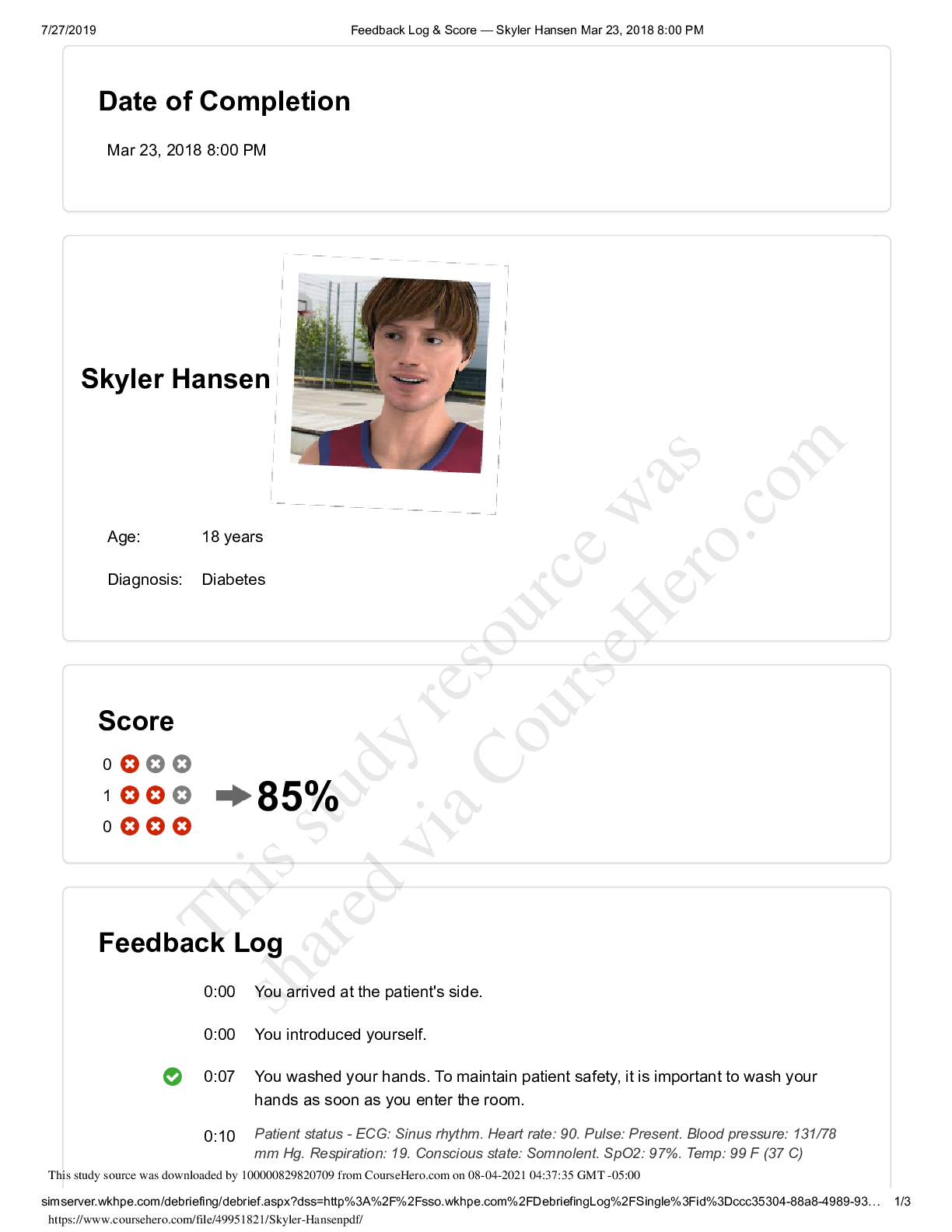
Skyler Hansen, Diabetes Diagnosis. Feedback Log & Amp Score (8...

Mona Hernandez. Diagnosis: Pneumonia. Includes Feedback Log. 9...

Edith Jacobson. Diagnosis: Diagnosis: Hip fracture. Includes F...

Eva Madison. Diagnosis: Dehydration. Includes Feedback Log. 94...
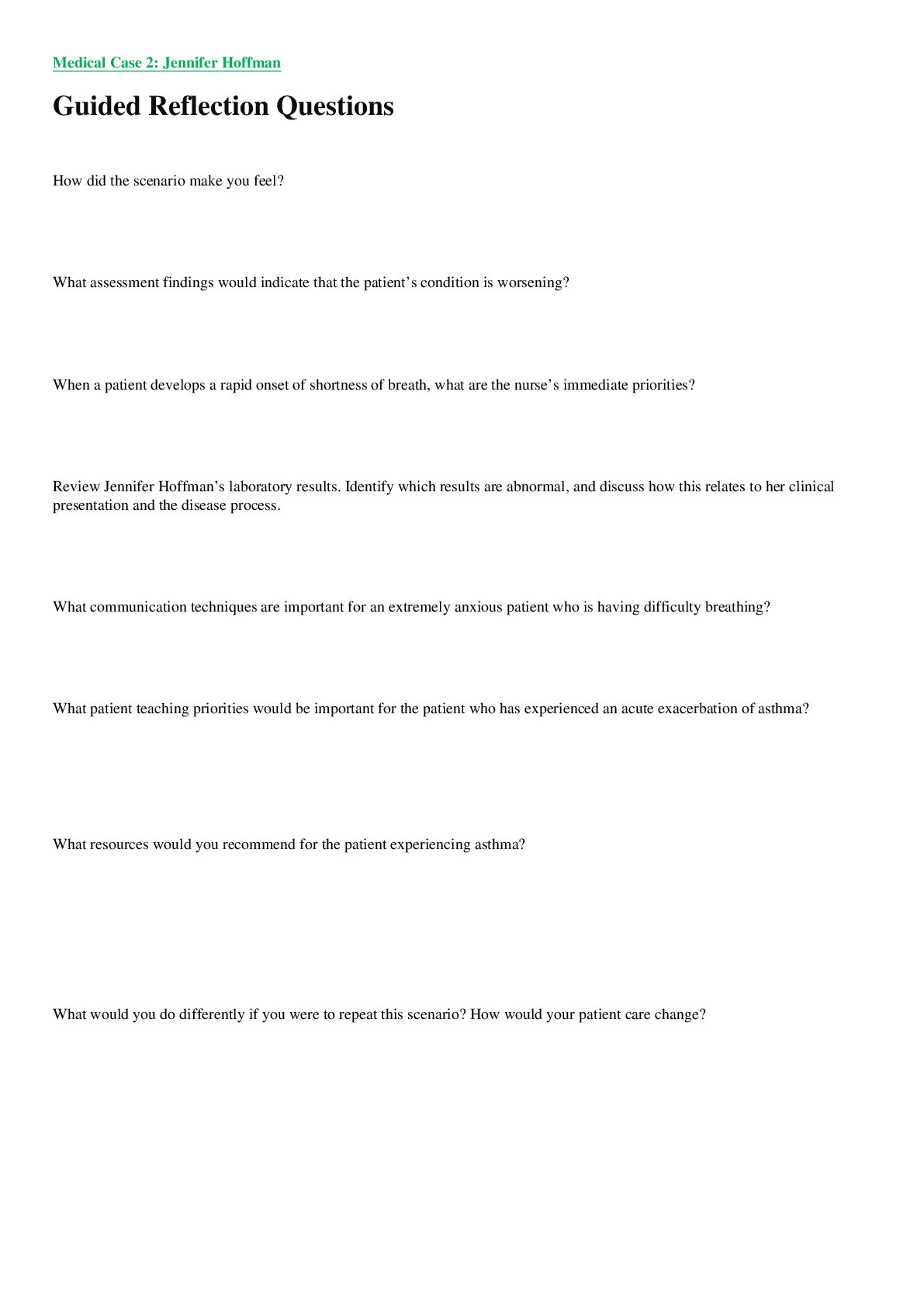
Jennifer Hoffman Medical Case 2: Guided Reflection Questions W...

TEST BANK for Davis Advantage for Psychiatric Mental Health Nu...
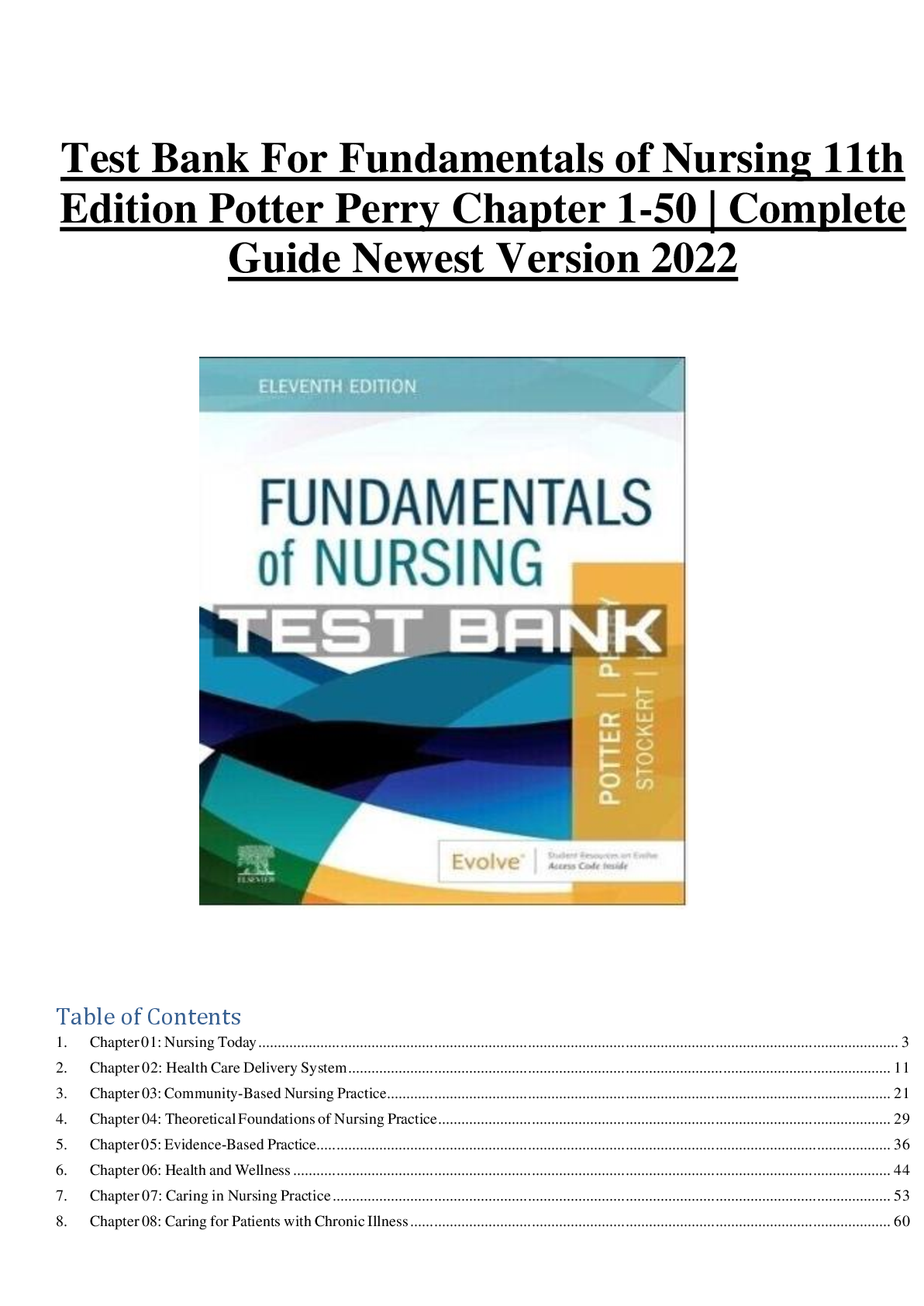
Test Bank For Fundamentals of Nursing 11th Edition Potter Perr...
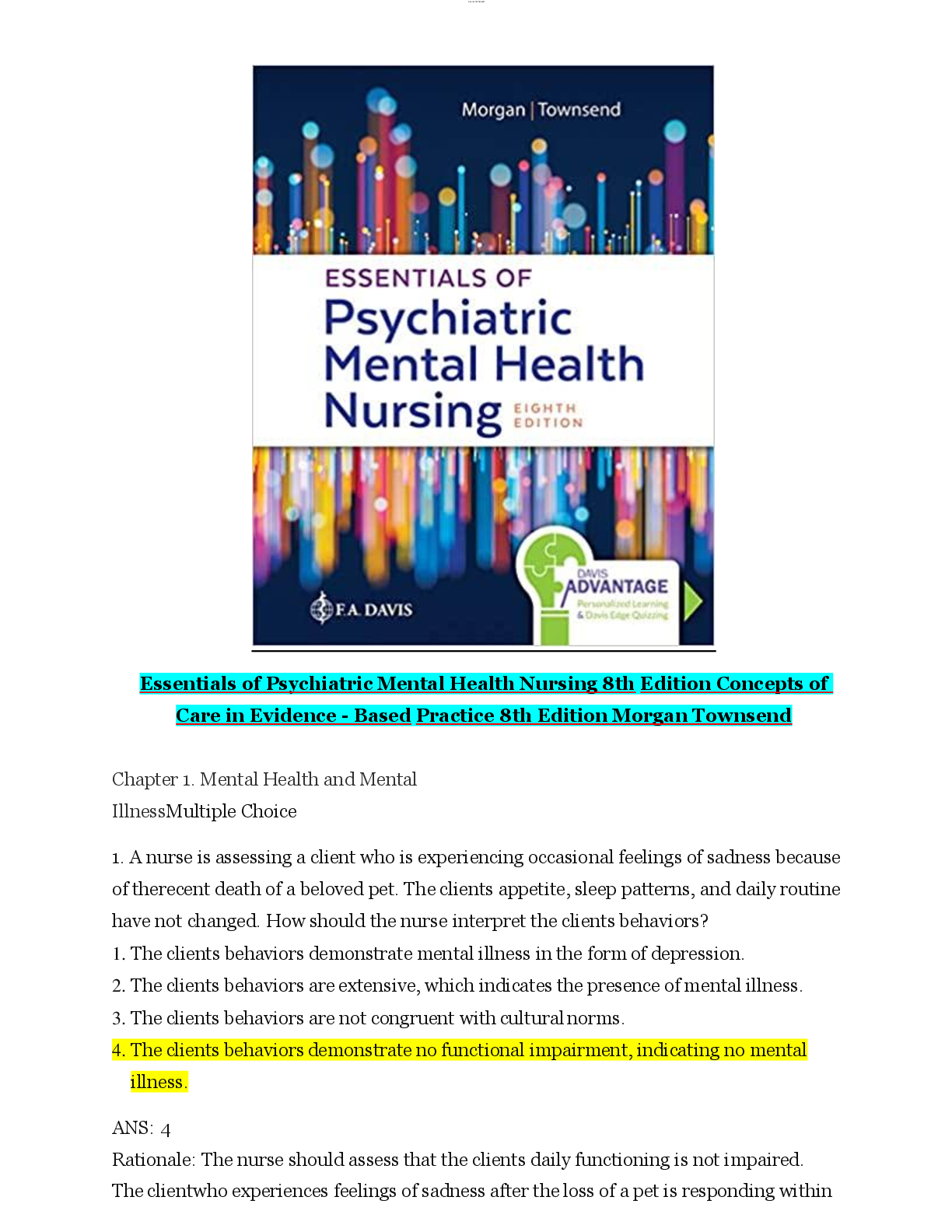
TEST BANK for Essentials of Psychiatric Mental Health Nursing:...
Essentials of Psychiatric Nursing 2nd Edition Boyd TEST BANK

TEST BANK for Essentials of Psychiatric Nursing 2nd Edition by...
Test Bank for Essentials of Psychiatric Nursing 2nd Edition by...
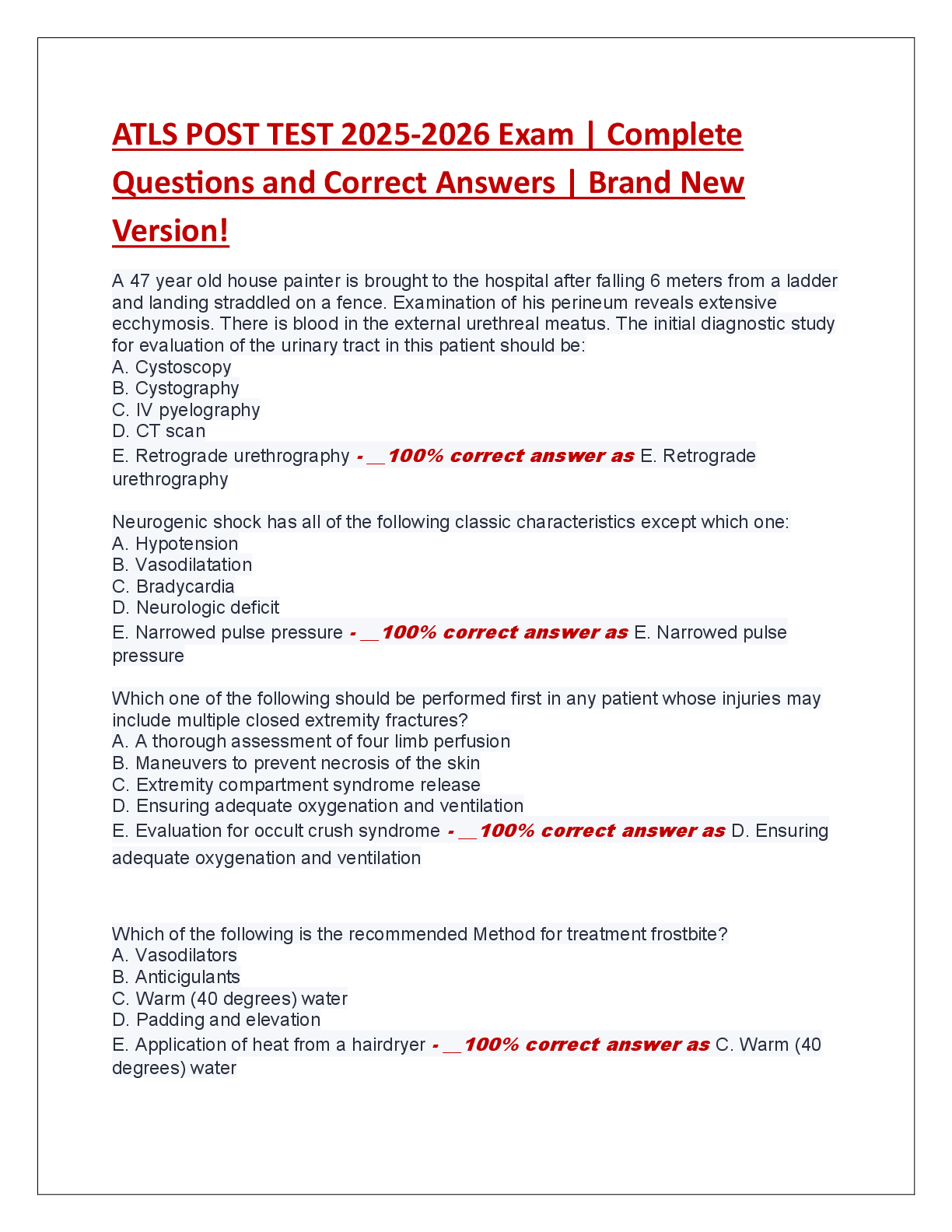
ATLS POST TEST 2025-2026 Exam | Complete Questions and Correc...
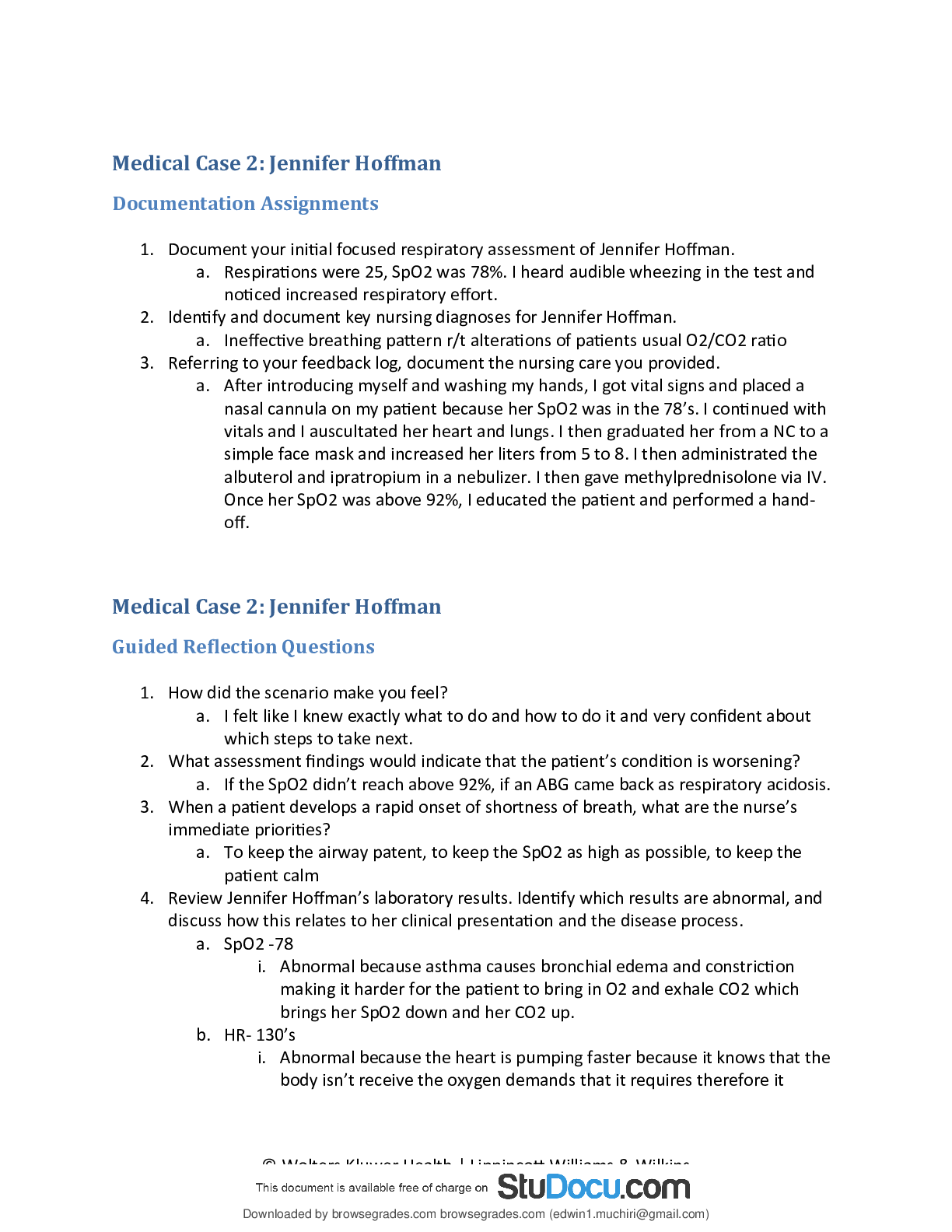
VSIM Jennifer Hoffman DA. Medical Case 2 Documentation Assignm...

vSim Kenneth Bronson | Age 27 Years | Diagnosis Pneumonia | C...
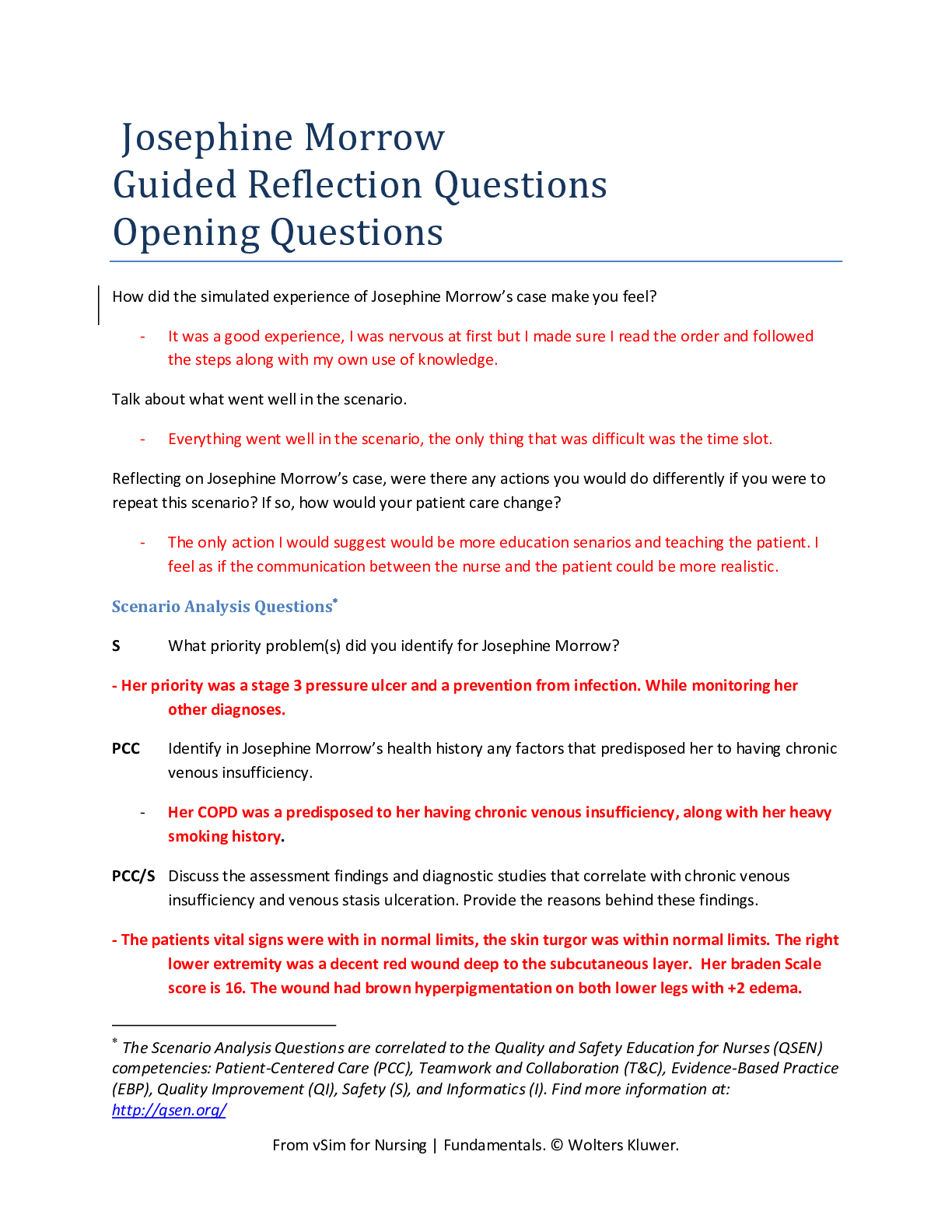
Amelia Sung Post-Simulation Quiz vSim for Nursing Maternity Ca...