NURSING > ATI Study Resources. > ATI Urinary Elimination - Practice Assessment, Answered With Rationales (All)
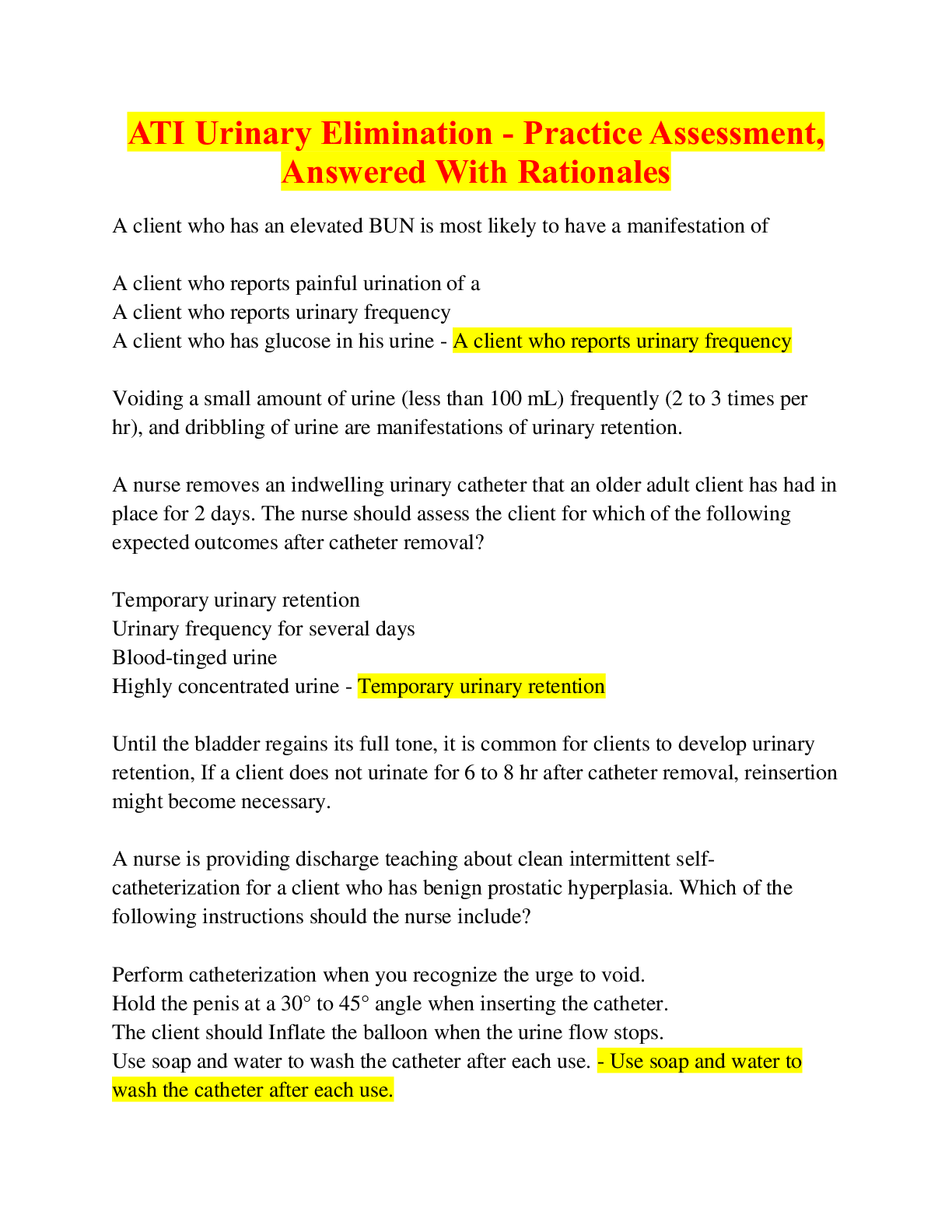
ATI Urinary Elimination - Practice Assessment, Answered With Rationales
Document Content and Description Below
Last updated: 2 years ago
Preview 1 out of 16 pages
Instant download
Buy this Document to get the Full Access Instantly
Provided by Students Who Aced it
We Verify Document Content to Gurantee Accuracy
Reviews( 0 )
Document information
Connected school, study & course
About the document
Uploaded On
Nov 06, 2023
Number of pages
16
Written in
All

Additional information
This document has been written for:
Uploaded
Nov 06, 2023
Downloads
0
Views
190
Topic Tags
Related Subjects & Courses
Explore similar study resources and related concepts.
Recommended For You
Get more on ATI Study Resources. »
ATI Urinary Elimination - practice assessment. Questions & Ans...
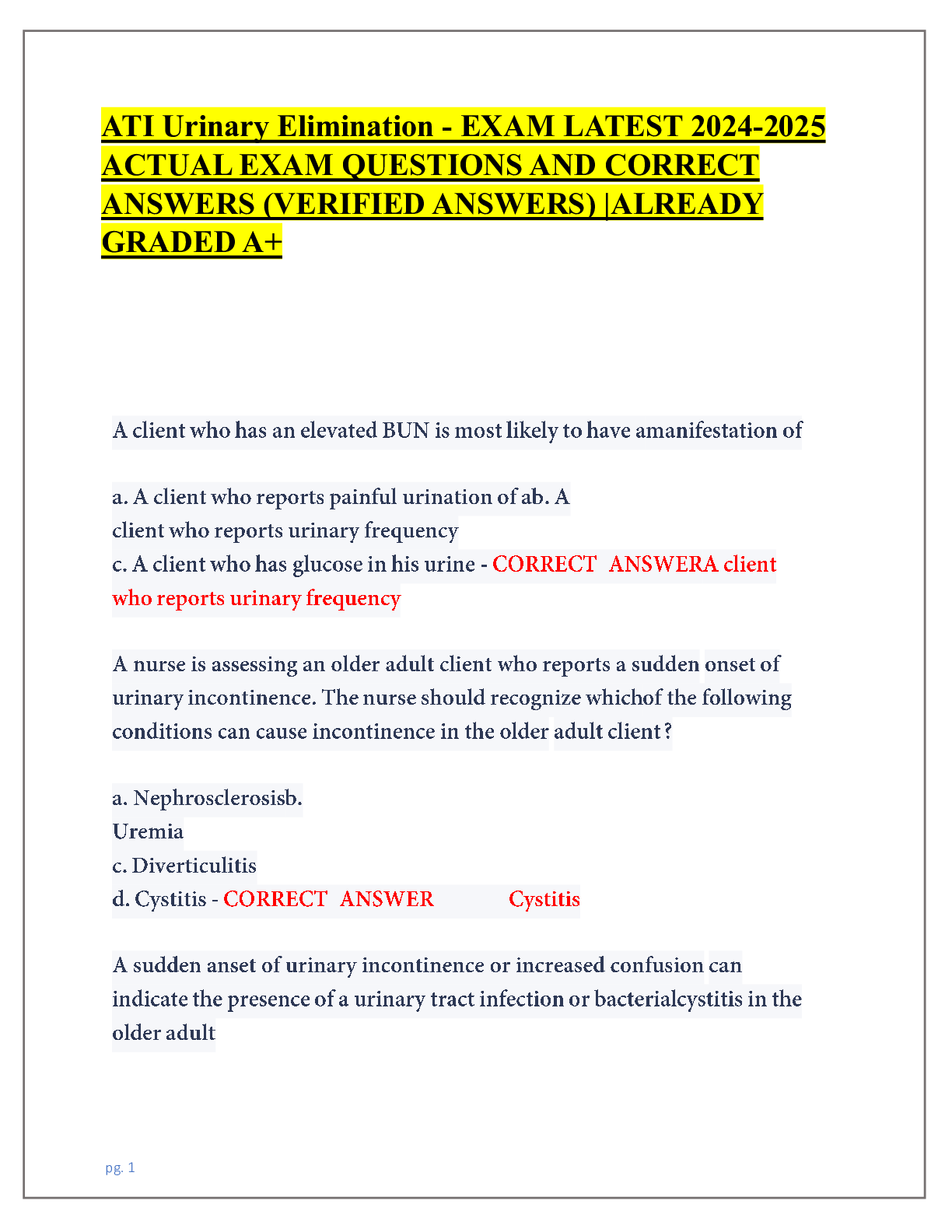
ATI Urinary Elimination - EXAM LATEST 2024-2025 ACTUAL EXAM QU...
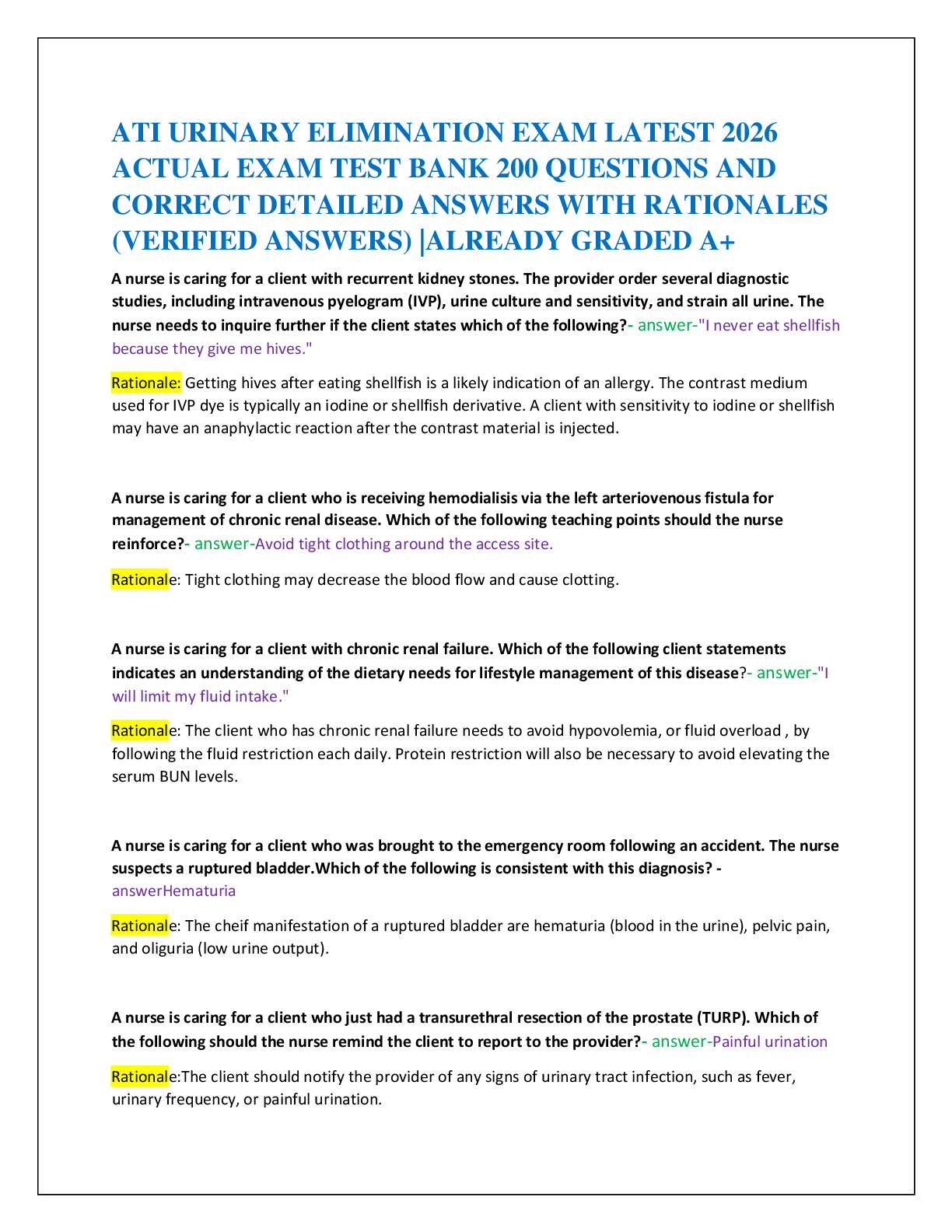
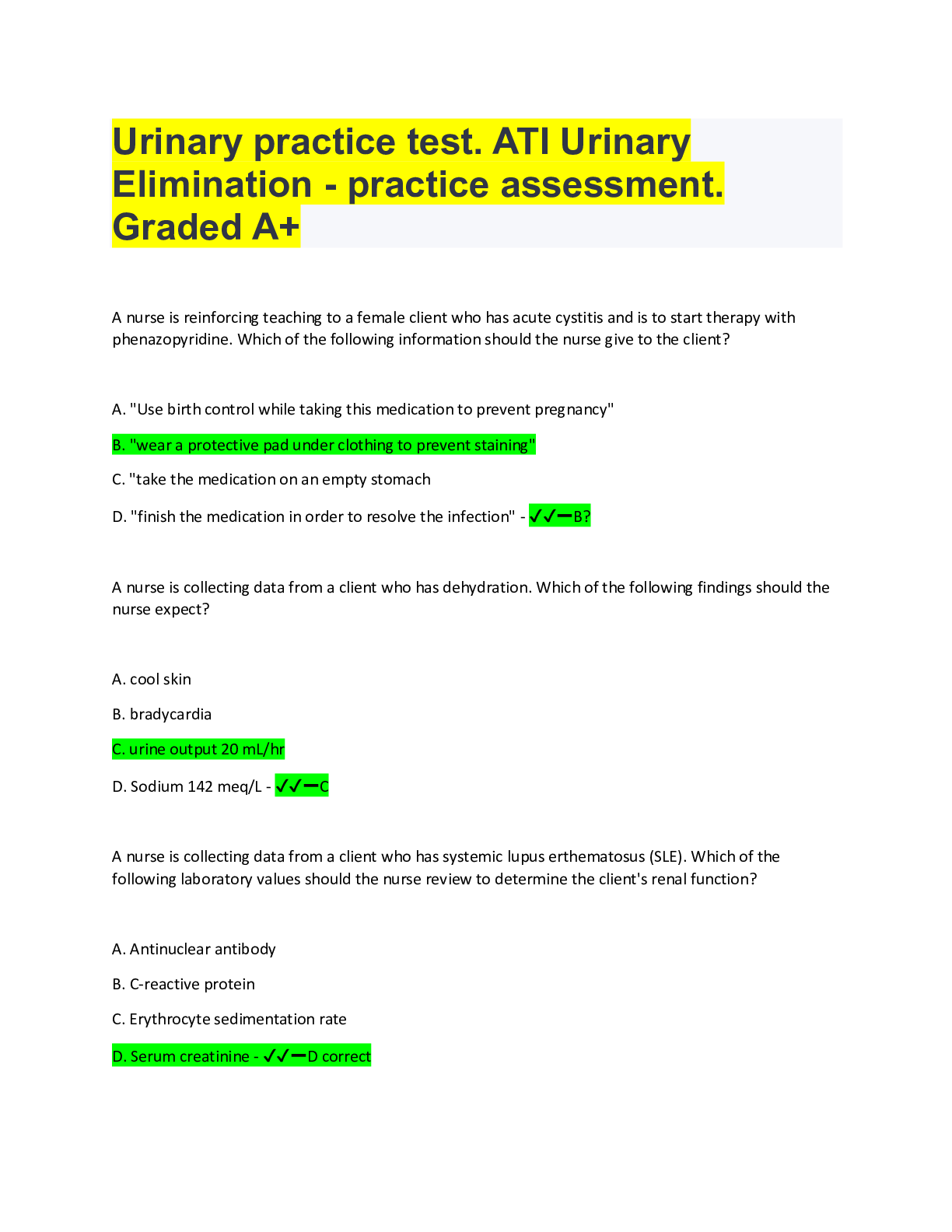
Urinary practice test. ATI Urinary Elimination - practice asse...

ATI TEAS 7 Exam Test Bank – 300 Questions with Answers Latest...

ATI Fundamentals 2.0 Proctored | ATI Testing | Academic Year 2...
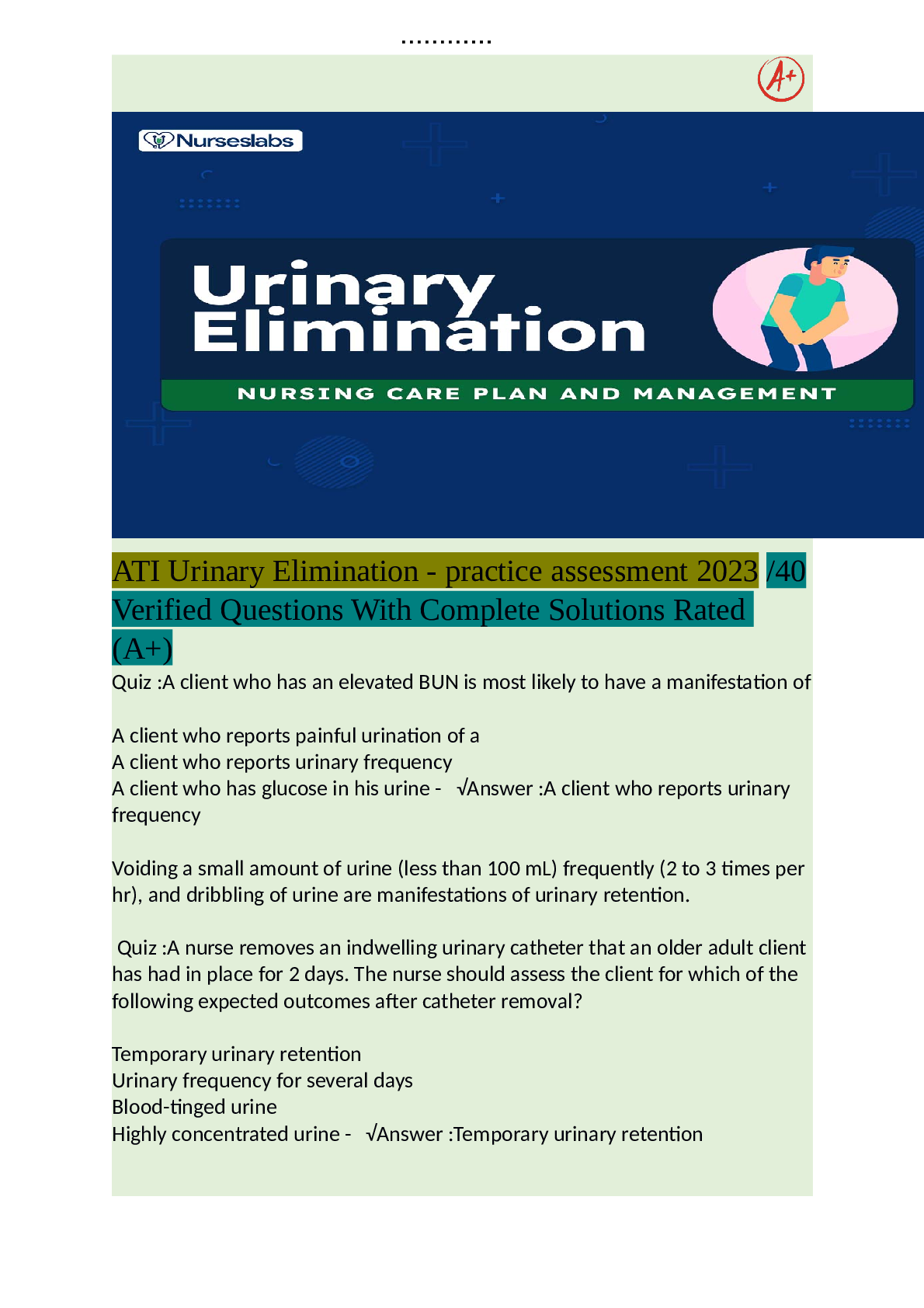
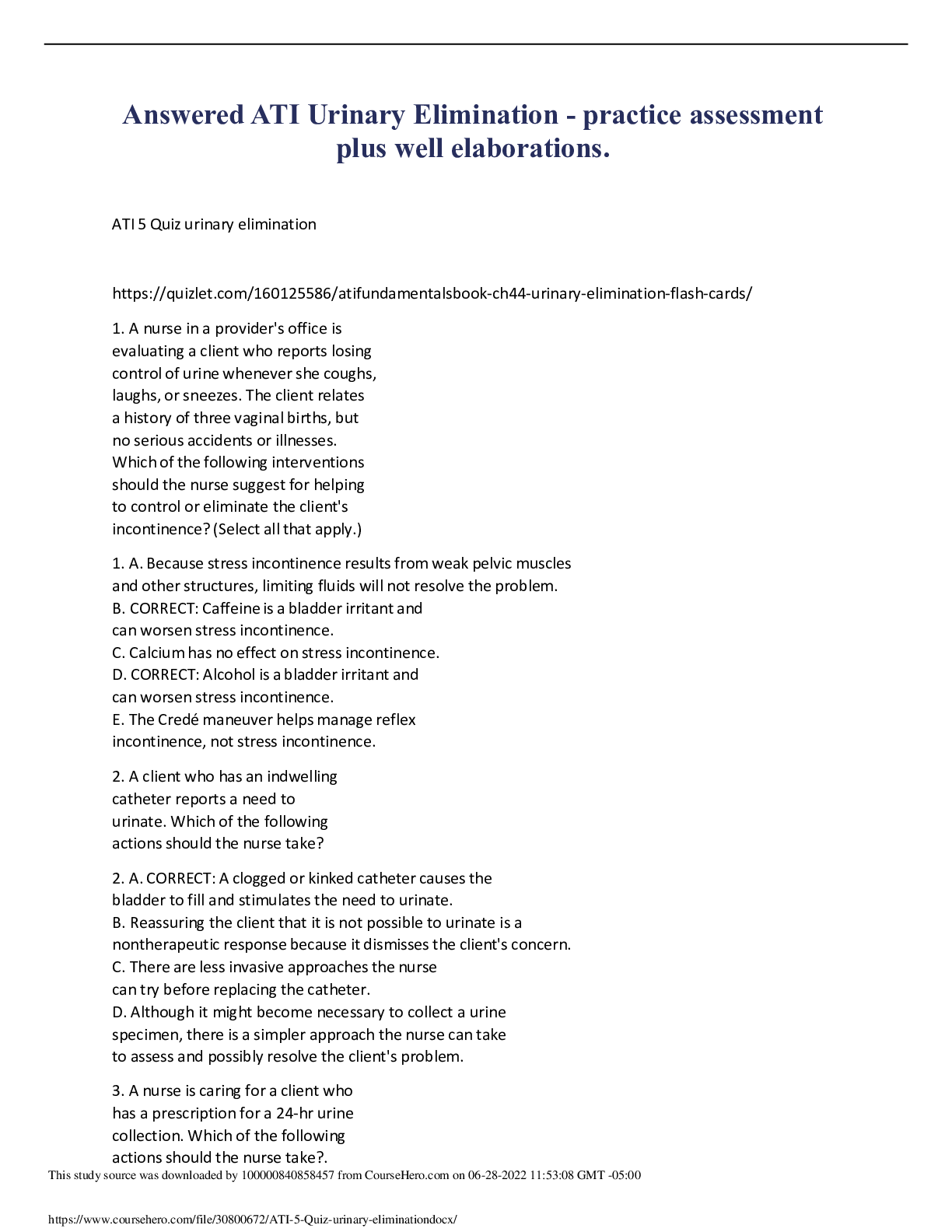
ATI Urinary Elimination - practice assessment> answered/elabor...
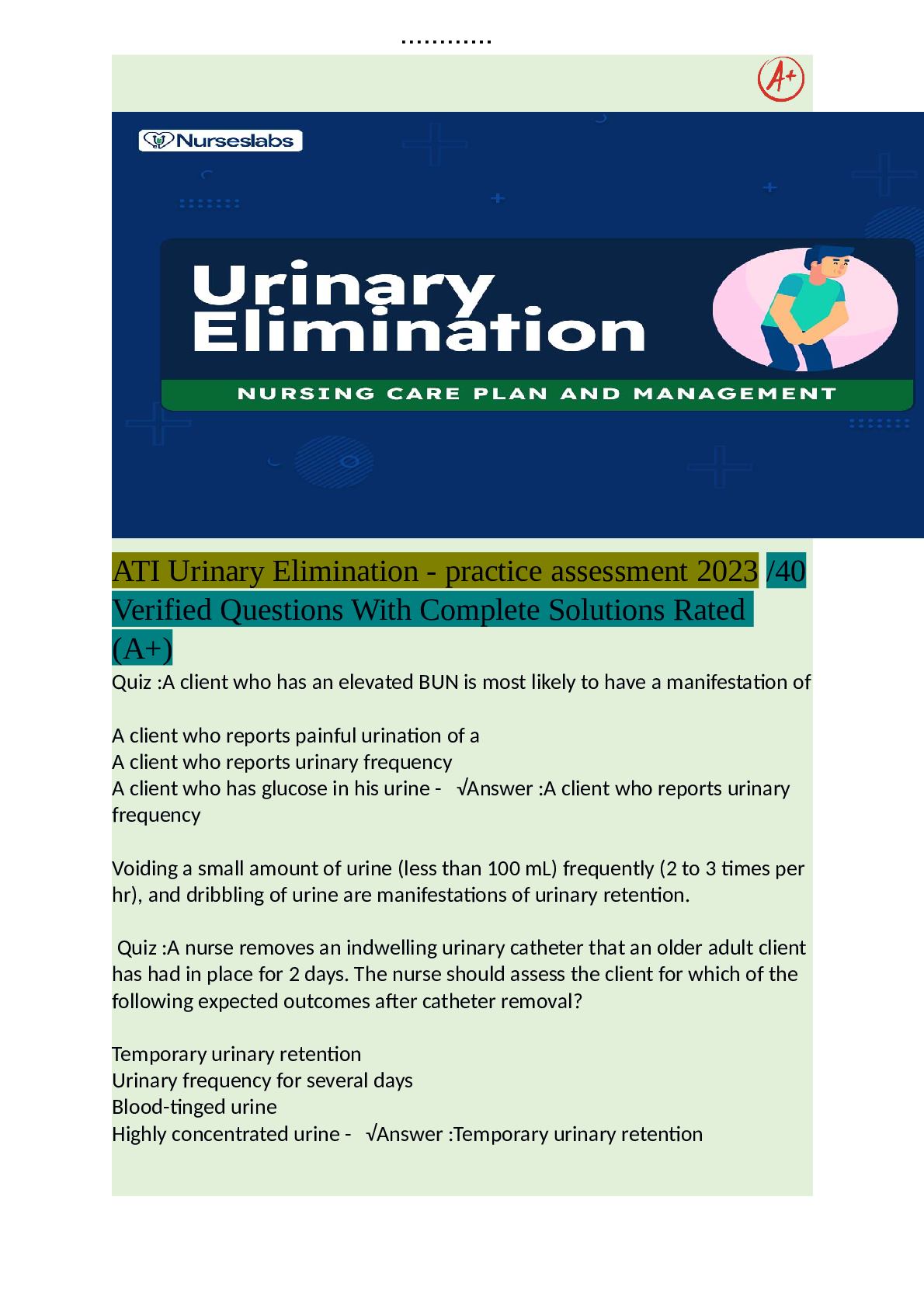
ATI Urinary Elimination - practice assessment> answered/elabor...

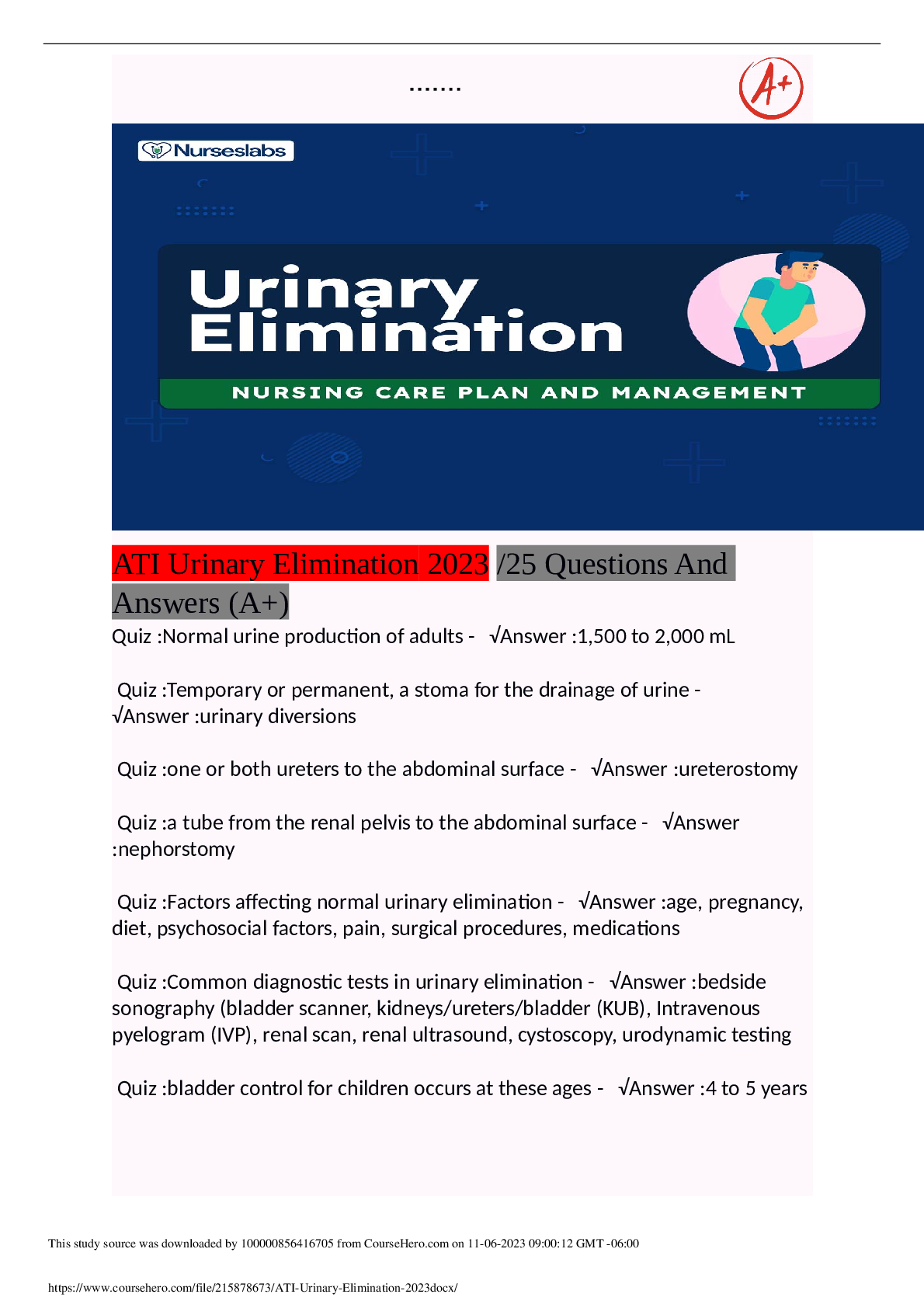
ATI Urinary Elimination - practice assessment> answered/elabor...

ATI MATERNAL NEWBORN PROCTORED EXAM | 33 VERSIONS Contains 260...
.png)
ATI MENTAL HEALTH EXAM A, B and C I Grade A+ Answers and C...

ATI MATERNAL NEWBORN PROCTORED EXAM WITH RATIONALES Version...

TEST BANK for Davis Advantage for Psychiatric Mental Health Nu...






 English & language usage.png)


