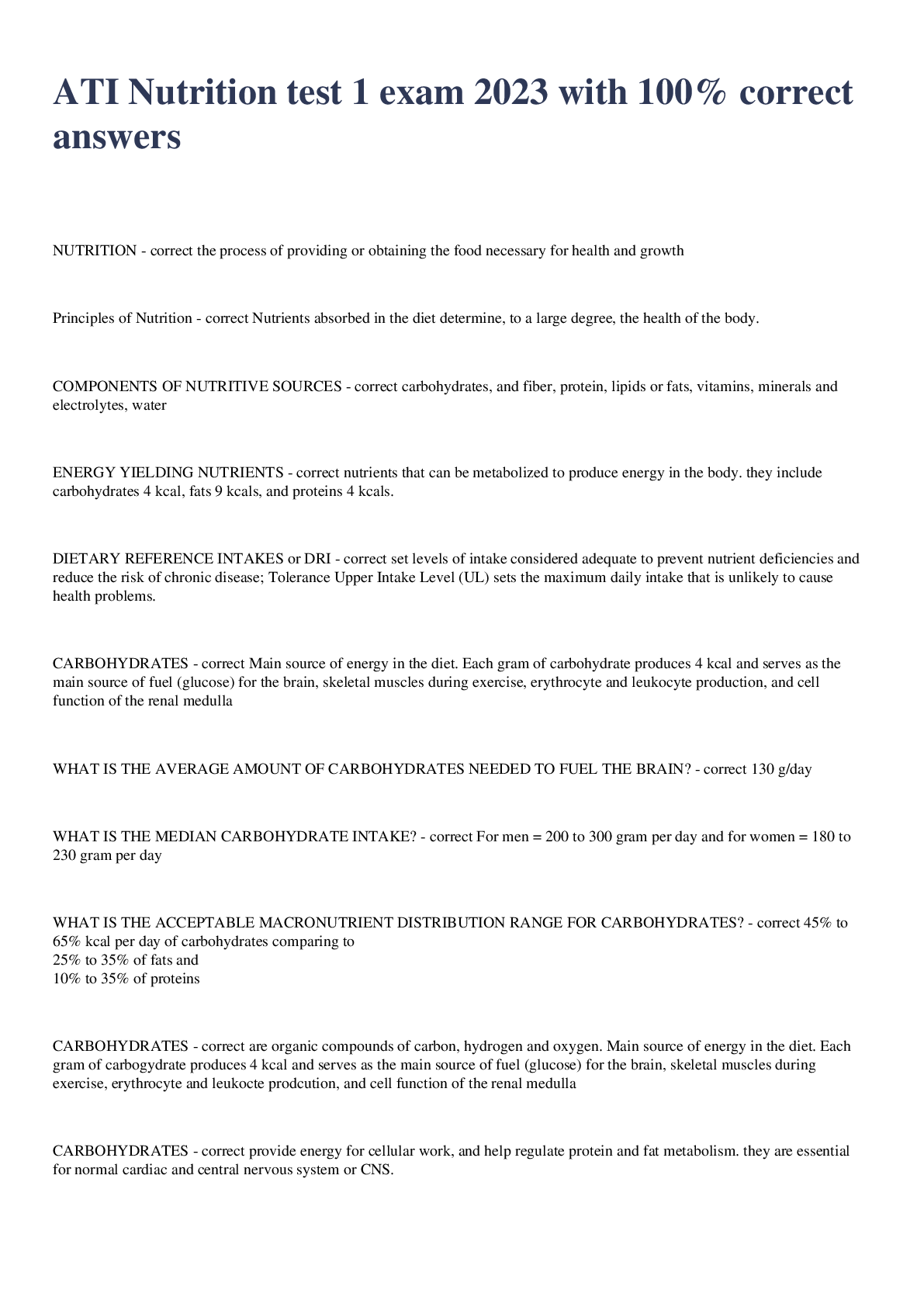
NUTRITION - correct the process of providing or obtaining the food necessary for health and growth
Principles of Nutrition - correct Nutrients absorbed in the diet determine, to a large degree, the health of the bod
...
NUTRITION - correct the process of providing or obtaining the food necessary for health and growth
Principles of Nutrition - correct Nutrients absorbed in the diet determine, to a large degree, the health of the body.
COMPONENTS OF NUTRITIVE SOURCES - correct carbohydrates, and fiber, protein, lipids or fats, vitamins, minerals and electrolytes, water
ENERGY YIELDING NUTRIENTS - correct nutrients that can be metabolized to produce energy in the body. they include carbohydrates 4 kcal, fats 9 kcals, and proteins 4 kcals.
DIETARY REFERENCE INTAKES or DRI - correct set levels of intake considered adequate to prevent nutrient deficiencies and reduce the risk of chronic disease; Tolerance Upper Intake Level (UL) sets the maximum daily intake that is unlikely to cause health problems.
CARBOHYDRATES - correct Main source of energy in the diet. Each gram of carbohydrate produces 4 kcal and serves as the main source of fuel (glucose) for the brain, skeletal muscles during exercise, erythrocyte and leukocyte production, and cell function of the renal medulla
WHAT IS THE AVERAGE AMOUNT OF CARBOHYDRATES NEEDED TO FUEL THE BRAIN? - correct 130 g/day
WHAT IS THE MEDIAN CARBOHYDRATE INTAKE? - correct For men = 200 to 300 gram per day and for women = 180 to 230 gram per day
WHAT IS THE ACCEPTABLE MACRONUTRIENT DISTRIBUTION RANGE FOR CARBOHYDRATES? - correct 45% to 65% kcal per day of carbohydrates comparing to
25% to 35% of fats and
10% to 35% of proteins
CARBOHYDRATES - correct are organic compounds of carbon, hydrogen and oxygen. Main source of energy in the diet. Each gram of carbogydrate produces 4 kcal and serves as the main source of fuel (glucose)
[Show More]